
Created originally for military purposes, the Global Positioning System (GPS) has faced serious challenges amid global conflict, including a growing number of incidents involving signal jamming, spoofing, and cyberattacks that disrupt GPS functionality. The primary danger is a domino effect wherein navigation failures impact civilian and military transportation, power grids, and other systems that rely on geolocation and precise satellite timing. Beyond that, there is the risk of disorientation for countless people, not only in cities but also at sea, in the air, in space, and in other remote locations.
The consequences of interference with GPS are already being actively discussed at the UN, the Cybersecurity and Infrastructure Security Agency, and the defense ministries of the United States and other countries. How realistic are the negative scenarios being studied, and how can we counter attacks, spoofing, and jamming of GPS satellite signals? That’s the focus of our article.
Source: U.S. Air Force
Threats to national security
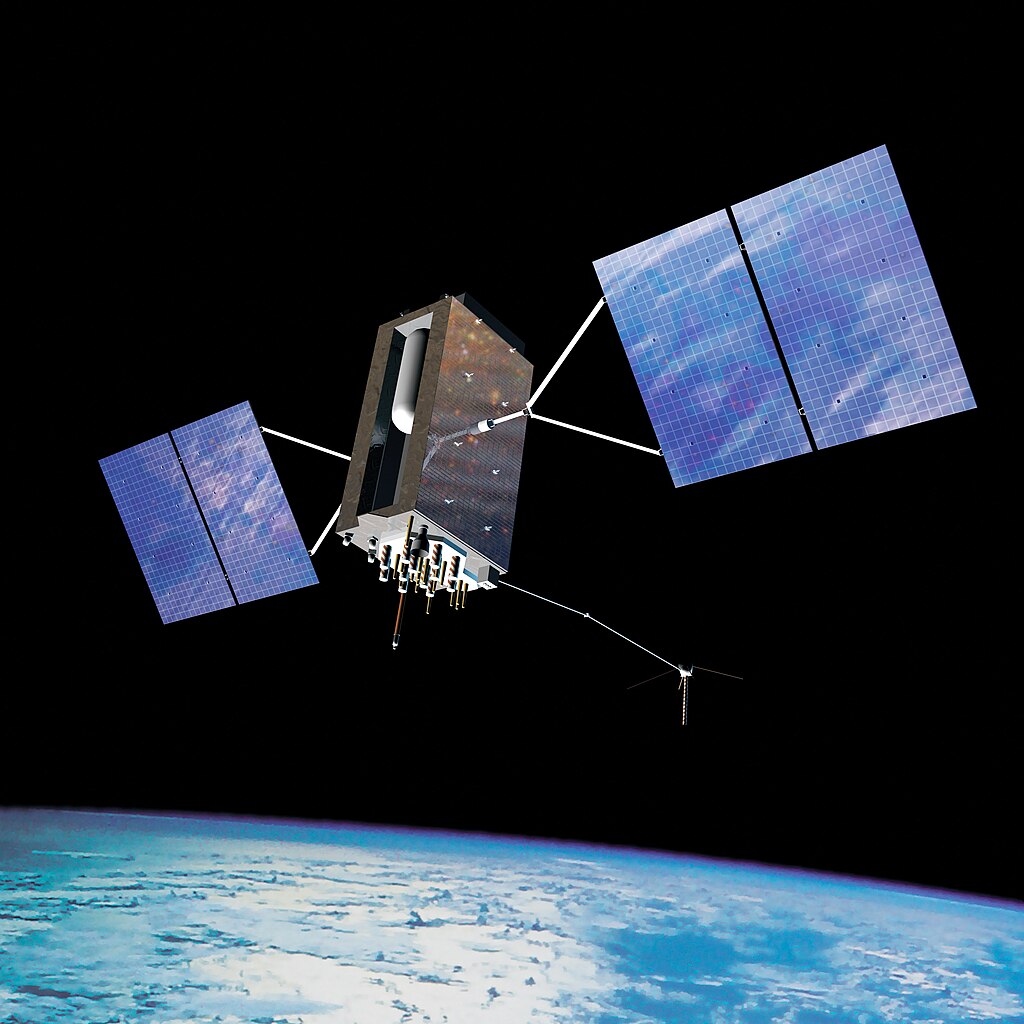
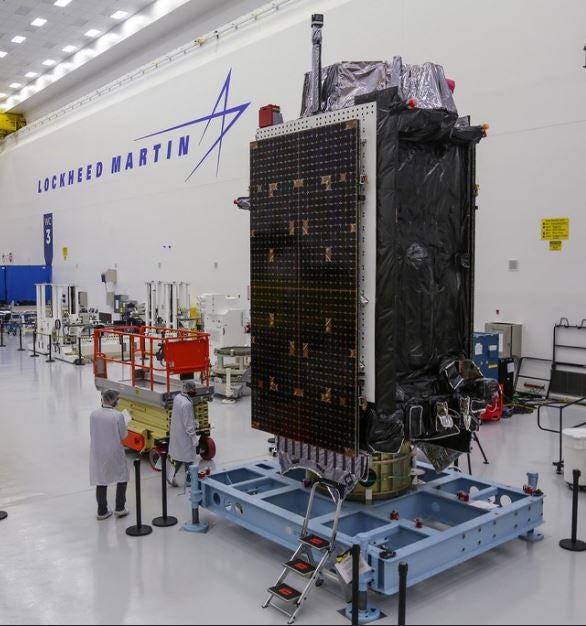
Today, GPS is supported by a constellation of 31 Navstar satellites, a ground control segment, and a massive user segment, which, according to Statista, is expected to reach 10.6 billion devices by 2031. This user segment includes both specialized military, naval, and aviation receivers as well as civilian car navigation systems, smartphones, smartwatches, and simple trackers that can be attached almost anywhere.
GPS is owned by the United States Space Force (USSF), which operates under the U.S. Department of Defense. However, civilian use of the system became possible in 1988, following the accidental downing of a Korean Air Lines passenger aircraft by the USSR five years earlier. Even so, GPS retains a degree of military specialization: defense users receive special PRN codes in encrypted form to protect sensitive data from unauthorized access by third parties.
Source: Lockheed Martin
GPS signals are critically important for the navigation of aircraft, ships, humanitarian aid vehicles, emergency services, financial transactions, agriculture, and telecommunications networks. Power grids also rely on GPS: continuous time and frequency synchronization enables control of energy generation, distribution of electricity, and coordination of operations across numerous energy facilities. Additionally, the navigation system is used to detect seismic activity and determine the epicenter of earthquakes. GPS receivers are often the first to register changes in the frequency of tectonic movement, which typically signals an impending earthquake.

Source: Lockheed Martin
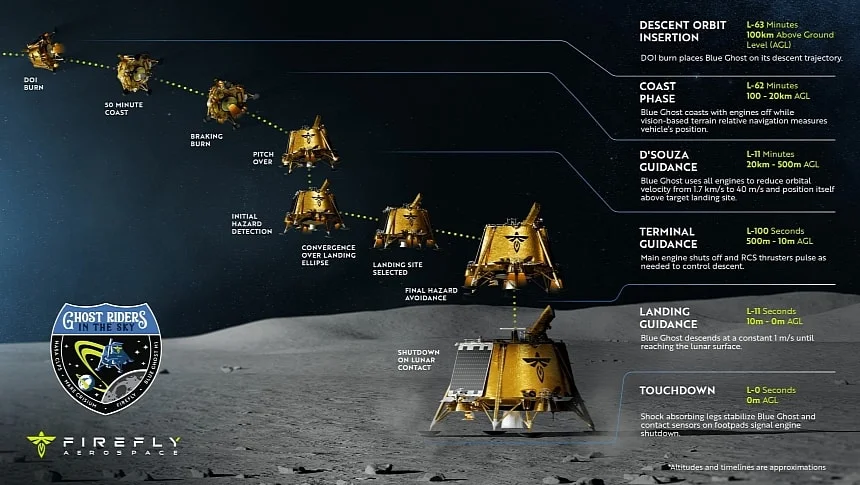
GPS is also essential for space missions to determine time and location, calculate orbital and spacecraft trajectories, conduct remote sensing of Earth and celestial bodies, enable autonomous operation of spacecraft, and perform other tasks. If, during future missions to the Moon, American astronauts land near the south pole in search of water, they will have to work almost constantly in low-light conditions. In such cases, navigation will assist with landing and orientation, while the precise timing system, discussed further below, will help select optimal moments for scientific experiments.
Source: Firefly Aerospace
Each GPS satellite is equipped with highly accurate atomic clocks that transmit time synchronously (with minimal delay) with UTC. As Edward Powers, a senior engineer at The Aerospace Corporation, stated, “GPS can’t work without accurate time, and it provides accurate time for everyone in the world.” According to him, at least 16 critical sectors of the U.S. economy depend on the stable operation of GPS. In other words, the global positioning system has become one of the load-bearing pillars of our largely digital world. Unsurprisingly, this has made it a target for certain groups of malicious actors and authoritarian states seeking to disrupt its normal operation.
In 2016, pilots of Cathay Pacific Flight 905, traveling from Hong Kong, reported a sudden loss of GPS signal during the final miles of the runway approach. As a result, they had to land the aircraft under visual flight rules (VFR). This was one of the first high-profile incidents that demonstrated the potential threat not only to aviation but also to public trust in navigation systems as a whole. Similar GPS disruptions were later reported dozens of times at various airports around the world. Pilots had to adjust their speed and circle the airport, risking further problems. One pilot, attempting to land in Idaho, narrowly avoided crashing into a mountain, thanks only to the lightning-fast response of the air traffic controller.
It remains unclear whether these incidents were the result of deliberate interference with GPS, but in any case, the system’s vulnerability was becoming apparent. This was an even bigger problem outside of the aviation sector, since aircraft can still be flown and landed without GPS.

Source: REUTERS
In 2019, the BBC published the results of an investigation highlighting the use of fake GPS signals in areas visited by Vladimir Putin. Over the course of a year, analysts from the Centre for Advanced Defence (C4ADS) recorded around 10,000 instances of GPS signal spoofing, likely linked to Russia. These incidents affected the navigation of maritime vessels and caused problems with airport navigation systems.
Russia has been one of the first countries to use GPS spoofing to advance its geopolitical interests. China may also be engaged in these activities: its BeiDou navigation satellite system appears to have started mimicking signals from the American GPS and the European Galileo systems. This was initially suspected by researchers at the Radionavigation Laboratory at the University of Texas and later confirmed by scientists from the German Aerospace Center. Although specific recorded instances of signal spoofing did not end up being tied to malicious activity, the ability to imitate signals from foreign satellites makes BeiDou a genuine threat to the national security of the United States and other countries.
Jamming and spoofing as the main causes of GPS failure
In the incidents described above, we’re talking about the substitution of “real” GPS signals with fake ones that closely mimic them, a process known as spoofing. Spoofing is a malicious technique and form of cyberattack that allows an attacker to distort an object’s actual location. To do this, signals from multiple satellites are replicated (copied) and transmitted from the ground. Since the fake signals are stronger than the real ones, they easily overpower the originals.
Depending on the scale of the operation, attackers may use either complex and expensive equipment supported by teams of specialists or relatively accessible tools, such as portable, software-defined radio (SDR) systems. These pose the greatest threat to drones and autonomous systems, where even a slight displacement in coordinates can lead to catastrophic consequences.
Source: rntfnd.org
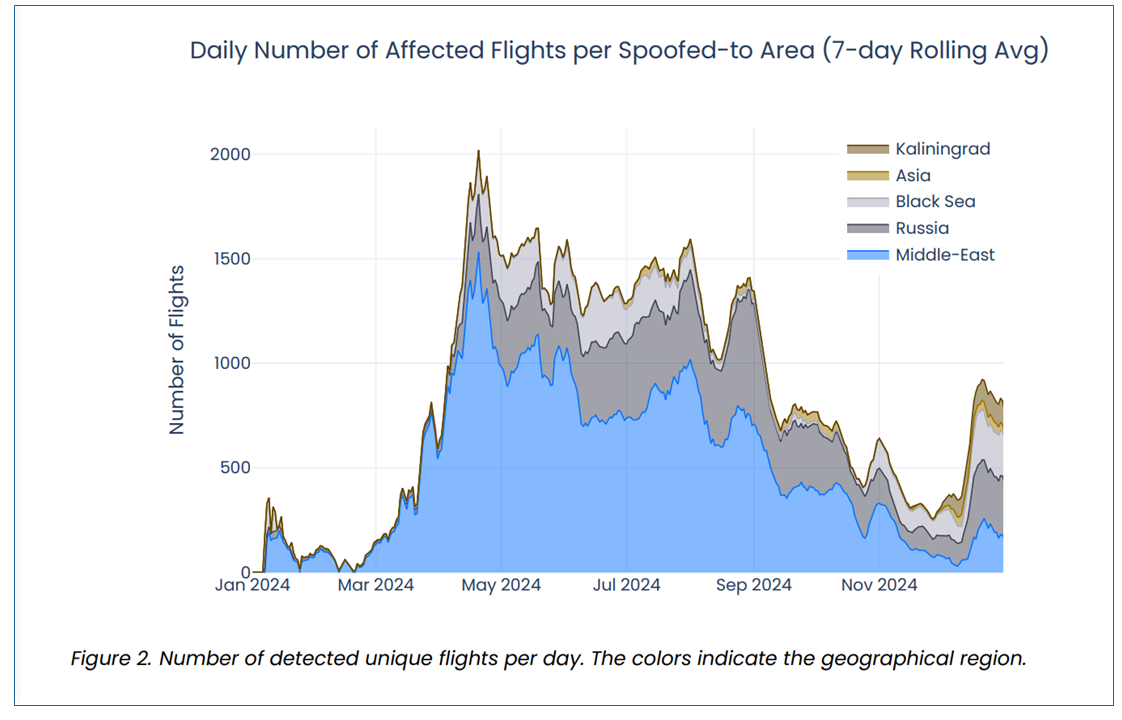
GPS spoofing has not yet caused large-scale damage, but the number of recorded incidents is growing at an alarming rate. With sufficient resources for complex attacks, spoofing could be used to hijack a ship, reroute an aircraft, steal expensive equipment from construction sites, or even trigger traffic gridlock in any high-traffic region of the world.
In recent years, significantly more spoofing cases have been reported in areas of geopolitical tension. For example, in December 2024, the aviation advisory group OPSGROUP noted frequent use of this technology in the Middle East, including Iraq, Iran, and Israel, as well as in the Black Sea, where it most severely affected private and commercial flights. In the Baltic states, the problem worsened after Russia’s full-scale invasion of Ukraine. In active combat zones, spoofing is mainly used to prevent aircraft and drones from reaching their targets. Some experts even argue that its impact could be more destructive than GPS jamming.
Unlike spoofing, jamming doesn’t involve signal substitution. It simply disables the GPS receiver by overwhelming it with interference. Jamming is done using transmission devices that block or disrupt radio signals. While jamming can sometimes occur accidentally, in most cases, it is the result of deliberate interference.
Jamming is more widespread and easier to detect, whereas spoofing is not always identifiable. This is what makes it so problematic. In the spring of 2024, Estonia accused Russia of jamming GPS signals over the Baltic states and reported that airlines had been experiencing navigation issues for several months. Earlier, Finnair temporarily suspended flights to Tartu, a city just 170 km from the Estonian-Russian border, for the same reason. Estonia’s air navigation authority recorded over 600 dangerous incidents in a single month.

Source: cbc.ca
Like spoofing, GPS jamming poses a threat to both civil and military aviation, especially to aircraft using ADS-B technology to determine the receiver’s location. This information is transmitted via transponders to ground stations and other aircraft. The potential risk of accidents increases when flights occur in bad weather or areas with heavy traffic. There is also a higher likelihood of ships veering off course and delays in supply chains. In border regions, attackers may jam GPS signals to smuggle goods or evade law enforcement. Additionally, jamming can be combined with other types of cyberattacks on critical infrastructure to cause maximum damage.
How to address jamming and spoofing
The vulnerability of GPS has been known for a long time. As early as 1995, the issue was raised by the U.S. Department of Defense. At that time, MITRE, an organization involved in the security of national defense, aviation, financial, medical, and other systems, prepared a document called “Methods for Countering GPS Spoofing.” Unfortunately, its recommendations were treated in a purely formal way, and spoofing and jamming were not addressed in any serious way.
Everything changed with the development of technology and the emergence of affordable SDR radio systems, with which GPS signals can be simulated, even without deep expertise or significant resources. That being said, it is not usually amateurs engaged in such activities but rather large totalitarian states like Russia and China that are presumably involved in signal spoofing.
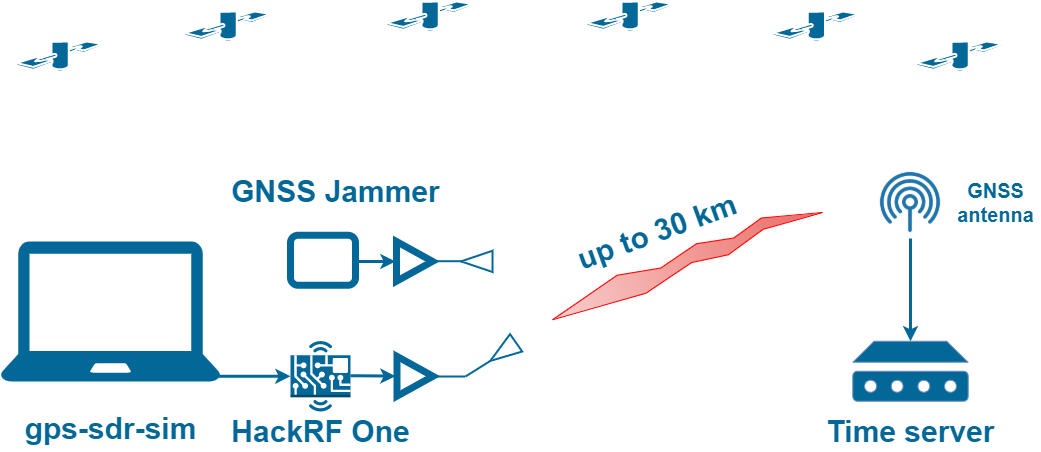
Source: gpspatron.com
Many methods for detecting spoofing have been invented, but many remain theoretical or have not seen widespread adoption. The simplest and least expensive to implement is a drift parameter monitoring algorithm, which tracks anomalous changes in GPS signal characteristics (SNR, coordinates, timestamp, 1PPS), indicating the presence of false signals. In the military sector, cryptography is effective: satellite codes are encrypted and decrypted using a key. However, this method is unsuitable for the civilian user segment for the simple reason that there are too many users, so a key would not provide adequate protection.
Other approaches include comparing data from different navigation systems (for example, GPS with GLONASS or Wi-Fi) or using multiple antennas, since it is difficult for an attacker to simultaneously spoof accurate signals for all antennas. More complex methods analyze signal distortions or determine the signal’s direction of origin, but these often require expensive equipment. None of these methods is perfect on its own, so the best protection is considered to be a combination of several approaches.
When it comes to GPS jamming, there are also ways to mitigate its effects. Spectrum analyzers and special software monitor radio frequency interference and anomalies in power changes that could affect the operation of the global positioning system. Anti-jamming antennas with controlled reception patterns (CRPA) filter out interference and help maintain more accurate positioning.
There are also multisensor navigation systems that combine GPS with other navigation methods, such as inertial navigation systems or astronavigation based on electromagnetic radiation from astronomical objects. Among alternative navigation systems, eLoran, which was developed by the United States Navy (USN), is worth a mention. While the U.S. is currently dismantling eLoran infrastructure, which relies on low-frequency radio waves, eLoran-based solutions are being developed in Russia, China, and Iran.
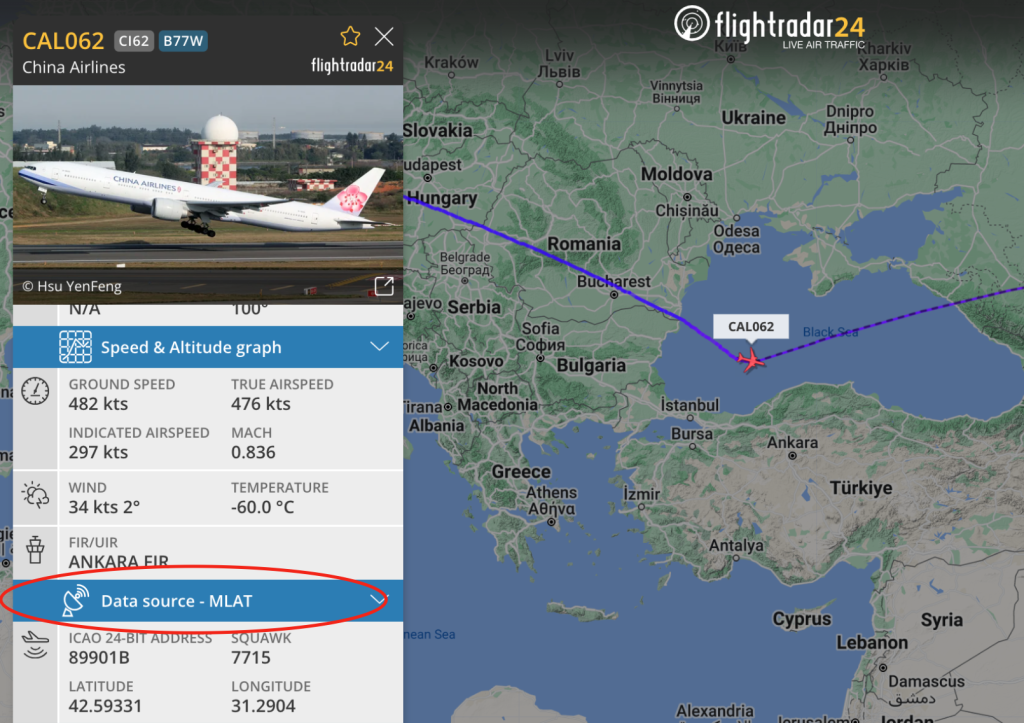
Source: flightradar24.com
Recently, other solutions have emerged that use artificial intelligence and machine learning to help detect interference with the GPS system. While jamming is easy to identify due to the loss or weakening of a signal, spoofing is more difficult, since the receiver continues to receive signals, albeit fake ones. In January 2025, Slingshot Aerospace received a $1.9 million grant from the U.S. Space Force to develop a system for detecting and predicting GPS interference and spoofing. This solution uses AI for satellite tracking, space traffic coordination, modeling, and simulation of the space environment. Similar systems are being developed by DARPA, the RNT Foundation, GPSPatron, and the MIT Lincoln Lab.
The United Nations has warned that the increasing number of incidents related to GPS spoofing and jamming threatens the safety of aviation, maritime navigation, and telecommunications infrastructure. As an alternative, the UN proposes strengthening coordination between civilian and defense sectors, improving monitoring, and developing backup navigation infrastructure, including ground-based systems, since the scale of the problem is growing rapidly. OPS Group emphasized that, in just the past three years, the number of spoofing incidents affecting aviation has increased by 400%. Meanwhile, the UK Space Agency estimated that a seven-day disruption of the GNSS (Global Navigation Satellite System), which includes not only GPS but also China’s BeiDou, Europe’s Galileo, and Russia’s GLONASS, could cause direct losses of $9.8 billion. It seems the era of taking GPS stability for granted is coming to an end. It is necessary, at minimum, to develop and maintain alternatives, coordinate efforts, and seek new ways to protect global navigation systems.