As soon as the first satellites appeared in Earth’s orbit, new means of communication, through the transmission of radio signals from satellite to satellite or from a satellite to Earth, became available. Positioned hundreds of thousands of kilometers above our heads, satellites were an ideal tool for instantly covering large areas on Earth with a signal, ensuring connectivity even in the planet’s most remote regions. Relay satellites also seemed like an attractive solution for rapidly transmitting signals over long distances, as radio waves in space propagated without interference, primarily from Earth’s atmosphere.
The last decade, marked by the emergence of massive satellite constellations numbering in the thousands, has made satellite broadband not only accessible but also fast. For the first time in the history of the technology, connection speeds have begun to approach those of fiber-optic networks. However, radio communication still has several persistent weaknesses, including low bandwidth and vulnerability to signal interception or jamming. For this reason, space agencies and satellite companies have increasingly begun exploring alternative methods of satellite signal transmission, primarily optical or laser-based space communication.
The emergence of optical communication systems: from Earth to space
As with any space technology, optical data transmission was initially invented on Earth. Some of the earliest examples of optical communication include signal fires, which ancient people used long before our era.
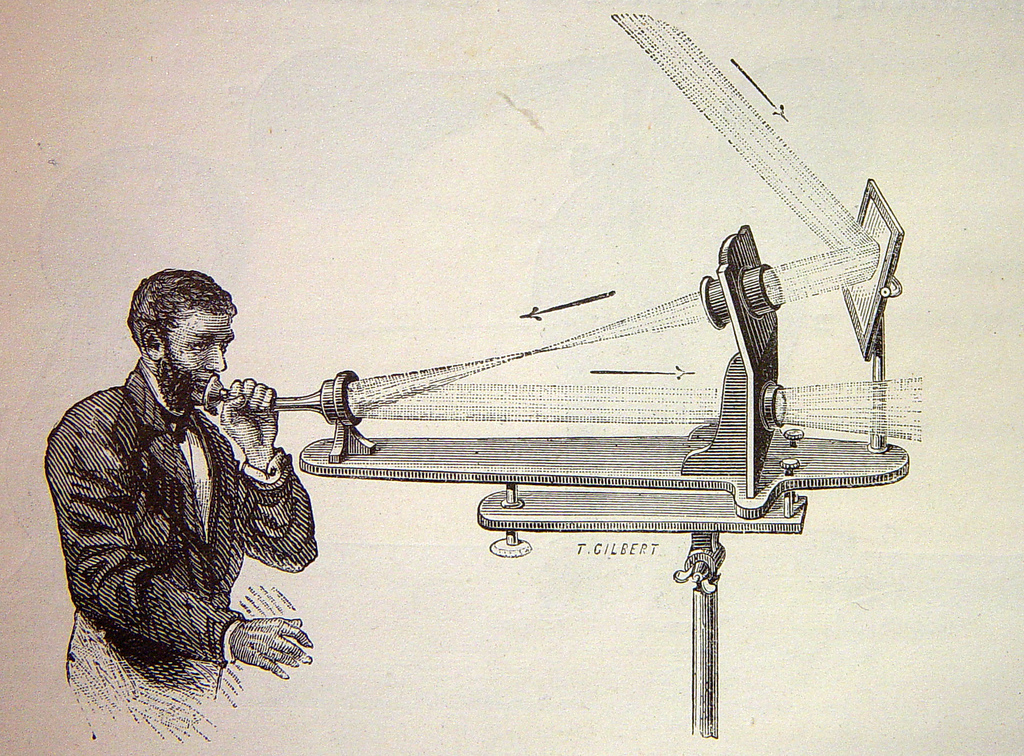
The modern form of this technology began to emerge only in the late 19th century, when an American physicist of Scottish descent, Alexander Graham Bell, conducted the first tests of his “photophone,” a device that allowed voice messages to be transmitted using a concentrated beam of light. During a demonstration on June 21, 1880, Bell’s photophone successfully transmitted a voice message over a distance of 213 meters.
Source: wikipedia.org
However, the photophone was quickly overshadowed by the invention of the telephone, whose operation was based purely on an electrical circuit. The telephone provided significantly better communication quality, although it relied on electrical cables. While some optical communication systems were occasionally used during the first half of the 20th century, including the German Blinkgerät, which was employed during World War I, a true revolution in free-space optical communication (FSOC) only took place with the invention of the laser by Theodore Maiman in 1960.
The first laser communication systems were implemented in the United States as “campus area networks” (CAN). These networks used helium-neon lasers to transmit data between computers connected within university campuses or corporate offices. However, it is important to note that optical communication was not common in all CAN networks; most often it was used for technological demonstration. Despite the high security of laser communication channels, in the latter half of the 20th century, fiber-optic networks prevented laser technology from entering the global commercial telecommunications market.
Moreover, early tests of laser communication systems for terrestrial data transmission suggested that optical transmission was not necessarily superior to radio frequency (RF) communication. Laser beams were poorly suited for long-distance data transfer and were highly susceptible to scattering and absorption by Earth’s atmosphere, leading to significant signal delays or even partial data loss. In contrast, the longer wavelength of radio signals allowed them to pass through the atmosphere almost unobstructed, even under high humidity or heavy precipitation, with only certain RF bands being negatively affected by adverse weather conditions.
However, in the vacuum of space, the situation is entirely different. The absence of atmospheric interference eliminated the drawbacks of laser data transmission. Since both radio and laser signals belong to the electromagnetic spectrum, they propagate at the same speed in space: close to the speed of light. Furthermore, in a space environment, the high intensity and shorter wavelength of laser radiation enables the transmission of a greater volume of data per unit of time compared to RF signals.
Due to these characteristics, the development of laser communication technology has shifted toward Earth’s orbit and beyond, into near space.
Laser beams on the Moon and the first inter-satellite data transmission
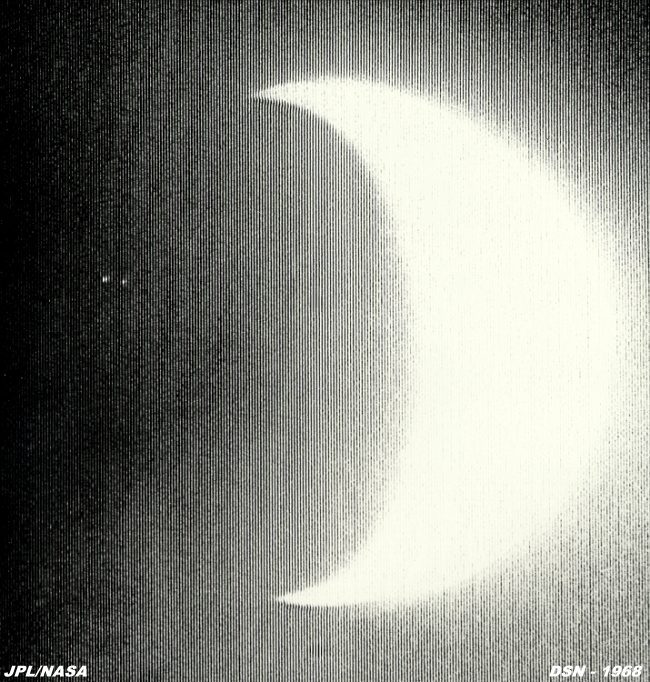
The first extraterrestrial demonstration of laser data transmission technology was conducted in 1968 during NASA’s Surveyor 7 lunar mission, which made a soft landing on the Moon on January 10. The lander was equipped with receiving equipment that detected radiation from two-watt argon lasers simultaneously transmitted from the Kitt Peak National Observatory (KNPO) in Arizona and the Table Mountain Observatory (TMO) in California.
Source: JPL/NASA
Surveyor 7’s interplanetary successor in the realm of laser communication systems was NASA’s Galileo probe, which was launched toward Jupiter on October 18, 1989. Three years after the start of its mission, in 1992, Galileo demonstrated its ability to detect a laser beacon directed at it from Earth at an astounding distance of 6 million kilometers. However, the probe could only receive the laser signal from the ground station and lacked the necessary equipment to establish a return transmission channel.
A similar experiment involving optical signal acquisition, pointing, and tracking (PAT) was later conducted by the Japanese ETS-VI satellite while it was in geostationary transfer orbit. The data transmission speed reached 1 Mbit/s, which was sufficient for sending essential satellite control commands.
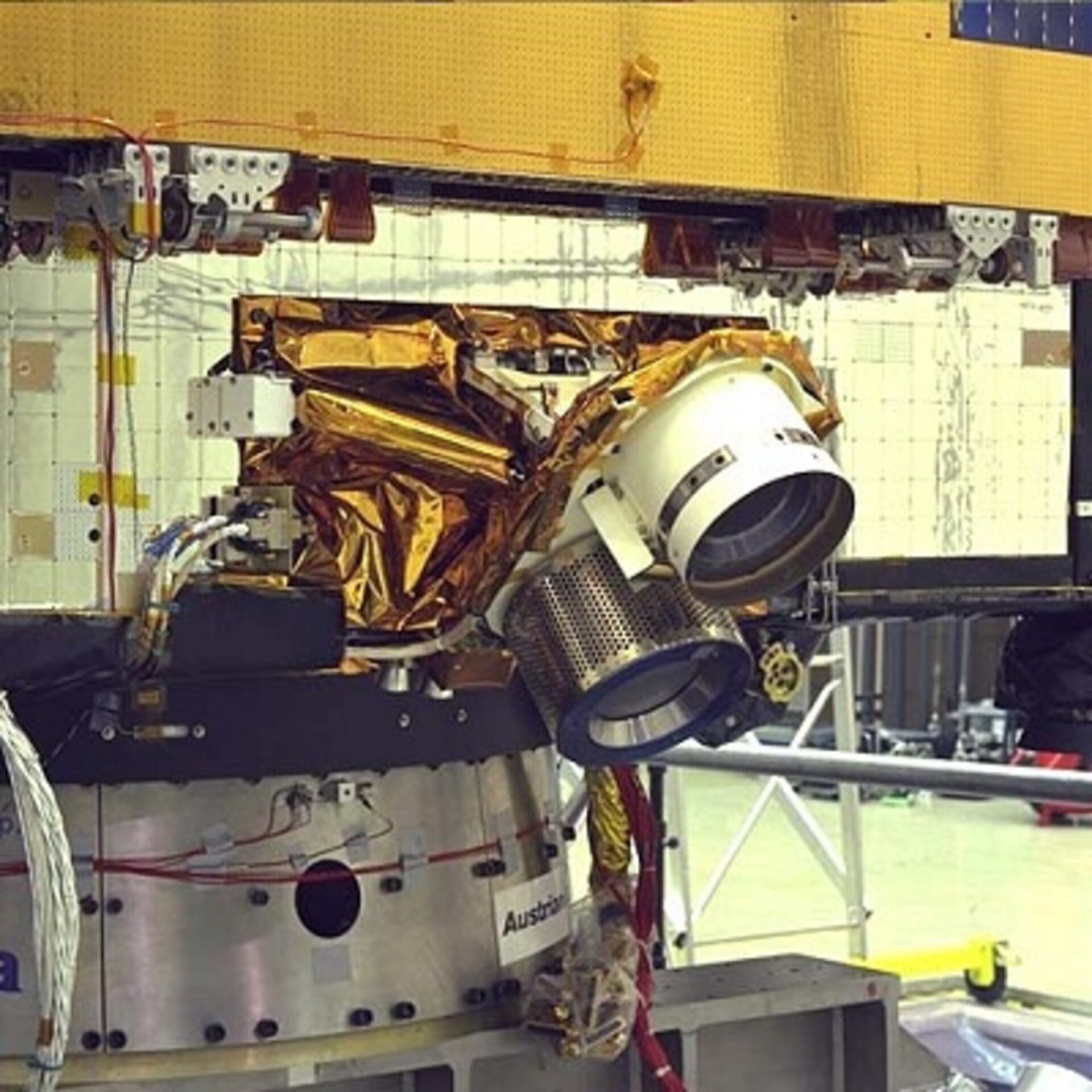
The European Space Agency (ESA) also researched optical communication systems, beginning active work in 1977 on the development of high-speed laser communication technology in space. This effort led to the SILEX (Semiconductor Laser Intersatellite Link Experiment) project in the 1980s, designed for inter-satellite laser data transmission. Developed by Astrium, which was headquartered in Paris, the SILEX system used a laser diode based on aluminum gallium arsenide (AlGaAs) with a power output of 60 W. The entire laser terminal weighed 160 kg and required 150 W of power.
The complete development and testing cycle of SILEX took nearly 20 years, with the first demonstration occurring only in November 2001. During this test, two European satellites, ARTEMIS and the Earth observation satellite SPOT-4, exchanged data via SILEX. They became the first space probes to maintain a stable inter-satellite dual-channel link throughout their missions, transmitting over 230 hours of telemetry and sensor data via the laser communication channel. The optical link achieved a data transmission speed of 50 Mbit/s.
Source: ESA
Later, in November 2005, the ARTEMIS satellite established the world’s first dual-channel laser link with the Japanese Optical Intersatellite Communications Engineering satellite (also known as Kirari), which was launched aboard a Dnepr rocket. For this satellite, Japan developed its own laser terminal, LUCE (Laser Utilizing Communications Equipment), which had a technical design similar to the European SILEX. The communication link was established between Kirari, in low Earth orbit (LEO) and ARTEMIS, in geostationary orbit (GEO).
Then, in December 2006, the world’s first satellite data exchange between ARTEMIS and an aircraft in flight was conducted. The aircraft was equipped with the French LOLA (Liaison Optique Laser Aéroportée) laser communication terminal, which enabled data exchange with the SILEX satellite laser terminal.
The trend towards miniaturization
Despite the clear success of laser-based inter-satellite data transmission, such terminals were still not well-suited for space applications. They were quite heavy and consumed too much power while delivering data transmission speeds comparable to standard radio-wave transmitters of significantly smaller size. For the technology to advance further, it was necessary to reduce mass and improve the energy efficiency of laser terminals.
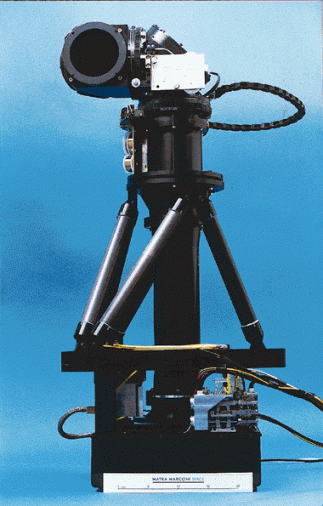
The development of compact laser communication terminals began at ESA in the early 1990s, eleven years before the first SILEX system was operational on the ARTEMIS/SPOT-4 satellite pair. The new device was named SOUT (Small Optical User Terminal), with a projected weight of only 25 kg. The project’s primary contractor was British Aerospace.
Source: ESA
Of course, the miniaturization of laser terminals inevitably led to a reduction in signal transmission speed, with compact terminals achieving only 2 Mbps. Although the SILEX and SOUT programs (later renamed SOTT) were developed independently, a crucial milestone was their technological compatibility: both terminals could exchange data with one another.
SOTT laser terminals are still in use and the latest compact laser terminals designed for commercial use in space-to-space communication systems are expected to reach transmission speeds of up to 1 Gbps.
The development of SOUT laser terminals established a trend toward reducing the size of equipment necessary for stable space-to-space and space-to-Earth laser communication. This trend will ultimately enable the integration of compact laser terminals into satellites of large-scale internet constellations, such as Starlink and others, which will be discussed further below.
NASA Breakthrough: Advancing Targeting and Tracking
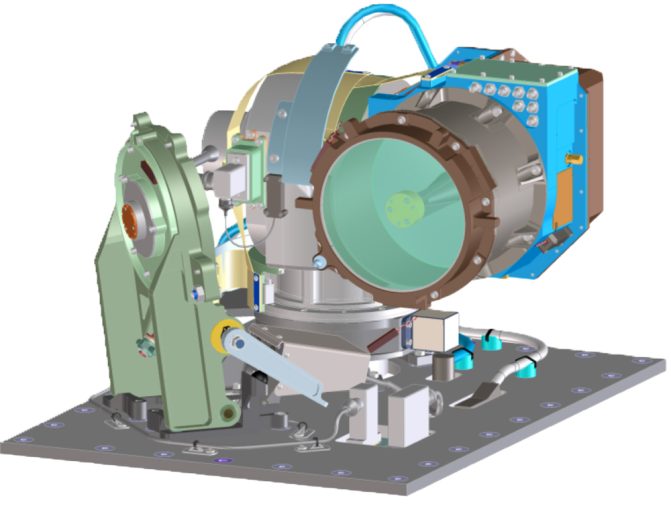
In 2013, aiming to improve existing laser communication systems, NASA returned to the Moon with its LADEE (Lunar Atmosphere and Dust Environment Explorer) mission. One of the probe’s payloads was the LLCD (Lunar Laser Communications Demonstration), designed to establish a two-way laser communication link with Earth.
Source: NASA
During the demonstration on October 18, 2013, the LLCD terminal, located 385,000 km from Earth, achieved a downlink data transmission speed (from the Moon to Earth) of 622 Mbps and a maximum uplink speed (from Earth to the Moon) of 20 Mbps. For the first time in the history of laser communication, the downlink data rate had surpassed that of standard radio frequency communication.
The high-speed connection was ensured by using pulse modulation of the laser beam, which transmitted telemetry data and code not as continuous laser radiation but as laser pulses in short time intervals. This approach allowed large data sets to be sent in portions during each laser activation interval.
The LLCD mission also significantly improved the system for pointing, acquisition, and tracking (PAT), which, in turn, enabled a reduction in beam width. This was achieved using the LADEE laser telescope (for transmission from the satellite to Earth) and highly sensitive ground tracking stations with large apertures, which allowed the weak laser signal, scattered while passing through Earth’s atmosphere, to be captured. These sensitive PAT systems enabled the use of a narrower laser beam, making the entire network less susceptible to interception.
In April 2014, a year after the success of LLCD, NASA’s Jet Propulsion Laboratory (JPL) conducted a demonstration of the OPALS (Optical Payload for Lasercomm Science) system. This optical communication payload was delivered to the ISS aboard a Dragon spacecraft as part of the SpaceX CRS-3 commercial resupply mission.

Source: NASA
The OPALS terminal operated on the ISS for 90 days. The demonstration involved directing a laser beam from the ISS to a ground receiving station located in the San Gabriel Mountains in California. OPALS featured its own automated system whose laser terminal automatically aligned the beam with the receiver on Earth and compensated for the movement of the ISS and errors caused by Earth’s atmosphere.
During a series of experiments, OPALS successfully established 18 connections out of 26 attempts. The data transmission speed reached 50 Mbps, confirming the viability of the technology. However, the 30% failure rate means that this method can not yet guarantee stable data transmission. As a result, the true breakthrough in space laser communication in 2014 did not belong to the Americans.
ESA reaches gigabit speeds: the advent of EDRS
In November 2014, the European Space Agency (ESA) became the first organization to achieve gigabit-speed optical data transmission in space.
The first test demonstration of the new European Data Relay System (EDRS) architecture took place during the Sentinel-1A mission, which established a laser communication link with another European satellite, ESA’s Alphasat. EDRS’s optical signal transmission speed reached 1.8 Gbps in a LEO-GEO link over a distance of up to 45,000 km. In 2014, this was an unprecedented achievement for any space-based laser communication terminal. In subsequent demonstrations, ESA planned to quadruple the laser connection speed, aiming to reach 7.2 Gbps.

Source: ESA
The fully operational satellites belonging to the EDRS constellation were launched later. The EDRS-A satellite was placed into orbit in January 2016, and on August 6, 2019, its capabilities were expanded with the launch of EDRS-C, which had similar functionality to its predecessor. Both satellites took their positions in GEO orbit and became laser relay stations, enabling laser communication with a range of satellites in LEO orbit. The EDRS satellites transmitted received data to ground stations using three different radio frequency bands: S-band (with a peak data transfer rate of 600 Mbps), Ku-band, and Ka-band (up to 800 Mbps).
Currently, the two EDRS satellites provide near-total coverage of Africa, the Middle East, Europe, Asia, and the Americas, facilitating laser communication with various commercial and government satellites and relaying their data to Earth. The plan to strengthen the EDRS constellation by 2030 includes the launch of two additional satellites, which will ensure full global coverage. As of May 2023, the European EDRS system has conducted more than 75,000 successful laser inter-satellite data transfer operations.
Commercial use
In recent years, laser communication has revolutionized commercial inter-satellite data transmission systems, especially in satellite constellations. Starting from version 1.5, all Starlink satellites have been equipped with compact optical signal transmission terminals.
Starlink’s main competitor, the OneWeb satellite constellation for global internet coverage, is following a similar path. The company has also announced plans to implement optical inter-satellite communication for data relay in space with its second-generation satellites, OneWeb Gen 2.
Another commercial satellite constellation, Amazon Kuiper, which is planned to consist of 3,236 satellites in LEO, will also use laser communication for inter-satellite connectivity. As of 2023, only two test satellites, Kuipersat-1 and Kuipersat-2, are in orbit, but once all test data has been collected, Amazon will begin the next phase of Kuiper deployment using launch vehicles from United Launch Alliance and Arianespace.
The Canadian telecommunications company Telesat will also soon begin deploying a commercial constellation, Lightspeed, which will consist of 198 satellites. Despite having a relatively small number of satellites compared to other internet constellations, Lightspeed is designed to cover almost the entire planet, providing customers with high-speed internet access.
Laser inter-satellite communication is also part of the new generation of Iridium NEXT satellites, which provide satellite telephony. The 75-satellite constellation was deployed between 2017 and 2019, and six Iridium NEXT satellites remain in reserve on Earth in case replacements are needed.
At the beginning of this year, the Chinese commercial satellite company Chang Guang Satellite Technology announced a breakthrough in high-speed data exchange. Through various Chinese media outlets, it claimed a data transmission speed of 100 Gbps in both space-to-Earth and space-to-space systems. For comparison, Starlink currently uses only inter-satellite laser communication (space-to-space), with data transfer speeds not exceeding 100 Mbps: 1,000 times lower than what China claims to have achieved.
During one demonstration, the MF02A04 satellite, part of the Jilin-1 constellation (which aims to reach 300 active satellites by 2027) transmitted a satellite image of its alma mater, a ground station located in Jilin Province.

Source: CCTV
It is worth noting that the future Jilin-1 constellation satellites were the first commercial satellites to demonstrate such high data transmission speeds. For its part, the United States had achieved these speeds slightly earlier, but within the framework of scientific missions.
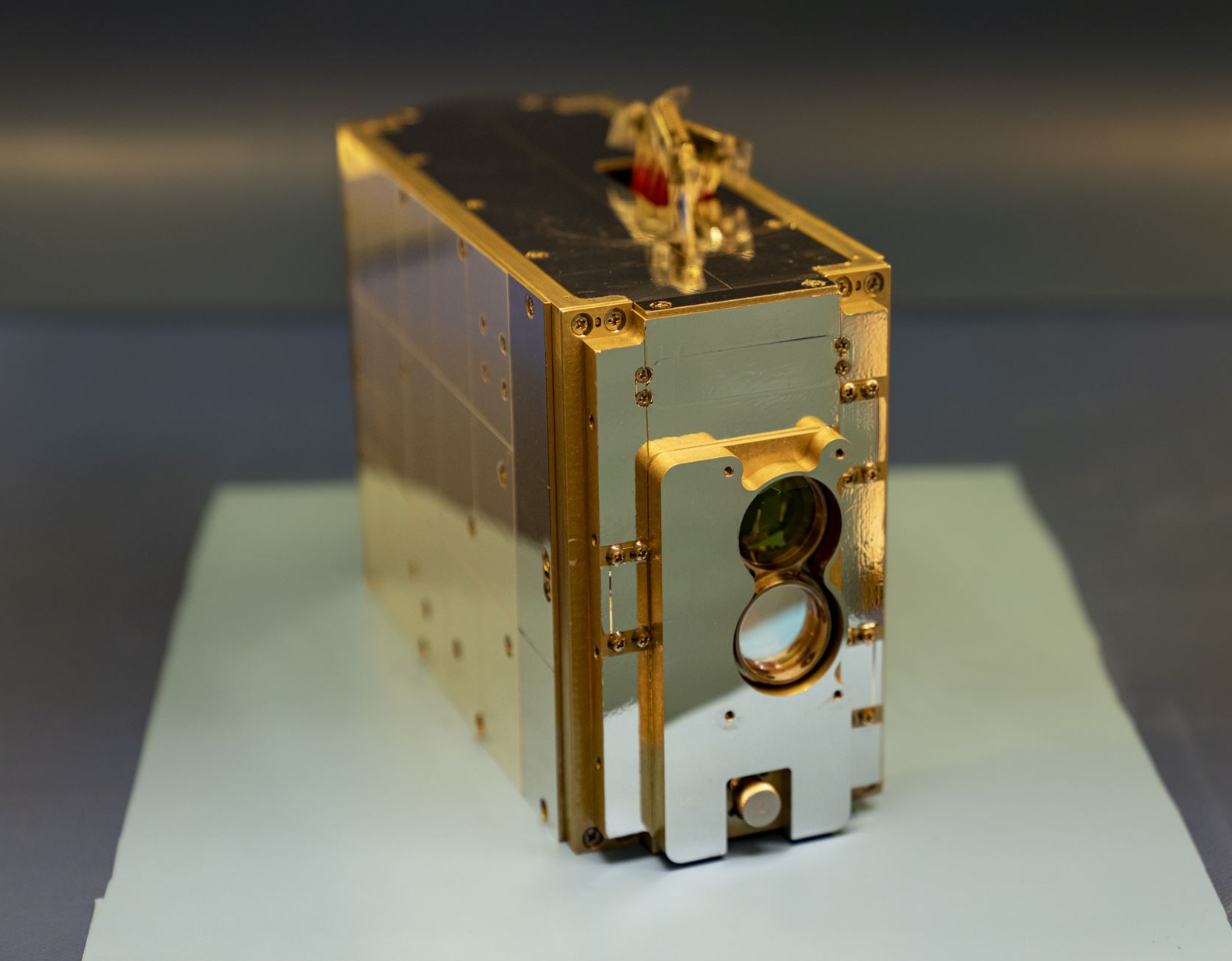
On April 28, 2023, NASA successfully reached an optical signal bandwidth of 200 Gbps. These record-breaking speeds were achieved using the TBIRD (TeraByte InfraRed Delivery) optical system, whose terminal is mounted on the NASA Pathfinder Technology Demonstrator 3 (PTD-3) satellite.
Source: NASA
Laser terminals like TBIRD and its counterparts installed on China’s Jilin-1 satellites unlock unprecedented possibilities for high-speed transmission of ultra-high-resolution satellite images to Earth, including images both of Earth’s surface and deep space, captured using modern optical telescopes. Additionally, the technology offers a significantly higher level of data security compared to even the most advanced RF transmission systems available today. This is why laser-based space communication systems have attracted interest not only from the civilian sector but also from militaries.
Military interest and the future of the technology
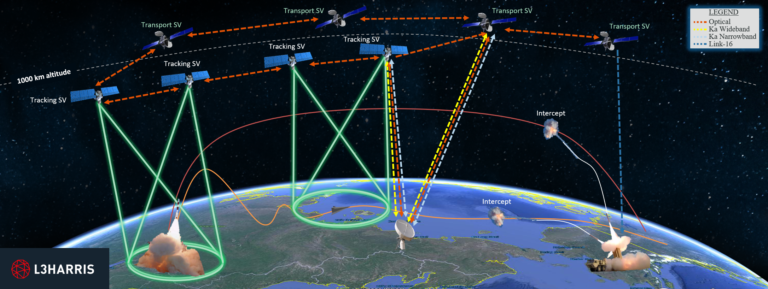
Military organizations are actively engaging various commercial contractors to integrate laser communication into their space forces. In January of this year, the U.S. military, as part of the Proliferated Warfighter Space Architecture (PWSA), successfully demonstrated cross-vendor laser communication between satellites in LEO for the first time.
Cross-vendor optical space communication refers to laser communication between satellites developed by different manufacturers. During the January demonstration, a secure optical data link was established between a Tranche 0 Transport satellite built by Denver-based York Space Systems and another Tranche 0 Transport satellite developed by SpaceX.
Source: L3Harris
The growing trend toward cross-vendor laser communication highlights the need for unified interface standards and data exchange protocols for military satellite constellations. By adopting this approach, the U.S. Space Development Agency (SDA) aims to diversify the number of companies involved in military satellite production, reducing the strain on the industrial base while increasing competition among major contractors. It is also important to note that laser communication is particularly valued in the military sector due to its high level of signal security.
Currently, 23 military satellites from the first-generation Tranche 0 are already in orbit. Throughout 2025, an additional 150 next-generation military satellites, called Tranche 1, are planned for deployment. Together, they will perform a wide range of tasks, from missile launch tracking to establishing reliable communication for strategic and tactical command, combat aviation, UAVs, and more. Several satellite manufacturers are involved in deploying the Tranche 1 constellation, including L3 Harris, SpaceX, York Space Systems, and Lockheed Martin.
Today, optical communication technology seems to have a bright future in space. Every sector of the space industry—scientific, commercial, and military—is invested in these systems. The use of laser terminals will also be in high demand for future interplanetary missions, particularly those to Mars. And while we cannot yet say exactly when humanity will set foot on Mars, one thing is certain: high-speed internet will be waiting for the first colonists when they arrive.