Space exploration remains one of humanity’s most challenging undertakings. Efficiently managing spacecraft systems, ensuring astronaut safety, analyzing vast amounts of data, and identifying patterns are resource-intensive tasks where mistakes can be costly. Today, artificial intelligence (AI) helps achieve these same goals with less effort. Lisa Denzer, head of the AI lab at the European Space Agency (ESA), calls AI “indispensable for future exploration” due to its ability to enable spacecraft autonomy. This is critically important for deep space missions, such as those to Mars, where even a second of communication delay with Earth can be crucial.
Although humans have yet to return to the Moon and crewed missions to Mars are still several years away, even by the most conservative estimates, AI is already supporting space missions at every level, from training future crews to optimizing operations in space.
Simulation, control, and flight safety
The process of simulating spaceflight has always been complex, due to the numerous factors affecting space flight: external conditions such as temperature, microgravity, and radiation, as well as the consequences of human intervention, are all potential problems. Using extensive datasets and trained models, conditions in space are recreated on Earth with high accuracy. This helps engineers test systems in advance and predict spacecraft behavior before launch.
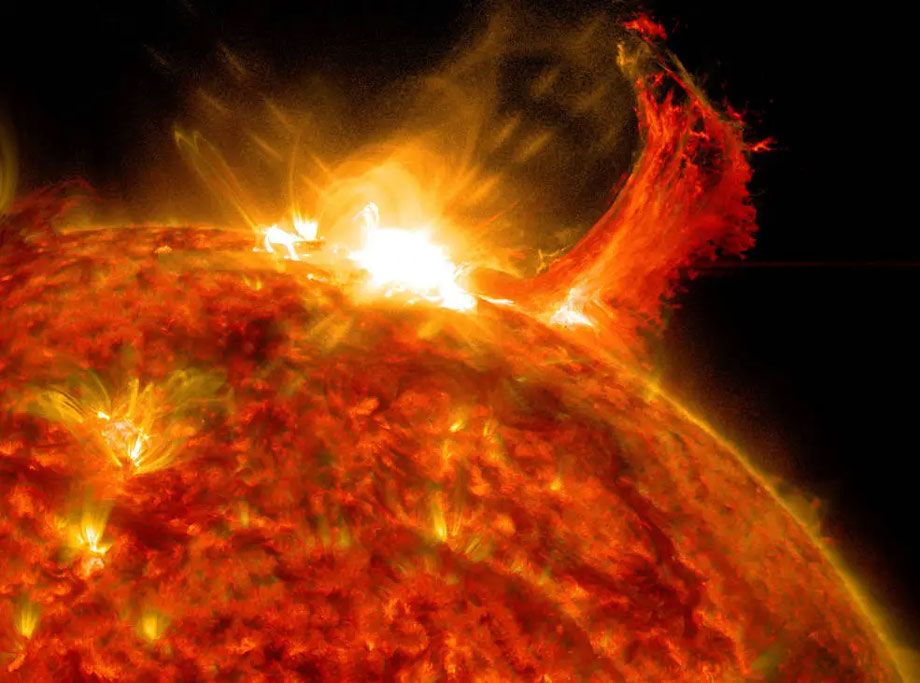
Another significant contribution to the success of modern space missions also comes from the direct use of AI in flight management and ensuring flight safety. Algorithms analyze historical and operational data about space weather, spacecraft telemetry, and other environmental aspects to predict potential threats, such as solar flares, geomagnetic storms, or micrometeoroid impacts. Thanks to early warnings, flight control centers can take immediate action to protect astronauts, spacecraft, and critical infrastructure, directly influencing the reliability and safety of missions.
Source: NASA
During flight, AI indirectly contributes to crew safety by monitoring the temperature and composition of the air mixture through a sensor system. This helps avoid overheating of the crew and equipment or the negative effects of excessive carbon dioxide on the human body during long-duration missions. By analyzing vast amounts of data throughout the mission, AI detects signs of stress, calculates potential health risks for astronauts, and suggests ways to mitigate them.
It is also expected that NASA will soon release a major update for its core flight system, cFS. The software, which the agency has relied on for the past 20 years, will now incorporate next-generation flight computing, multi-core data processing, artificial intelligence, and machine learning. Additionally, autonomous decision-making capabilities and hardware-based cybersecurity features are planned.
Astronaut training: XR technologies and digital twins
In Cologne, Germany, at the European Astronaut Centre (EAC), there is a lab researching the application of AI to support decision-making, optimize operations, and solve problems in deep space. Another area of focus here is astronaut training using XR technologies: augmented and virtual reality. These technologies help astronauts train in conditions that are as close to real life as possible. “Digital twins”—virtual models of spacecraft and mission conditions—are also used. They help teams improve mission planning, risk management, and spacecraft system maintenance.

Source: ESA
Optimizing operations in space
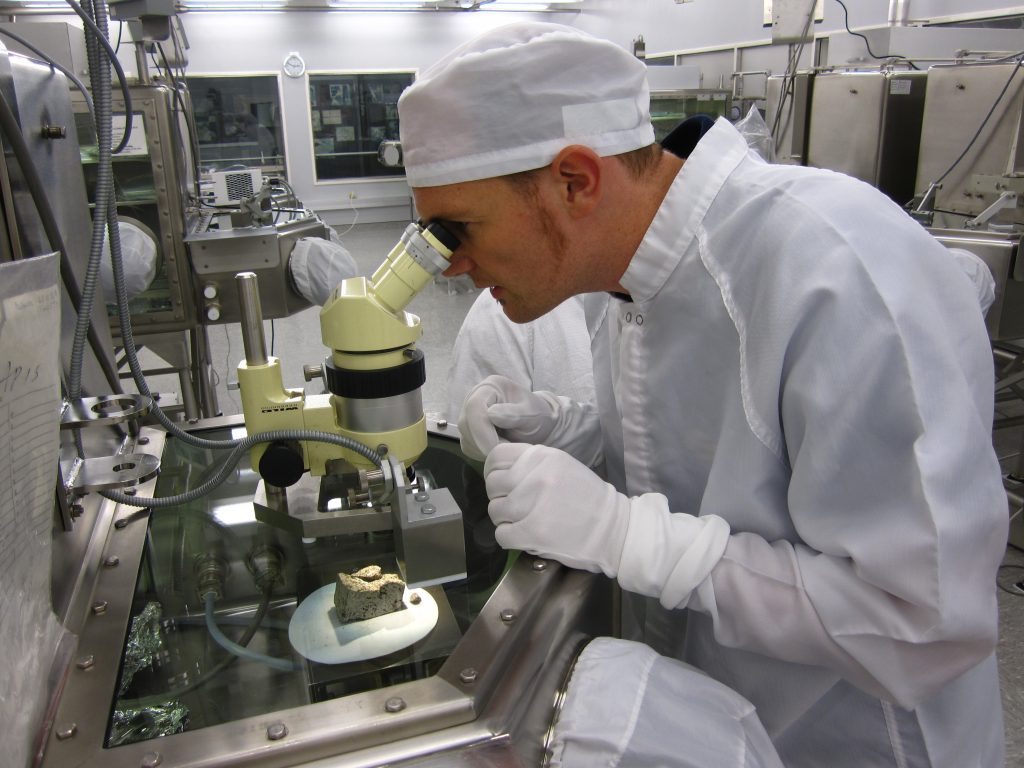
The ultimate goal of any space mission is to collect data and bring it back for further analysis. However, there is often too much data, making it difficult to prioritize it on the spacecraft or to deliver it to Earth in its entirety. Today, AI successfully addresses this problem: it assesses the scientific value of samples on-site, reducing the weight of the cargo sent to Earth.
One of the projects under the Spaceship EAC initiative is working on an intelligent geological classifier. An algorithm has been developed that autonomously classifies lunar samples using an unsupervised machine learning method, where the model operates fully autonomously and identifies patterns based on the images of rock samples it receives.
Source: ESA
Another AI project by Spaceship EAC assists in expert evaluation of photographs taken by astronauts in space. When a photo needs to be taken on the ISS, astronauts move to the Cupola and adjust the camera settings. However, since the station is constantly in motion, capturing the perfect shot isn’t easy. AI solves this problem: the algorithm analyzes weather conditions, lighting, and other external factors, then suggests specific camera settings before the astronauts take the photo.
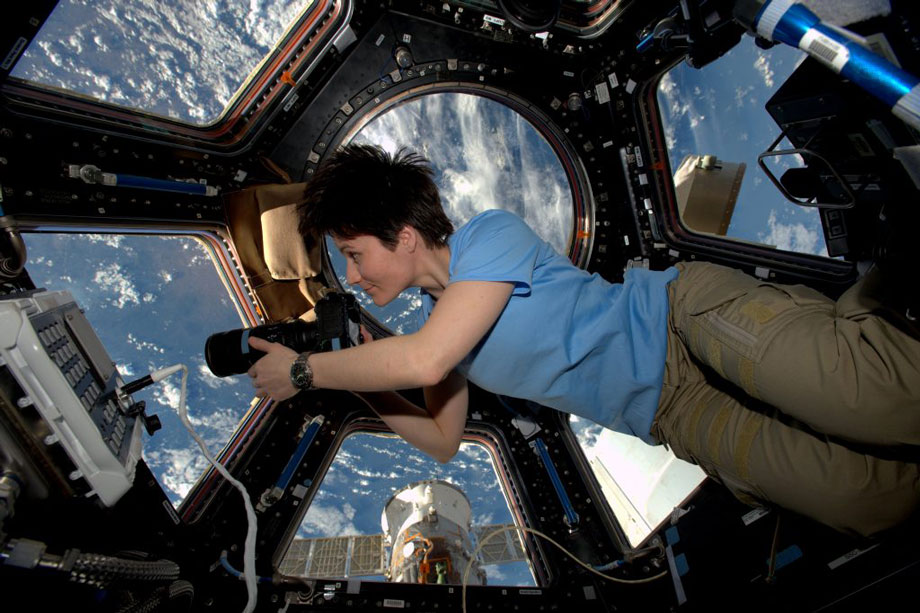
Source: ESA
Mission planning
Onboard systems locally controlled by intelligent technologies use real-time data to choose optimal flight paths, efficiently avoid space debris, and select energy-saving operating modes. SpaceX’s Dragon spacecraft uses AI to assist with docking to the ISS, reducing delays, the need for manual control, and the risk of human error. And NASA’s ASPEN system automates the planning of space missions.

Source: NASA
In addition, NASA uses AI in the design of equipment for future missions. This makes it possible to reduce the weight of spacecraft while increasing the load they can withstand, and development takes less time than it would if done by humans. One such spacecraft is based on a structure made of interlinked “bones.” The connection points are selected by AI to ensure the structure is both strong and lightweight.
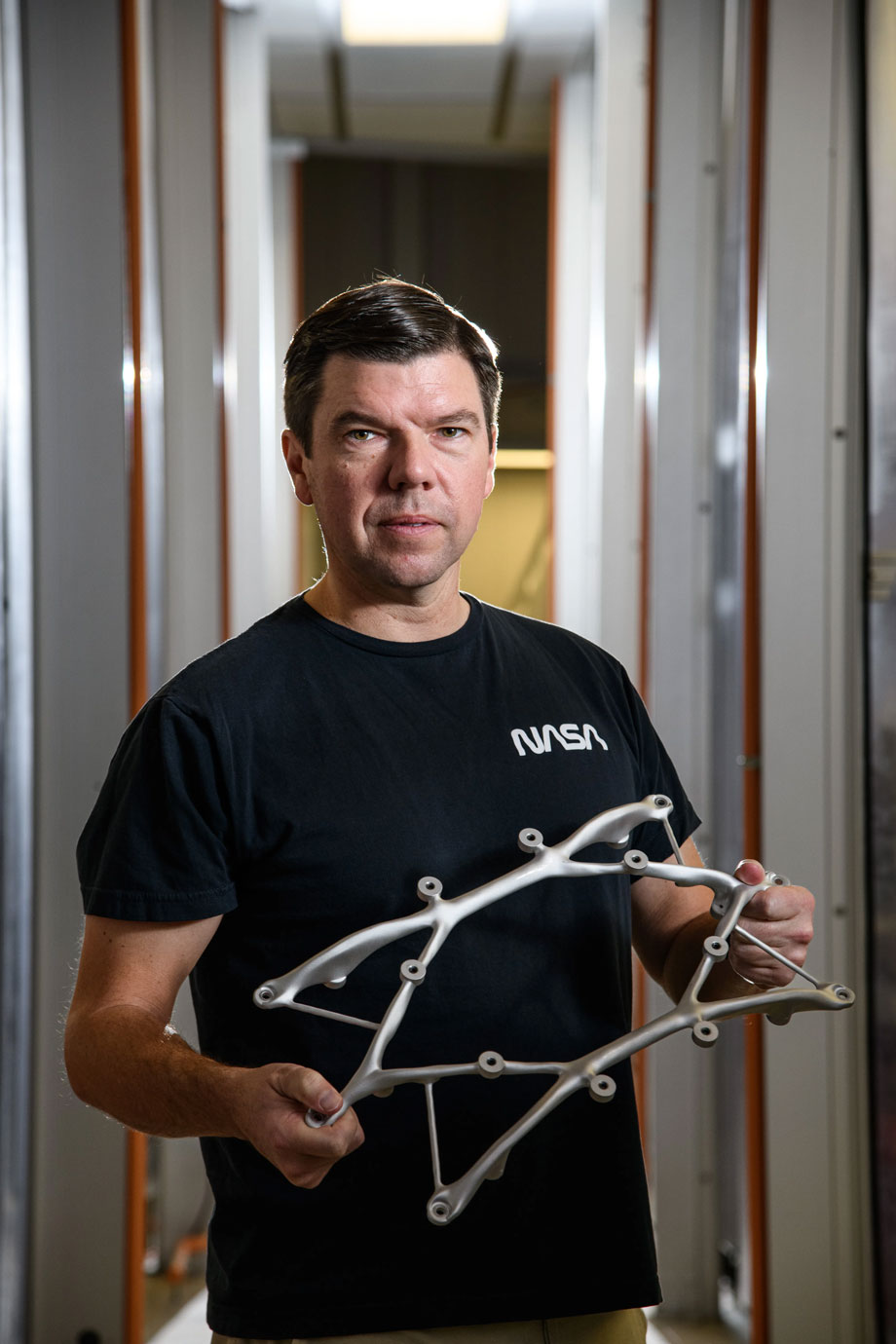
Source: NASA
The idea of using AI for designing and 3D printing spacecraft components looks very promising. In the future, this will make it possible to produce large parts directly in orbit, including parts that wouldn’t fit inside a standard launch vehicle. This approach, known as ISAM (In-space Servicing, Assembly, and Manufacturing), is supported by the NASA Office of Space Technology’s Innovative Funding Center and is considered a priority in the development of U.S. space infrastructure.
AI-powered astronaut assistants
Although astronauts go into space thoroughly prepared, there is always room to optimize operations or enhance safety on-site. AI-powered assistants quickly detect potentially dangerous situations, such as rising CO2 levels or failed sensors monitoring critical life-support parameters.
The first AI-based robotic assistant was Cimon (Crew Interactive MObile companioN), which was sent to the ISS in June 2018. Cimon, developed on behalf of the German Space Agency, supports voice commands and assists astronauts in research. It can be asked to perform specific tasks, take photos, or even play an astronaut’s favorite music. Scientists have also studied how robotic companions like Cimon help humans cope with stress under limited social interaction conditions.
You can see it for yourself in this demo video:
Cimon is equipped with two AI systems: an onboard one for spatial orientation developed by Airbus and a cloud-based one for speech analysis developed by IBM. The assistant uses a Wi-Fi connection to transmit data via satellite to Earth and stay connected to IBM’s cloud. Thanks to IBM Watson, an AI-powered supercomputer, Cimon understands the meaning and context of astronaut requests, demonstrates emotional intelligence (such as recognizing crew emotions), and responds appropriately to unusual situations.
In 2019, three more similar robots were launched to the ISS. Designed and built at NASA’s Ames Research Center in California’s Silicon Valley, they are known as the Astrobee team. These robots operated autonomously or followed commands sent from Earth. On board the space station, they performed inventory and environmental monitoring.
After two years of working separately on the ISS, Astrobee and Cimon finally met and had their first joint photo session.
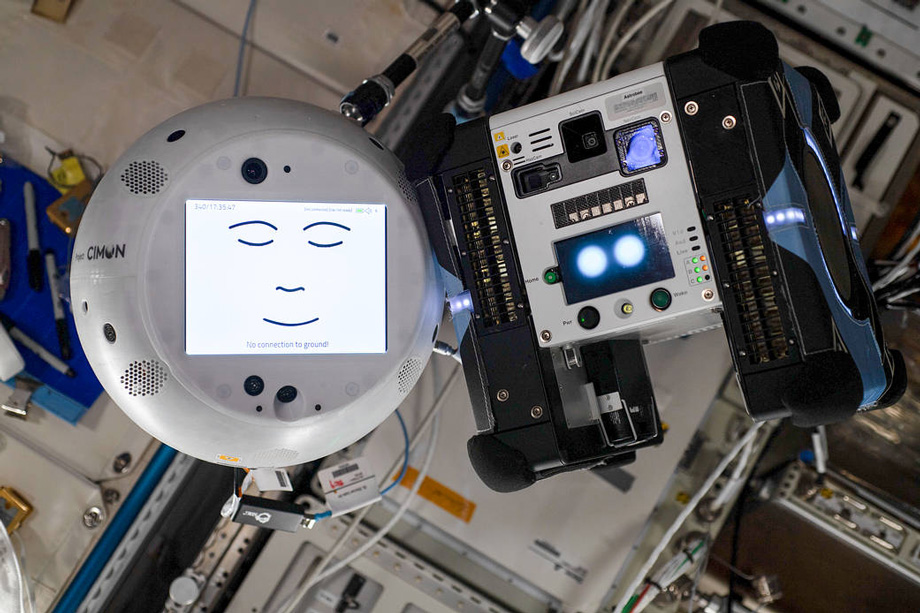
Source: NASA
A smart robot is also currently working aboard the Chinese Tiangong space station. Crew members of the Shenzhou-19 mission are already performing several operations with the help of Xiao Hang, which translates to “little cosmos.” Chinese scientists are studying the spatial interaction of the robot with humans in space and are also looking for ways to improve the efficiency of space operations. Xiao Hang moves autonomously in microgravity, takes photos of the crew on command, and performs other simple tasks.
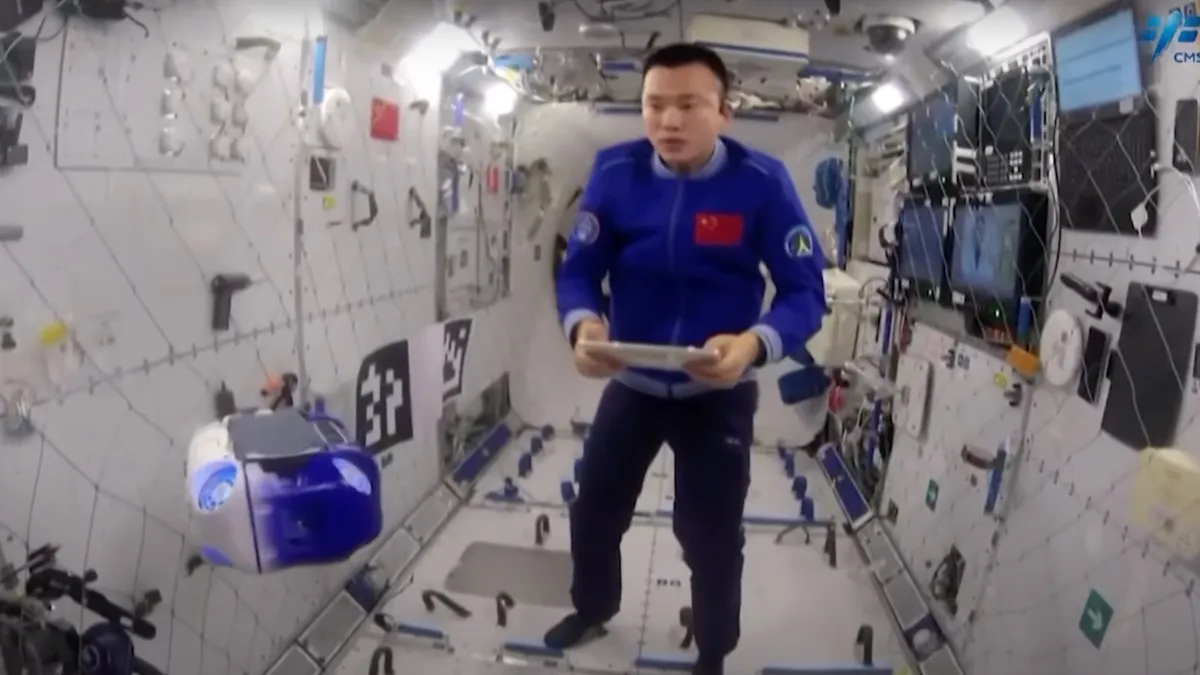
Source: CCTV
Problems and challenges
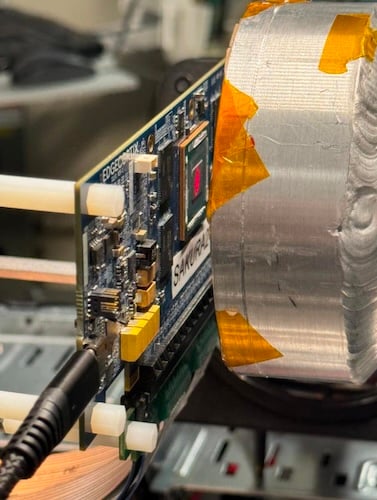
Artificial intelligence is still in the development stage, and not all AI-based solutions work perfectly. Others are effective but require significant computational resources. This creates a need to find a balance between the impressive capabilities of predictive analytics and the weight of the computational equipment that can be placed aboard a spacecraft. Another issue is that extreme conditions—radiation, microgravity, and temperature—make electronics more vulnerable and less reliable. This is a major problem, given their crucial role in space operations.
Source: edgecortix.com
As on Earth, space also presents issues related to ethics, transparency, and data privacy that AI systems can handle. Since this field is still relatively new, however, there are no universal rules and policies shared by all countries and space agencies that ensure the transparent and secure operation of AI and robotic systems in space. Cultural and individual limitations remain a barrier to the integration of AI on manned missions. While some experts are open to AI, others feel uncomfortable in environments with intelligent robots or systems that replace humans in making critical decisions.
The future of AI in space missions
Kirk Hovell, co-founder and Chief Technology Officer of Obruta, a Canadian startup focused on autonomous space flights, believes: “Making spacecraft fly autonomously is a transformative technology and the foundation on which the orbital economy will be built. And the path to this lies through autonomy and AI.”
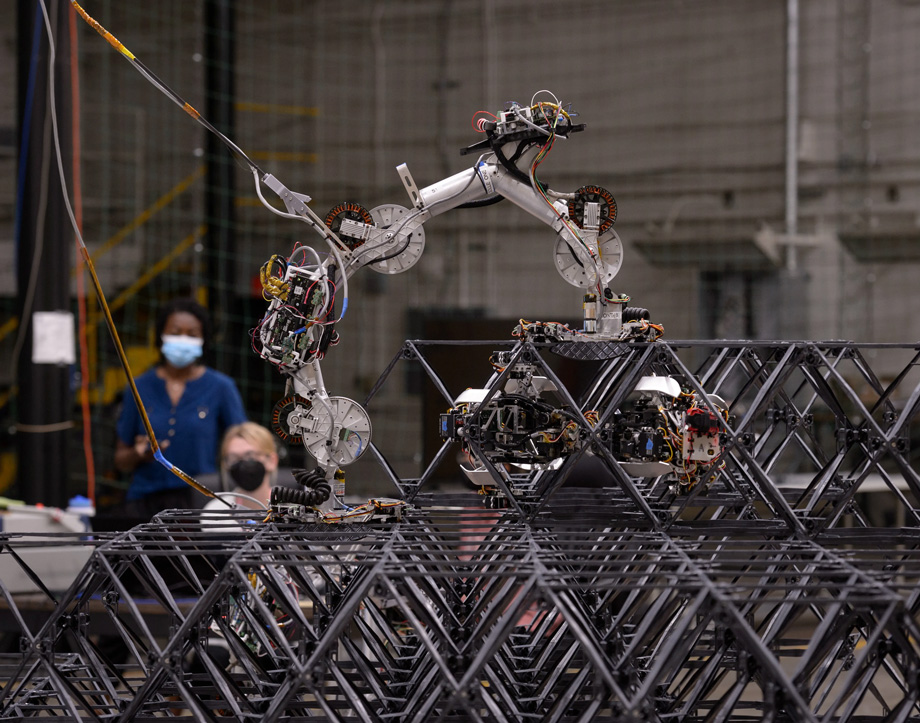
Shreya Santra, Associate Professor of Aerospace Engineering at the University of Tokyo, predicts: “In the future, AI could indeed bring a shift in the organization of research missions. Modular smart robots, working independently or alongside astronauts, will begin to establish habitats, move cargo, or build rocket launch pads. This is faster, more efficient, and safer for the crew, plus it will reduce the high costs of implementing planetary missions.”
Source: NASA
David Salvagnini, NASA’s chief AI specialist, spoke about plans for AI in future planetary missions. During long-duration flights, astronauts may face health problems, yet they lack the necessary medical knowledge to diagnose or treat them. And in the event of a communication breakdown, they would not be able to quickly contact a physician on Earth. Specialized AI systems on the spacecraft, however, would be able to accurately and swiftly diagnose various medical conditions and suggest relevant treatments.
AI will also play a significant role in the Artemis missions. The Orion spacecraft, which will transport astronauts to the Moon, will use the SIAT (System Invariant Analysis Technology) system developed by NEC. This advanced analytical system will be used at many different stages of operation: from spacecraft design to anomaly detection and big data analysis during its operation. To help astronauts navigate the lunar surface, AI-based planetary navigation will also be essential.
NASA’s recently adopted strategy for sustainable space exploration includes the use of AI to address safety-related tasks. In particular, it aims to improve orbital debris detection and provide high levels of autonomy in decision-making regarding system recovery after failures. AI will also enhance communication reliability and ensure optimal use of data transmission channels to Earth.
China is also betting on AI in deep space exploration. In February 2025, it was announced that AI technology will drive Chinese missions that are intended to reach the boundaries of the Solar System. The country has already set a goal to reach 100 astronomical units, each corresponding to the distance from Earth to the Sun, by 2049. In this case, AI will provide autonomy, reduce dependence on Earth-based data processing, and help make real-time decisions.
Although AI’s capabilities in organizing space flights are impressive, the technology still cannot fully replace humans. Humans must remain present “behind the scenes,” as the cost of mistakes in space is too high to fully trust machines. However, it is the collaboration between humans and AI that opens new possibilities for more efficient and safer space missions.