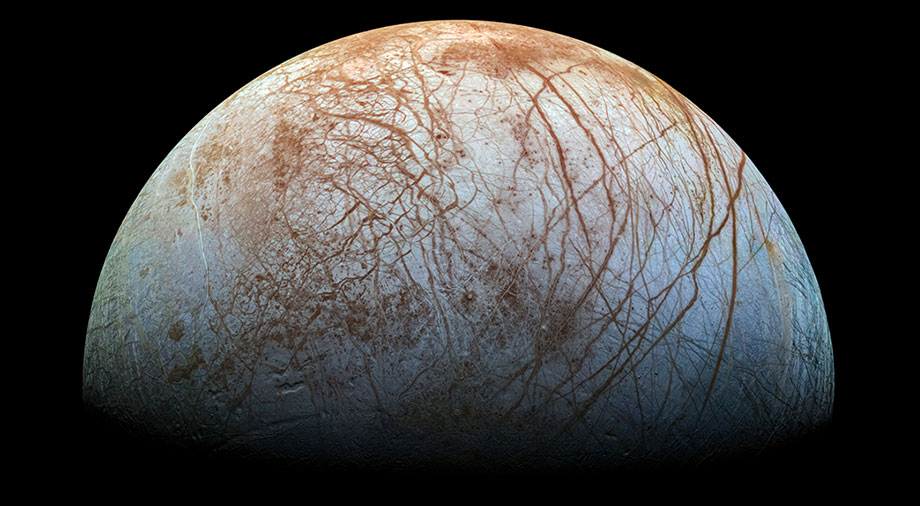
On October 14, 2024, NASA launched the Europa Clipper mission to the Jupiter system. The main task of the spacecraft will be to undertake a detailed study of Jupiter’s icy moon, Europa. However, this analysis will differ significantly from previous studies of the Jovian moon, because its primary objective is actually to determine whether Europa has conditions suitable for life. Let’s take a closer look at how exactly Europa Clipper will investigate one of the most promising moons in the Solar System for colonization.
Approaching Europe: a look at the past
NASA’s interest in Europa began to grow as early as the 1970s. In 1972 and 1973, two space probes, Pioneer 10 and Pioneer 11, were launched into the distant corners of the Solar System, becoming the first spacecraft to provide scientists with images of Europa once they reached Jupiter.
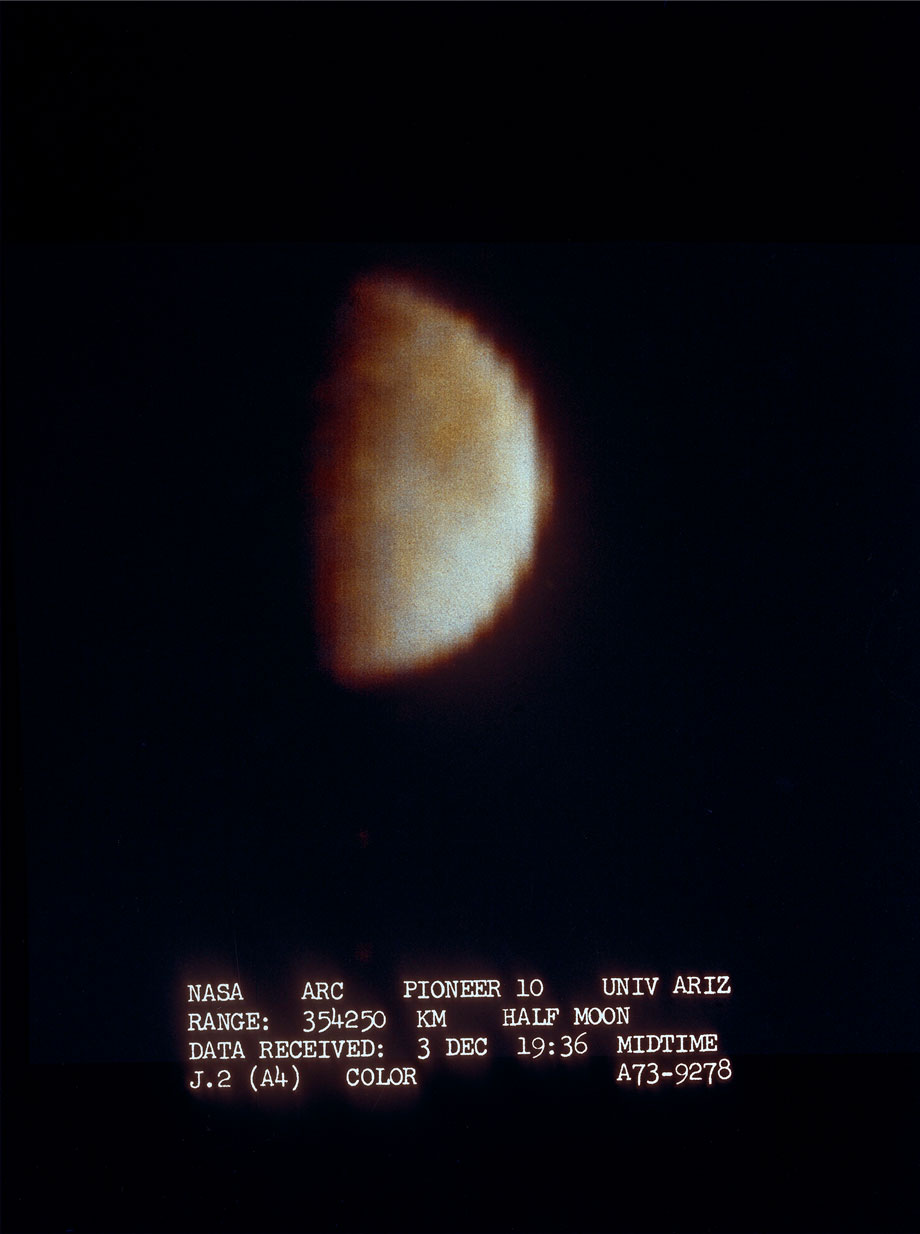
For its part, Pioneer 10 was the first spacecraft ever to cross the Main Asteroid Belt, flying past Europa on December 3, 1973, at a distance of 321,000 km (slightly closer than the Moon is to Earth). Exactly one year later, on December 3, 1974, Pioneer 11 also flew past the Jovian moon, although at a distance almost twice as far: nearly 600,000 km. In both cases, the distance from the satellite to Europa significantly affected the quality of the images obtained. For instance, the Pioneer 10 photos show only bright and dark regions of the moon, but they are not detailed enough to recognize the surface’s topographic features.
Source: science.nasa.gov
The image taken by Pioneer 11 was also of low quality, but it complemented the data obtained by Pioneer 10 and helped refine Europa’s mass and orbital parameters. During their missions, the two spacecraft also studied the radiation environment around Jupiter’s planetary system. They were the first to discover that the radiation belts are far more intense than previously expected: in fact, they are thousands of times stronger than Earth’s. The power of this radiation even caused a partial failure of some instruments aboard Pioneer 10 (which is why Pioneer 11 flew past the moon at twice the distance). But this experience nevertheless provided extremely valuable information for developing reliable radiation shielding in subsequent probes.
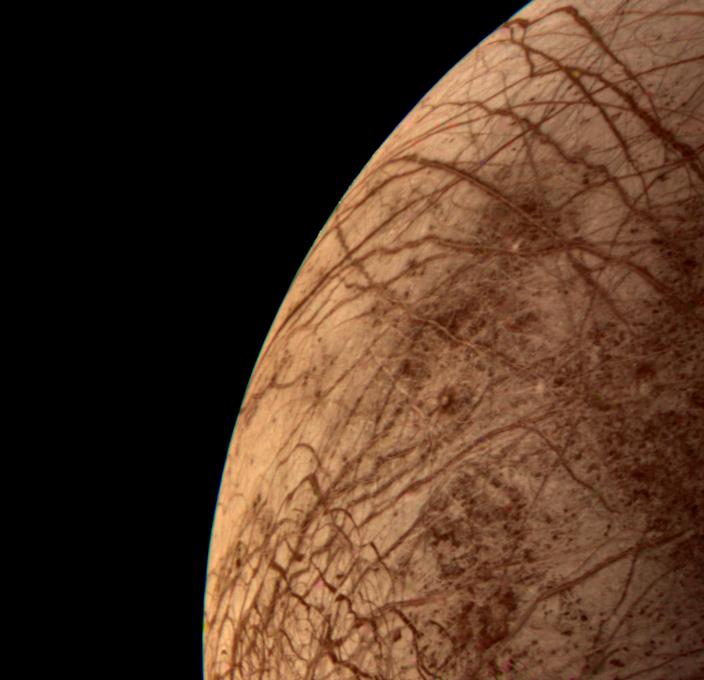
Later, in 1979, the two Voyager spacecraft, Voyager 1 and Voyager 2, also performed very close flybys of Europa. They were the first to capture its smooth, almost craterless icy surface, covered with mysterious lines and fractures. The absence of craters indicated that Europa’s surface is relatively young (later studies estimated the age of this celestial body at 40–90 million years).
Source: jpl.nasa.gov
The mysterious lines on the moon’s surface stretch for millions of kilometers and look strikingly similar to cracks in sea ice on Earth. Scientists suggested that these lines were caused by Jupiter’s tidal forces, which stretched and compressed Europa’s crust, allowing material from the interior (possibly water or soft ice) to rise and freeze. Color images from Voyager showed that the dark bands crossing the bright ice have a reddish tint. This could indicate the presence of some non-icy materials, possibly salts or sulfur compounds, that also emerged from the moon’s interior.
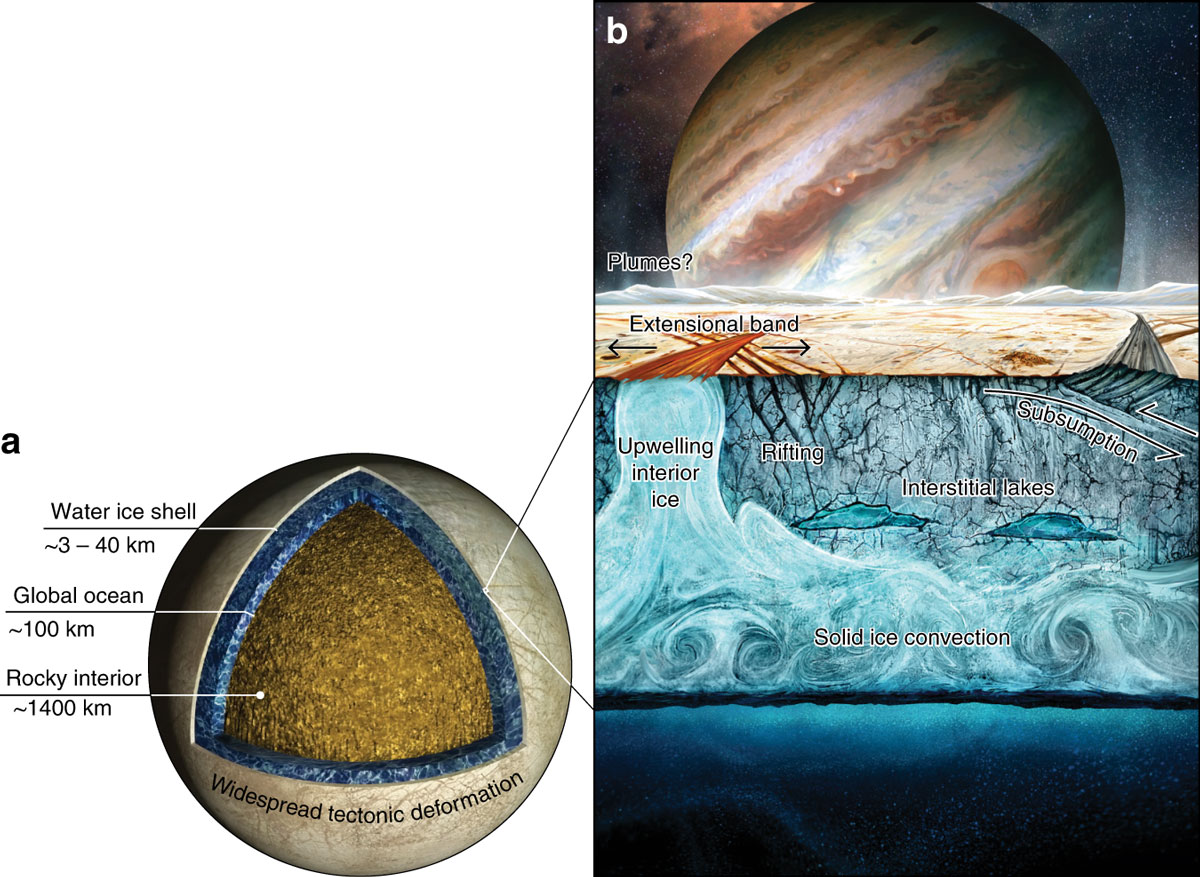
The final confirmation provided by the Voyager spacecraft was evidence of internal heat, which could likewise be generated by Jupiter’s tidal forces, as if “kneading” the moon’s interior like dough. The discovery of fractures and a smooth surface naturally led to a revolutionary hypothesis: beneath Europa’s outer ice shell, there might be a global liquid ocean and, therefore, the potential for organic life.
Source: nature.com
The next spacecraft to approach Europa was Galileo. This probe remained in orbit around Jupiter from 1995 to 2003, performing 11 targeted flybys past its icy moon, the closest of which occurred in 2000. At that time, the probe passed Europa at a distance of just 351 km, still the closest any spacecraft has ever come to the moon. But the real value of the mission, of course, lay not in its record numbers, but in its scientific discoveries. Magnetometer data obtained by Galileo indicated that an induced magnetic field, a secondary field generated when Jupiter’s magnetic field penetrates the moon, exists around Europa.
It became clear that the existence of such a field required a layer of electrically conductive material that was in constant motion. The most likely candidate was believed to be a global salty liquid ocean beneath the moon’s icy crust. Galileo’s findings became the strongest evidence yet that a salty ocean does indeed exist beneath Europa’s frozen surface, laying the scientific foundation for the Europa Clipper mission. By the early 2000s, NASA was already hypothesizing that Europa might possess all three ingredients needed for the emergence and maintenance of life: liquid water, chemical elements, and thermal energy.
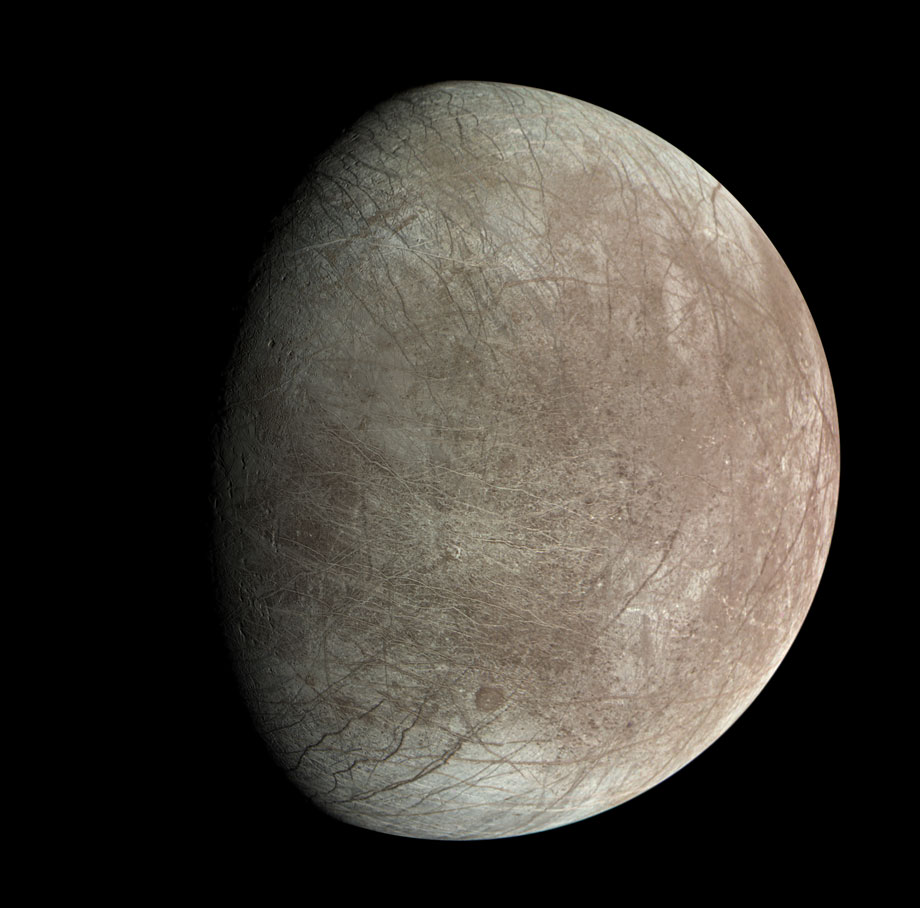
The final spacecraft that still occasionally researches Europa is NASA’s Juno. It was launched in 2011 and arrived in orbit around Jupiter in 2016. Although its primary research subject was Jupiter, in its extended mission, the probe also focused on its moons. To date, the spacecraft has made only one close flyby of Europa, on September 29, 2022. As a result, many high-resolution images of the moon were obtained, along with additional data on Europa’s magnetic field and its atmosphere.
Source: nasa.gov
It was in a Juno image that scientists noticed a unique patch of chaotic terrain measuring 37 × 67 km, later nicknamed “the Platypus” and identified as one of the youngest regions on the moon. Further image processing revealed signs of salty water rising from the subsurface ocean to the icy crust, supporting the idea that chaotic regions like the Platypus contain pockets of liquid water. In nearby terrain, the image also shows double ridges with dark spots that may be deposits from cryovolcanic plumes (geysers of water vapor) that also originate from the subsurface ocean.
In other words, even before Europa Clipper began its journey, NASA researchers had already accumulated a wealth of data about Jupiter’s moon. Only the final step remained: to develop a spacecraft equipped with scientific instruments that could definitively determine whether the icy moon is suitable for the emergence of life.
Precision and protection: Europa Clipper’s key instruments and engineering design
As noted previously, the concept of a dedicated space mission to Europa emerged after the discoveries made during the Galileo mission. The scientific community began insisting on the need to develop a probe to investigate this moon’s habitability in greater detail. However, NASA did not officially approve the Europa Clipper project concept until 2015.
The initiative and its initial funding owe their thanks to a decision by the U.S. Congress. During the years of development, Congress repeatedly allocated funds to the mission, often even more than NASA had requested in its budget proposals. The driving force behind this support was then–Chairman of the House Appropriations Committee, Congressman John Culberson, a passionate advocate of the search for life on Europa. In total, the expected cost of the mission soon exceeded $5 billion.
Responsibility for the development, construction, and integration of the spacecraft itself was assigned to NASA’s Jet Propulsion Laboratory (JPL) in Pasadena, California. Most of the probe’s scientific instruments were developed there as well, though specialists from the Applied Physics Laboratory (APL) at Johns Hopkins University, the Southwest Research Institute (SwRI), and the Goddard Space Flight Center (GSFC) also took part in the project.

Source: jpl.nasa.gov
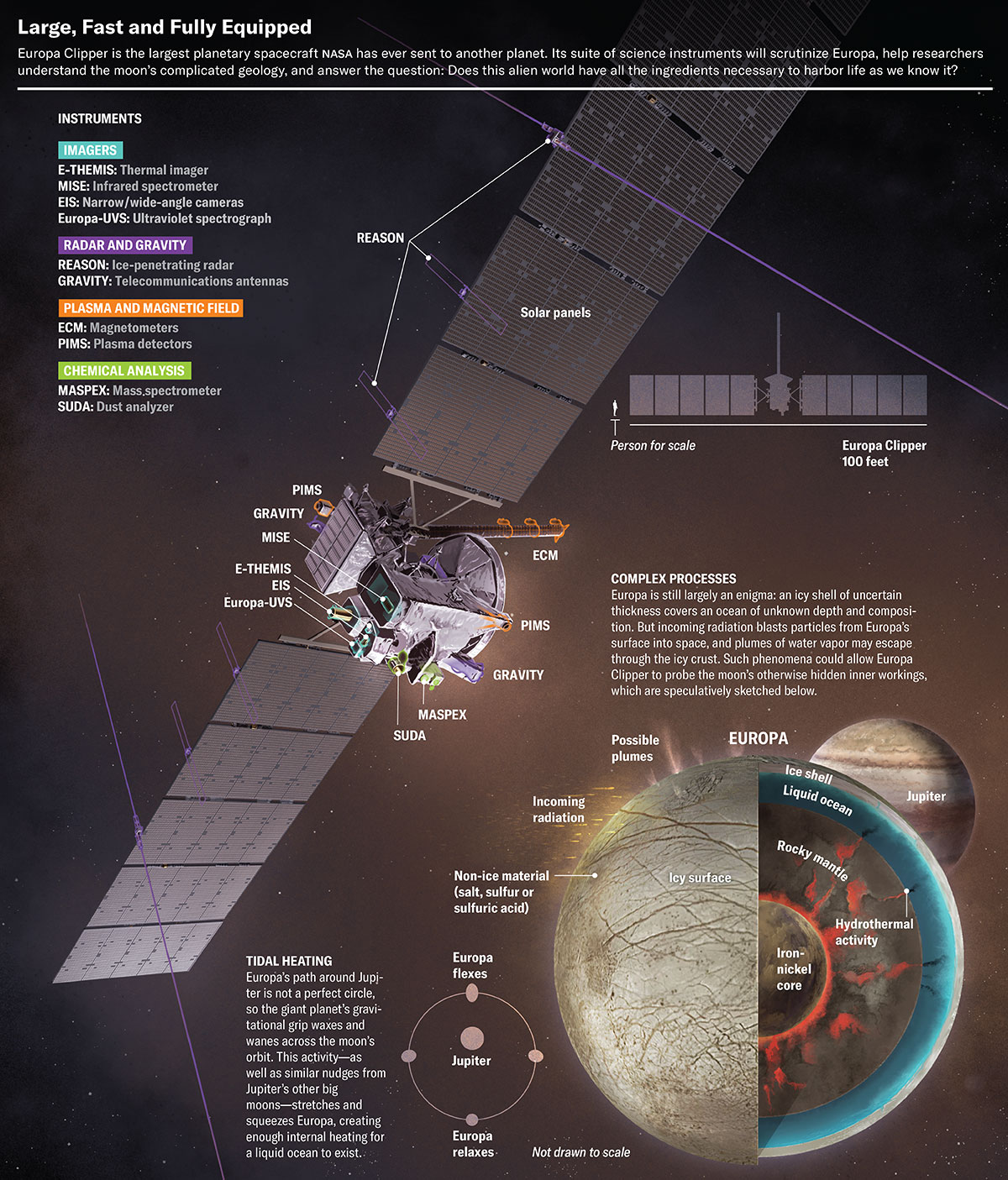
Since Europa must be studied with unprecedented precision, the Europa Clipper was designed to carry no fewer than nine scientific instruments:
- Europa Imaging System (EIS) — a camera system consisting of a narrow-angle camera (NAC) and a wide-angle camera (WAC) for acquiring high-resolution images, detailed mapping of the moon’s surface, and searching for possible active cryovolcanic plumes.
- Mapping Imaging Spectrometer for Europa (MISE) — an infrared spectrometer for mapping the chemical composition of Europa’s surface. It is meant to help identify organic molecules, salts, acidic hydrates, and traces of water.
- Radar for Europa Assessment and Sounding: Ocean to Near-surface (REASON) — an ice-penetrating radar. This instrument will be used to measure the thickness of the ice shell and search for pockets of water (subsurface lakes) within it. REASON’s main objective is to definitively confirm the existence and depth of the subsurface ocean.
- Europa Thermal Emission Imaging System (E-THEMIS) — a thermal imager that measures surface temperature on the moon. It will focus on detecting thermal anomalies that may indicate places where warm water or material is rising to the surface (the prime candidates for such geyser-like activity being plumes).
- Europa Clipper Magnetometer (ECM) — an instrument for measuring Europa’s magnetic field. It is needed to precisely determine the depth, thickness, and salinity of the subsurface ocean.
- Plasma Instrument for Magnetic Sounding (PIMS) — an instrument focused on detecting and studying the plasma around Europa. PIMS works in tandem with the magnetometer to better understand the induced magnetic field caused by the motion of the salty ocean.
- Jovian Auroral Distributions Experiment (JADE) — a device for measuring low-energy ions and electrons. JADE’s primary purpose is to study Europa’s interaction with Jupiter’s magnetosphere. According to the designers, this device will help scientists understand the processes eroding the moon’s surface.
- Energetic-Heavy Ion Sensor (E-HIIS) — a sensor for measuring high-energy heavy ions, essential for accurately characterizing Jupiter’s hazardous radiation environment. E-HIIS will be critical for designing and protecting future spacecraft — including landers — that travel to Europa.
- Mass Spectrometer for Planetary Exploration (MASPEX) — a mass spectrometer for analyzing the gas composition of Europa’s thin atmosphere as well as material ejected from plumes. This instrument will be aimed at detecting signs of organic molecules and the chemical “building blocks” of life.
Source: scientificamerican.com
As Pioneer 10 and Pioneer 11 discovered, radiation in Jupiter’s planetary system was extremely intense, threatening to disable any spacecraft operating directly in its orbit rather quickly. To solve this “radioactive” problem, NASA’s engineers and scientists made a mission-defining decision known as the “Clipper Strategy.” It proposed the following approach: instead of entering a hazardous permanent orbit around Europa, the spacecraft would orbit on a high-elliptical trajectory around Jupiter.
Europa Clipper will thus spend most of its time far from the center of Jupiter’s radiation belts. Each flyby of Europa will be brief, allowing the number of transits to increase dramatically. Preliminary calculations indicate that over the course of its mission, the probe is expected to fly past the moon about 50 times. This approach kills two birds with one stone: on one hand, it enables the collection of all necessary data, and on the other, it significantly minimizes the accumulation of radiation doses that would be deadly to the probe’s electronics.

Source: scientificamerican.com
Of course, the orbital trajectory is not the only factor in the spacecraft’s radiation protection: its sensitive electronics, computers, and power systems have all been placed inside a special vault. This vault consists of a cube with thick titanium walls for maximum shielding against high-energy particles. This will provide Europa Clipper’s electronics with additional protection and allow it to withstand a total radiation dose far beyond what an ordinary satellite could survive.
The spacecraft itself will be powered by solar panels. At first, engineers considered using radioisotope thermoelectric generators similar to those installed on Cassini, but later abandoned the idea due to high cost and radioactivity. As a result, the probe was equipped with solar panels instead. However, given Jupiter’s enormous distance from the Sun (the gas giant is roughly 25 times farther from the Sun than Earth), Europa Clipper required the largest solar arrays ever sent into deep space. The result is a pair of gigantic wings, each about 30.5 meters long when fully deployed. In addition, because of the extreme distance from the Sun, engineers had to develop a complex thermal control system to protect the spacecraft’s sensitive instruments and sensors during operation. A radiator system was also integrated to dissipate excess heat into space.
As we can see, the design of Europa Clipper evolved as a direct response to the harsh radiation environment of Jupiter and the need to accommodate the maximum possible amount of scientific equipment. And although its development was quite long and complex, it ultimately led to the creation of this uniquely capable spacecraft.
Arguments for and against: will Europa Clipper be able to prove Europa is suitable for life?
The Europa Clipper mission is NASA’s biggest bet thus far on confirming extraterrestrial life in the Solar System. But there are still about five years left before the spacecraft reaches its operational orbit (the main phase of research is scheduled to begin in 2030). Meanwhile, let’s examine the main arguments for and against the habitability of Europa.
The strongest arguments in favor of Clipper’s potential success are based on the three pillars of life that scientists believe may exist on Europa.
- Presence of liquid water — arguably the most significant argument, as it has already been indirectly confirmed by Galileo’s data. Magnetometer readings indicated the presence of a global salty ocean beneath Europa’s icy shell, and water is the most essential component for the emergence and maintenance of organic life as we know it. The REASON radar on Europa Clipper will be able to measure ice thickness and potentially locate water pockets that could exist as subsurface lakes — the most habitable environments.
- Presence of energy (energy gradient) — Jupiter’s intense radiation, while dangerous for the spacecraft, can also serve as a source of energy for life. The JADE and MASPEX instruments will study chemical compounds created by radiation on the moon’s surface, such as oxygen, and how they might enter the ocean. These compounds create the necessary chemical disequilibrium (gradient) capable of sustaining microorganisms similar to those found in Earth’s deep-sea hydrothermal vents.
- Detection of organic substances and geological activity — if life exists on Europa, it will likely leave organic or salt traces that may erupt onto the surface via geysers or plumes. The MASPEX and MISE instruments are specifically designed to directly analyze these traces. They will study the surface composition directly near the geysers. The greatest success would come if Europa Clipper manages to fly through an active plume during eruption, as the probe could then collect water samples from the ocean without the need for future landings. Water is the most likely medium to contain biological markers, such as amino acids or other complex organic molecules, if life indeed exists on Europa.
However, arguments against life on the moon have also been confirmed by previous research.
- Radiation-induced surface destruction — Jupiter’s radiation belts are extremely intense, which could render Europa’s surface completely sterile. In this case, any organic molecule ejected from the ocean to the surface would not survive long, as radiation would rapidly break chemical bonds. Even if Clipper finds organic molecules on the surface (e.g., using the MISE instrument), scientists cannot be 100% sure that they originated from the ocean rather than being delivered by meteorites.
- Ice thickness may make the ocean inaccessible — although we now know a liquid ocean exists, it is separated from the surface by a thick ice shell. In a sense, this natural barrier may be too effective. If the ice is too thick (10–30 km) and there are not enough active geysers, the probe simply may not be able to obtain samples of ocean water.
- Lack of hydrothermal vents — on Earth, life in deep oceans is fueled by energy from hydrothermal vents (interaction of water with hot rocky seabeds), but we still don’t know if similar processes occur on Europa. If the ocean is too cold and there is no active volcanic activity at the bottom, it may lack the geothermal energy and necessary minerals to support complex life. Europa Clipper will only be able to assess this indirectly by observing the chemical composition.
As we can see, the probability that each of these scenarios is realistic is substantial. Only the direct experiments set to begin in 2030 can either confirm or refute them. It is also important to remember that Europa Clipper will not carry microscopes, so it almost certainly cannot directly confirm life on the moon. The main goal of the spacecraft is to provide scientists with decisive evidence regarding Europa’s potential habitability.