Artificial intelligence is revolutionizing space right before our eyes, with billions of dollars being invested in industries related to space engineering and technology. Against the backdrop of the rapid growth of NewSpace, national space agencies are striving to maintain their key role in space exploration and research, developing relevant programs and initiatives. From NASA and ESA to space agencies in India and China, here’s an overview of the exciting AI projects being implemented right now.
USA
NASA uses various AI-powered tools to support missions and research projects, analyze data to identify trends and patterns, and develop autonomous space systems and vehicles. AI helps plan and execute deep space missions (as discussed in part two of our series), process large satellite data sets, diagnose equipment, and train astronauts.
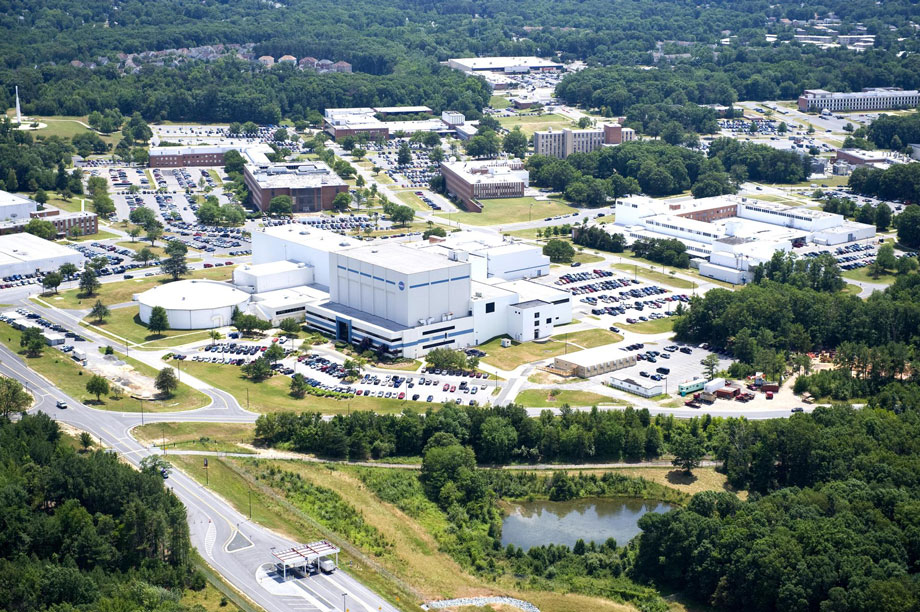
Much of this research is conducted at the Goddard Space Flight Center (GSFC), where new technologies are being developed to push the boundaries of scientific and technological capabilities in space exploration. The AI department is directly supervised by David Salvagnini, the chief artificial intelligence scientist at NASA.
Source: NASA
NASA is currently developing two dozen AI projects, including:
- AEGIS — an autonomous scientific target selection system for planetary rovers based on computer vision.
- ASPEN Mission Planner — a planning system for managing resources and time constraints during space missions.
- CLASP — a long-term observation planning system.
- Enhanced AutoNav — an autonomous navigation system for the Perseverance rover, based on stereo vision, 3D terrain reconstruction, and traversability assessment.
- Global Seasonal Mars Frost Maps — maps of Martian frost compiled using data from five remote sensors with data analysis and neural network techniques.
- Perseverance — a suite of autonomous functions for the rover, including planning, navigation, diagnostics, terrain classification, and image processing.
- MLNav — a navigation system for route planning using machine learning heuristics and safety checks with traditional models.
- Onboard Planner for Mars 2020 — an onboard scheduler for the rover, considering priorities and thermal conditions.
- Terrain Relative Navigation — intelligent rover navigation based on machine vision for trajectory planning and landing.
- SensorWeb — sensors for monitoring natural phenomena (volcanic eruptions, floods, and wildfires).
- SPOC — tools for soil and object classification from rover images using ultra-precise neural networks.
- Volcano SensorWeb — an AI monitoring system for the 50 most active volcanoes on Earth using satellites and sensors.
NASA has also developed software for analytics and automating the classification process of internal documents in the New Technology and Software Reporting system and a speech conversion system, ATCSCC Speech2Text and Analysis, for transcribing webinars from the Air Traffic Control Center. On-site at the Goddard Space Flight Center, AWARE, an AI-based people-counting system, assesses congestion in waiting areas.
NASA actively collaborates with companies implementing AI and related projects. Among them is Skyline Nav AI, which developed an alternative navigation system for space, based on advanced computer vision models, AI, and edge computing. The new system provides precise real-time geolocation without GPS, Wi-Fi, or cellular networks, making it indispensable for remote locations where these signals are unavailable, such as the Moon.

Source: NASA
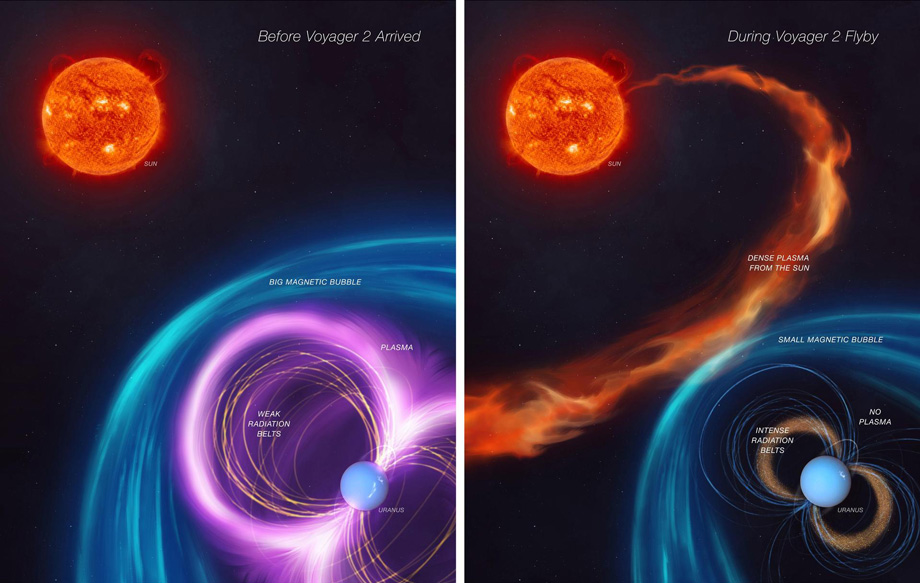
NASA strives to make the most of data that has been collected previously, while it also continues to accumulate new data using active satellites and rovers. For example, with the help of AI, which processes hundreds of thousands of images in seconds, the agency’s scientists are discovering new craters on Mars. The number of such cases is growing, thanks to the work of the Science Mission Directorate (SMD), where several projects are focused on training AI models on large data sets. The goal is to make more accurate predictions about space weather and other phenomena, as well as to consolidate and analyze data from different sources and missions.
Source: NASA
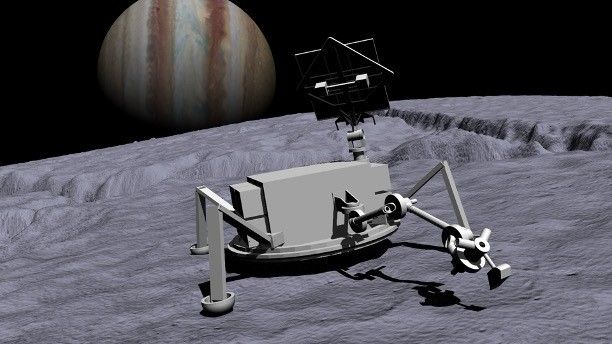
NASA also plans to use AI to search for signs of life and potentially habitable planets within our Solar System and beyond, primarily on Europa and Enceladus (moons of Jupiter and Saturn, respectively). The first missions to these moons will be robotic and will require high autonomy due to signal delays from Earth, potential communication losses, challenging conditions, and limited battery resources. To prepare for these missions, the Jet Propulsion Laboratory (JPL) at NASA has created testbeds, including the Ocean Worlds Lander Autonomy Testbed (OWLAT) and the Ocean Worlds Autonomy Testbed for Exploration, Research, and Simulation (OceanWATERS). On the first testbed, AI develops and tests algorithms that enable a spacecraft to make autonomous decisions under limited communication with Earth, and machine learning helps adapt movement to unexplored types of surfaces. The second testbed is a virtual platform that simulates spacecraft landings. Here, AI is responsible for simulating and refining autonomous behavior scenarios, ranging from mission planning to fault diagnosis and resource management.
Source: NASA
European Union
Established in early 2024 and located at the European Astronaut Centre (Cologne, Germany), the European Space Agency (ESA) Artificial Intelligence Laboratory for crewed and robotic space missions serves as a central hub for the development of AI. Here, astronauts are trained using XR technologies, the possibilities for autonomous navigation and optimization of spacecraft are explored, and fail-safe equipment is designed to withstand harsh conditions. ESA is also developing large language models (LLMs) to simplify working with complex technical documentation and reduce response time to incidents involving astronauts aboard the International Space Station (ISS).
In September 2020, ESA launched Europe’s first Earth observation mission using AI. As part of this mission, the CubeSat satellite was equipped with the Φsat-1 system, which automatically filtered out cloud images and transmitted only useful data to Earth. The second satellite, with Φsat-2 on board, was launched into orbit in August 2024. In this mission, ESA is testing two new AI applications: one detects anomalies in water bodies, such as oil spills or harmful algal blooms, and the other identifies fires and determines the extent of the affected areas.

Source: ESA
In April 2021, as part of the ESA Discovery program, the agency invited the scientific and business communities to propose innovative ideas for the open OPS-SAT platform. This marked the beginning of a major experiment in which ESA began funding projects aimed at using AI to carry out space operations, Earth observation, and other tasks more efficiently.
In 2022, ESA Discovery funded 12 AI projects focused on increasing the efficiency and autonomy of satellites, followed by several more that used deep learning algorithms to improve the quality of space imagery, detect and track changes on Earth, and enhance spacecraft controllability. Later, 26 additional projects used satellite data to search for space debris fragments. AI proved useful here for identifying the type of plastic debris it consisted of.
Source: ESA
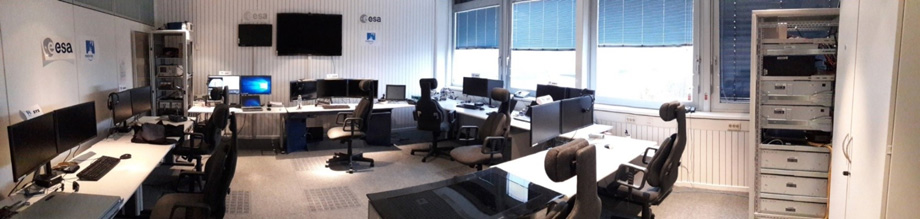
The European Space Operations Centre (ESOC) is actively exploring the benefits of AI in current and future space missions. The AInabler platform was developed to create and deploy AI models in space operations. Its tools include OCAI for data analysis, 4caster for telemetry prediction, and an LLM-based assistant for identifying the causes of anomalies.
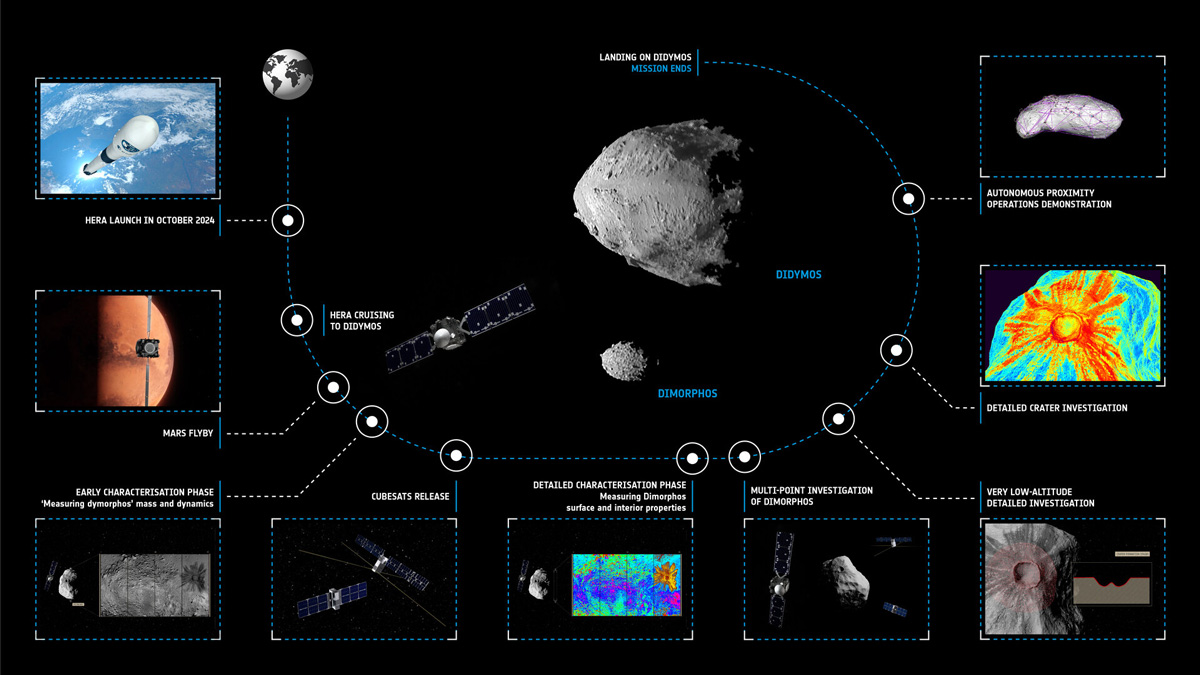
In October 2024, ESA launched the Hera autonomous interplanetary station, which will study the asteroid Dimorphos, a satellite in the Didymos system, through the end of 2026. Hera navigates itself directly to the asteroid using the same principles that underpin self-driving cars. By collecting data from multiple sensors, the system builds a model of its environment and makes decisions independently.
Source: ESA
Canada
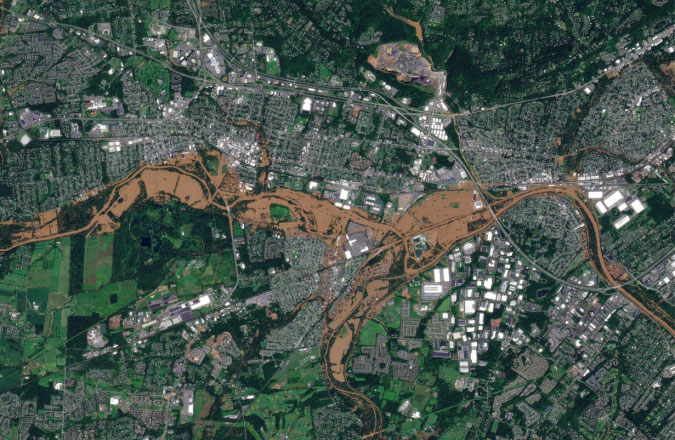
The Canadian Space Agency (CSA), together with the Canadian government, is funding the SkyWatch project, which explores the use of AI and big data analytics to optimize operations and the use of space- and ground-based observation resources. Data collected through Earth observation and processed using AI helps in predicting and preventing a wide range of disasters, both natural and man-made.
Source: SkyWatch
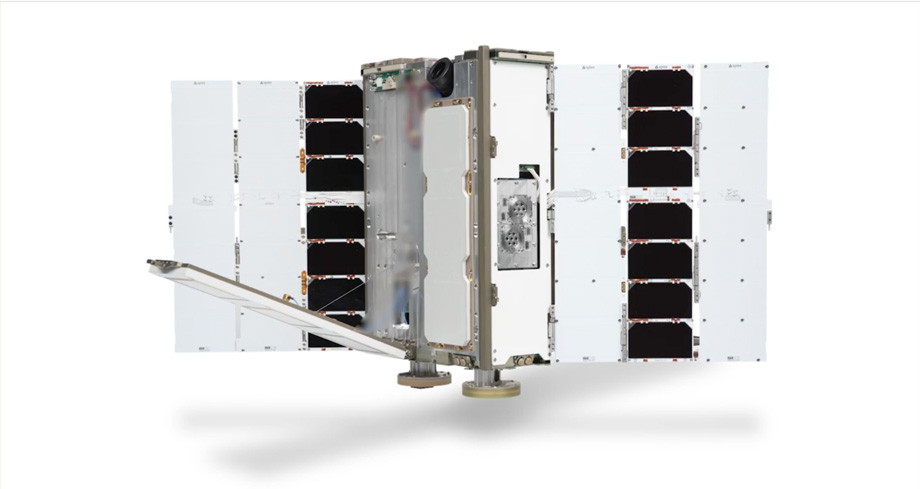
In 2025, the Canadian Space Agency plans to fund at least 75% of the Persistence mission, which will significantly advance Canada’s efforts in implementing AI initiatives in space. The mission aims to expand the capabilities of onboard AI in space and demonstrate that this technology can revolutionize the speed of data processing and decision-making. The initiative is being carried out in collaboration with Spire Global and Mission Control. Spire Global is expected to develop the LEMUR 6 satellite with an optical payload, while data analysis will be handled by the onboard SpacefarerA AI platform. This will allow data to be processed in real-time while in orbit, reducing transmission delays and improving decision-making efficiency.
Source: spaceinsider.tech
China
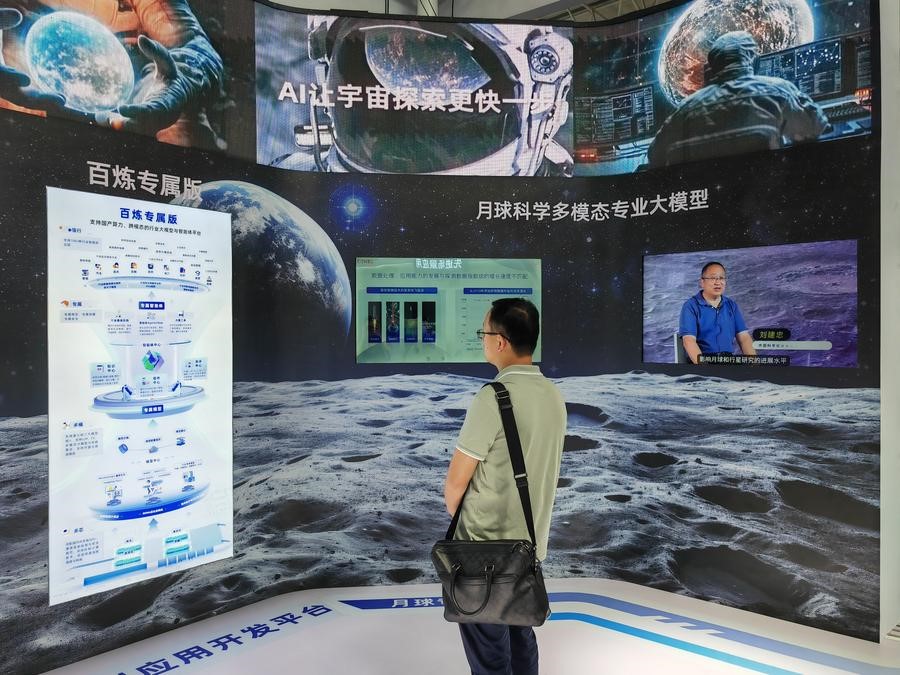
China is striving to take the lead in the global tech race, and the success of startups like DeepSeek confirms certain progress in this direction. In the space sector, China has not yet reached a “satellite moment,” but it is seeking to benefit from innovations in the private sector. One example is the development of a large language model (LLM) for lunar research, which was introduced by Chinese scientists in 2024. This AI model identifies lunar craters and memorizes them based on size, depth, and shape, allowing scientists to better study the Moon’s geological evolution.
Source: Xinhua
Another distinctive feature of China’s space program is that its ambitions are fueled by dual-use technologies that can be used for both civilian and military purposes. The country is integrating advances in AI and quantum computing, adding intelligent capabilities to its BeiDou navigation satellite system, and striving for maximum autonomy in space. In the long term, AI will be essential in supporting China’s planned missions to the outer edges of the Solar System. It will also be needed for complex calculations, processing large volumes of data, and making real-time decisions. The China National Space Administration (CNSA) also plans to carry out missions to the head and tail of the heliosphere by 2049.
India
The Indian Space Research Organisation (ISRO) also processes large volumes of satellite data using AI. During its successful lunar landing, intelligent sensors played a key role in ensuring a smooth and precise touchdown. On January 1, 2025, India launched its first space-based AI laboratory, MOI-TD, developed by the company TakeMe2Space. The laboratory’s payload includes tools for innovative methods of acquiring, storing, and filtering data, primarily high-resolution imagery.

Source: realtynmore.com
Looking to the future
The development of autonomous AI systems is gradually transforming the role of humans in space exploration. “The only argument in favor of sending people [to space] is adventure, an experience for the wealthy, and it should be funded by private sources,” says Lord Martin Rees, the UK’s Royal Astronomer. He agrees with Andrew Coates, a physicist from University College London: “For serious space exploration, I prefer robots. They go much further and do much more.” On the other hand, astronauts do what robots cannot: inspire people on Earth.
Whether robots will replace astronauts or not, in the coming years, artificial intelligence will become a key component in nearly all areas of space activity for the world’s leading space agencies. They are focusing on developing autonomous systems capable of independently managing spacecraft, processing data in real-time, and adapting to the unpredictable conditions of deep space.
In the near future, new AI initiatives and projects are expected, including fully autonomous spacecraft capable of conducting research and making decisions in emergencies. AI is also becoming the standard in processing and analyzing the growing data streams from space telescopes and satellites, facilitating new scientific discoveries. Finally, these and related technologies could play a key role in preparing for the exploration of deep space, supporting robotic missions, and aiding in the search for extraterrestrial life.