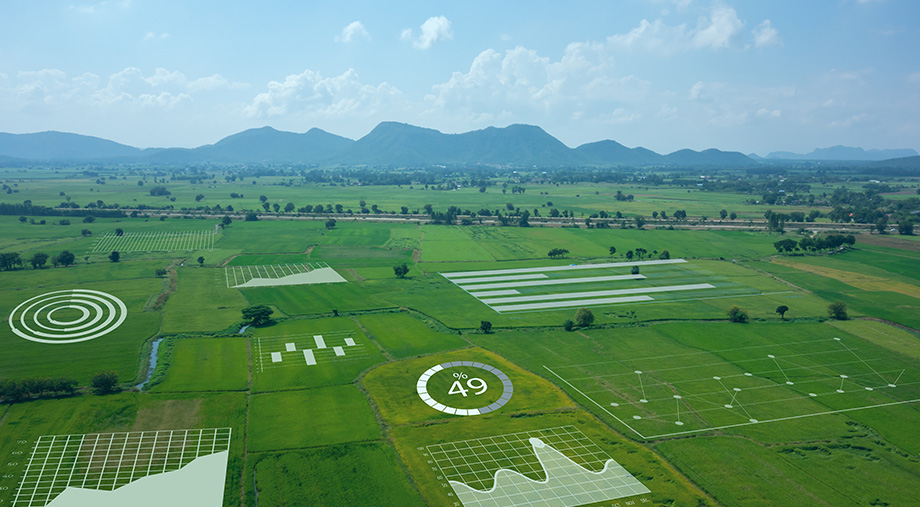
Climate-Smart Agriculture (CSA) is a new initiative focusing on environmentally friendly agriculture using a step-by-step strategy developed by the United Nations Food and Agriculture Organization (FAO) in 2022. The strategic plan for implementing CSA in agriculture worldwide encompasses nine years from 2022 to 2031 and introduces a range of new practices and technologies aimed at developing green farming methods that are resilient in the face of challenges associated with global climate change.
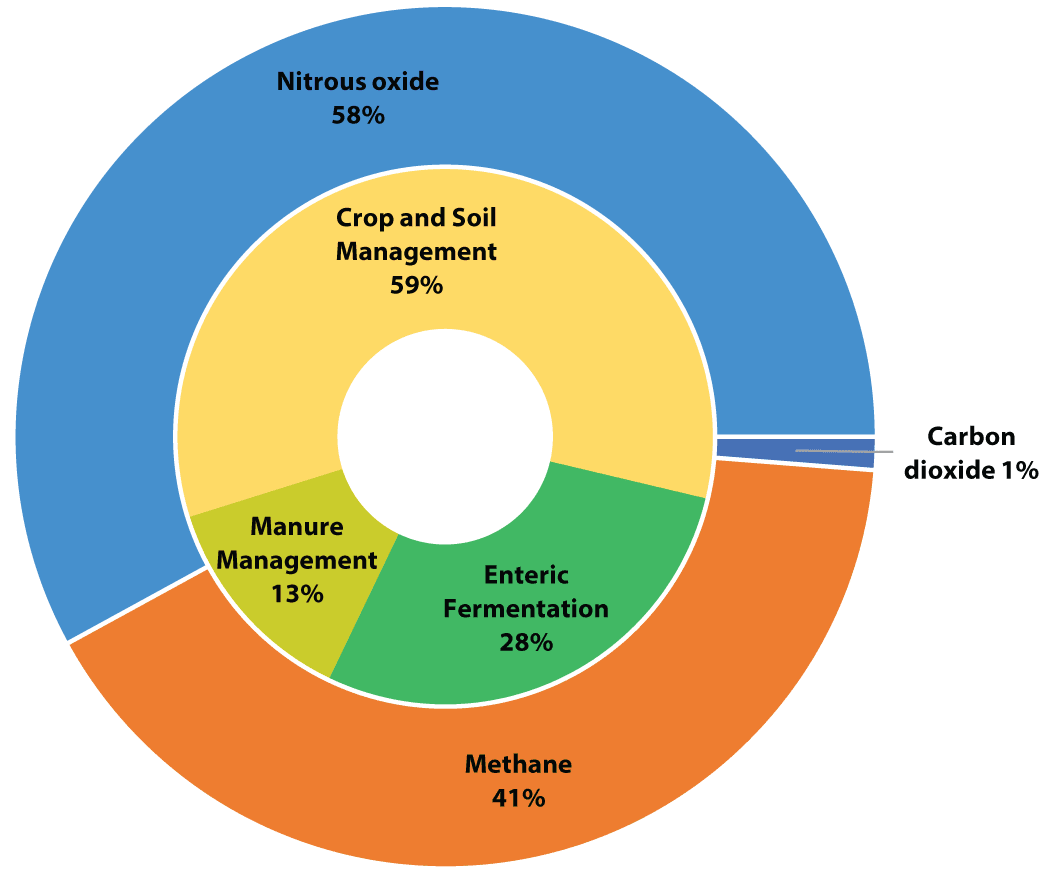
Climate-smart agriculture is focused on enhancing the ability of farms to produce larger volumes of food while reducing greenhouse gas emissions, primarily methane (CH4) and nitrous oxide (N2O). Ultimately, the aim is to ensure global food security for growing populations: the implementation of CSA methods could sustainably feed approximately 9.7 billion people, the projected global population by 2050. To achieve these goals, climate-smart agriculture incorporates various innovative technologies and methods into farming practices, with space technologies playing a significant role.
Key provisions of the FAO climate-smart agriculture program
The Strategic Framework 2022–2031 outlines a series of measures aimed at modernizing the agri-food sector worldwide by gradually integrating the following provisions into global agricultural practices:
- Transition to more efficient and sustainable agri-food systems. The main goal is to implement new food security methods by transforming existing agri-food systems and adopting conceptually new approaches to increase agricultural production while preserving soil fertility. A crucial aspect is maintaining biodiversity in crops and the rational use of existing ecosystems, especially in regions most affected by the consequences of global warming.
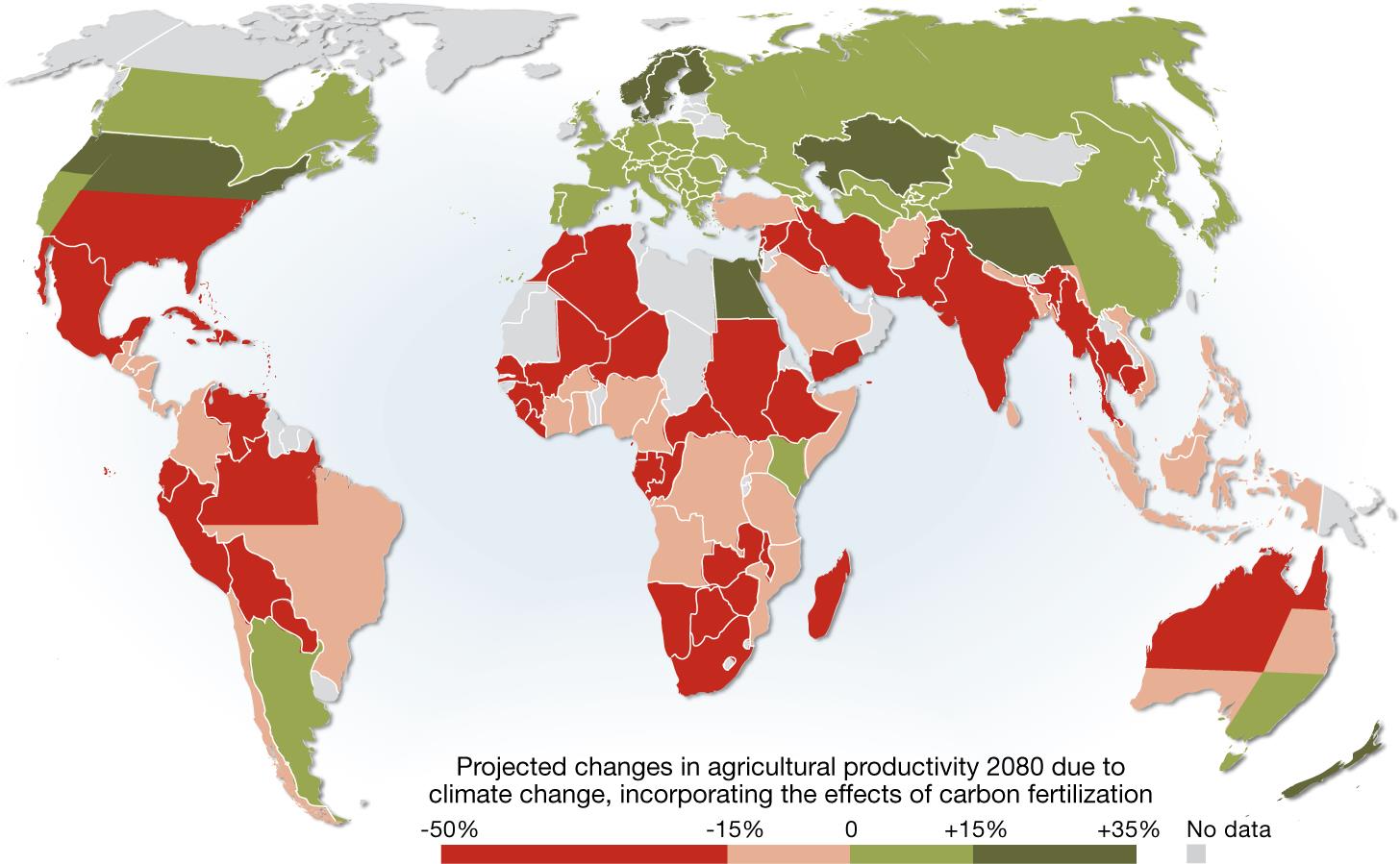
- Climate-smart agriculture is the cornerstone of the FAO’s strategy. Implementing CSA requires a comprehensive approach that includes increasing productivity and incomes for large farms, adapting to the challenges of global warming, and a coordinated, systematic effort to combat its root causes: greenhouse gas emissions. These emissions are a key factor driving climate change, rendering previously fertile lands unsuitable for agriculture due to droughts, wildfires, floods, and the degradation of soil caused by the unregulated use of synthetic fertilizers.
Source: extension.missouri.edu
- Providing financial support from the FAO and several non-governmental organizations (NGOs) for the implementation of CSA methods. The FAO offers financial and expert support to farms and countries interested in adopting CSA practices. These practices include agroforestry, which is a set of measures to improve agricultural crop growing conditions by creating and managing forested areas near farmland. Other initiatives focus on soil conservation, protecting water resources, and introducing new climate-resilient crop varieties. Additionally, precision farming methods are being implemented, utilizing digital and space technologies to enhance farm productivity and predict yields. Currently, agricultural expansion is one of the leading causes of uncontrolled deforestation. This creates a situation where food production leads to inefficient use of natural and water resources: in some arid countries, up to 70% of all freshwater is used for farming.
- International support. The FAO will not only facilitate new investments but also foster political dialogue among countries interested in restructuring their agricultural sectors to meet CSA standards. The goal of this dialogue is to persuade governments of the urgent need to implement CSA as quickly as possible.
- Adoption of new technologies. The 2022–2031 strategy highlights the necessity of technological modernization, emphasizing the use of satellite monitoring data for agricultural land and the introduction of digital applications to optimize and control farming processes. Agricultural land conditions will be analyzed using geospatial maps and AI-based models, which will also be used to provide consultation services for agribusinesses.
The key message of an FAO report entitled Climate-Smart Agriculture Case Studies 2021: Projects from Around the World is that the successful implementation of CSA has three main outcomes: increased agricultural productivity; the adaptation of both large and small farms to climate change; and a significant reduction in greenhouse gas emissions from agricultural activities.
Source: UNEP/GRID-Arendal
Today, certain types of agriculture, such as rice cultivation and livestock farming, are among the main sources of methane emissions. Therefore, the environmental impact minimization proposed by CSA is expected to significantly improve the situation in this area.
General benefits of climate-smart agriculture
Increasing the productivity of farms through the implementation of CSA methods is expected to lead to sustainable economic growth in the long term. This is primarily achieved by optimizing resources through precision farming and agroforestry, as well as gaining access to the premium segment of eco-friendly agricultural markets.
The resource-efficient approach of CSA methods reduces farmers’ agribusiness expenses. Savings on fertilizers and herbicides are made possible through satellite data, which provides detailed insights into every aspect of agricultural land, from plant health to soil moisture levels. This allows farmers to apply fertilizers and herbicides only in areas where they are truly needed.
A certain level of stability in agricultural production is also achieved through the use of new, more resilient crop varieties, including monocultures. These modified crops demonstrate increased resistance to various pests and diseases and can be adapted to arid climates, and saline soils, or even produce higher yields. However, debates about the feasibility of using new resilient monocultures in climate-smart agriculture are still ongoing.
Eco-friendly crops grown using CSA approaches gain access to the premium organic product market. This enhances their competitiveness by introducing new quality standards for agricultural products cultivated in this way.
One of the key advantages of CSA is the increased resilience of agricultural enterprises that adopt climate-smart practices. This resilience is primarily achieved by mitigating the harmful impact of climate factors such as extreme heat or floods. As a result, for the first time in agricultural history, CSA provides a way to avoid one of the sector’s biggest risks: crop failure.
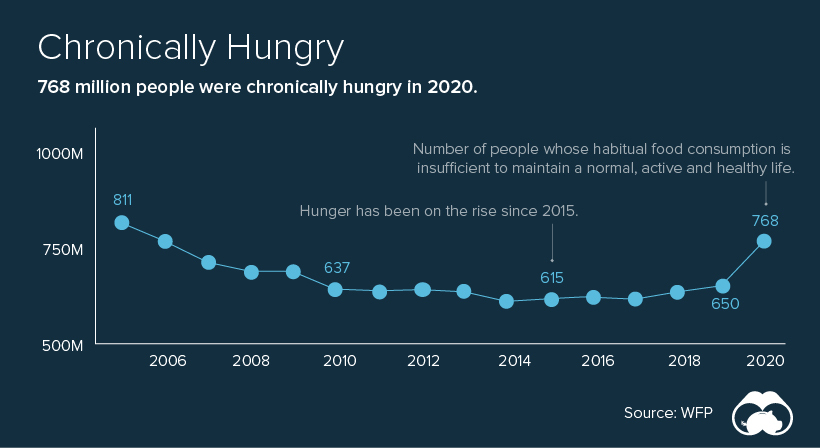
The active implementation of CSA methods can also help address the issue of hunger, as global malnutrition remains a pressing concern even in the 21st century. Sustainable resource use and the development of new resilient crop varieties could significantly benefit regions that suffer most from food insecurity. According to the FAO Hunger Map for 2021–2023, the most vulnerable regions include countries in Africa, South America, Oceania, and India. In mainland Europe, Slovakia, Albania, and Ukraine faced food shortages during this period.
Source: visualcapitalist.com/WFP
It is important to recognize that the threat of hunger exists primarily in economically underdeveloped and technologically lagging countries. These factors, however, are expected to hinder the rapid adoption of CSA technologies and practices. The challenges faced by such countries can be addressed by securing external funding, for example from the UN, NGOs, and nonprofit organizations dedicated to strengthening food security.
Another positive outcome of CSA implementation is its social impact. This new, climate-focused approach to agriculture is expected to contribute to job creation. This applies not only to farmers and their assistants but also to engineers, biologists, IT specialists, and analysts. These professionals will be involved in various technological and analytical processes that support sustainable farming.
CSA’s space component: satellite monitoring, automated data processing, and international and private initiatives
Space technology is a key component of CSA and is utilized at all stages of agricultural activity, from identifying potentially fertile land to monitoring plant health and determining the optimal time for harvesting. This is made possible through the creation of geospatial awareness maps and computer models based on satellite monitoring data. Yield maps, soil resource maps, and disaster risk maps provide a comprehensive approach to data analysis, giving farmers greater awareness and predictive capabilities, ultimately improving productivity.
The benefits of integrating space technology into CSA are particularly evident in large agribusinesses that manage tens or even hundreds of thousands of square kilometers of farmland. In such cases, ground-based monitoring of fields is impractical, making satellites and high-altitude UAVs the most effective solution.
Several initiatives have been launched to help underdeveloped countries integrate their agricultural sectors into CSA using geospatial satellite data. One such initiative is the global CropWatch program, developed by the Chinese Academy of Sciences in 2021. A joint effort with the UN Commission on Science and Technology for Development (CSTD), this program provides information on farmland conditions, plant health, and crop yield forecasts based on satellite monitoring and various ground indicators. CropWatch also alerts farmers to potential natural disasters such as droughts or floods.
It is important to note that CropWatch does not operate its own satellite fleet but instead analyzes remote sensing data from external monitoring satellites, including NOAA-AVHRR, MODIS (Terra and Aqua satellites), Landsat, Sentinel, and others. By leveraging this data, the CropWatch platform performs Big Data analytics and delivers reports, geospatial maps, and forecasts to initiative participants.

Source: NASA/JPL AIRS Project
CropWatch is part of the Group on Earth Observations Global Agricultural Monitoring Initiative’s (GEOGLAM) GEO/GEOSS (Global Earth Observation System of Systems), launched by the G20. In addition to providing direct services for CSA, it promotes active technology exchange, particularly with technologically underdeveloped countries. In 2023, the platform facilitated South-South technology transfer, enabling 11 Asian and African countries to gain the necessary skills to adapt the CropWatch system to their regional needs. Agricultural experts from Algeria, Cameroon, Ghana, Kenya, Lebanon, Malawi, Mauritius, Nigeria, Syria, Zambia, and Zimbabwe received in-depth training on the program’s functionality.
Beyond global initiatives, several private satellite companies are focusing on precision farming services. Satellite observation data and analytics are offered to clients as one-time paid services or long-term subscription-based solutions. The EOSDA Crop Monitoring platform is a prime example of such services. EOS Data Analytics provides clients with a comprehensive range of information on crop conditions. Data is collected both from the company’s own satellite, EOS SAT-1, which was launched in early January 2023, and from other publicly available monitoring satellites.
The EOSDA Crop Monitoring platform informs users about the Normalized Difference Moisture Index (NDMI), which aids in developing smart strategies for agricultural water resource management. Additionally, spectral plant scanning provides crucial data for an integrated pest management (IPM) strategy, fertilizer application planning, and even livestock management.
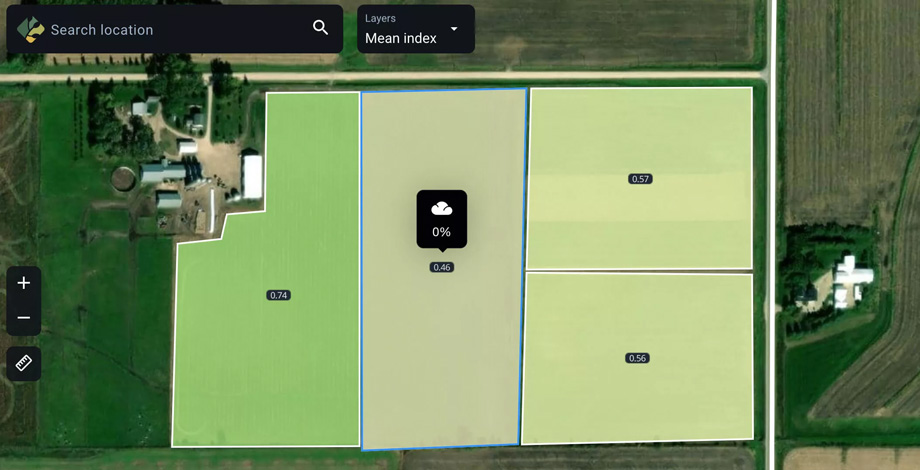
Source: eos.com
As we can see, both international institutions and private companies are making significant efforts to promote climate-smart agriculture. However, while international platforms like CropWatch primarily focus on large-scale government strategies aimed at transitioning entire national agricultural sectors to CSA, private companies like EOS Data Analytics are more geared toward providing precision farming services to small and medium-sized farms, although large agricultural holdings are also among their clients.
Challenges to implementing CSA
CSA is a relatively young initiative, however, and it faces various environmental, economic, and regulatory challenges. These factors all hinder the rapid implementation of CSA practices and technologies. The main barriers to CSA adoption in some countries and private farms include:
- Economic barriers. Since CSA is a high-tech field that involves space technologies and digital components with AI-driven models, many farmers face excessive costs in the early stages of establishing climate-smart farms. Additionally, market uncertainty acts as a destabilizing factor, as even farms that transition to CSA cannot yet be certain that they will receive premium prices for produce grown using these methods. The long-term economic benefits of CSA also remain a concern, as significant financial advantages become evident only over time. All these factors may discourage farmers from adopting sustainable agriculture. Economic challenges related to CSA implementation could be addressed through international initiatives supporting and promoting green farming. Financial assistance and investor support from specialized NGOs and nonprofit organizations can also help.
- Political and institutional barriers. Another key issue is the lack of a clear regulatory framework to define the rules for this new sector. Without such regulations, some countries may struggle with adopting certain CSA technologies and methods. Addressing this challenge requires strengthening government institutions that support CSA, introducing new regulatory norms and standards, and fostering stable communication among all stakeholders.
- Technological barriers. Some countries and farms lack access to CSA technologies, and a shortage of specialists and training programs further exacerbates the problem. Limited access to information about CSA practices can also slow down adoption. These challenges can be mitigated through open information policies that enhance farmers’ technological awareness, promote the exchange of technical knowledge between countries, and develop local CSA technology bases.
- Environmental barriers. While CSA is promoted as a green and environmentally friendly farming practice, some aspects remain understudied and may potentially harm local ecosystems. Concerns have been raised regarding the implementation of monocultures, particularly in terms of biodiversity risks, potential health effects, and the economic dependence of small farms on large agribusinesses that supply modified crops. Given the complexity of these discussions, FAO’s strategy advocates for a comprehensive approach to CSA that includes both traditional farming methods and new crop varieties, depending on regional and agricultural conditions. Some critics argue that precision farming technologies contribute to electronic waste and increased energy consumption, which may, in turn, lead to greenhouse gas emissions. To minimize these environmental risks, regular monitoring and impact assessments of CSA practices are necessary.
Despite the benefits that global CSA adoption promises, it clearly still faces a range of “growing pains” typical of new approaches that challenge or transform established practices. Addressing these issues at the national level will require political commitment, the introduction of new quality standards and regulations, and awareness campaigns to inform farmers about the potential advantages of CSA.