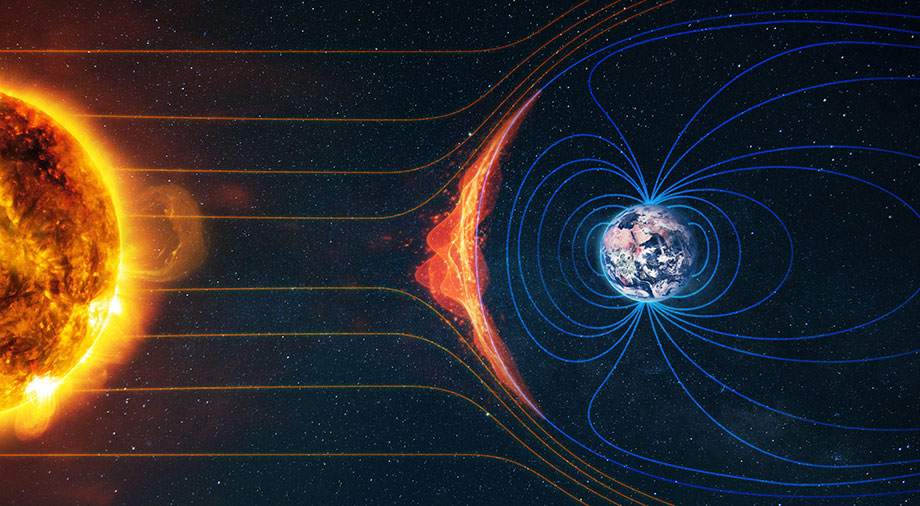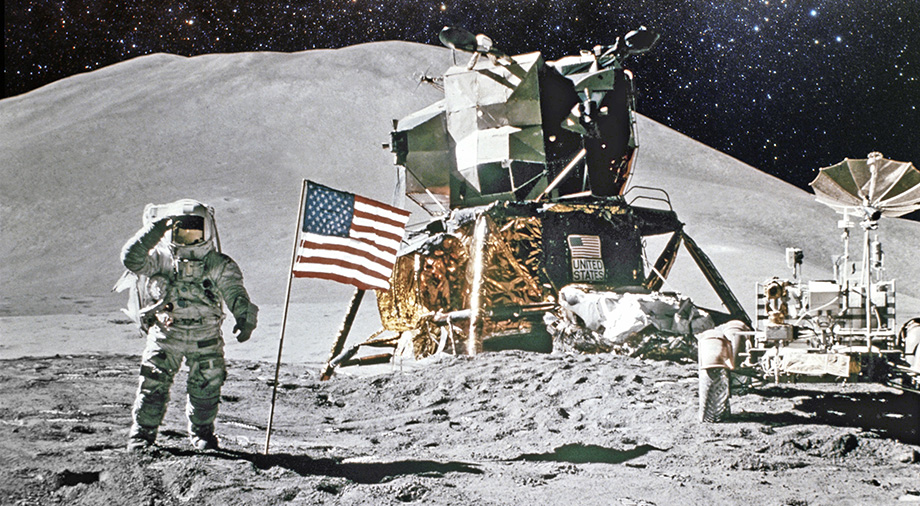
On July 20, 1969, the world stood still as around 650 million people, or roughly one in every five people on Earth at the time, watched a live broadcast from the surface of another celestial body. What had begun as part of a fierce geopolitical rivalry during the Cold War ultimately became a shared triumph for all humanity. Neil Armstrong and Buzz Aldrin’s first steps near the Mare Tranquillitatis, or “Sea of Tranquility,” forever changed our understanding of the limits of human achievement and opened a new era of space exploration.
Today, 57 years after that historic event, we view the legacy of the Apollo program not merely through the lens of nostalgia, but as the essential foundation for future missions beyond Earth. The unique engineering expertise, crew training methods, and vast body of scientific data gathered during the first lunar missions paved the way towards NASA’s modern and far more ambitious Artemis program, which aims to return humanity to the Moon, this time for the long term.
In the arms of the Sea of Tranquility: the preparation and drama of Apollo 11
The road to the Moon was built through a carefully sequenced series of intermediate missions, each designed to solve a specific critical challenge. The program began with the first crewed test of the Command Module in Earth orbit during Apollo 7 in October 1968. Just two months later, in December, the crew of Apollo 8 made history by becoming the first humans to enter lunar orbit, completing ten revolutions around the Moon and validating the accuracy of deep-space navigation.
The next two milestones focused on testing the Lunar Module (LM). In March 1969, Apollo 9 evaluated the two-stage spacecraft in Earth orbit, successfully demonstrating its docking procedures and life-support systems. Two months later, in May, Apollo 10 conducted a full dress rehearsal in lunar orbit. Its Lunar Module, Snoopy, descended to within just 15.6 kilometers (9.7 miles) of the Moon’s surface, rehearsing every phase of the landing sequence except the final touchdown.
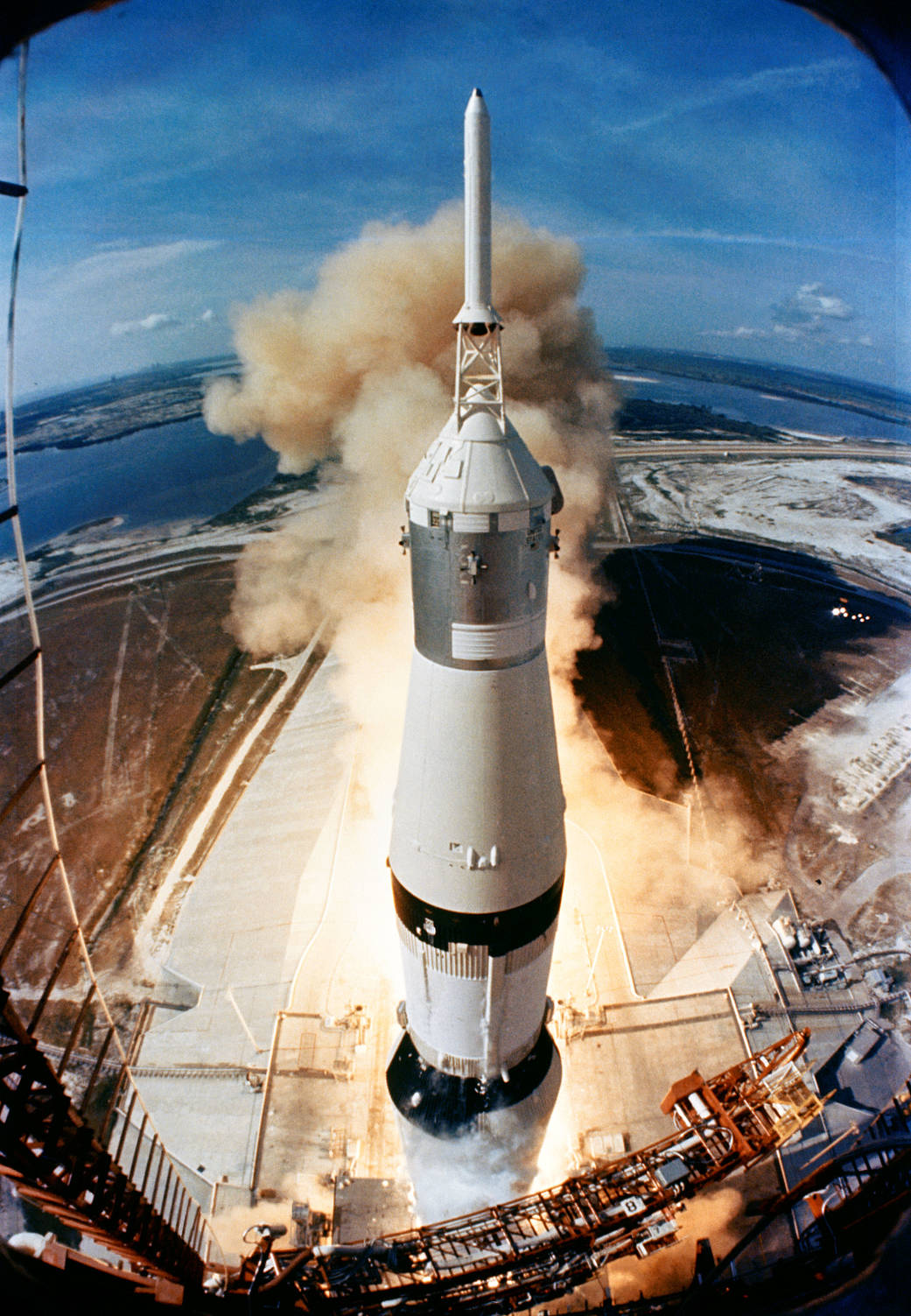
The technological centerpiece of the entire program was the Saturn V heavy-lift launch vehicle, developed under the leadership of Wernher von Braun, the engineer behind the world’s first guided ballistic missile, the V-2. Saturn V was a true giant: standing 111 meters (364 feet) tall and weighing 2,970 metric tons at liftoff, it was the most powerful rocket ever built at the time. Its first stage was powered by five F-1 engines burning RP-1 kerosene and liquid oxygen, producing a combined thrust of 34.5 million newtons.
Source: nasa.gov
On July 16, 1969, the Saturn V lifted off from Launch Complex 39A. Aboard Apollo were Commander Neil Armstrong, Lunar Module (LM) Pilot Buzz Aldrin, and Command and Service Module (CSM) Pilot Michael Collins. The Apollo spacecraft consisted of two primary elements: the Columbia Command and Service Module, which supported the crew during the journey to and from the Moon, and the Eagle Lunar Module, designed exclusively to land two astronauts on the lunar surface and later return them to lunar orbit.
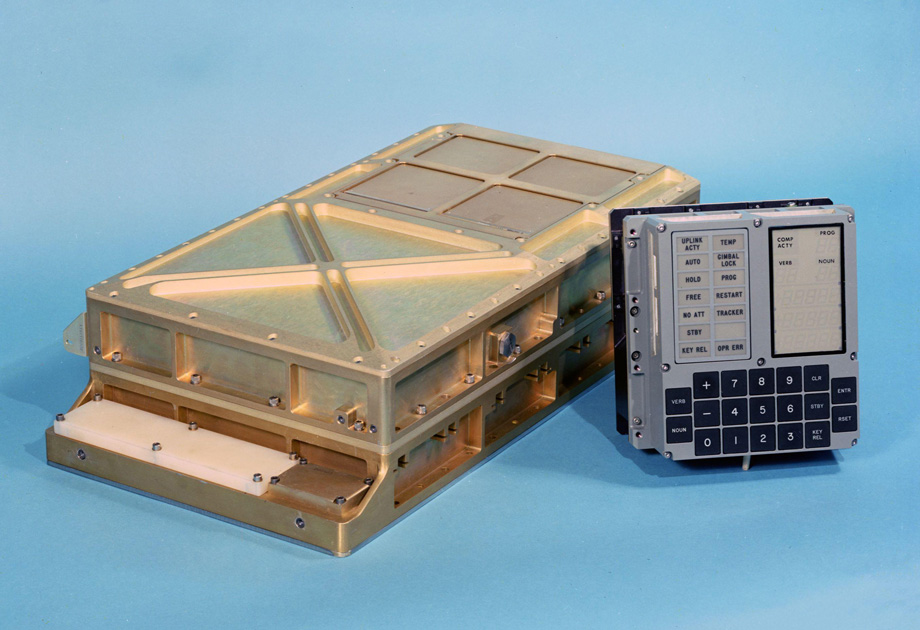
On July 20, as Eagle began its final descent, tension inside Mission Control in Houston, Texas, reached its peak. At an altitude of about 18 kilometers (11 miles), the Lunar Module’s onboard computer began issuing a series of alarm codes: 1202 and 1201. These warnings indicated that the processor was critically overloaded. Due to a configuration issue with the Rendezvous Radar, the computer was receiving an excessive number of unnecessary tasks, leaving it unable to process navigation functions in real time.
Source: en.wikipedia.org
The key decision was made by Steve Bales, a 26-year-old guidance engineer. After quickly analyzing the alarm codes, he gave the go-ahead to continue the descent, recognizing that the computer was successfully discarding lower-priority tasks while continuing to focus on the engine control functions essential for landing. But the challenges were far from over.
At an altitude of roughly 100–150 meters (330–490 feet), Armstrong looked out the window and realized that the automatic guidance system was taking Eagle directly toward West Crater, a boulder-strewn impact crater littered with rocks the size of automobiles. Landing there could have critically damaged the Lunar Module, making a return to lunar orbit impossible.
Armstrong immediately switched to semi-manual control, adjusted the spacecraft’s attitude, and guided it away from the hazardous terrain in search of a flatter landing site. The maneuver consumed precious time and fuel, both of which had been budgeted with only a minimal safety margin. The situation became critical when the low-fuel warning light illuminated, signaling the start of the final countdown.
Mission Control announced that only 60 seconds of usable fuel remained before the spacecraft would have to abort the landing. Armstrong carefully managed the module’s vertical descent while battling clouds of lunar dust kicked up by the engine plume, which almost completely obscured the surface. The landing gear finally touched down on the lunar regolith at coordinates 0.67° N, 23.47° E, with enough propellant left for only about 25 seconds of engine operation.
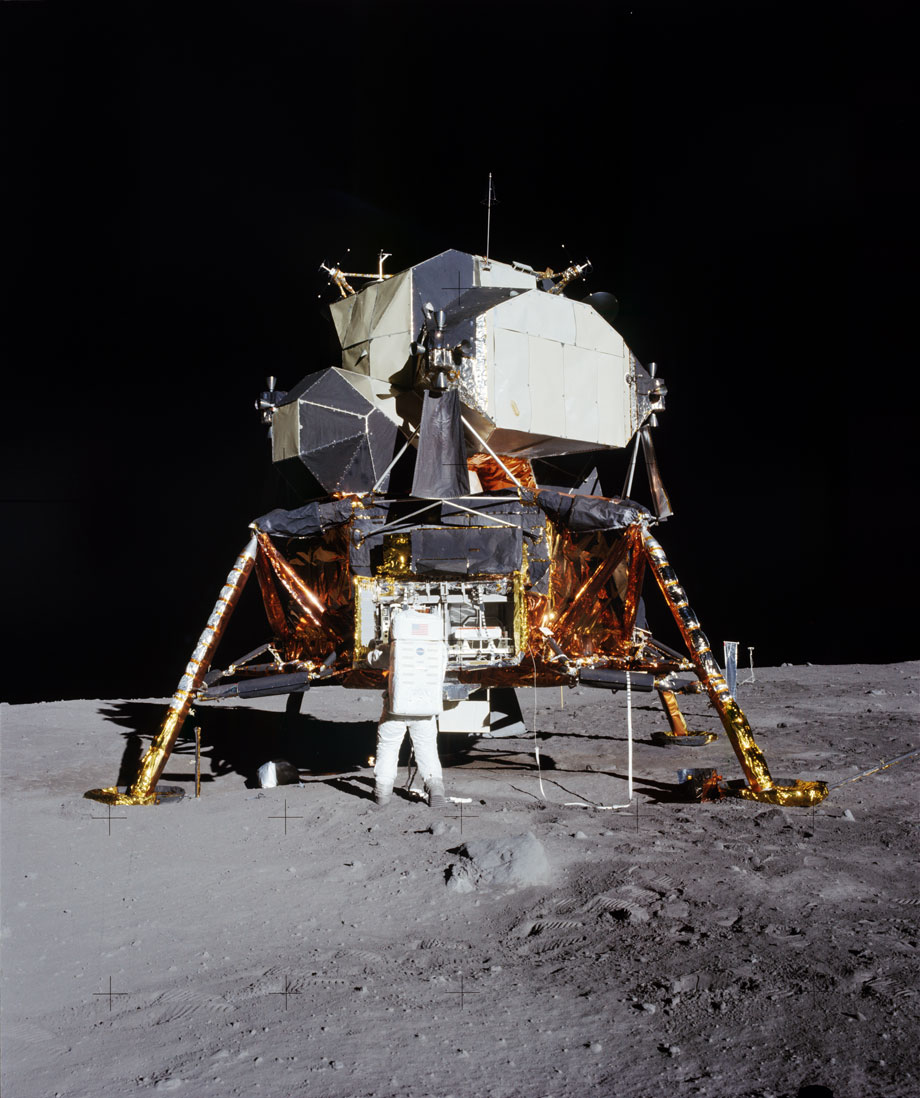
Source: en.wikipedia.org
At 20:17:40 UTC, after traveling 380,000 kilometers (236,000 miles), the historic message reached Earth: “Houston, Tranquility Base here. The Eagle has landed.” Six hours later, Neil Armstrong took humanity’s first small step onto the surface of the Moon. At that moment, the astronauts’ survival depended entirely on their A7L spacesuits, developed by ILC Dover in collaboration with Hamilton Standard.
The A7L spacesuit featured a sophisticated 21-layer construction, with each layer serving a specific protective or environmental control function. Closest to the astronaut’s body was a liquid cooling garment, in which water circulated through more than 80 meters (260 feet) of tubing, efficiently removing excess body heat generated during physical activity. The outer layers, made of aluminized Mylar and specialized fabrics, protected the wearer from the vacuum of space, micrometeoroids, and extreme temperatures, which during the crew’s 2.5-hour lunar excursion ranged from about -150°C (-238°F) in the shade to +120°C (+248°F) in direct sunlight.
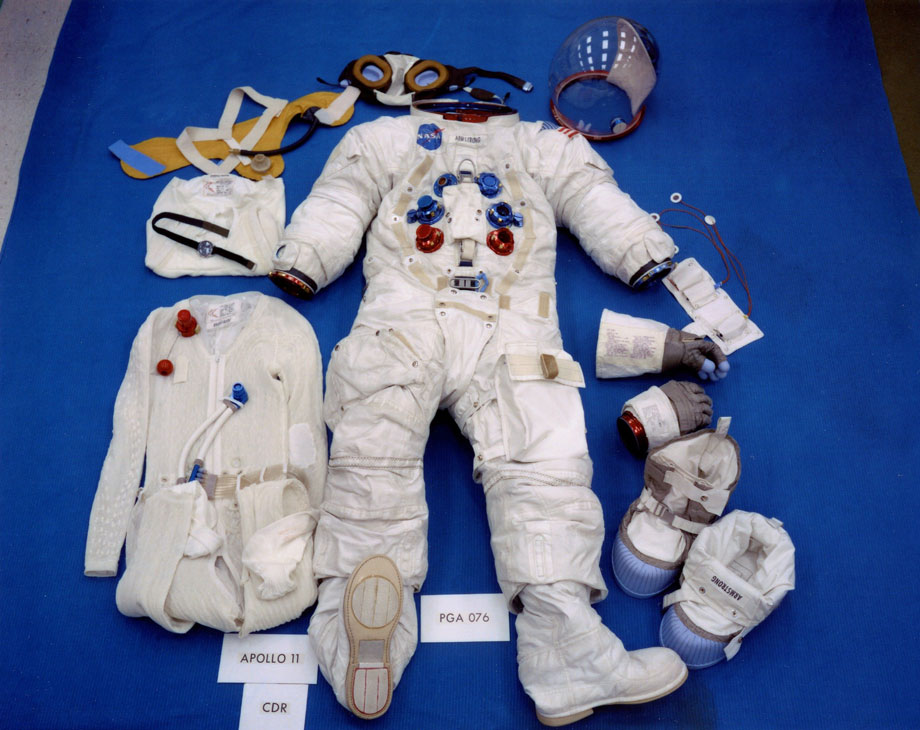
Source: en.wikipedia.org
Apollo 11 proved that it was fundamentally possible to land humans on the Moon and return them safely to Earth. But the lunar program did not end there. The missions that followed pursued far broader scientific objectives.
Next steps: danger and discoveries
In November 1969, the Apollo 12 crew, consisting of Pete Conrad, Robert Gordon, and Alan Bean, demonstrated the capability for pinpoint lunar landings. They guided their Lunar Module, Intrepid, to within just 160 meters (525 feet) of the Surveyor 3 robotic probe, which had been operating on the Moon since 1967.
The astronauts removed Surveyor 3’s television camera and several cable sections to return them to Earth for analysis of the long-term effects of intense space radiation and the vacuum of space on terrestrial materials. They also deployed the first complete Apollo Lunar Surface Experiments Package (ALSEP), a suite of scientific instruments designed to transmit geophysical data from the Moon in real time.
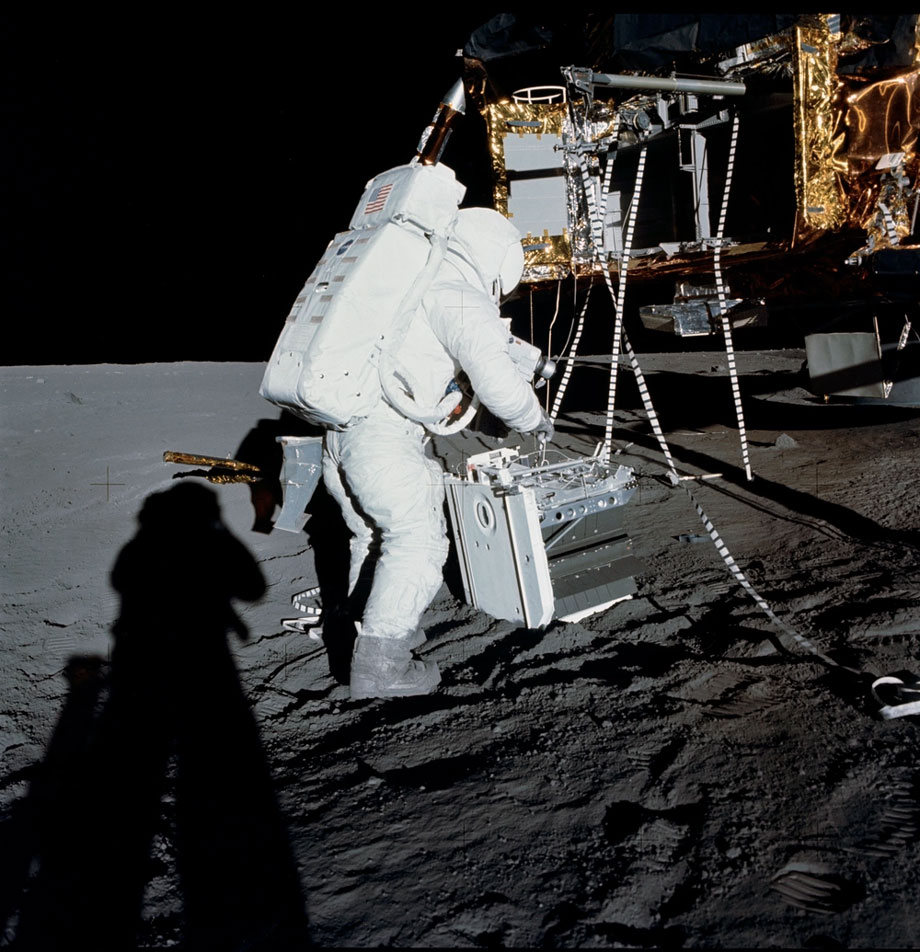
Source: dvidshub.net
The launch of Apollo 13 in April 1970 nearly ended in disaster but instead became one of the greatest feats in the history of human spaceflight. En route to the Moon, an explosion in oxygen tank No. 2 of the Service Module left the spacecraft without most of its electrical power and oxygen supply. The crew used the Lunar Module Aquarius as a lifeboat and looped around the Moon on a free-return trajectory. Thanks to the extraordinary efforts of engineers on the ground, the astronauts ultimately splashed down safely in the Pacific Ocean.
In February 1971, Apollo 14, commanded by veteran astronaut Alan Shepard, successfully landed in the rugged Fra Mauro highlands. Shepard and Edgar Mitchell transported their tools and lunar samples using a two-wheeled Modular Equipment Transporter (MET). It was during this mission that Shepard famously hit a golf ball on the Moon, demonstrating the behavior of objects in the lunar environment, where gravity is only one-sixth as strong as on Earth.
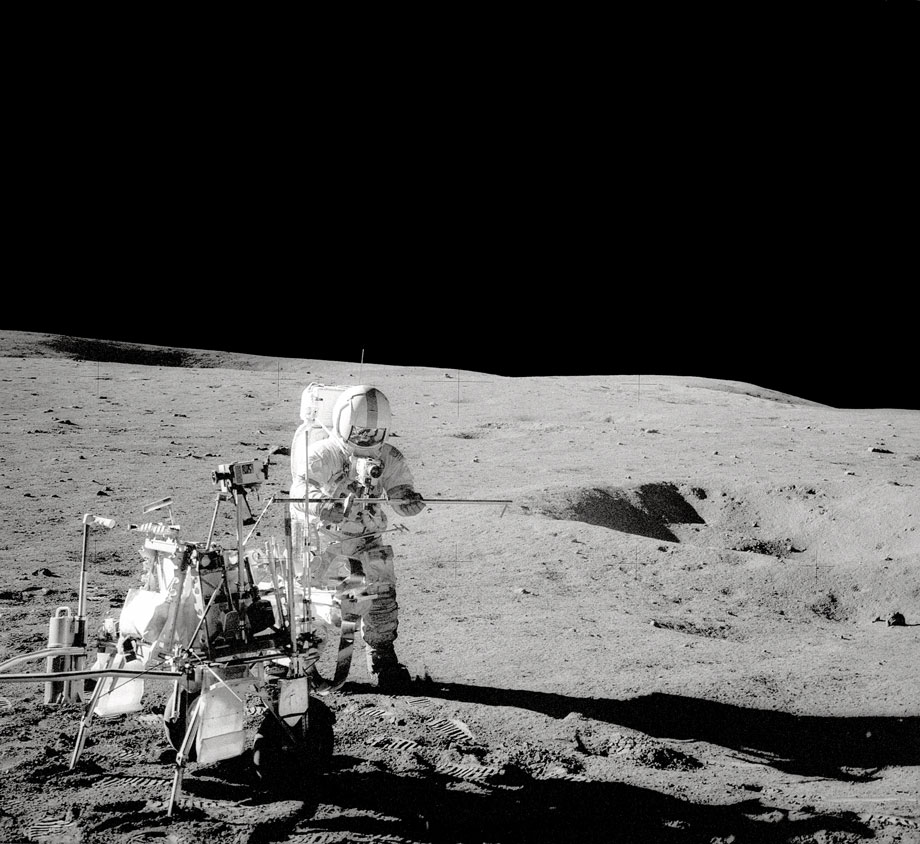
Source: en.wikipedia.org
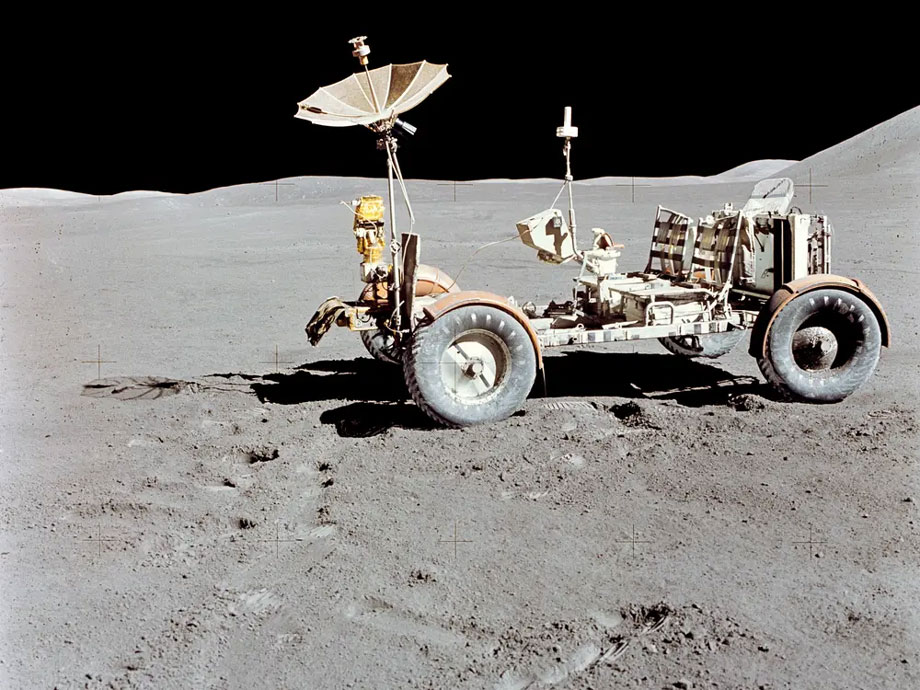
Apollo 15, launched in July 1971, inaugurated the series of so-called J missions. These missions featured significantly longer stays on the lunar surface (up to three days) and greatly expanded the exploration range through the use of the two-seat Lunar Roving Vehicle (LRV). Meanwhile, David Scott and James Irwin became the first people to drive a vehicle on another celestial body.
On Earth, the Lunar Rover weighed 210 kilograms (463 pounds), but in the Moon’s weak gravity, its effective weight was only about 35 kilograms (77 pounds). The LRV was powered by four independent electric motors, each producing 0.25 horsepower. Using the rover, the crew traveled a total distance of 27.8 kilometers (17.3 miles). They explored Hadley Rille, where they discovered a remarkable fragment of one of the oldest known samples of the Moon’s primordial crust, an anorthosite approximately 4.1 billion years old that became known as the Genesis Rock.
Source: airandspace.si.edu
In April 1972, Apollo 16’s Lunar Module crew members John Young and Charles Duke landed in the mountainous Descartes Highlands. The mission was designed to test the hypothesis that the lunar highlands had a volcanic origin. The astronauts collected 95.8 kilograms (211 pounds) of rock and soil samples, which ultimately disproved that theory, showing instead that the region’s terrain had been shaped primarily by massive meteorite impacts.
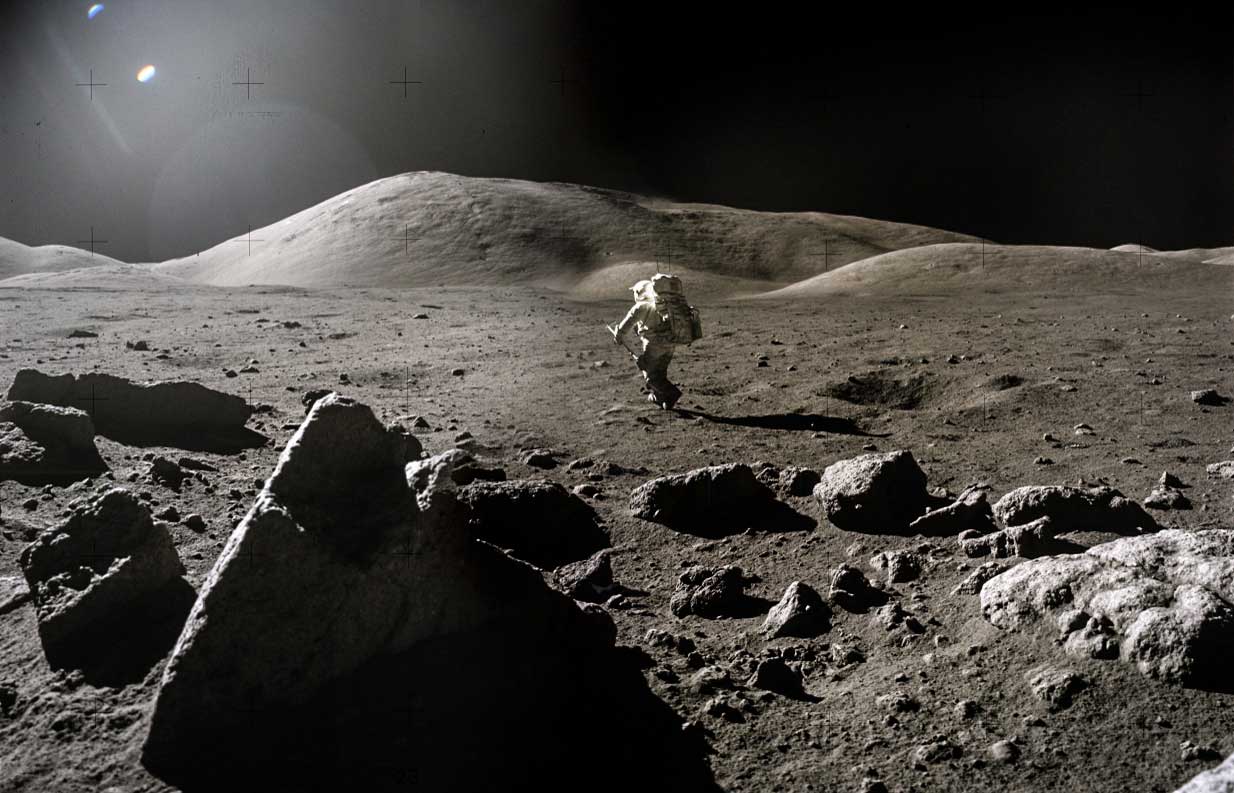
The final chapter of the lunar program came with Apollo 17 in December 1972. For the first time, the crew included a professional scientist, geologist Harrison Schmitt, who conducted fieldwork alongside Commander Eugene Cernan in the Taurus–Littrow Valley. Their stay on the Moon lasted a record 75 hours, including 22 hours spent outside the Lunar Module.
Schmitt’s geological expertise led to the discovery of the famous “orange soil,” which was later identified as tiny beads of volcanic glass formed during an eruption more than 3.6 billion years ago. The Apollo 17 crew collected and returned 110.5 kilograms (244 pounds) of lunar material to Earth, the largest sample haul of the entire Apollo program.
Source: skyandtelescope.org
Across the six successful lunar landing missions, a total of 12 astronauts set foot on the Moon. They deployed more than 50 scientific instruments, which continued transmitting data on lunar seismic activity, the Moon’s magnetic field, and the composition of its exosphere until September 1977. The 382 kilograms of lunar regolith and rock samples returned to Earth remain an invaluable resource for planetary scientists around the world.
The path to Artemis: a new philosophy of presence on the Moon
More than half a century after the Apollo program ended, humanity is returning to the Moon, this time with a fundamentally different philosophy. NASA’s new lunar program, named after Apollo’s twin sister Artemis, aims not merely to conduct brief visits to collect additional samples of lunar regolith, but to build the infrastructure needed for a sustained human presence on the Moon and in cislunar space.
Whereas Apollo was a technological sprint between two superpowers, Artemis is a global international marathon involving the European Space Agency (ESA), the space agencies of Japan and Canada, and a wide range of private aerospace companies.
The technological architecture of Artemis is built around three key elements:
- The Space Launch System (SLS), a super-heavy-lift rocket that, in its baseline configuration, produces greater liftoff thrust than the legendary Saturn V: 39 million newtons compared with 34.5 million newtons.
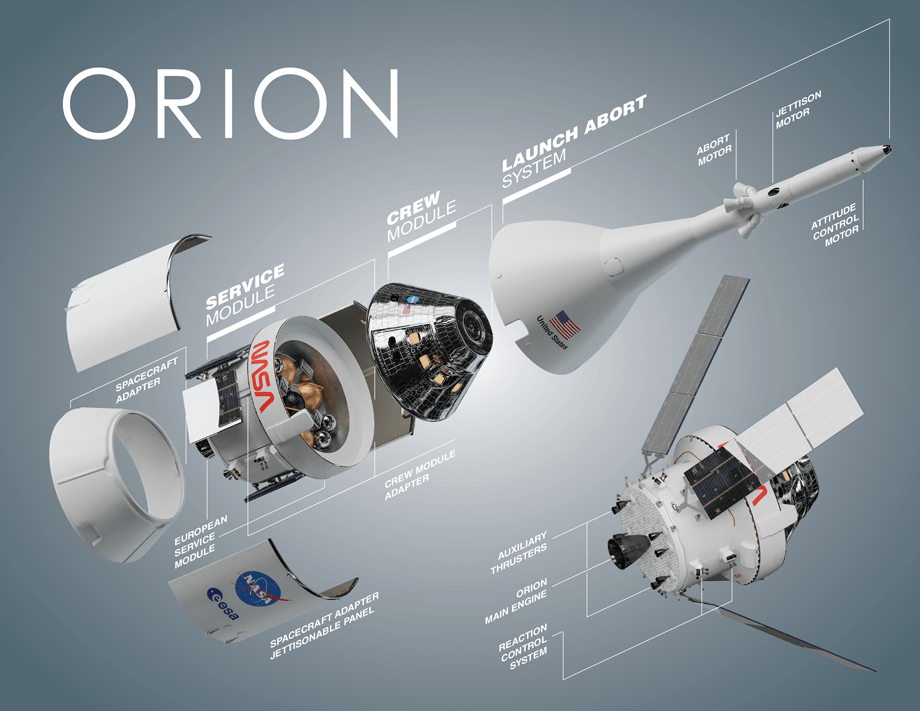
- The Orion crew spacecraft, capable of supporting a crew of four on missions into deep space.
- The original Artemis architecture also included the construction of the lunar-orbiting Gateway station, intended to serve as the primary transfer point and scientific hub for future planetary expeditions. However, in 2026, NASA revised the program and abandoned Gateway in its planned form, shifting its focus toward direct lunar missions and commercially developed landing systems.
Source: nasa.goin
Unlike the equatorial plains where the Apollo missions landed, the primary destination of the Artemis program is the Moon’s south pole. This region has attracted intense scientific interest because it contains permanently shadowed craters that have not been exposed to sunlight for billions of years. Temperatures there can plunge to an extreme -246°C, preserving substantial deposits of water ice in their original state.
Extracting this ice is central to the concept of sustainable space exploration and In-Situ Resource Utilization (ISRU). By splitting water into hydrogen and oxygen, future lunar settlers could produce not only drinking water and breathable oxygen, but also liquid rocket propellant. In the long term, this could transform the Moon into a refueling station for missions deeper into the Solar System, including future crewed expeditions to Mars.
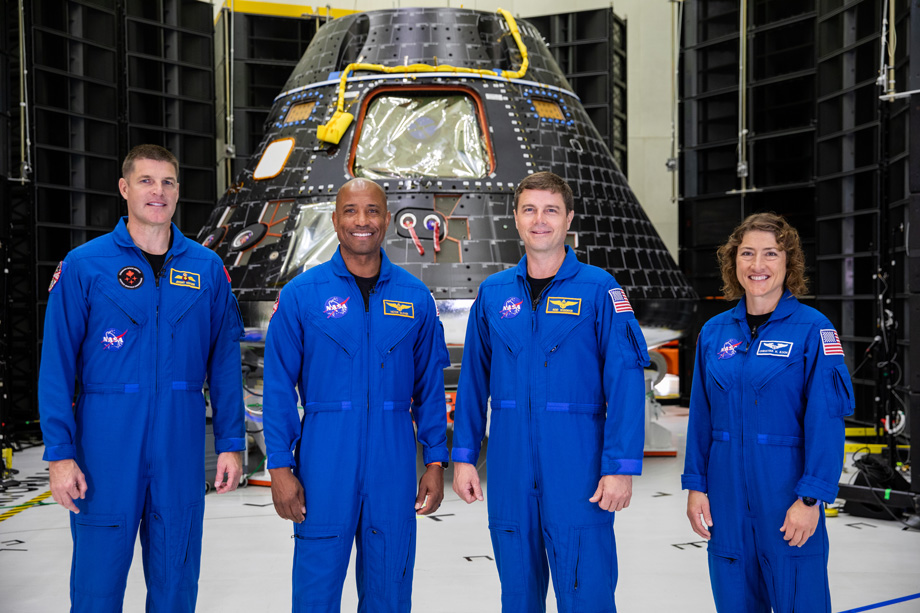
The program has already reached several major milestones. In late 2022, the uncrewed Artemis I mission successfully demonstrated the reliability of the Space Launch System (SLS). The next major achievement came with the successful launch of the crewed Artemis II mission on April 1, 2026. The crew, Reid Wiseman, Victor Glover, Christina Koch, and Jeremy Hansen, completed a historic flyby of the Moon and returned safely to Earth, becoming the first humans in more than 50 years to travel beyond low Earth orbit.
Source: nasa.gov
However, in February 2026, NASA fundamentally revised the sequence of future missions, significantly changing the profile of Artemis III. Under the new risk-reduction strategy, Artemis III, currently scheduled for launch in late 2027, will no longer include a crewed lunar landing. Instead, the mission will focus on a crewed demonstration flight in low Earth orbit (LEO), similar in concept to Apollo 9.
The primary objective of the updated Artemis III mission will be to test and demonstrate rendezvous and docking operations between the Orion spacecraft and demonstration versions of commercial Human Landing Systems (HLS) being developed by SpaceX (Starship) and Blue Origin (Blue Moon). Four astronauts will launch aboard the Space Launch System (SLS), which will fly without the Interim Cryogenic Propulsion Stage (ICPS); instead, a full-scale mass simulator will be used. Orion will then remain docked with the HLS for several days while the crew evaluates internal interfaces and verifies the performance of the life-support systems.
The historic return of astronauts to the lunar surface in the 21st century has now been officially assigned to Artemis IV, currently planned for launch in 2028. During that mission, the crew will use fully operational lunar landers to descend to the Moon’s south polar region, carrying out the first human landing in more than 50 years while wearing Axiom Space’s next-generation AxEMU spacesuits.
The journey that began with the pioneering achievements of NASA’s Apollo program now finds its natural continuation in Artemis, a program designed to usher in a new era of lunar exploration and prepare humanity for future crewed missions to Mars.