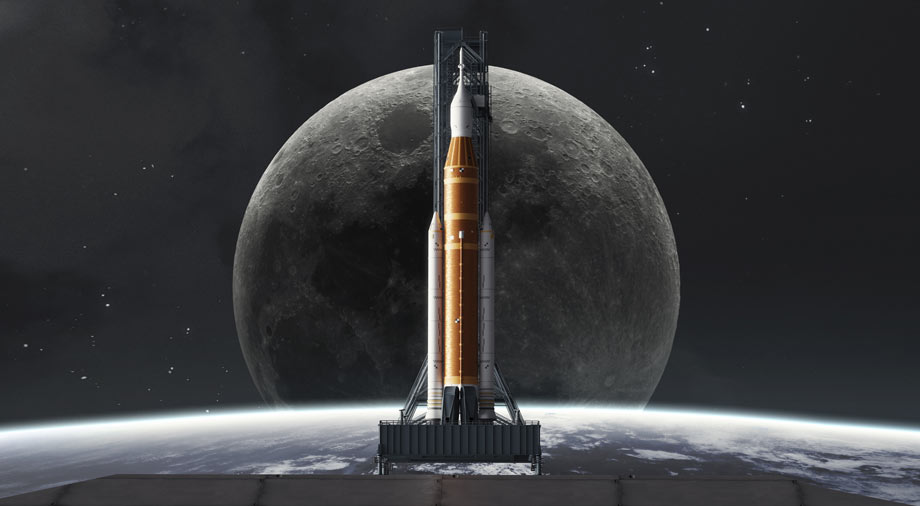
At the end of February 2026, the space community learned that NASA would fundamentally restructure the lunar Artemis program. What had previously been perceived as a linear sequence of steps toward a Moon landing has now transformed into a more complex, yet significantly more sustainable, mission strategy. The official statement, made on February 27, made it clear: the old paradigm no longer aligned with the realities of technical readiness and safety requirements, and perhaps the agency needed to look back to the success of the Apollo program as a foundation for future crewed missions to the Moon.
With this shift in course, the question arises: why is NASA taking such radical steps, effectively canceling the return of astronauts to the Moon that was supposed to take place during the Artemis III mission? Is crew safety really the sole priority behind these drastic changes, or is there a deeper strategic calculation related to competition with China and the stability of funding? We decided to analyze how the transformation of the Artemis program will affect the United States’ lunar exploration strategy.
Artemis III adjustments: safety is the priority
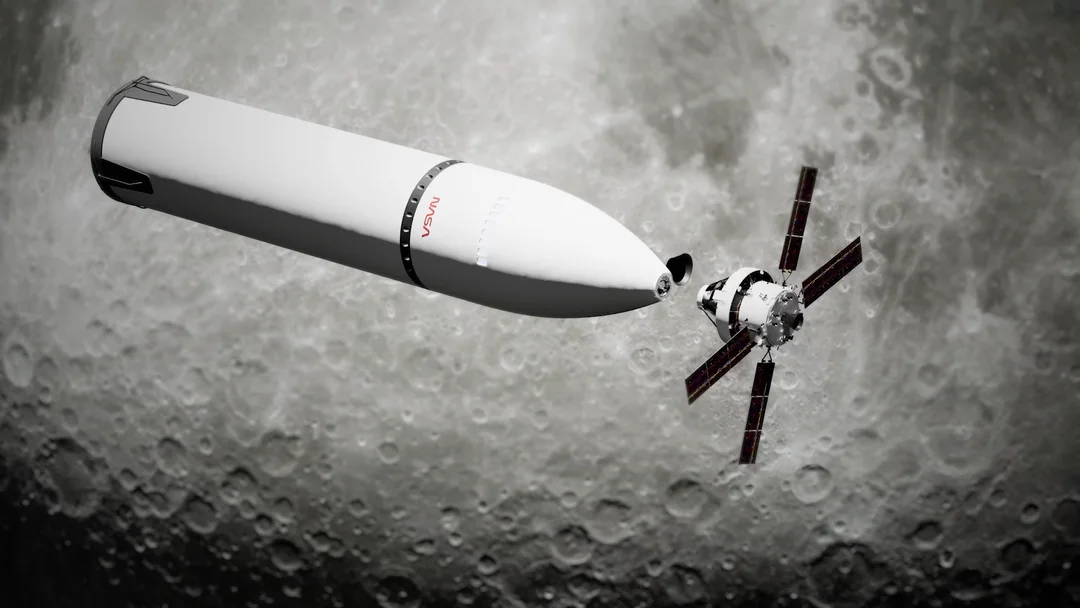
The previous plan for the Artemis III mission envisioned a historic human landing at the Moon’s south pole as early as 2028. However, NASA’s new strategy radically changes the mission’s objectives, transforming it into a complex test flight in low Earth orbit (LEO). Instead of descending to the lunar surface, the crew will focus on practicing docking operations with landing modules.
This shift is based on the recommendations of a 2025 report by the Aerospace Safety Advisory Panel (ASAP), officially released on January 26, 2026. Experts highlighted the “cumulative level of technical risk,” since Artemis III was intended to combine too many untested technologies during a single mission. In particular, it was supposed to mark the first use of the Orion spacecraft in conjunction with the Human Landing System (HLS) in lunar orbit. The new approach proposes separating these processes into distinct missions.
Source: reddit.com
As part of the updated mission, planned for 2027, the Orion spacecraft will also rendezvous either with Starship from SpaceX or Blue Origin’s Blue Moon. However, to minimize safety risks, the maneuver will take place near Earth. This updated approach will allow testing of life-support systems and crew transfer mechanisms between the two vehicles under conditions where emergency evacuation is possible. In the event of an emergency, astronauts would be able to return to Earth within hours rather than days.
In addition, Artemis III now includes an expanded testing program for new spacesuits designed for extravehicular activity (EVA). Since the latest developments by Axiom Space differ significantly from earlier Apollo-era systems, testing them in open space before a lunar surface descent is critically important. This will allow engineers to gather real-world data on suit mobility and thermal regulation.
For those familiar with the history of spaceflight, it is clear that the new vision for Artemis III closely mirrors the successful Apollo 9 mission. At that time, NASA also chose to forgo an immediate flight to the Moon to test the lunar module in Earth orbit. That decision ultimately saved the program from future disasters and laid a solid foundation for the success of Neil Armstrong and Buzz Aldrin, who became the first humans to walk on the Moon during the Apollo 11 mission.

Source: beyondthesestonewalls.com
The fundamental restructuring of Artemis ІII also eases part of the schedule pressure on the development of the landing module. Since Starship will not be required to immediately fly to the Moon with a crew, SpaceX gains additional time to refine uncrewed launches of its system, helping to avoid the rush that typically leads to technical failures.
Speaking at a special briefing at NASA headquarters on February 27, 2026, dedicated to changes in the Artemis lunar program, NASA Administrator Jared Isaacman noted: “A direct path to the Moon without intermediate testing is not a path to success.” The agency has made a strategic decision to invest time in the stability and reliability of its flight architecture. As a result, the Artemis III mission is now viewed as a critically important, yet primarily technical, foundation for practicing complex orbital maneuvers. This marks a significant departure from the original plans, under which the third mission was intended to place an astronaut on the Moon.
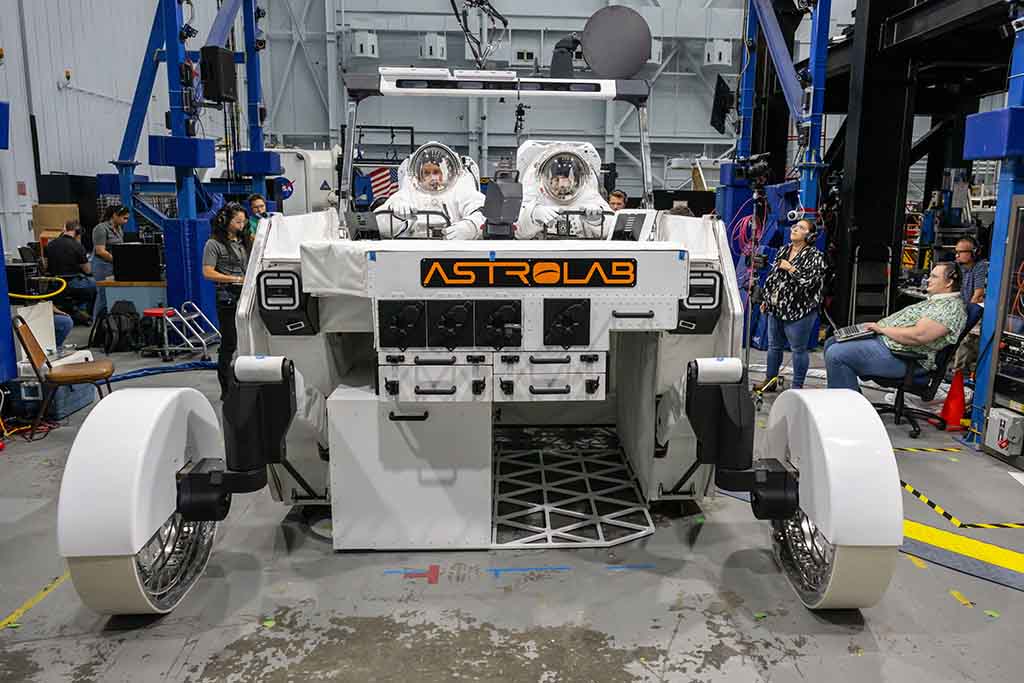
Another important aspect of the updated Artemis program will be an additional phase of testing communication and data transmission systems between different segments of the architecture. As demonstrated in the new mission design scheme, not only will the primary spacecraft be involved in flights, but also auxiliary monitoring systems: robotic landers from Intuitive Machines and the mobile Astrolab FLEX rovers. These systems will function as distributed sensor nodes and relay stations to support continuous communication between astronauts and mission control on Earth. In the long term, the integration of such auxiliary systems will contribute to the creation of a comprehensive space mission management network, capable of handling the far more complex challenges astronauts may face both in lunar orbit and on the surface of the Moon.
Source: kennedy-center.org
As we can see, the revised lunar program will also feature an interesting example of space cooperation: the crew members of Artemis III will become the first to test interfaces between government and private technologies. Software interoperability between NASA, SpaceX, and other private spacecraft will require fine-tuning under real microgravity conditions, where every coding error or signal delay will be analyzed for future landings.
Ultimately, postponing the landing by a year (under the updated plan, this is now expected to take place as part of Artemis IV) will allow for better preparation of the mission’s scientific equipment. NASA engineers will also gain additional time to calibrate sensors used for detecting deposits of water ice in permanently shadowed lunar craters. This will undoubtedly increase the overall scientific value of the entire program.
Logistical challenges for HLS: cryogenic fuel and reusability
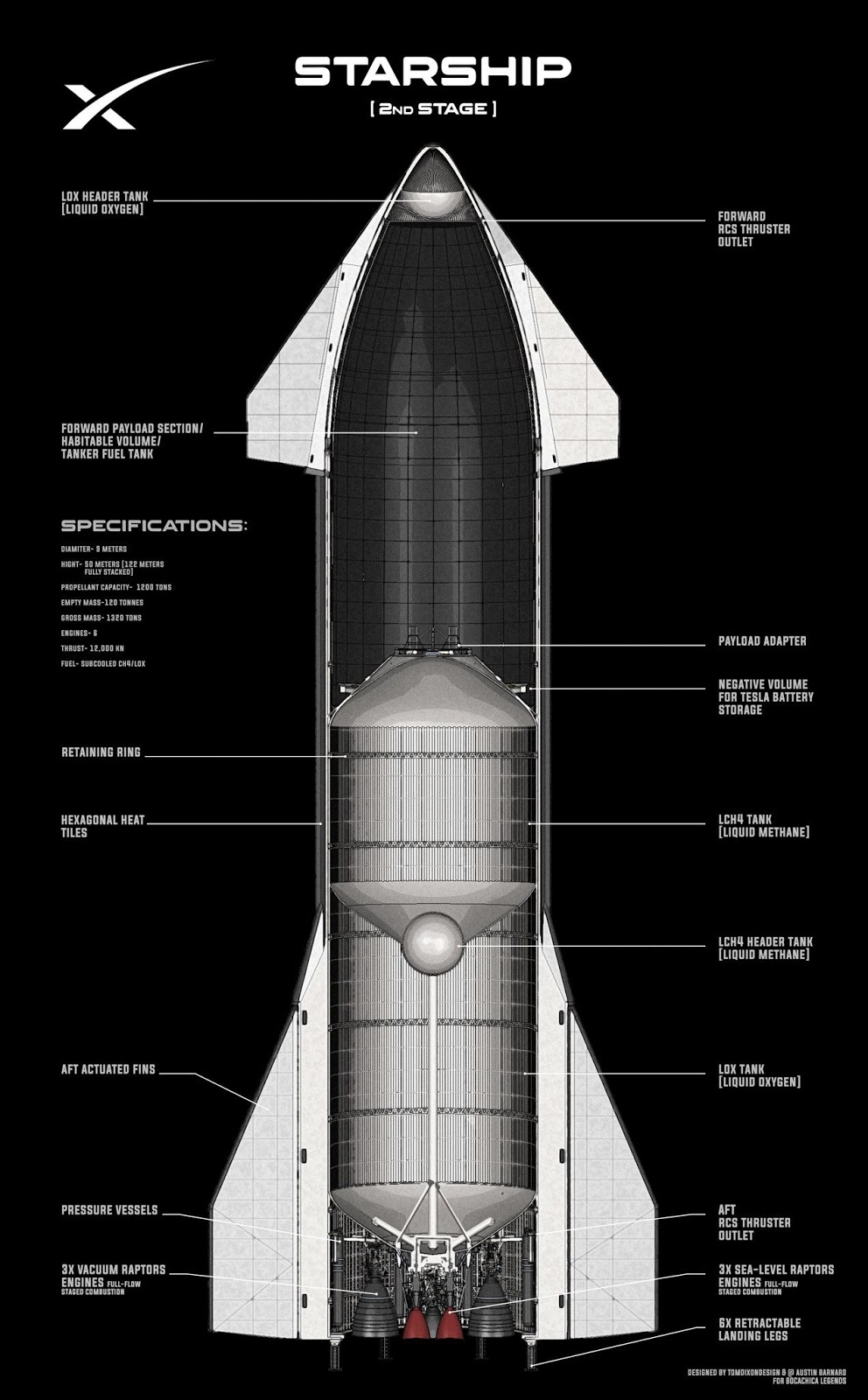
A cornerstone of the previous Artemis architecture was the complexity of the Starship refueling system. For this massive vehicle to reach the Moon and perform a soft landing, it would require more than ten fuel tanker launches. However, the technology needed for transferring hundreds of tons of cryogenic methane and oxygen in space has never been demonstrated on such a scale.
NASA acknowledged that creating orbital fuel depot systems is far more challenging than initially anticipated at the start of the program. The main issue lies in the long-term storage of propellant at extremely low temperatures, since even minimal evaporation could render the mission unfeasible if the tanker launch schedule is disrupted.
Source: space.stackexchange.com
In the new strategy, the focus has shifted toward demonstrating “tipping point” technologies, such as critical fluid management capabilities. In other words, SpaceX must first prove the viability of automated docking and fuel transfer systems without human involvement. This will require a series of uncrewed missions, now integrated into the updated preparation schedule for Artemis IV.
In addition to SpaceX, NASA places high expectations on Blue Origin and its Blue Moon Mark 1 module. Blue Origin’s concept uses liquid hydrogen, which presents an even greater storage challenge but offers higher engine efficiency. Having two distinct technological approaches, however, creates necessary system redundancy, allowing NASA to select the most reliable and safest option.
Beyond the issue of fuel, the problem of providing power to modules during the lunar night, which lasts 14 Earth days, remains critical. NASA’s new requirements are forcing contractors to rethink the architecture of solar panels and batteries, since, without a reliable heat source, electronics would fail under extreme temperature conditions.
Another key element of the new logistics is the standardization of docking interfaces. The agency requires that landing modules be compatible not only with the Orion spacecraft, but also with the future Lunar Gateway. This would enable the Human Landing System (HLS) to function as a reusable “elevator” between lunar orbit and the surface, significantly reducing operational costs.
The success of this strategy will clearly depend on the launch frequency of Starship from sites in Texas and Florida. To refuel a single lander within a short timeframe, SpaceX must achieve a launch cadence of every few days, something that will require a comprehensive overhaul of ground infrastructure and supply chain logistics.
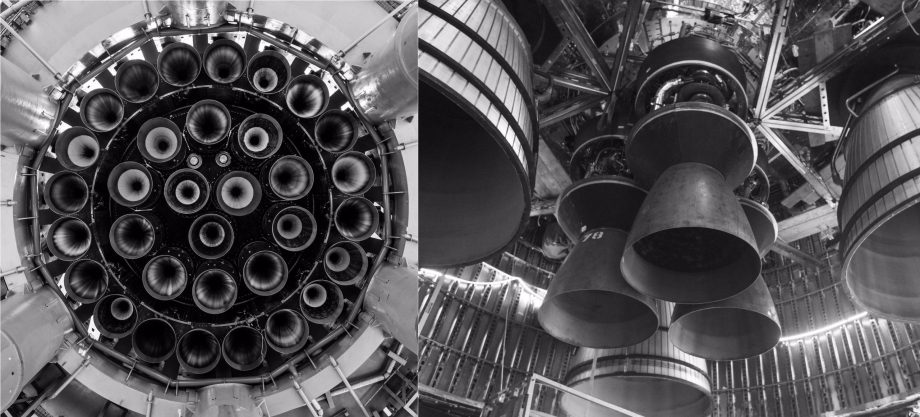
However, some critics question the reusability of Starship in the context of lunar missions. While stage recovery is well established for near-Earth operations, landing on the Moon and then launching again demands entirely new performance characteristics from the Raptor engine, the Starship’s primary propulsion system. Dust and regolith kicked up during landing could damage critical components, potentially making such operations unfeasible.
Source: universetoday.com
The new NASA strategy now envisions conducting an uncrewed landing of the Human Landing System (HLS) before each major crewed mission. This approach is intended to verify the stability of the lander’s support structure and the performance of its engines under real lunar surface conditions. Only after the successful return of the uncrewed vehicle to orbit will approval be granted for a mission carrying astronauts.
Ultimately, the new vision of the Artemis program suggests that HLS will no longer be a simple analog of a transport vehicle for astronauts. Previously, refueling was considered merely a technical step in preparing a single Starship flight, but it is now evolving into a permanent infrastructure of orbital fuel depots. These depots are intended to support a continuous pipeline of different reusable spacecraft that may eventually replace HLS.
This shift could transform the Artemis program from a series of sequential missions into the development of a full-fledged Earth–Moon transportation system, one that could serve not only for travel to the Moon but also for deeper space exploration beyond.
The evolution of SLS: from unique products to assembly line production
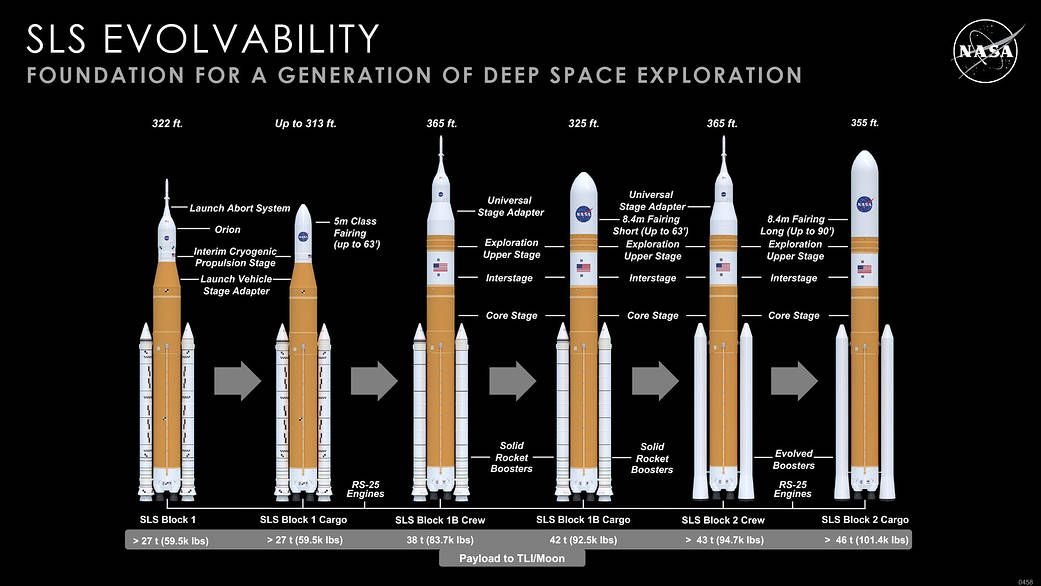
In discussions of the updated Artemis program plan, close attention has also been paid to the program’s primary government rocket, the Space Launch System (SLS), which has long been criticized for its high cost and low launch rate. The previous model envisioned the development of complex upgraded versions of SLS (Block 1B and Block 2), each designed separately for different phases of the program. However, NASA ultimately decided to shift toward a standardized configuration in order to ensure serial production.
Source: nasa.gov
The primary goal is increased launch cadence, with intervals between Space Launch System launches not exceeding ten months. Achieving this with the current production model is impossible, since each SLS core stage is built as a unique engineering unit tailored to the specific needs of an individual mission. Transitioning to a standardized specification will allow the main contractors, Boeing and Northrop Grumman, to optimize their production lines.
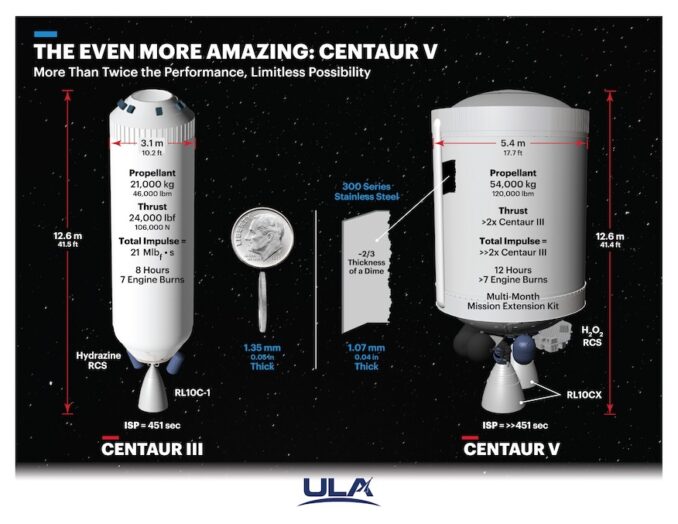
One of the most striking developments is the idea of using the Centaur V upper stage from ULA instead of the now-canceled Exploration Upper Stage (EUS) from Boeing. The new Centaur V is the technological successor to the decades-proven Centaur III series (used on Atlas V rockets) and is currently being integrated on Vulcan rockets. Incorporating the ULA upper stage into SLS could significantly reduce mission preparation time and lower the risk of delays.
The switch to Centaur V provides more than a twofold increase in performance by increasing fuel capacity from 21 tons to 54 tons. Despite retaining the same height of 12.6 meters, its diameter has been expanded to 5.4 meters, allowing for the installation of more powerful RL10CX engines with a specific impulse exceeding 451 seconds. The engineering excellence of the design is highlighted by the use of ultra-thin 300-series stainless steel, just 1.07 mm thick—thinner than a 10-cent coin. A key advantage for extended Artemis missions is the Mission Extension Kit, which increases the autonomous operational time of the stage from eight hours to several months, effectively turning it into a durable interorbital tug.
Source: spaceflightnow.com
The implementation of standardized formats means that NASA is moving away from chasing maximum power in favor of operational stability. The standard SLS Block 1 will be able to deliver Orion spacecraft to the required trajectories, while additional payloads (such as Gateway modules) will be carried by commercial rockets like Falcon Heavy or New Glenn. This new strategy also includes expanding the staff at Kennedy Space Center. NASA plans to restore core rapid launch preparation capabilities that were partially lost after the end of the Shuttle program. This involves automating prelaunch checks and upgrading mobile launch platforms.
Problems discovered during the “wet” dress rehearsals before Artemis II in February 2026 confirmed the need to simplify systems. Hydrogen leaks and helium valve issues on the upper ICPS stage clearly demonstrated that the excessive complexity of SLS is a serious reliability obstacle. Standardizing components is intended to eliminate these problem areas.
Additionally, NASA aims to make the supply chain more transparent and resilient to industrial risks. Using components that are already mass-produced for commercial space launches reduces dependence on unique, specialized suppliers that NASA previously relied on. The restructuring is also expected to improve the overall financial transparency of the program. Standardized blocks allow for clearer forecasting of costs for each subsequent launch, which is critically important for securing support from the US Congress, which always demands detailed justification for multi-billion-dollar budgets amid current social and economic challenges.
Currently, a key stage for the future of SLS will be preparing the rocket for the fourth and fifth Artemis program missions, which will require multiple rockets in rapid succession. If the SLS production cycle remains stuck at 3–4 years for each rocket, the program will simply stall. This is why NASA is now focusing its efforts on getting close to producing one rocket per year by 2028.
Return in 2028: a double landing strategy and a rethinking of the Gateway’s role
NASA’s new schedule identifies 2028 as the key date for restoring human presence on the lunar surface. Instead of a single mission, the agency is now considering the possibility of two landings in the same year: Artemis IV in early 2028 and Artemis V at the end of the year. At the moment, this seems like an attempt to make up for lost time due to an intensive flight schedule, but it may also reflect NASA’s plan to enter a new accelerated rhythm of lunar launches.
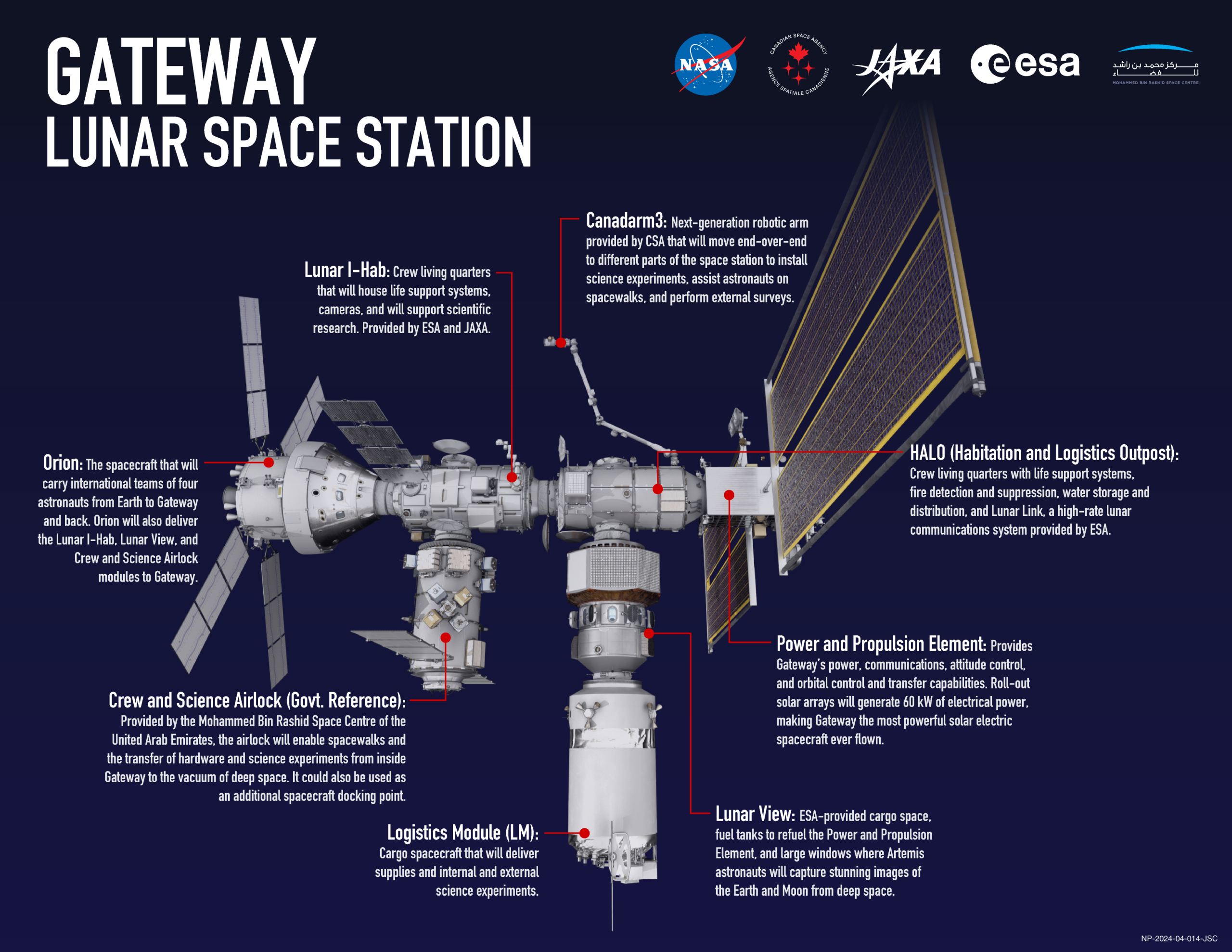
The Artemis IV mission will be the first in which the crew uses the Gateway as a transfer point. Unlike Orion’s direct docking with the Human Landing System, the approach involving the circumlunar orbital station is intended to demonstrate greater flexibility. Overall, NASA’s updated Artemis strategy radically rethinks the role of Gateway. Whereas it was previously seen mostly as an optional transfer hub, in the new paradigm, it will be the central logistical core of the entire lunar economy. The vision for the station is evolving from a scientific outpost into a full-fledged service center, capable of supporting not only crews but also an extensive network of private robotic missions.
Source: nasa.gov
The main change lies in the implementation of the concept of in-space servicing, assembly, and manufacturing (ISAM). According to the plan announced at the recent ASCEND 2026 conference, Gateway is now being equipped with standardized interfaces for servicing commercial spacecraft, effectively transforming it into an orbital workshop. Here, autonomous manipulators will be able to swap scientific modules on CLPS lunar landers or refuel communication satellites. This multifunctionality will make Gateway a critically important asset for any commercial player planning operations near the Moon’s south pole.
The station will play a particularly important role in the Artemis IV and Artemis V missions. Thanks to the transition to the more powerful Centaur V upper stage, the SLS rocket will be able to deliver heavier payloads to Gateway, enabling the completion of the HALO habitat module and the international I-Hab module in record time. The station will provide a safe environment where the Orion crew can remain for up to 60 days, conducting thorough diagnostics of the Starship lander systems before descent.
In addition, Gateway has been officially designated as the primary relay for the lunar internet, where all data from rovers like Astrolab FLEX and stationary monitoring stations will first be collected onboard for initial processing using artificial intelligence algorithms. This will allow gigabytes of technical information to be filtered, transmitting only the most important scientific results to Earth, which is critically important given the limited bandwidth of deep-space communications.
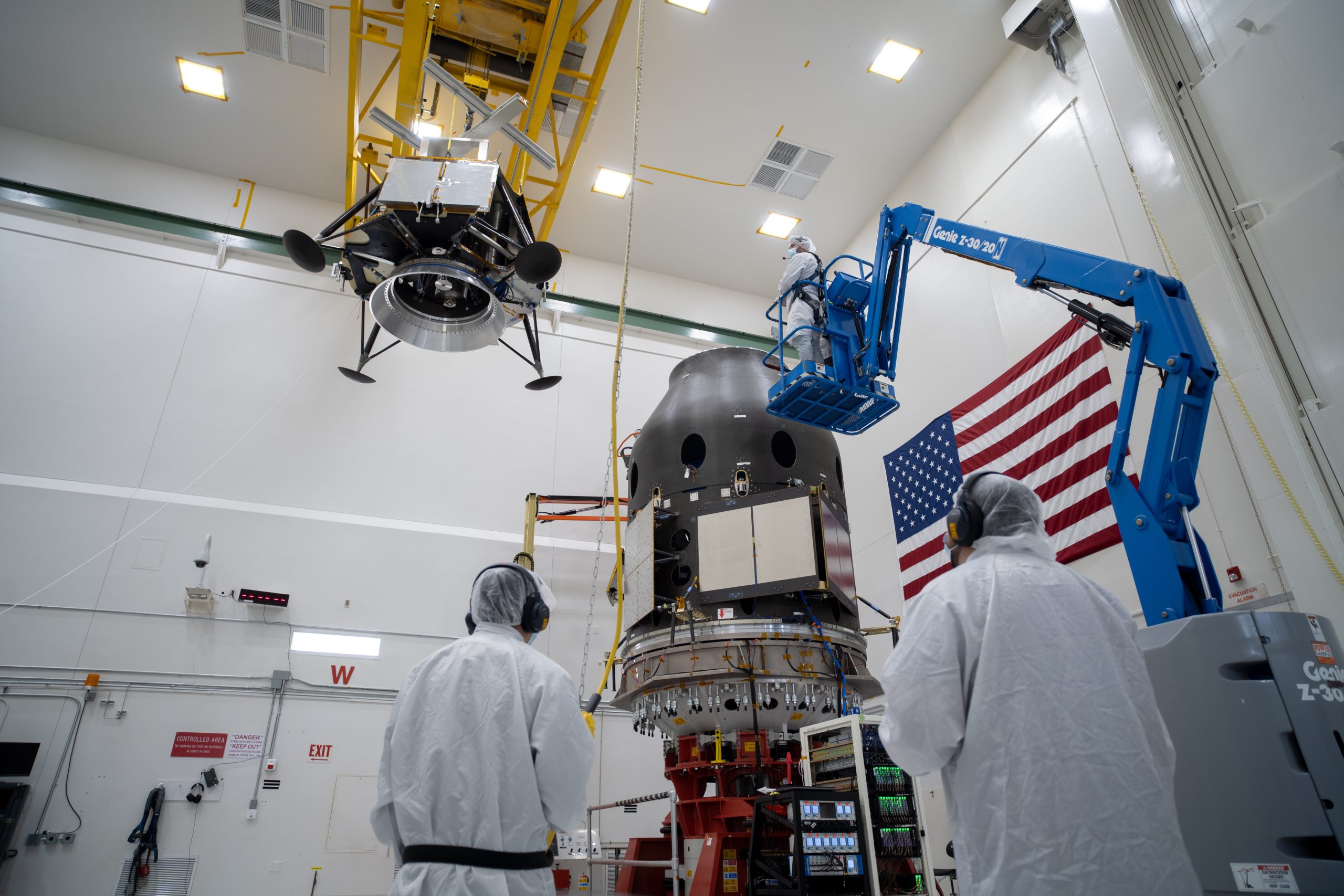
A key component of the success of the dual Artemis IV and V missions remains the Commercial Lunar Payload Services (CLPS) program. Private companies such as Intuitive Machines, Astrobotic, and Firefly Aerospace, which have participated in CLPS for years, will send their own lander modules to the Moon in advance, carrying scientific instruments, power sources, and communication systems. In particular, the second Blue Ghost lander from Firefly Aerospace, planned for launch in 2026, will play a key role in deploying communication and navigation infrastructure.
Source: jpl.nasa.gov
One of the central elements of Artemis IV will be the deployment of the FLEX lunar rover from Astrolab. This rover will allow astronauts to travel significant distances from the landing site, which will be particularly useful for exploring ice deposits. The scientific programs of both missions will focus on searching for water ice in permanently shadowed regions (PSRs). Water, however, is not just a subject of study but a strategic resource for producing fuel and oxygen directly on the Moon. The success of the 2028 missions will determine whether the combined partnership of Artemis Accords nations can build the first permanent lunar base by the mid-2030s.
The dual landings in 2028 are intended to test two different types of landers under real operational conditions. If SpaceX conducts a landing during Artemis IV, then Blue Origin may have the opportunity during the subsequent Artemis V. This is intended to create a model of healthy competition, wherein NASA acts as the service customer rather than the sole operator of all spacecraft.
Beyond scientific goals, the success of the fourth and fifth missions will have enormous geopolitical significance. China, for example, is actively developing its International Lunar Research Station (ILRS) program, which also envisions a Moon landing by 2030, as well as a continued lunar presence. Demonstrating that the US and its Artemis partners can carry out two successful missions per year is meant to showcase technological leadership and the advantage of a public–private partnership model.
However, such an intensive schedule requires flawless performance from ground operations. Any delay with Artemis II or III would automatically push back the entire chain of subsequent lunar missions. In other words, NASA is already walking a fine line to ensure all necessary Gateway infrastructure is ready to receive the first visitors in 2028.
Back to basics: reviving the Apollo spirit in a digital age
The radical changes in Artemis are not just about hardware but also about an internal transformation of NASA as an organization. The administration has acknowledged that decades of low activity in crewed spaceflight have led to a certain stagnation in management processes within the agency. This is why the new wave of Artemis program restructuring is accompanied by a large-scale personnel and organizational reform within the agency.
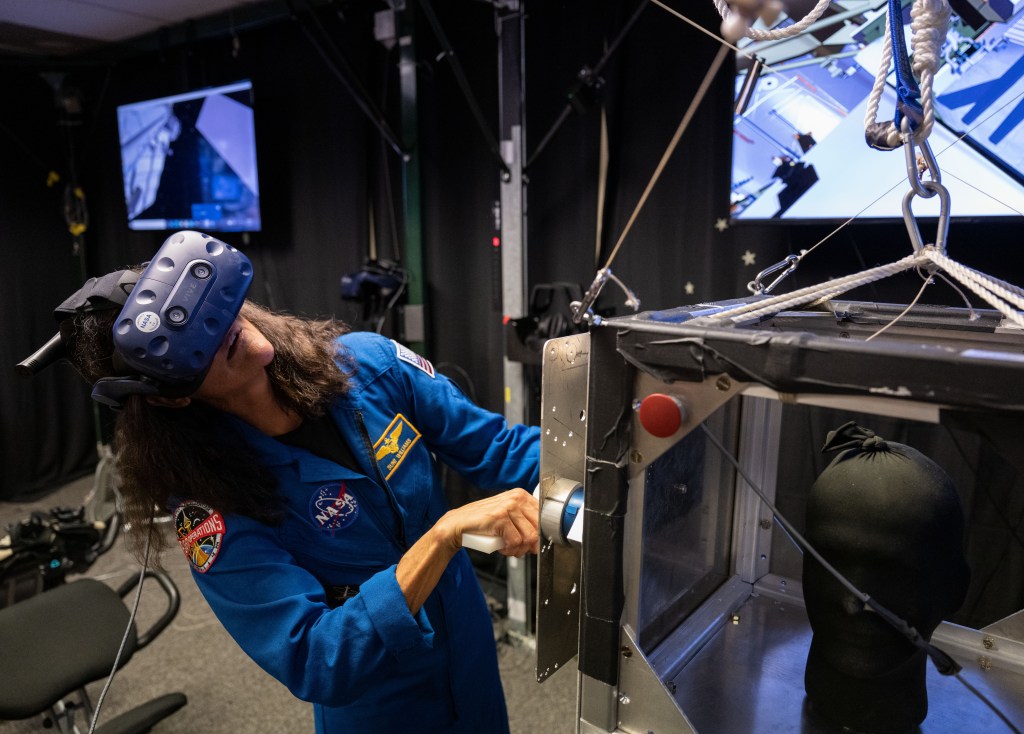
One of the main objectives is the transition to a rapid-response model based on computer simulation of all key program operations. NASA aims to implement “digital twins” of all Artemis systems to model the consequences of any technical changes and to practice critical maneuvers during space missions. The restructuring also includes modernizing astronaut training centers. New simulators employ augmented and virtual reality (AR and VR) technologies to train for crewed landings under the low-light conditions of the lunar pole.
Source: nasa.gov
One important change has involved the contracting system: NASA is increasingly moving away from the cost-plus model (covering all expenses plus profit) toward fixed-price contracts for specific deliverables. The new strategy incentivizes contractors to be more efficient, as they themselves bear the financial risks of delays or development errors.
In addition, NASA has actively begun involving industry veterans to advise younger teams. These experts previously worked on the Shuttle and Apollo programs and therefore bring invaluable experience in implementing such technically complex programs. Collaboration with international partners is also reaching a new level. Space agencies from Europe, Japan, and Canada are integrated into the program not as auxiliary forces but as developers of critical modules for Gateway and key service units for Orion, making Artemis a truly international initiative.
The restructuring also takes into account environmental and ethical aspects of lunar exploration. The space agency is developing rules of conduct for historic Apollo landing sites and standards for resource extraction to avoid future conflicts. Leadership in space now also means leadership in establishing new rules of the game for all participants in lunar activity.
According to NASA Administrator Jared Isaacman, he and his team believe that only this hybrid model will allow the agency to remain competitive in the new lunar space race. The updated vision of the Artemis program is intended to serve as the ultimate test, evaluating the ability of a government organization to operate at the speed of the private sector.