About 44 tons of space debris fall to Earth each year. Most of it is harmless, no larger than grains of sand. But occasionally, asteroids are among them: celestial bodies made of rock, ice, or metal left over from the formation of the Solar System. Asteroids rarely reach our planet, yet the risk of collision does exist. It has happened before: 66 million years ago, a 10-kilometer object struck Earth and led to the extinction of the dinosaurs, and in 2013, an 18-meter fireball (which turned out to be a meteorite) exploded at an altitude of 30 km over the Urals.
An asteroid is a rocky celestial body that orbits the Sun, most often in the asteroid belt between Mars and Jupiter. A meteorite is smaller than an asteroid and appears as a rocky or metallic body that has passed through the atmosphere and fallen to Earth.
Astronomers assess the risk of asteroid impacts using the 10-point Torino Scale and color coding. White and green (0–1 points) indicate either virtually no threat of collision or such a small probability that it does not warrant concern. Red (8–10 points) warns of certain impacts capable of causing serious destruction and/or leading to species extinction.
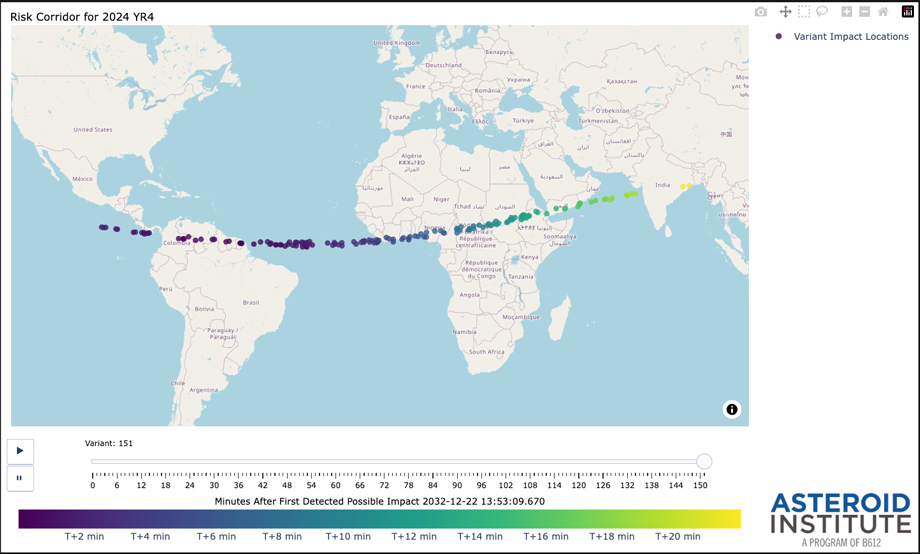
The good news is that the current rating on the Torino Scale is 0. However, more than 1,700 objects potentially threaten Earth, all of which have varying chances of approaching it in the future. The most probable scenario is a collision with asteroid 2024 YR4, about 100 meters in diameter. The risk of impact with this object is estimated at roughly 2%. According to different scientists, however, the probability ranges from 0.16% to 3.2%, and these estimates are constantly being updated. Therefore, leading national agencies and other organizations continuously monitor the movement of hazardous objects in an effort to minimize potential damage from a collision.

Source: nasa.gov
Why are asteroids and meteorites so dangerous?
Small asteroids are far more numerous than large ones, and they fall to Earth much more often. The smallest, up to 1 meter in diameter, hit our planet roughly once a year. Objects like the one in 2013, which was about 18 meters across, occur once every 60–80 years. Asteroids around 50 meters in size strike approximately once every 200–300 years.
The most dangerous are asteroids more than one kilometer in diameter. The impact of such an object on solid ground would release enough energy to cause a catastrophe. And the most destructive scenario would be a collision with a 10-kilometer asteroid, powerful enough to completely wipe out life on our planet.
Of course, meteorites and asteroids leave marks not only on Earth. Two of the most prominent craters on the Moon, Tycho and Copernicus, are visible even with binoculars. These are also the results of impacts, as are similar traces found on Mercury, Jupiter, and other planets.
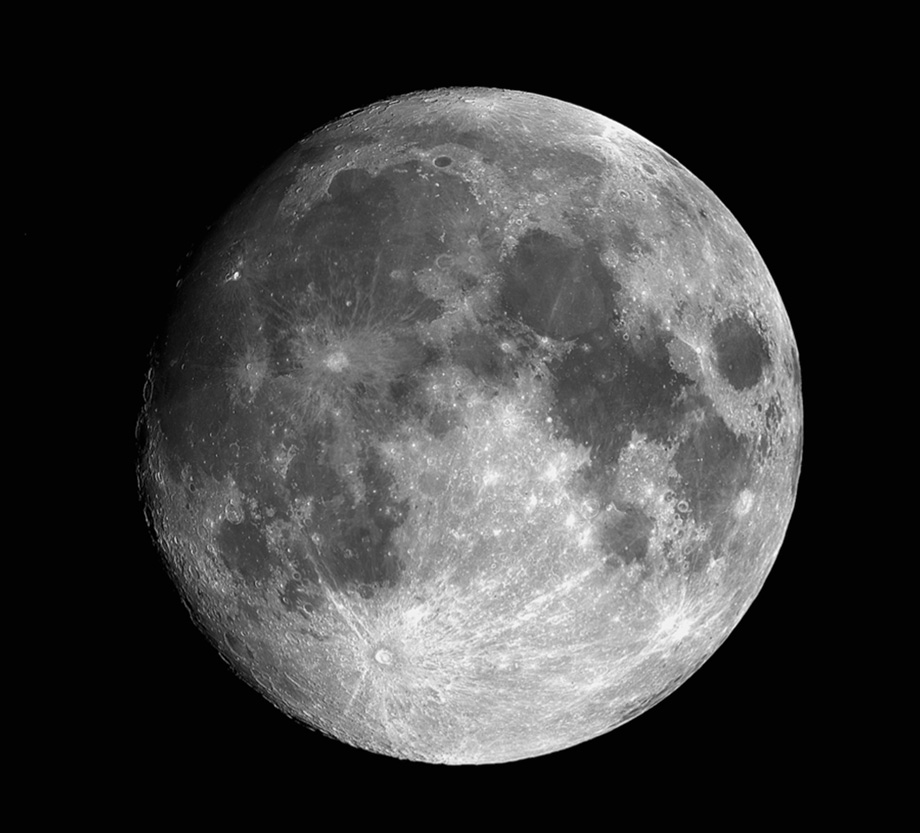
Source: nasa.gov
The last of the known large objects, the Tunguska object, which was about 50 meters in diameter, entered Earth’s atmosphere on June 30, 1908, streaked across the sky as a fiery ball before the eyes of frightened witnesses, and exploded over Siberia. The blast caused forest fires and the deaths of three people, and the shockwave flattened trees across an area of 2,150 km². The exact power of the explosion has not been determined, but according to various estimates, it ranged from 3 to 50 megatons of TNT equivalent.
The Tunguska event was the largest impact-related incident in recorded history. In 2016, the United Nations designated June 30 as International Asteroid Day to raise awareness about asteroids and efforts to protect our planet.
Today we know far more about asteroids than we did at the beginning of the 20th century, yet we still cannot fully protect Earth from such collisions. In part, this is because these celestial bodies remain difficult to detect: telescopes observe them in different ways. Moreover, asteroids do not emit light like stars, which makes it challenging to determine their shape and size. Predictions are further complicated by the Yarkovsky effect: sunlight heats one side of a rotating asteroid, and the emitted heat creates a weak reactive thrust. Over decades, this can shift the rock’s orbit by hundreds of kilometers.
You can learn more about the history of asteroid discovery and classification in one of our previous articles.
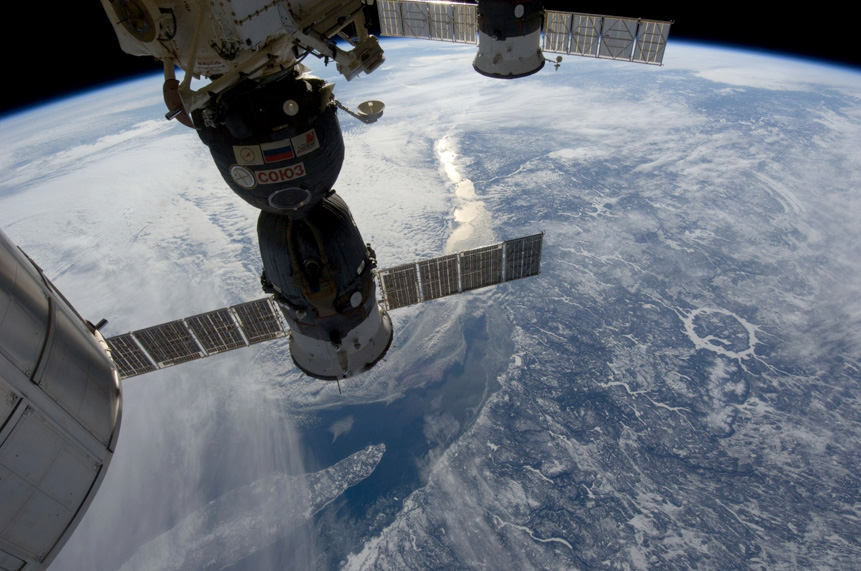
Source: nasa.gov
What are space agencies doing to protect the planet?
Asteroids have been colliding with Earth for millions of years, but for a long time, scientists were unable to assess the threats and consequences of such impacts. Everything changed thanks to modern telescopes that continuously scan the sky, and to researchers who analyze the data obtained and compile catalogs of objects in the Solar System.
The term “planetary defense” was introduced about thirty years ago by U.S. Air Force Lieutenant Colonel Lindley Johnson following a major cosmic collision. In 1994, the comet Comet Shoemaker–Levy 9 broke apart and slammed into Jupiter, leaving enormous scars in its atmosphere, which were larger than Earth itself. The force of the impact was 600 times greater than if someone had detonated the entire nuclear arsenal of our planet.
To learn more about planetary defense, as well as the incredible efforts and unsung heroes behind it, be sure to watch the documentary NASA Planetary Defenders.
For NASA and the United States Congress, the 1994 incident was the wake-up call that finally prompted them to begin a systematic search for hazardous objects in space. Since 2016, this effort has been led by the Planetary Defense Coordination Office (PDCO). Four years after the landmark Shoemaker–Levy 9 collision, Congress directed the space agency to specifically identify asteroids larger than one kilometer in diameter, a threshold at which a catastrophe would become truly global. At that time, only about two hundred such objects were known, although in reality, there are many more.
NASA began searching for potentially hazardous asteroids as part of the Near-Earth Object Observations Program (NEO), which continues to coordinate efforts to study near-Earth objects using a network of observatories around the world. These facilities provide data that make it possible to determine the physical and chemical properties of such objects, refine their orbits, and recommend potential mitigation strategies.
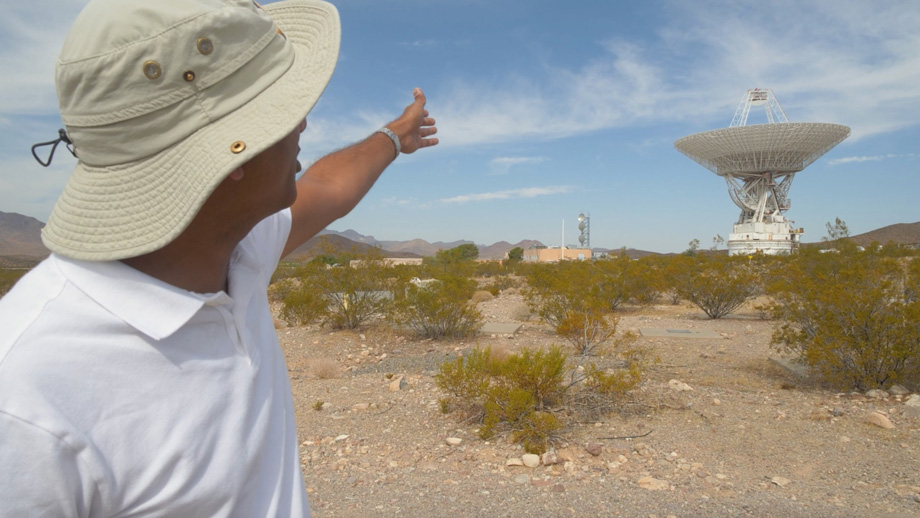
Source: nasa.gov
There is no shortage of objects to observe: as of early December 2025, 876 asteroids larger than 1 km had been discovered (with about 50 still left to find), and just over 11,000 asteroids larger than 140 m (with 14,000 yet to be detected).
The Planetary Defense Coordination Office (PDCO) reported that 191 near-Earth asteroids passed closer to us than the Moon between December 2024 and the end of November 2025. During that same period, the European Space Agency (ESA) registered its 40,000th near-Earth asteroid and noted that the number of such objects continues to grow: a quarter of them have been discovered in just the past three years.
On the one hand, this confirms our planet’s vulnerability to threats from space. On the other hand, it highlights the significant progress scientists have made in detecting, classifying, and realistically assessing these dangers. Let us take a look at what is being done to neutralize them.
Continuous monitoring of asteroids from Earth
At the beginning of 2014, the International Asteroid Warning Network (IAWN) began operations, bringing together 15 observatories and space institutes from the United States, Europe, China, Korea, and other countries. They exchange data and promptly issue warnings if any asteroid larger than 10 meters is expected to approach Earth within the next 20 years with a collision probability exceeding 1%.
More than ten years later, the IAWN includes 55 participants from 25 countries, among them space agencies, universities, private organizations, and even independent astronomers.
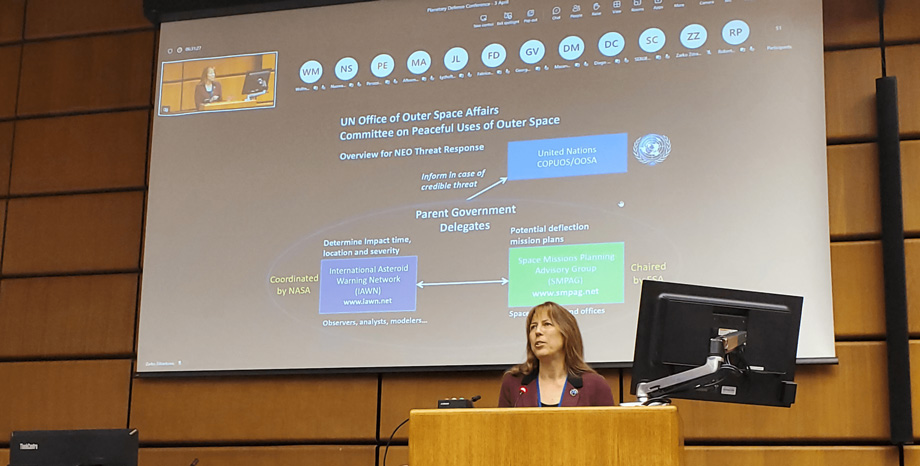
Source: nasa.gov
Telescopes: the first to spot the threat
To ensure that the International (IAWN) and other planetary defense organizations receive accurate data and can act preventively, the sky is continuously scanned by three ground-based systems: Catalina Sky Survey (CSS), Pan-STARRS, and ATLAS.
- The CSS observatory in Arizona searches for comets and asteroids using three telescopes. At various times, this project has been responsible for discovering up to 47% of all known asteroids, including those that impacted Earth in 2008, 2014, and 2018.
- The Pan-STARRS telescope system is located atop the Mauna Kea volcano on the island of Hawaii and continuously scans three-quarters of the sky. It detects up to 99% of all asteroids larger than 300 meters that cross Earth’s orbit.
- The robotic ATLAS early-warning system for asteroid impacts is based in Hawaii, Chile, and South Africa. It combines observational data from five telescopes, each of which surveys a quarter of the sky four times per night. Among the objects discovered by ATLAS are the largest asteroid to approach Earth in January 2018 and 2024 YR4, which could potentially collide with Earth in December 2032.
Source: b612foundation.org
Flyeye: a breakthrough in autonomous sky scanning
In 2025, the European Space Agency launched the Flyeye telescope, which features an unusual design reminiscent of an insect’s eye. This event became a major contribution to planetary defense: unlike traditional telescopes, Flyeye can capture an image of a region of the sky more than 200 times larger than the full Moon in a single exposure. It is a true technological breakthrough. We can now detect objects approaching from space far more efficiently, before they become a threat.
Another unique feature of Flyeye is that it is fully autonomous. Each night, without human involvement, it systematically scans predefined areas of the sky and identifies objects moving against the background of stars. Even during testing at the Italian Space Geodesy Center, Flyeye obtained images of several known asteroids and even photographed asteroid 2025 KQ just two days after its discovery.
Vera C. Rubin: a new flagship in asteroid searches
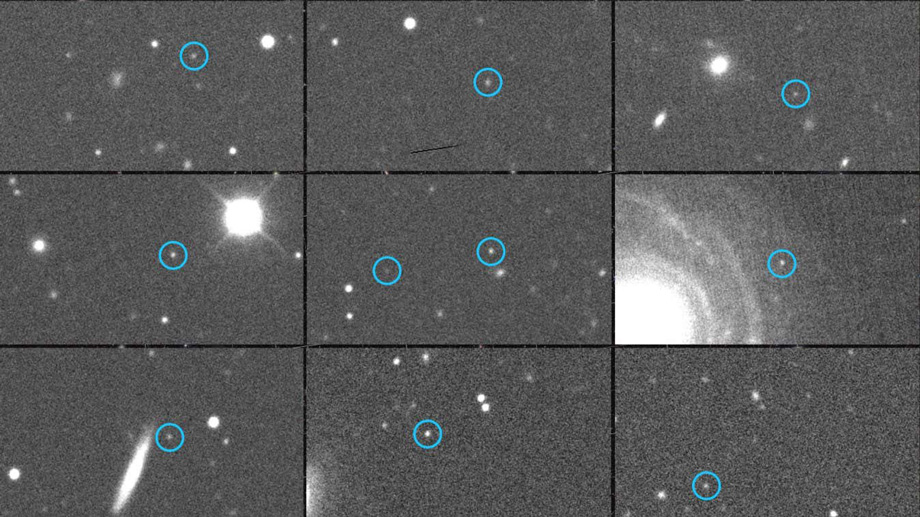
The first observatory in U.S. history named after a woman scientist, the Vera C. Rubin Observatory, scans the entire accessible sky of the Southern Hemisphere every 3–4 nights. It is so sensitive that it could detect the light of a candle from a distance of a thousand kilometers.
The observatory seeks answers to questions about dark matter, as did Vera Rubin herself, but its data are already being used for planetary defense as well. For example, in the first 10 hours of test observations, even before the official start of its program, the Rubin Observatory discovered more than 2,000 previously unknown asteroids in the Solar System, including seven near-Earth objects. Scientists say the observatory will be able to identify at least 90% of potentially hazardous asteroids with diameters of 140 meters or more, and, within its first two years of operation, it is expected to add millions of new objects to astronomical catalogs.
Source: newscientist.com
All data from telescopes around the world are sent to the Minor Planet Center (MPC). It is a single international hub that verifies and catalogs every observation and calculates the preliminary orbits of objects. The scale of its work is impressive: the center’s database already contains more than 400 million records of individual observations, and new data are added almost every minute.
From observation to action
Although telescopes and technologies like machine learning do an enormous amount of work in searching for potentially hazardous objects, humans still play a crucial role in the process. For example, CSS specialists visually examine likely candidates for collisions with Earth. An experienced observer can detect the movement of a dim, unremarkable object and pass this information as quickly as possible to other observatories for verification. On average, about 20 asteroids are selected in a single night for more detailed study, and they are published on the citizen science platform, Zooniverse, so that anyone interested can explore them.
Alongside IAWN, another organization was created under UN recommendation: the Space Missions Planning Advisory Group (SMPAG). They work together but are responsible for different stages of response: if IAWN issues a warning, SMPAG plans the countermeasures. When the advisory group receives a signal from IAWN, it adjusts space missions: for example, deciding which technology is best suited to alter an asteroid’s orbit.
In parallel, planetary defense is also handled by the federal agency National Nuclear Security Administration (NNSA), which operates under the U.S. Department of Energy and works closely with the U.S. Department of Defense. Since 2020, it has also been responsible for detecting and mitigating potential collision threats from near-Earth objects. Today, NNSA and its three laboratories collaborate with NASA to use shared resources to analyze potential asteroid impacts.
Sometimes, NNSA’s work results in simulations like these, which visually show the trajectory of an asteroid approaching Earth:
How DART and Hera are changing the game in planetary defense
At first glance, it seems simple: detect a potentially hazardous object as early as possible, and then either act on it or figure out how to minimize the damage on Earth. However, until very recently, humanity was no better prepared for collisions with asteroids and meteoroids than the dinosaurs.
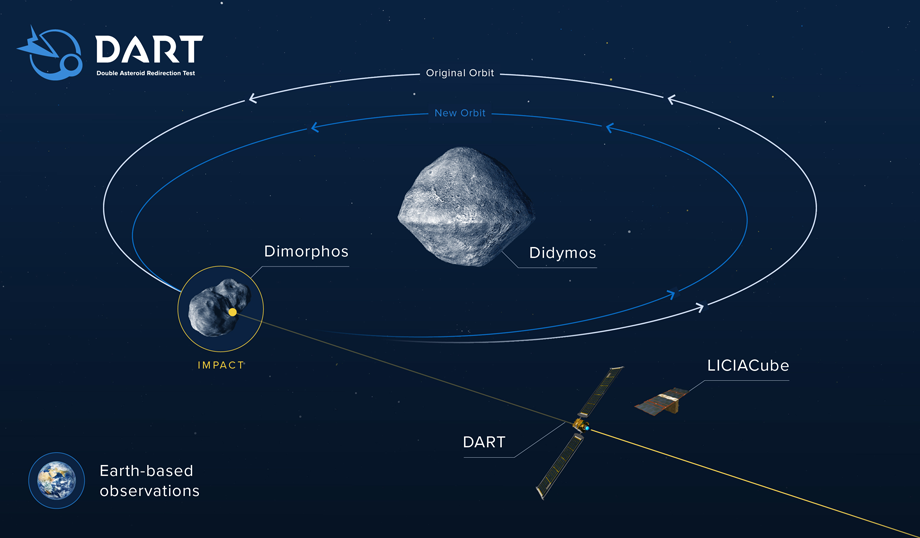
Significant changes began in September 2022, when NASA launched the spacecraft Double Asteroid Redirection Test (DART) toward the asteroid Dimorphos, a moon of Didymos, at a speed of over 22,500 km/h. As a result of the collision, Dimorphos’s orbit (160 meters in diameter and 5.5 million tons in mass) was shortened by 32 minutes. The DART mission thus confirmed that a kinetic impact can alter the trajectory of asteroids with a high likelihood of threatening Earth. This was the first demonstration in history of humans deliberately changing the motion of a celestial object.
Source: dart.jhuapl.edu
This binary system was not chosen by chance for the first large-scale planetary defense experiment. Dimorph orbited Didymos just like the Moon orbits Earth. Moreover, the asteroid was not classified as potentially hazardous and was relatively small. A larger asteroid would have required a stronger push, or even hundreds of DART impacts. to achieve a similar effect.
The story didn’t end there, however: in November 2026, the European Space Agency’s Hera spacecraft, launched two years earlier, will arrive at the collision site and finally document its aftermath. Everyone is eagerly awaiting Hera’s results and the scientists’ conclusions, as they will help develop measures to protect our planet from asteroids. DART itself did not collect all the necessary data due to the nature of its mission, and the LICIACube satellite that detached from it had only a minute to capture a few images of the dust debris from different angles.
Future missions to enhance planetary defense
In addition to Hera, at least three more new missions are planned by the end of the decade to help better understand how asteroids approach Earth and manage the associated risks. One of them is the Rapid Apophis Mission for Space Safety (Ramses), which will use much of the same technology developed for Hera. ESA is carrying out this mission in collaboration with the Japan Aerospace Exploration Agency (JAXA). The spacecraft will accompany the asteroid Apophis during its very close (but safe) approach to Earth in February 2029. Using two cubesats (one Italian-built and the other Spanish), scientists hope to understand how Earth’s gravitational influence affects the asteroid’s physical properties and orbit.
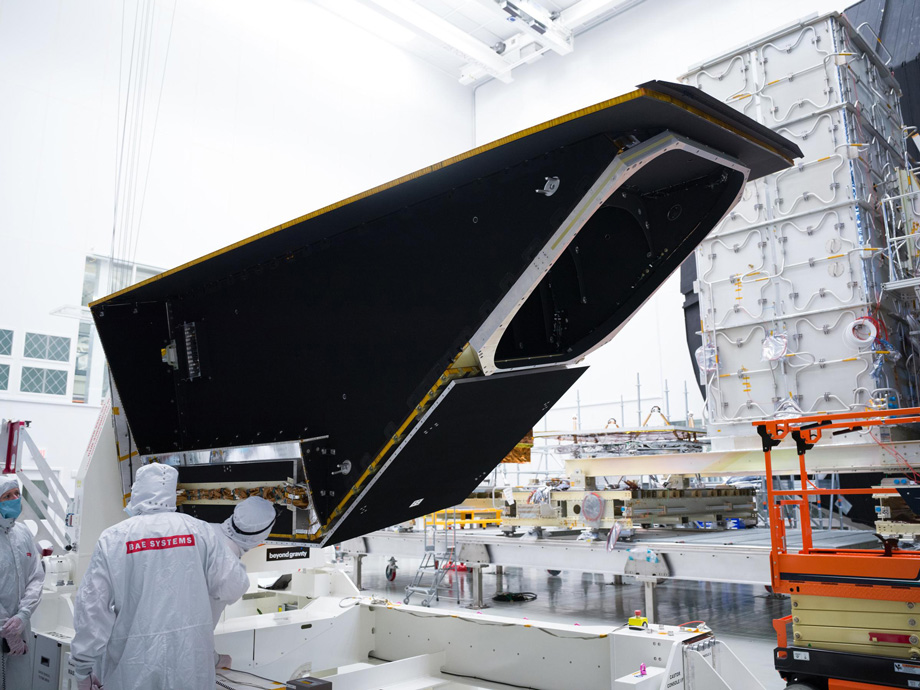
In 2027, according to the plan, the first space-based infrared observatory, NEO Surveyor (formerly NEOCam), is scheduled to begin operations. It will replace NASA’s NEOWISE telescope, which was shut down in July 2024 after more than ten years of studying potentially hazardous asteroids and comets. From space, NEO Surveyor will track asteroids in near-Earth orbit using specialized detectors sensitive to thermal radiation, while conventional telescopes rely on sunlight reflected from asteroids. This will help detect objects that cannot be observed from Earth.
Source: nasa.gov
Another infrared observatory, the Near-Earth Object Mission in the Infrared (NEOMIR), is planned for launch by ESA in the early 2030s. Unlike NEO Surveyor, it will be sent closer to the Sun, and its increased frequency of repeated observations will allow detection of even fast-moving near-Earth objects 20–25 meters in size, 3–4 weeks before a potential impact with Earth.
Asian countries have also joined efforts to counter potential threats from space. China plans to launch a mission in 2027 to the 30-meter asteroid 2015 XF261, combining an observer and an impactor probe in a single launch. The collision is expected in April 2029 at a speed of 10 km/s. Meanwhile, Japan’s JAXA has extended the Hayabusa2 mission, sending it to the small, fast-rotating asteroid 1998 KY26. This will allow, for the first time in 2031, a close-up study of one of the objects most likely to collide with our planet.
The risk of a major asteroid impact on Earth in the next decade is minimal. Although it is too early to speak of guaranteed protection, humanity has in recent years begun to assess the real scale of the problem and started building an early warning system to predict impacts and prepare for them. NASA and ESA are creating coordination centers, consolidating planetary defense efforts, and expanding the network of ground-based and space telescopes. The successful DART mission demonstrated that we can not only observe asteroids but also alter their orbits. The designation of 2029 as the International Year of Planetary Defense and Asteroid Awareness further underscores the importance and scope of these efforts.