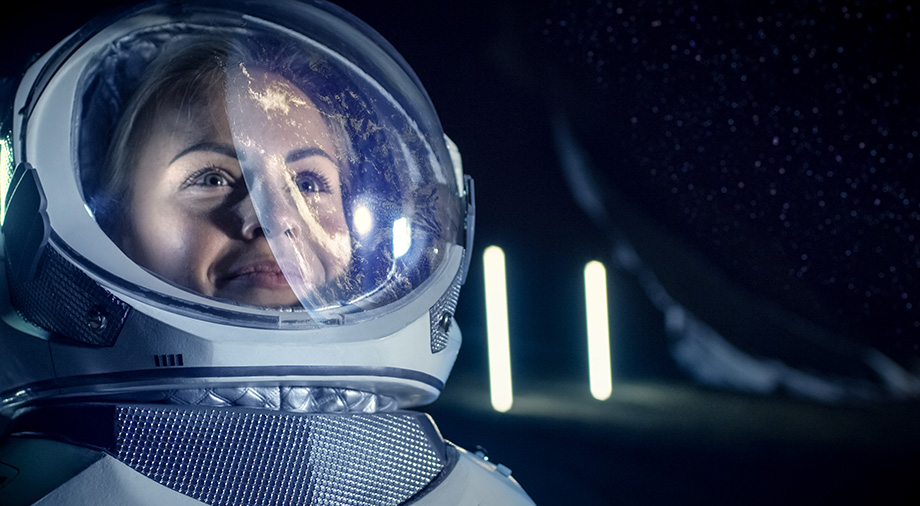
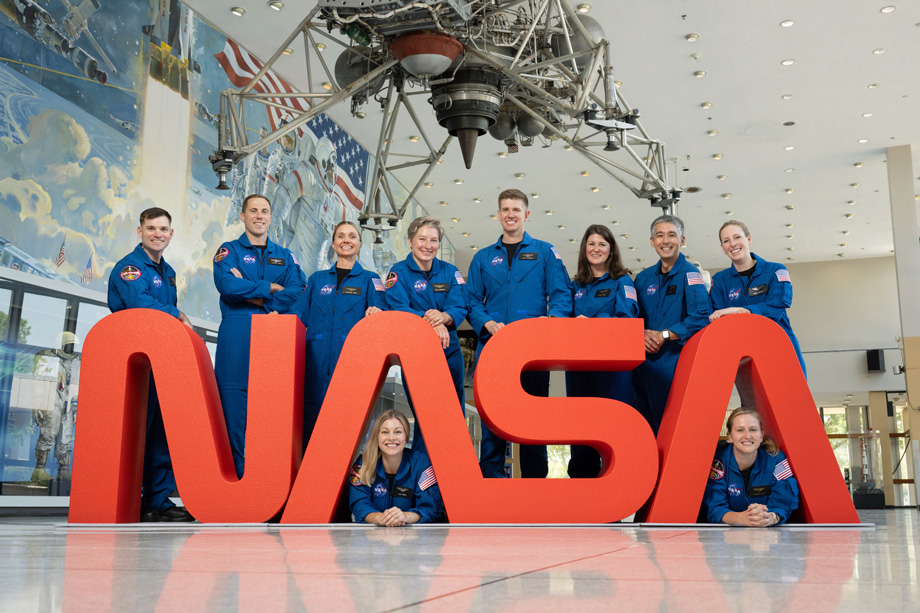
Women are no longer just venturing into space: they are managing payloads, setting scientific records, and laying the groundwork for future missions. Sixty-four years after the first human spaceflight, and for the first time in the history of NASA, there are more women than men among astronaut candidates: six women as compared with four men. The female members of the team include geologist Lauren Edgar, military physician Imelda Muller, test pilot Katherine Spies, test pilot Rebecca Lawler, naval aviator Erin Overcash, and bioengineer Anna Menon. Menon, in fact, has already been to space and set an altitude record for women during the Polaris Dawn mission.
Currently, another major project is preparing for launch: the Nancy Grace Roman Space Telescope. It is scheduled to be delivered into orbit in the fall of 2026 by a SpaceX Falcon Heavy rocket. The telescope was named in honor of the first head of NASA’s astronomy division, a woman who in the 1960s boldly entered the male-dominated field of space exploration and effectively became the “mother of Hubble.” She earned that nickname for her pivotal role in planning and creating the Hubble Space Telescope, the largest orbital observatory launched in the 20th century. Today, the Nancy Grace Roman Space Telescope has every chance of becoming the next flagship mission, as it is expected to collect an enormous volume of data in record time.
Today, let’s take a look at the most remarkable space events of 2025 that wouldn’t have been possible without the women who worked to bring them to fruition.
Source: nasa.gov
The first all-female NS-31 crew
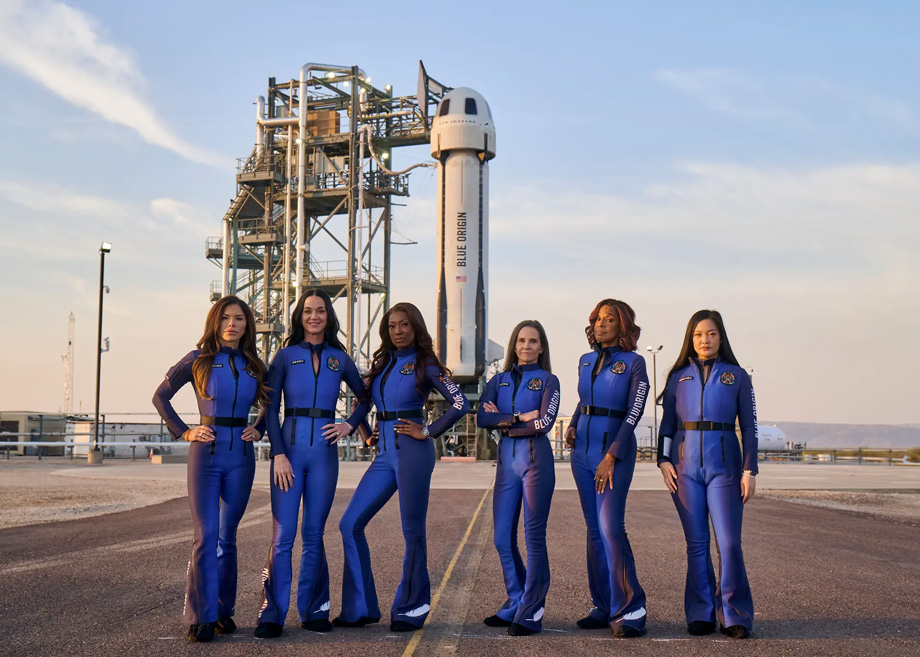
On April 14, 2025, the New Shepard rocket operated by Blue Origin carried six women into space. The capsule rose to an altitude of 106 km, crossing the Karman line, the internationally recognized boundary between Earth’s atmosphere and outer space. The crew spent several minutes in weightlessness, and the entire flight lasted just over ten minutes.
It was the first all-female crew since 1963, when a woman first traveled to space. Among the participants were singer Katy Perry, television host Gayle King, journalist Lauren Sanchez, human rights activist Amanda Nguyen, and researcher Kerianne Flynn. But from a professional standpoint, the true star of the mission was Aisha Bowe.
Source: blueorigin.com
Bowe is an aerospace engineer, a former NASA employee, and the founder of the IT company STEMBoard. On New Shepard, she served as a payload operator and, as part of a partnership program with NASA, she conducted biological experiments with plants in microgravity and wore a BioButton device that monitored her vital signs. This research will help scientists better understand how the female body responds to spaceflight.
Bowe was also the first black woman to fly with Blue Origin. She is actively involved in promoting STEM among girls and women, inspiring them to pursue their dreams and reach for the stars. In an interview with a magazine published by the World Intellectual Property Organization, she said: “Do not limit your ambitions! Once you achieve your goal, aim even higher!”
Despite its positive outcomes, the NS-31 mission sparked mixed reactions from the public. Some felt that celebrities had turned a serious scientific endeavor into a spectacle and criticized it as an expensive PR project by Jeff Bezos. On the other hand, thanks to Aisha Bowe’s media presence and Amanda Nguyen’s human rights advocacy, millions of people learned about the mission, including many who had never previously taken an interest in space.
France’s Sophie Adenot and the εpsilon mission
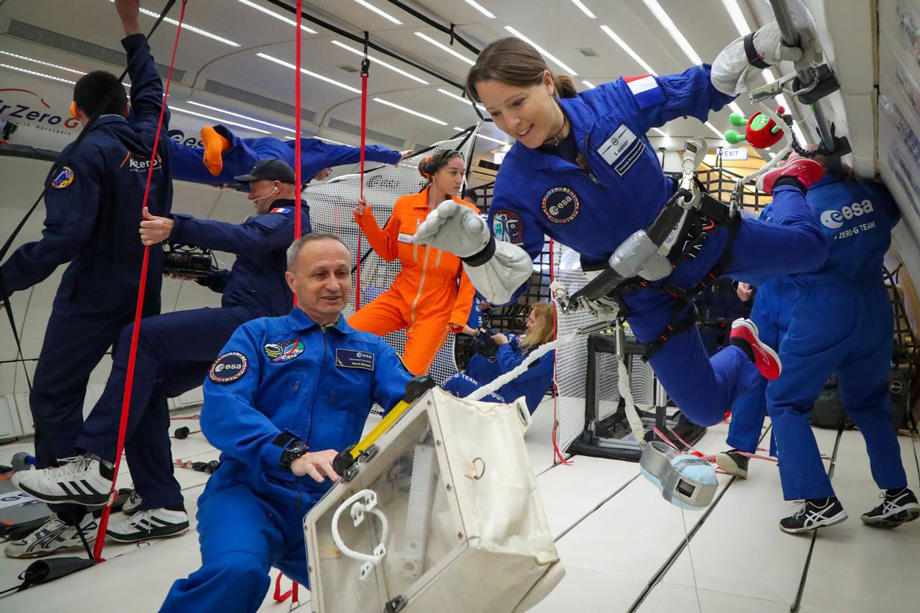
On February 13, 2026, a Falcon 9 rocket lifted off from Kennedy Space Center carrying a Crew Dragon capsule. Among the four crew members of the Crew-12 mission was French ESA astronaut Sophie Adenot, a lieutenant colonel in the French Air Force and the first woman in France to serve as a helicopter test pilot.
The mission, called εpsilon, will last about eight months, during which time Adenot plans to work on a wide range of tasks aboard the International Space Station, including conducting scientific experiments and medical research, supporting Earth observation activities, and participating in the operation and maintenance of the station.
This will be Adenot’s first spaceflight, for which she trained for nearly three years. She will be the second female astronaut from France after Claudie Haignere, who made her first flight in 1996.
Source: futura-sciences.com
Rabea Rogge: Germany’s first female astronaut
On March 31, 2025, just a few days before NS-31, the four-day private crewed Fram2 mission was launched, sponsored and led by crypto entrepreneur Wang Chun. During this mission, German national Rabea Rogge traveled to space for the first time. This happened nearly five decades after the 1978 flight of the first German astronaut, Sigmund Jähn, aboard the Soviet Soyuz spacecraft. Before Rogge’s mission, 12 German men had already flown to space.
A biomedical engineer by training, Rogge previously worked in neuroengineering and researched brain–computer interfaces. While in Fram2’s polar orbit, she participated in about twenty studies, mostly focused on changes in the human body under microgravity conditions, as well as on the growth of fungi in weightlessness.
The 29-year-old Rogge received little attention in the global media, unlike her European colleague Sophie Adenot. Nevertheless, her flight was especially significant for Germany, which has a highly developed aerospace industry and a long history of participation in ESA and NASA programs.

Source: taz.de
Catherine Bennell-Pegg: winner of the 2026 Australian of the Year award
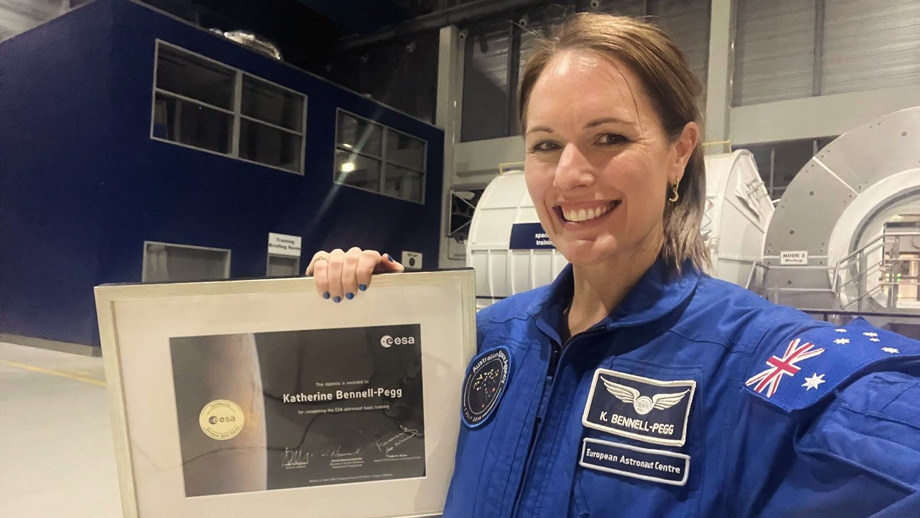
In January 2026, astronaut and space engineer Katherine Bennell-Pegg received the “Australian of the Year” award for 2026. This is considered one of the most prestigious honors in Australia and is presented to individuals who have made a significant contribution to Australian society or have become role models for the nation as a whole.
Bennell-Pegg became the first female astronaut to officially represent Australia and the first Australian woman to obtain professional astronaut status. She works with the European Space Agency and is a member of the ESA astronaut corps selected in 2022. In addition, Bennell-Pegg is actively involved in promoting STEM education among young people, especially girls.
Source: space.gov.au
Vietnam and Kazakhstan are also in the mix
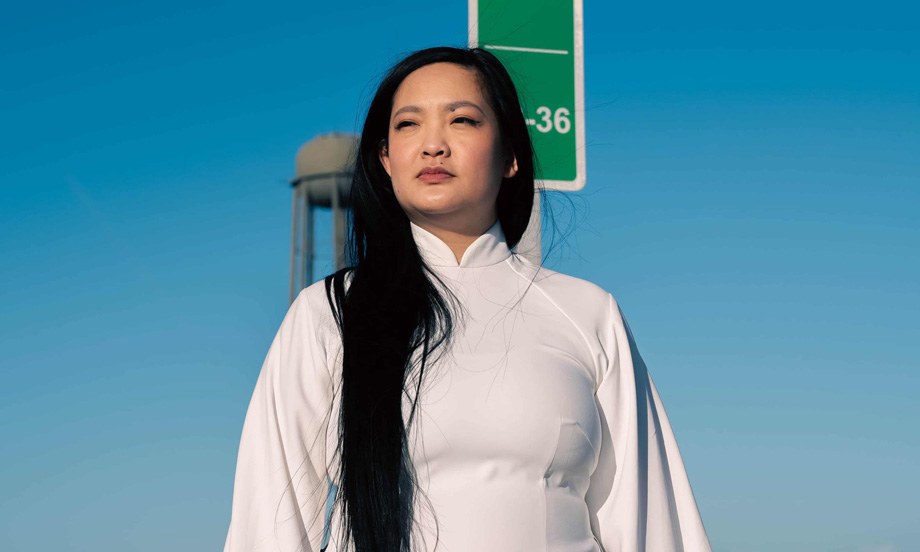
The NS-31 mission went down in history for having the first all-female crew in 60 years, but it will be remembered for more than that. Amanda Nguyen, a member of the NS-31 crew, a human rights advocate, a Nobel Peace Prize nominee, and co-founder of the organization Rise, became the first woman of Vietnamese descent to travel to space. She took lotus seeds with her so that scientists on Earth could later study the effects of microgravity on them.
Moreover, on October 8, 2025, Blue Origin completed the 36th flight under its New Shepard program, and one of the crew members was Danna Karagusova, the first woman from Kazakhstan to travel to space. This was undoubtedly an important milestone not just for Kazakhstan, but for all of Central Asia, whose countries have been actively developing their space programs in recent years.
Source: theguardian.com
Sunita Williams: the end of a career
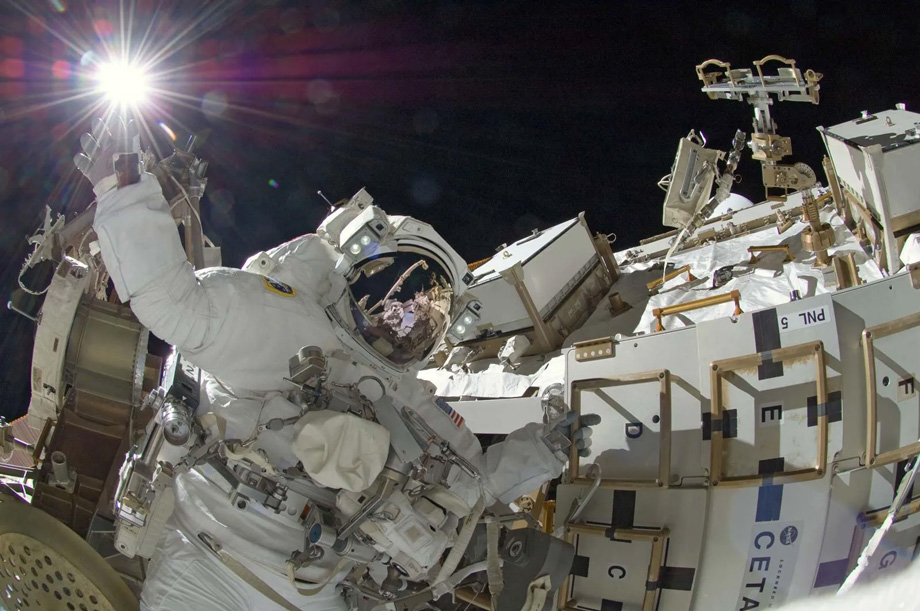
Almost a year ago, on March 18, 2025, astronauts Barry Wilmore and Sunita Williams returned to Earth aboard a Crew Dragon capsule after spending 286 days in space. Due to this extended mission, Williams accumulated a total of 608 days in orbit over the course of her career. She also holds the record among women for total time spent performing spacewalks: 62 hours and 6 minutes.
In January 2026, Williams announced that she was concluding her career at NASA after 27 years of service. She has already secured her place in the history of space exploration, made a major contribution to its advancement, and helped pave the way for future missions to the Moon and Mars. She continues to inspire future generations of astronauts, including women.
Source: britannica.com
Mars as a lifelong goal: the story of Alyssa Carson
While Sunita Williams has shifted into the role of an observer and plans to watch as NASA continues making history, new figures are emerging in the space information landscape. One of the most prominent is American Alyssa Carson, who has, since childhood, publicly declared her goal of becoming an astronaut and one day flying to Mars to stay. For this reason, she is sometimes called “the girl who will go to Mars and never return.” Of course, this is not part of any officially approved NASA plan, but rather a media image that Alyssa actively cultivates.
As a teenager, Carson became the youngest participant in the international Advanced PoSSUM Space Academy project, where she studied space science and underwent training. At 18, she earned her pilot’s license. She has also built her career around this dream: she studied astrobiology at the Florida Institute of Technology and continues to work in academia, researching whether microorganisms could survive on Mars. And of course, she persistently trains for future flights in microgravity conditions.
Source: variety.com
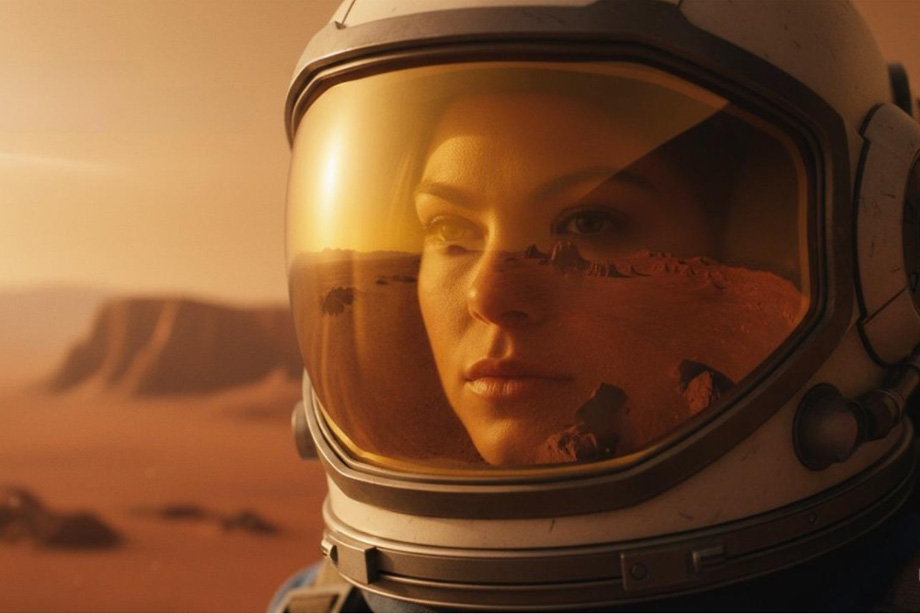
In 2025, Carson returned to the spotlight when the Indian film studio Studio Blo, together with Disruptor Studios, announced the production of a documentary about her. The film, called “Alyssa Carson: Ready for Liftoff,” was created with the involvement of artificial intelligence, which was used to visualize the potential life of humans on Mars 10, 50, and 100 years into the future.
Carson herself, a team of planetary scientists, and AI specialists all worked on the project. Although the activist has not yet succeeded in passing a real astronaut selection process, she continues to focus her audience’s attention on crewed missions to Mars and demonstrates through her own example that the path to a dream runs through education, science, and public engagement.