On July 1, 2025, ground-based telescopes detected the presence of the third confirmed interstellar object in our Solar System, which was named 3I/ATLAS (where 3I meant the third interstellar object, and ATLAS was the name of the robotic telescope that first detected it). However, there were many questions about this new interstellar visitor: astronomers noted, for example, the object’s very rare trajectory through the Solar System, a strange chemical signature, and even the presence of an “anti-tail,” which is uncharacteristic for comets. The wildest hypotheses even suggested that 3I/ATLAS might be an alien spacecraft, meaning humanity potentially stood on the brink of the first confirmed contact with an extraterrestrial civilization. NASA, of course, refuted all hypotheses about aliens and confirmed that 3I/ATLAS (which is now officially designated C/2025 N1) is an ordinary comet, albeit of interstellar origin.
But the story of 3I/ATLAS is interesting not just because of the debates over the object’s origin, but also because of its technical aspects. Behind the theories regarding the comet’s type lay painstaking work observing a small, very fast celestial body using advanced telescopes and technologies. Today, we will take a detailed look at how space observatories have learned to detect interstellar objects, and we will try to answer how it happened that, in the entire history of astronomical observations, such bodies began to be recorded only nine years ago.
Predecessors of 3I/ATLAS: orbital trajectory and high velocity
The era of interstellar discoveries began relatively recently. In 2017, the first confirmed interstellar object (1I) was detected and given an exotic name with Hawaiian roots, Oumuamua (which translates as “the first messenger from afar”). Oumuamua confirmed the fact that our Solar System is not a closed system. But why had such objects not been observed earlier, despite the high level of development of astronomical observatories by the mid-2010s?
This question has several complementary answers. Interstellar objects like Oumuamua had not been previously observed due to a combination of several key factors, including their trajectories, relatively small sizes, and extremely high speeds. Speed, in fact, is one of the main issues, since to overcome the Sun’s gravity and later leave the Solar System, such objects have to be moving two to three times faster than other bodies within the system, such as asteroids, comets, etc. This means that their velocity can reach 87 km/s, whereas a typical asteroid in our system travels at an average speed of about 30 km/s.
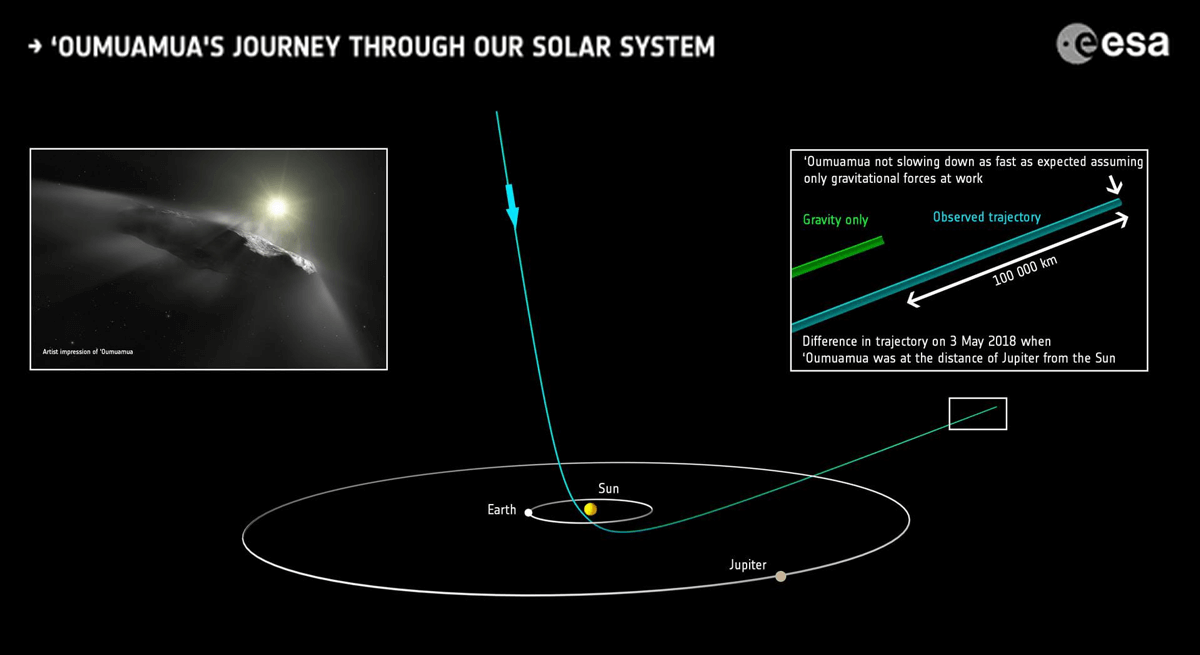
Another key point is an interstellar body’s orbital trajectory. It is at the stage of determining the orbit that an observed object is classified as interstellar or not. Bodies that belong to the Solar System have elliptical or parabolic trajectories around our star. In contrast, interstellar visitors move at speeds exceeding the escape velocity from the Sun’s gravity, resulting in a specific hyperbolic trajectory with an eccentricity (e) greater than one (e > 1). Detection of such an orbital trajectory automatically confirms the object’s interstellar status.
Source:sci.esa.int
Most large telescopes, both ground-based and space-based, are configured for deep but narrow fields of view, searching for faint and distant objects such as galaxies or stars, neglecting rapid scanning of large areas of the sky. As a result, the hyperbolic trajectories of interstellar objects, combined with their high velocities, made it difficult for astronomers to detect these outsiders in the Solar System in time. It was like trying to look at a visitor standing at your door by looking through the keyhole instead of using a wide-angle peephole.
Oumuamua was ultimately discovered by the wide-field astronomical survey system Panoramic Survey Telescope and Rapid Response System (Pan-STARRS), which was specifically designed for rapid sky monitoring and the automated detection of fast-moving transient objects such as asteroids. In fact, only the emergence of these new, technologically advanced automated survey systems, along with improvements in data-processing algorithms, made it possible to detect interstellar targets. The discovery of Oumuamua became the basis on which a new methodology for observing similar objects was developed.
Source: facebook.com
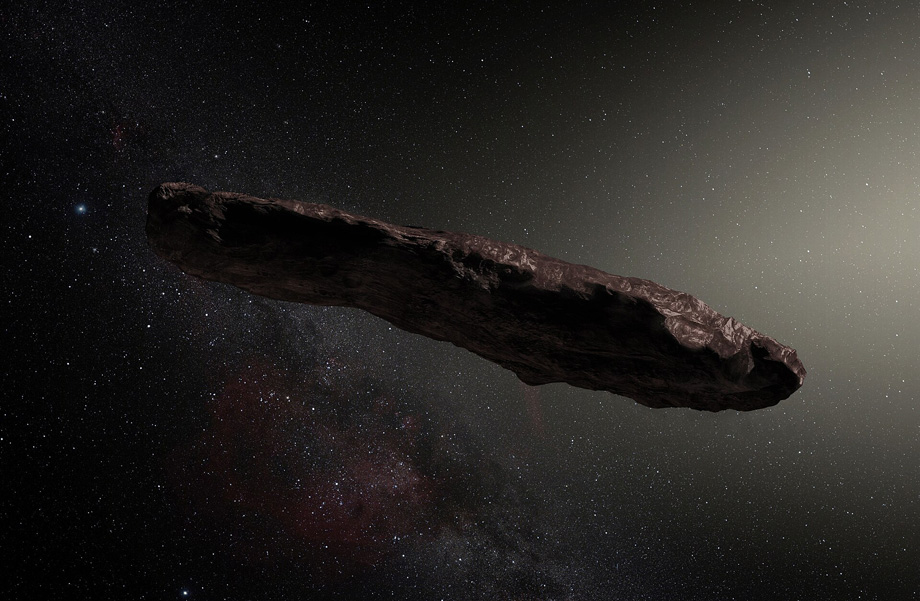
Oumuamua’s unusual, highly elongated shape, resembling a cigar, along with its mysterious non-gravitational acceleration without a visible coma (the large, diffuse gas-and-ice envelope surrounding a comet’s nucleus), suggested that interstellar objects might prove far more unusual than expected. Scientists realized they needed not only to search for such objects, but also to promptly analyze the dynamics of every new high-velocity body discovered in order to confirm its interstellar origin. In the case of Oumuamua, there was far too little time for a thorough study, since it was detected only on October 19, once it had already passed its closest point to the Sun (perihelion) and had begun to move rapidly out of the Solar System.
As a result, observations of Oumuamua lasted only a few weeks. However, it was not long before the next encounter with an interstellar object. This time, astronomical observatories around the world were ready. First and foremost, astronomers had proactively upgraded their search algorithms, which now focused on wide-field observation and the rapid calculation of hyperbolic trajectories, to avoid a repeat of the missed opportunity with Oumuamua.
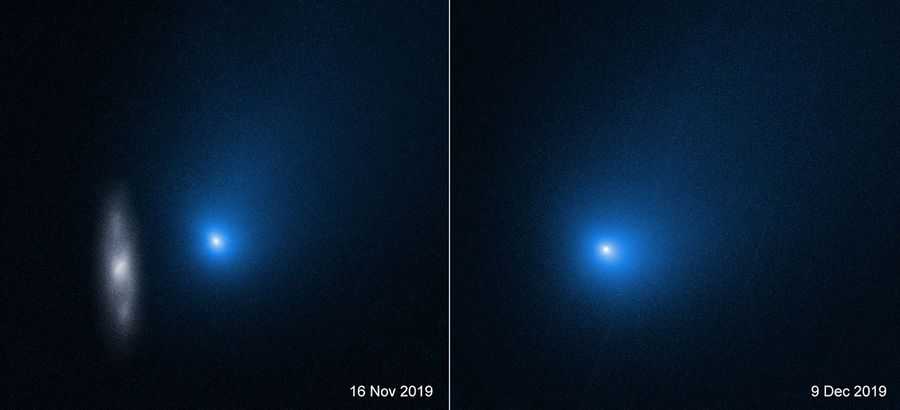
The new search algorithm produced results as early as 2019, when an amateur astronomer of Ukrainian origin, Gennady Borisov, discovered the second interstellar object, 2I/Borisov. This was of enormous significance because, unlike the enigmatic Oumuamua (whose precise astronomical classification remains debated to this day), 2I/Borisov turned out to be a classical active comet, featuring a typical coma formed by the sublimation of ice and gas, and a distinct tail trailing behind it under the influence of the solar wind and radiation pressure.
Source: science.nasa.gov
The second detection of an interstellar object was of tremendous scientific importance, since it demonstrated that not all visitors from afar are much different from the celestial bodies present in our own Solar System. 2I/Borisov’s rather ordinary comet-like behavior confirmed that interstellar objects can sometimes be regular icy comets ejected from their native star systems.
The short two-year interval between the discovery of 1I/Oumuamua and 2I/Borisov gave astronomers greater confidence that interstellar visitors enter our Solar System far more frequently than previously thought. Wide-field telescopes and observatories from around the world actively joined the search for new interstellar bodies.
Looking more widely at the Universe: ATLAS and Pan-STARRS
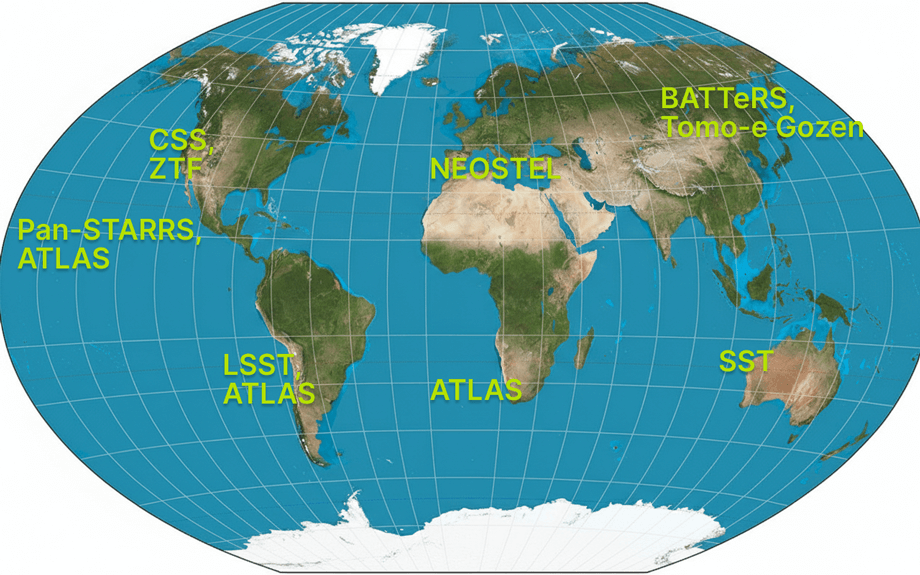
The experience of the first two encounters helped astronomers realize that the timely detection and thorough observation of interstellar objects with hyperbolic trajectories requires powerful wide-field survey systems. Ideally, such observatories should be distributed around the globe, since only in this way can continuous, round-the-clock coverage of the entire visible sky be ensured. By distributing observatories across different longitudes in both the Northern and Southern Hemispheres, limitations resulting from Earth’s rotation and local weather conditions can be compensated for. If one observatory is affected by daylight or unfavorable weather, another on the opposite side of the planet can take over the observational relay.
The first two telescopes in the Asteroid Terrestrial-impact Last Alert System (ATLAS) began full operations in 2015. Both were built in the Hawaiian Islands: the Haleakalā Observatory is located on the island of Maui, and the Mauna Loa Observatory is on the island of Hawaiʻi. Subsequently, additional wide-field ATLAS telescopes were brought online: one at the Sutherland Observatory in South Africa, and another at an observatory in Río Hurtado, Chile (it was this telescope that detected 3I/ATLAS in the Solar System on July 1).
Source: en.wikipedia.org
The operating principle of the ATLAS telescopes is based on rapid, wide-field scanning of the entire visible night sky, typically two to four times per night depending on the selected mode. The system automatically compares images, detecting any moving object, with particular attention to small asteroids heading toward Earth. Since ATLAS’s primary function is the search for moving objects, the telescope is optimized to track objects with high angular velocity, a key factor in identifying near-Earth asteroids as well as rare interstellar visitors with their hyperbolic trajectories.
Each ATLAS telescope is relatively small but extremely fast. Technically, it is a 0.5-meter Cassegrain telescope with a very large field of view. To cover as much of the night sky as possible and obtain clear results, very high-resolution images are required. That is why ATLAS is equipped with specialized 110-megapixel cameras. When scanning a particular section of the sky (local coverage mode), the telescope can take four full images over the course of a night. Another option is full coverage mode, in which ATLAS scans the entire visible sky at a rate of two images per night.
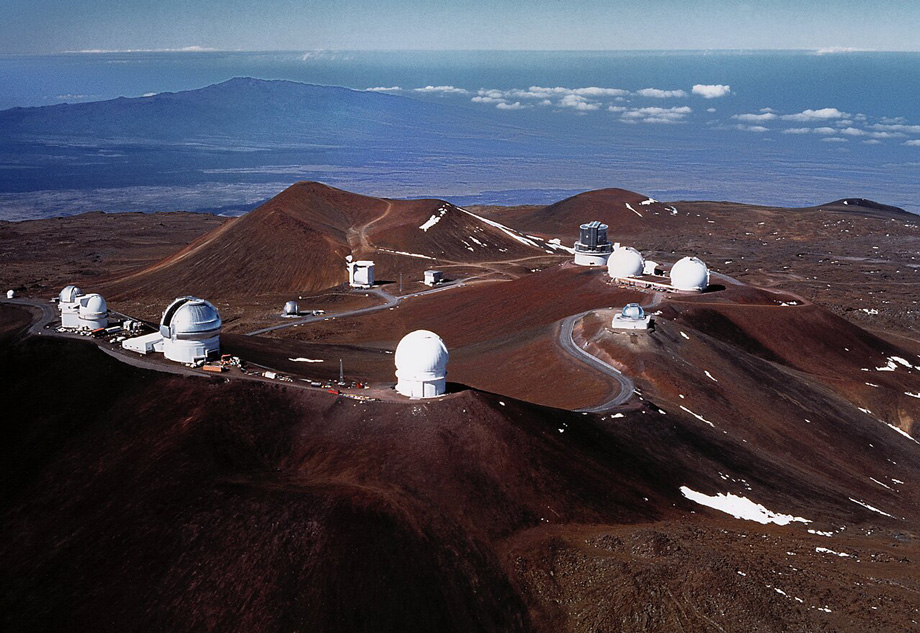
Operating in parallel with ATLAS is the Pan-STARRS system, located at the summit of the Haleakalā volcano on the Hawaiian island of Maui. Similar to ATLAS, the observatory uses large digital cameras to produce deep, wide-field images of the starry sky. The operating principle of Pan-STARRS involves taking several consecutive images of the same region of the sky. Later, by comparing the images obtained, software algorithms identify objects that have significantly changed their position since the previous observation. This approach makes it possible not only to catalog small bodies moving at high speed, but also to calculate their orbital parameters, determining whether an object belongs to the Solar System (elliptical trajectory) or is interstellar (hyperbolic trajectory).
Source: noirlab.edu
Observatories involved in the search for interstellar objects are constantly being upgraded for sky monitoring, gaining the ability to automatically compare images using machine-learning algorithms. This is done to more accurately detect objects moving at speeds exceeding those required to remain gravitationally bound to the Sun. Experience gained from working with the first two interstellar comets has made it possible to develop new, more effective algorithms for calculating such trajectories. This approach was introduced just in time: previous measurement inaccuracies could have led to the misclassification of an interstellar object as an ordinary long-period comet belonging to the Solar System.
But beyond the actual detection of a transiting interstellar object, another crucial stage is the observation process and the determination of its key parameters. It is precisely at this stage that most additional details emerge, allowing researchers to establish the object’s fundamental properties and classify it. Each year, this field of research is enriched with new methodologies aimed at determining a body’s luminosity, its precise velocity, and even the chemical composition of a comet’s coma.
Visualizing non-gravitational forces: luminosity and anti-tail
Immediately after its discovery, 3I/ATLAS unsettled the astronomers observing it. This had nothing to do with a potential collision with Earth. On the contrary, the minimum distance at which 3I/ATLAS approached our planet was 1.8 astronomical units, approximately twice the distance from Earth to the Sun, meaning there was absolutely no chance of impact.
What concerned scientists was the unusual hyperbolic trajectory the object followed into our Solar System: the orbital inclination of 3I/ATLAS was about 5.9° relative to the plane of the planets’ orbits (the ecliptic). This meant that 3I/ATLAS would travel roughly within the plane of the other planets, theoretically giving it a unique “opportunity” to study them in detail. Speculation about the object’s supposedly artificial nature emerged almost immediately, voiced even by some fairly respected scientists.
Another mystery surrounding 3I/ATLAS was its non-gravitational acceleration: the object was moving faster than it should have under the influence of solar gravity alone. This required scientists not merely to track its motion, but also to attempt to visualize the forces acting upon it. To quantitatively assess this excess acceleration, high-precision astrometry is used. This is a method with which scientists calculate deviations from an ideal gravitational trajectory, referred to as non-gravitational acceleration.
In the case of 3I/ATLAS, non-gravitational acceleration was most likely linked to the reactive thrust produced by gas outbursts (jets), which, according to Newton’s second law (force equals mass multiplied by acceleration), caused the interstellar object to move faster than predicted by gravitational models alone.
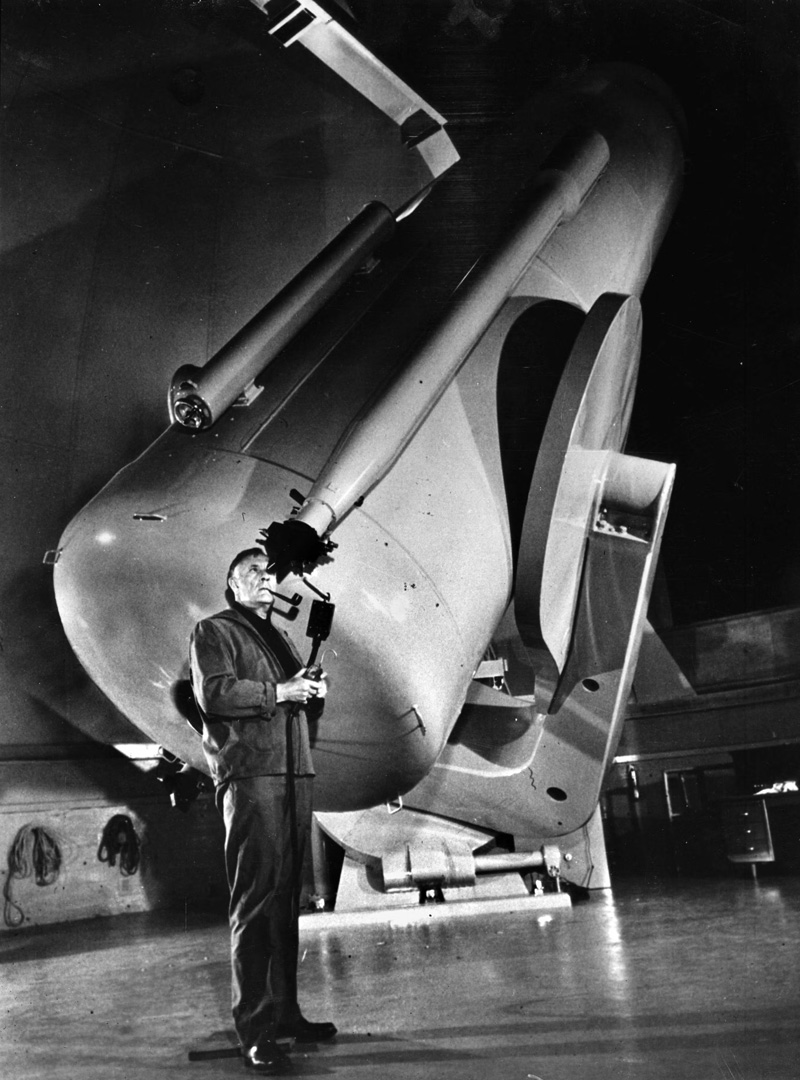
In general, visualizing the effects of non-gravitational forces requires analyzing a comet’s luminosity, which consists of sunlight reflected by dust and light emitted by gas. Luminosity is analyzed using a system of photometric filters, an invention employed in observational astronomy as far back as the late nineteenth century and later applied to the study of interstellar comets.
Source: biography.com
In the study of interstellar objects, photometric filters are useful for estimating the rate of sublimation by separating the light flux into its components. Astronomers use narrowband filters that transmit light only at very specific wavelengths corresponding to the emission lines of particular molecules in a comet’s gaseous coma, such as cyanide (CN), hydroxyl (OH), or carbon monoxide (CO). The intensity of the glow of these gases is directly proportional to the rate at which they are released from the nucleus.
By measuring this intensity and comparing it with the light reflected from the comet’s dust, scientists can quantitatively determine the rate of mass loss and calculate with high precision how many kilograms of gas the nucleus loses per second as the body moves. In other words, determining luminosity is crucial, since the sublimation rate makes it possible to confirm the causes of non-gravitational acceleration and even to identify the original chemical composition of the interstellar object’s material and its thermal history. It was precisely through this method that, in February 2026, scientists conclusively established that 3I/ATLAS is an object extremely rich in volatiles, rather than merely a rocky asteroid. This discovery became key evidence that the intense sublimation of ice creates the reactive force that further accelerates the body along its path through the Solar System.
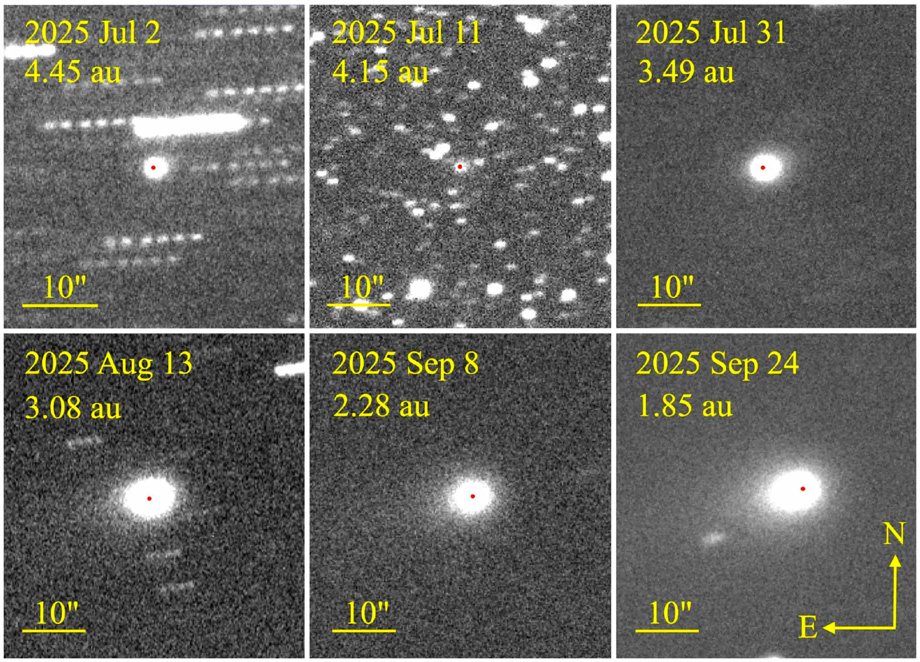
Another unusual feature was the tail of 3I/ATLAS. As the object gradually approached the Sun, its tail was at first directed not away from the Sun (as is typical for comets), but toward the star. This directly contradicts most observations of comets in our Solar System. However, the phenomenon was observed for only a few months, after which the comet’s anti-tail gradually transformed into a traditional tail directed away from the Sun.
Source: avi-loeb.medium.com
At the end of October 2025, an American astronomer, Avi Loeb, who has become the most prominent media-facing 3I/ATLAS researcher, recorded that the interstellar object’s anti-tail had gradually transformed into a traditional tail pointing away from the Sun. The transformation phenomenon occurred due to a fundamental change in the physics of evaporation as the comet approached the Sun. Astronomers explained the initial glow of the anti-tail as the dominant scattering of sunlight by fragments of water ice ejected during the intense sublimation of carbon dioxide (CO₂) from the comet’s extremely cold nucleus. These icy particles had a very short lifetime in the outflow.
The critical moment came when 3I/ATLAS continued its approach to the Sun, and the solar flux increased exponentially. This led to a sharp rise in temperature and, consequently, to the instantaneous evaporation of the icy fragments from the comet’s coma. Previously, these fragments had produced the glow that, when projected onto the comet’s orbital plane, visually resembled an anti-tail pointing toward the Sun. However, as the lifetime of the ice decreased, this source of scattered light quickly vanished.
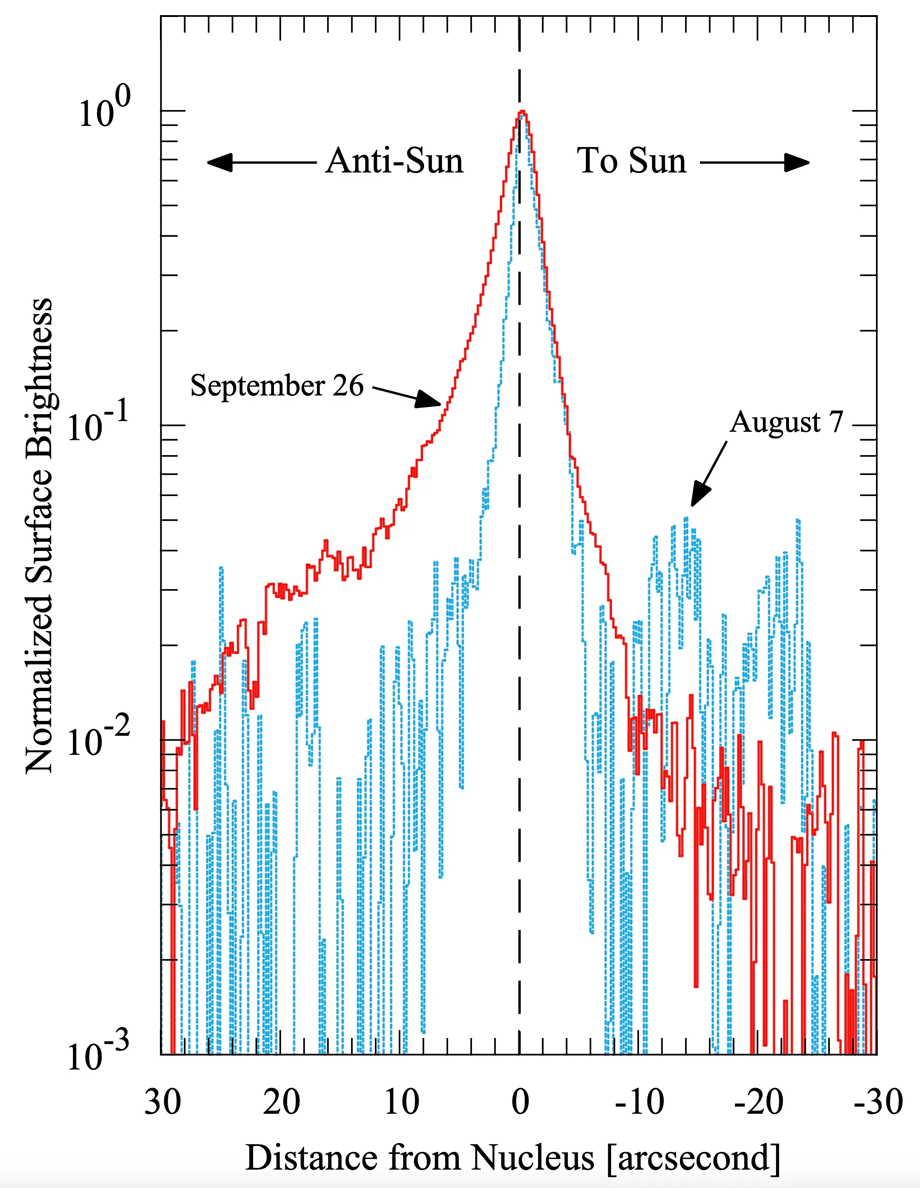
Source: avi-loeb.medium.com
As the comet approached the Sun, its coma began to be dominated by long-lived refractory dust particles and stable matter fragments. Unlike the short-lived ice, this dust is resilient enough to be effectively pushed by the pressure of solar radiation. This led to the formation of a classic dust tail, which in comets is always directed away from the Sun. Astronomers finally stopped seeing the anti-tail (as light from ice) and began to observe a regular tail (as light from dust), immediately ruling out hypotheses about “braking engines” on the supposed “spacecraft” 3I/ATLAS. But the mystery of the interstellar comet did not end there.
Chemical passport: 3I/ATLAS spectral fingerprint
Although determining the luminosity of an interstellar comet provides a preliminary idea of its chemical composition, the most comprehensive information comes only from high-resolution spectroscopy. This technology allows scientists to virtually peer inside an object formed in another star system and determine with high precision which chemical compounds it contains.
The light coming from a comet is collected by a large telescope and passed through a specialized device called an echelle spectrograph, which separates the light into its component wavelengths. The key principle is that each chemical element or molecule in the comet’s gas envelope, water, cyanide, or carbon, produces unique emission lines or bands in the spectrum. This is similar to a molecular “fingerprint” left by each celestial body, which the observatory can track. By comparing these lines with standardized laboratory data, astronomers can identify which substances are sublimating from the comet’s nucleus, entering its coma, and ultimately evaporating into open space.
Spectral analysis of 3I/ATLAS using the NIRSpec instrument on the James Webb Space Telescope showed that the comet is extremely rich in carbon dioxide and contains almost no water, a highly unusual composition compared with other comets in the Solar System. The dominance of carbon dioxide over water ice in its outgassing indicates that 3I/ATLAS was likely ejected from the outer, extremely cold region of its native star system — a region analogous to our Oort Cloud, but with even lower temperatures. This explains why the interstellar object began showing activity (gas emissions) at a very large distance from the Sun, generating its non-gravitational acceleration.
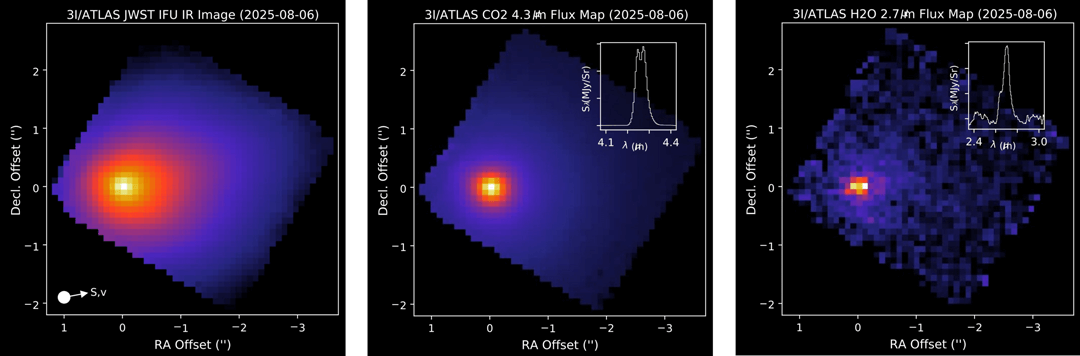
Source: en.wikipedia.org
As a bonus, observations from the Very Large Telescope (VLT) revealed that 3I/ATLAS contained a large amount of nickel and also had a very low iron content, which is highly unusual for a natural object in the Solar System. On Earth, such a composition is seen mainly in heavy industry, where nickel is separated from iron during metal refining processes. In the context of a comet, however, this was a fairly unique process.
Studies of 3I/ATLAS have already begun using high-precision instruments. A particularly important role is played by the Vera C. Rubin Observatory (VRO), which in January 2026 officially completed its testing phase and began the full-scale 10-year Legacy Survey of Space and Time (LSST) program. Thanks to its unprecedented sensitivity, VRO joined in monitoring 3I/ATLAS’s trajectory, enabling high-resolution spectroscopic studies even when the object is at large distances from the Sun. These observations aim to decode the comet’s unique chemical composition and search for exotic compounds uncommon in our Solar System. The data obtained are fundamental for reconstructing the conditions in the protoplanetary disk of the distant star where 3I/ATLAS formed.
When 3I/ATLAS first appeared, NASA even considered redirecting the Juno spacecraft, which is currently completing its mission around Jupiter, to achieve a historic intercept of the comet. This was initially planned for March 2026. To do this, however, Juno would have needed a critical trajectory adjustment in mid-September 2025, using Jupiter’s gravity to intercept the comet. Equipped with several highly precise instruments, Juno was seen as an ideal solution: its near-infrared spectrometer could analyze the comet’s chemical composition, its magnetometer could detect its magnetic properties, and its microwave radiometer could record thermal emissions during a flyby at a distance of about 25 million km. However, NASA abandoned this plan due to fuel considerations for completing Juno’s ongoing mission tasks.
The history of 3I/ATLAS research demonstrates how interstellar object studies are moving beyond random discoveries into systematic, technologically intensive exploration. Each detection of an active comet highlights the critical role of wide-field survey systems and machine-learning algorithms for rapid data processing. The likelihood of success is being further strengthened by new types of wide-field telescopes such as ATLAS and Pan-STARRS, as well as the VRO, which astronomers plan to use to discover and study hundreds of interstellar objects each year.