Satellite megaconstellations already provide internet access to governments, militaries, and, most importantly, people living in remote areas, since the lack of stable connectivity in places where laying fiber optics or connecting via ADSL is prohibitively expensive serves to deepen social inequality.
Starlink remains the dominant provider of satellite internet, with over 11,000 satellites as of February 2026. In second place is OneWeb, with more than 650 satellites. Although the current balance of power is unlikely to change soon, several similar projects are expected to deploy large constellations in the years to come. Let’s take a closer look at who stands the best chance of competing with Starlink and OneWeb and what the rapid growth of global broadband satellite networks could mean.
Megaconstellations: a brief history
Broadband satellite constellations are a relatively recent development. The first U.S. government attempts to deploy satellite groups into low Earth orbit (LEO) date back to the mid-1980s. Commercial constellations of about a hundred satellites in LEO appeared only in the 1990s, among them Celestri, Teledesic, Iridium, and Globalstar. However, these projects soon ran into serious financial trouble, failed to attract further investment, or went bankrupt due to the high cost of launches and the collapse of the dot-com bubble in the early 2000s.
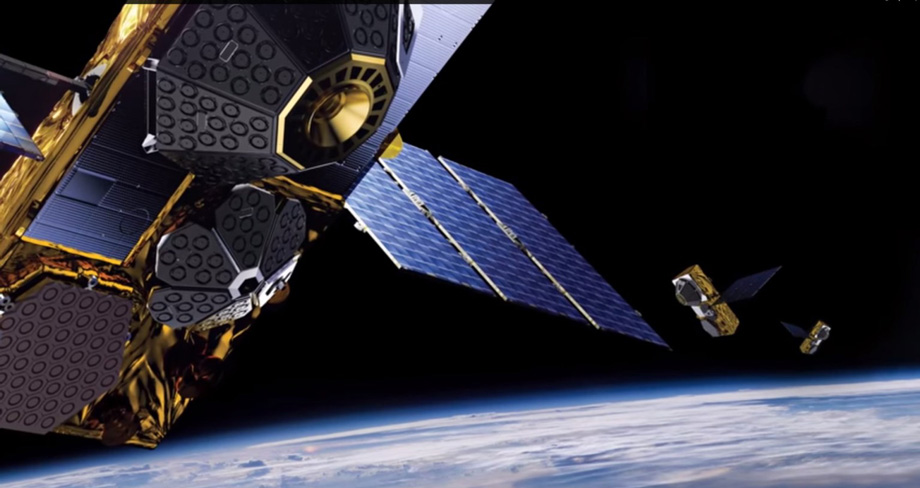
Source: spacenews.com
Starlink, of course, stands out as a long-runner in this field. The company was registered in 2015, received FCC approval in 2018, and immediately launched two test satellites. The first full batch of 60 satellites was sent into orbit in May 2019. The public beta version of the service, which offered speeds up to 150 Mbps, became available in 2020, but the company only started turning a profit three years later, having previously operated at a loss.
“To make the system economically viable, you need around 1,000 satellites. If we put many more into orbit, that’s great because it means demand for the system is high,” said Elon Musk, CEO and chief engineer of SpaceX.
As of June 2025, the company has 7,734 satellites in orbit, with 6,846 in active service. While Elon Musk had previously planned to deploy between 12,000 and 42,000 satellites (according to estimates at different points in time), he now intends to expand the mega-constellation by an additional one million satellites to build a network of orbital data centers.
OneWeb’s constellation emerged at almost the same time as Starlink. The satellites were built by OneWeb Satellites in collaboration with Airbus. The first six were launched into low Earth orbit in 2019, followed a year later by a larger batch of 34 satellites. OneWeb went bankrupt in 2020 but managed to overcome the crisis and, after restructuring, continued expanding its network. As of February 2026, OneWeb has 656 satellites (654 operational). Unlike Starlink, which serves customers directly, OneWeb operates through partner networks.
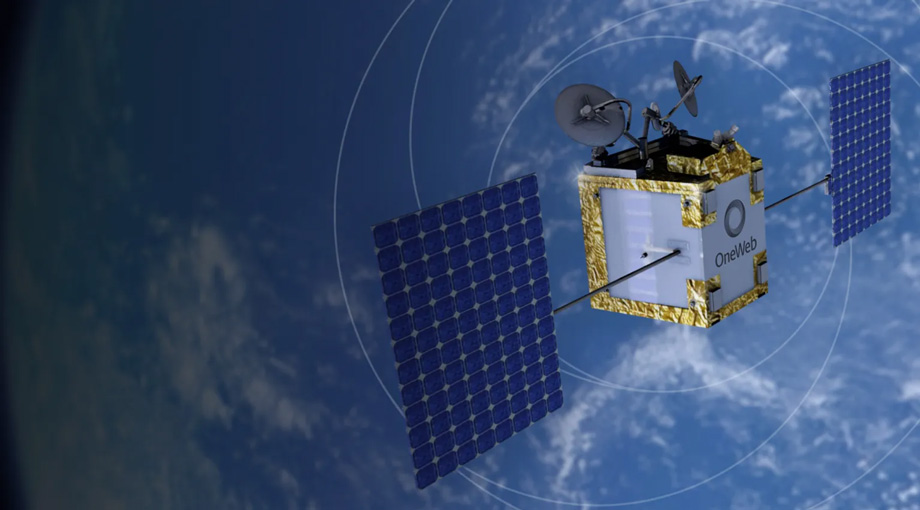
Source: spacenews.com
New megaconstellations
Advances in satellite technology and decreasing launch costs have led to the creation of lighter, more compact satellites that are cheaper to launch than they were 20 years ago. At the same time, demand for high-speed, low-latency internet access has been growing. All this has resulted in the emergence of new satellite constellations whose owners are, if not directly competing with market leaders, at least aiming to carve out a niche in the rapidly growing satellite internet market. A few small constellations have already reached orbit in 2025, and several more are expected to launch within the next two or three years.
Project Kuiper by Amazon
Kuiper Systems was established in 2019 as an Amazon subsidiary. On April 28, 2025, Kuiper Systems launched its first 27 low-latency broadband satellites. The project’s initial cost is estimated at $10 billion, and its goals align with those of Starlink: to provide broadband internet access to governments, businesses, and end users worldwide. Whether Kuiper Systems will become a major player remains to be seen. However, the company has already secured licenses for 3,236 satellites. As of February 2026, 182 satellites have already been launched (180 operational), with others to be launched before 30 June 2029. Kuiper intends to use launch services from Arianespace, Blue Origin, and SpaceX.
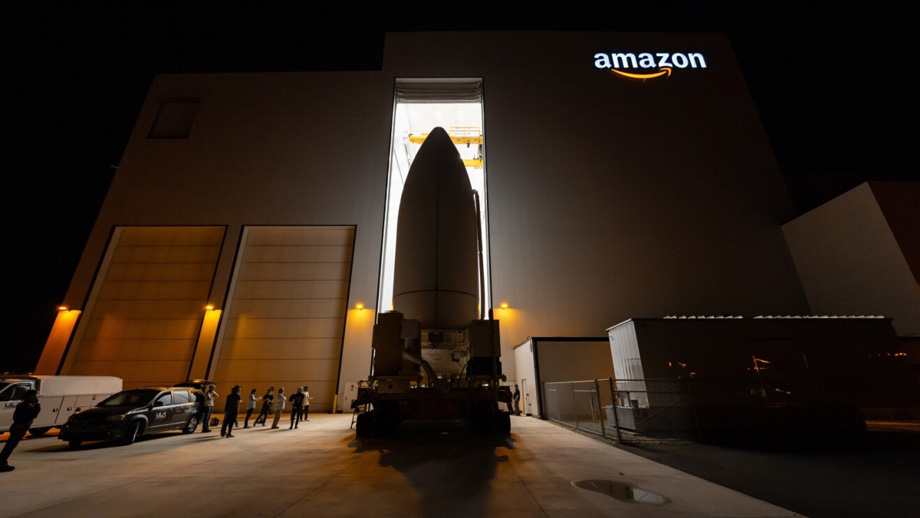
Source: aboutamazon.com
Guowang (aka Hulianwang/Xingwang)
With three names but just one satellite superconstellation, Guowang (also known as Hulianwang and Xingwang) is one of China’s most ambitious space projects, spearheaded by its primary aerospace contractor, the China Aerospace Science and Technology Corporation (CASC).
Guowang merges the satellites of the Hongyan and Hongyun constellations into a single superconstellation. These two projects had previously been developed in parallel: Hongyan (planned for 300 satellites) was managed by CASC, while Hongyun (156 satellites) was the work of a different Chinese aerospace conglomerate, CASIC. Both companies successfully launched prototype satellites in 2018 but showed little visible activity afterward.
The situation changed in 2020 when China’s main economic regulator, the NDRC, designated satellite communications as critical infrastructure. China quickly announced that it would merge the Hongyan and Hongyun constellations into a single superconstellation consisting of 12,992 satellites and established the China Satellite Network Group (China SatNet) as the operator of the future satellite broadband megaconstellation.
The Guowang project officially launched in 2022, with the first satellites sent into orbit in December 2024. Guowang currently has 145 operational satellites in orbit, and the operator plans to launch 400 more by 2027. Their primary purpose is to serve both the government and civilian sectors with broadband access and individual data transmission services. This also suggests that the Chinese government aims to establish a state monopoly in satellite communications similar to its control over terrestrial 4G and 5G networks, which are dominated by three state-controlled telecom companies.

Source: spacenews.com
Telesat Lightspeed
In 2016, the Canadian satellite communications company Telesat announced plans to deploy the Telesat Lightspeed constellation of 120 satellites in low polar and inclined orbits at an altitude of around 1,000 km. The orbital plane arrangement aligns with the Canadian government’s Enhanced Satellite Constellation Project, ensuring global coverage. A year after the project’s launch, the planned number of satellites increased to 300 and later to 1,600.
In December 2024, Telesat announced that its Lightspeed satellite constellation project had passed its preliminary design review, which paved the way for the company to compete with Starlink in low Earth orbit. According to Telesat CEO Dan Goldberg, “Starlink will continue to grow its market share, but they won’t take 100% of the market.” He also believes that some corporate clients will prefer to work with multiple providers to diversify risks.
Telesat signed a contract for 14 launches with SpaceX, aiming to deploy all 198 Lightspeed satellites within a year, starting from mid-2026. The constellation’s services are expected to include data transit for mobile network operators and internet service providers, as well as aviation and maritime connectivity, with a particular focus on government clients.

Source: eoportal.org
The satellite constellations we have discussed thus far serve virtually all categories of clients, from government agencies and the corporate sector to private individuals. However, there are also highly specialized projects, such as those aimed exclusively at the defense sector.
Helsing and Loft Orbital
Helsing, a leading European defense technology company, and Loft Orbital, a satellite infrastructure expert, have joined forces to deploy Europe’s first AI-powered multi-sensor satellite constellation. Designed for intelligence purposes, this system will provide real-time information for defense and security operations. The satellites are already in production, launch slots have been secured, and the missions are scheduled for 2026. Understandably, the size of the constellation and its technical specifications have not been disclosed.
What is known is that the satellites will carry cameras and radio-frequency sensors to monitor military targets in low Earth orbit. Unlike traditional satellites, this constellation will process data directly on board using artificial intelligence, eliminating the need to transmit information back to Earth. This approach will allow near-instant detection and classification of critical data related to events in border areas, troop movements, protection of military infrastructure, and other things of vital importance to European defense.
As Helsing co-founder Dr. Gundbert Scherf noted, “Ukraine has shown that the battlefield is becoming increasingly transparent, and the integration of AI and satellite intelligence is crucial.”

Source: helsing.ai
Problems with new and expanding satellite constellations
The rapid addition of dozens or even hundreds of new satellites in short periods of time risks overloading an already crowded environment filled with artificial objects. The greatest danger comes from the risk of collisions and the potential for the Kessler syndrome, which would dramatically increase the amount of space debris, worsening an already critical issue for space operations. For example, a single collision between a satellite and a piece of space debris can generate countless new fragments, which in turn threaten other satellites. This creates a chain reaction where the amount of space debris grows exponentially. It’s important to remember that fragments of any size are dangerous, even those smaller than 1 cm in diameter (and there are already millions of such fragments in low Earth orbit).
To avoid collisions, the International Space Station (ISS) is equipped with special shielding. Even so, it must maneuver frequently in order to avoid debris. These maneuvers burn extra fuel and disrupt astronauts’ spacewalk schedules. Providing similar protection for satellites is virtually impossible.
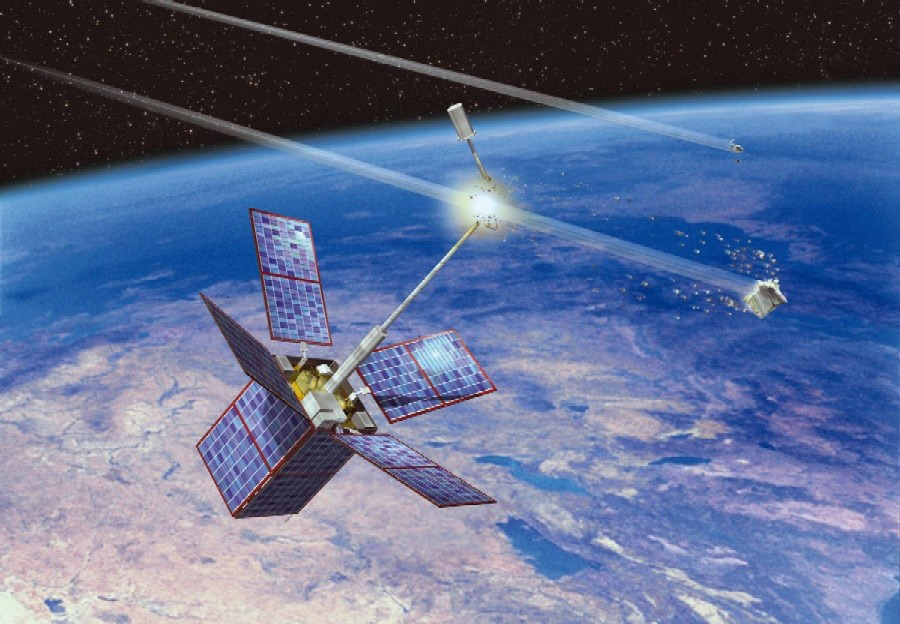
Source: space.com
Another growing problem is light pollution. This issue first drew attention in 2019, when 60 Starlink satellites were launched and activated simultaneously. When this happened, the satellites resembled stars and were clearly visible from Earth. At that time, the International Astronomical Union (IAU) expressed concern that the emergence of megaconstellations would interfere with astronomical observations. Beyond that, satellite constellations may also affect wildlife, since some migratory birds and amphibians navigate using luminous points in the night sky.

Source: bbc.com
There is also growing concern over radio pollution caused by satellites exchanging signals with millions of ground antennas. The interference created by satellites affects the operation of radio telescopes like the Event Horizon Telescope and observatories that rely on radio waves. This may pose challenges for studying star formation, black holes, and galaxies.
What is being done to minimize risks
Recognizing the seriousness of the problems posed by new and expanding satellite constellations, scientific organizations and private companies are working to reduce the risks of space debris accumulation, light pollution, and radio interference. For example, Kuiper Systems has designed its satellites to be less visible to astronomers observing from Earth by coating their bodies with a dielectric mirror film.
In 2023, Starlink signed an agreement with the National Science Foundation (NSF) to prevent its satellite system from interfering with astronomical observations. The company pledged to reduce the brightness of its satellites by changing their design and using new materials and coatings. This should allow observatories to avoid disabling their laser guide systems when satellites pass nearby. Starlink also promised not to transmit radio signals during key radio astronomy observations and to cooperate with the NSF if new issues arise as its megaconstellation grows.
You can see here how clearly Starlink satellites are visible from Earth:
However, the most critical efforts focus on reducing collision risks. OneWeb’s satellites are positioned in relatively high orbits (about 1,200 km versus Starlink’s 500 km), which minimizes signal delay and helps avoid overcrowding at lower altitudes. But it also complicates safe deorbiting from such heights. For this, OneWeb satellites carry additional fuel reserves. A few years ago, OneWeb began implementing Active Debris Removal (ADR) technology and, together with Altius Space Machines, developed a universal capture device for it.
SpaceX uses a different approach to prevent satellite collisions with debris: Hall-effect thrusters that provide significant thrust, enhance maneuverability, and allow satellites to deorbit at the end of their operational life. In the future, such engines could help reduce the amount of debris generated by collisions.
Currently, only a few manufacturers produce Hall-effect thrusters. Among them is the Ukrainian aerospace company SETS (Space Electric Thruster Systems), which is part of the Noosphere project group. SETS engines, designed for small, medium, and large satellites, enable orbital maneuvers, offer efficient fuel consumption, and have a long service life.
We covered Hall-effect thrusters in more detail, along with the technological and organizational methods for reducing space debris, in one of our previous articles.
Read more:
Starlink success story: how to sell the world one and a half million “flying saucers”