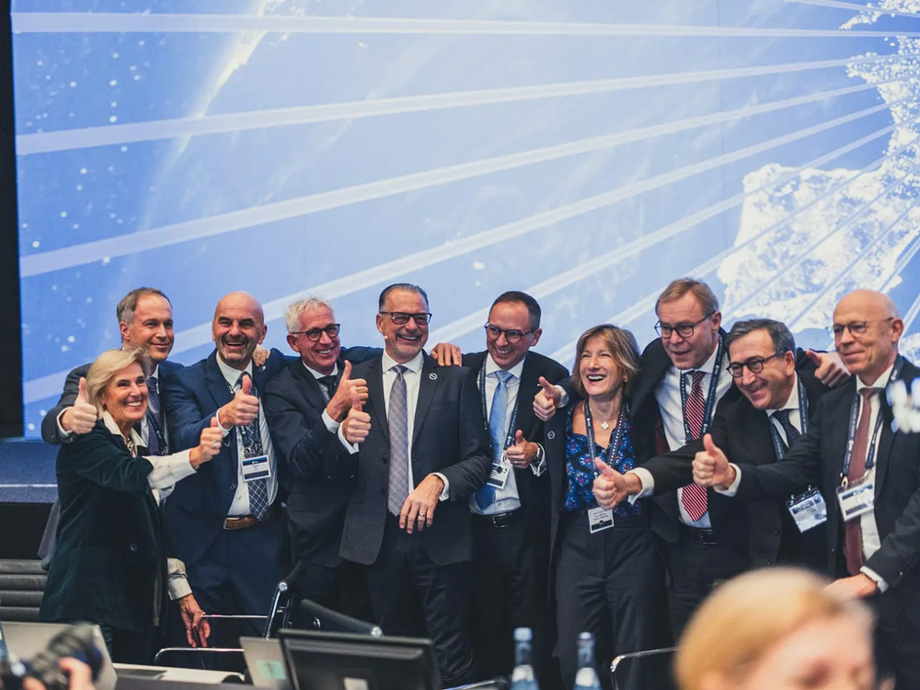
The most recent Council of Ministers of the European Space Agency (ESA), or CM25, held in Bremen on 26–27 November 2025, was marked by major shifts in the development of Europe’s space sector. ESA member states have agreed to increase the agency’s overall budget over the next three years, bringing it to a record €22.07 billion.
Another notable feature was the fact that, for perhaps the first time in the history of European space activities, attention was focused on strengthening the field of space defense technologies, which has been a kind of Achilles’ heel for the European Union and an area that, for many decades, had largely been provided through technologies and developments in partnership with the United States. Now, as the rift between long-standing Euro-Atlantic allies has dramatically widened, Europe is increasingly reflecting on the sovereign future of its own space sector.
Directions and donors: where will European money flow?
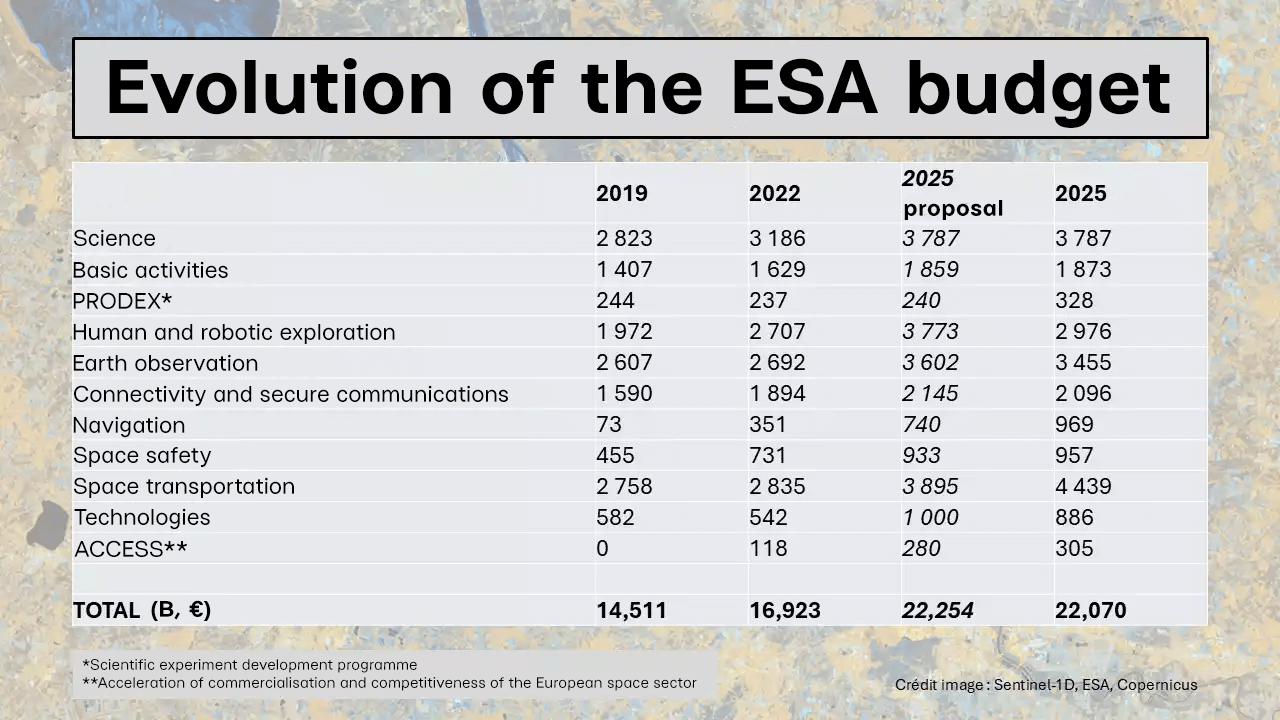
If we look at the bare figures, we see that the €22.07 billion allocated to ESA for the 2026–2028 period is about 30% higher than the previous three-year cycle (2023–2025), which amounted to €16.9 billion. The earlier sum was actually somewhat below the request of ESA Director General Josef Aschbacher, who had expected more than €18 billion from the agency’s member states.
In November 2025, a similar situation unfolded, and of his €22.254 billion request, about 90% was approved. The 2026–2028 three-year budget cycle will be distributed across the following sectors:
- Space transportation. The largest share of the budget, €4.4 billion, was allocated to the development and strengthening of the EU’s autonomous access to space. This includes both the modernization of already active launch vehicles such as Ariane 6 and Vega-C, and the development of new transport systems, including reusable spacecraft like Space Rider.
- The science program received a historic increase of 3.5% per year (adjusted for inflation), amounting to €3.8 billion over the coming years to fund ambitious missions. Among Europe’s near-term plans is a journey to Saturn’s moon Enceladus.
- Orbital Earth observation. €3.5 billion will be directed toward satellite monitoring programs. In particular, this includes technological upgrades of the existing Sentinel satellites under the Copernicus program, aimed at providing higher spatial resolution and more frequent imaging. Increased funding also provides for the development of new types of sensors and artificial intelligence applications for rapid data processing. As we will see below, this is also critical for the EU’s intelligence and security needs.
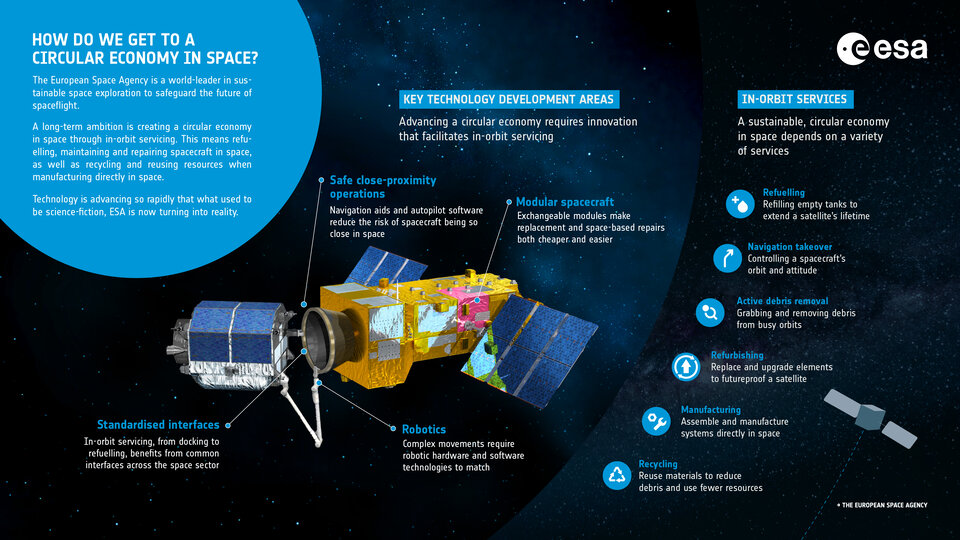
- Robotic exploration. Nearly €3 billion will go toward the development of robotic technologies, as it is already clear that most areas of space activity, from orbital construction, satellite servicing and refueling to the deployment of planetary factories for resource extraction on other worlds, will not be able to function without them.
- Communications and secure connectivity. Significant investments totaling €2.1 billion are earmarked for the deployment of resilient digital infrastructure, including the IRIS² secure governmental satellite communications constellation.
- Space safety and security will receive around €1 billion. This funding is intended to focus on the transition toward dual-use applications for civilian satellites.
Source: reves-d-espace.com
The main donors to ESA’s new budget, as before, remain Europe’s industrial heavyweights. Germany alone accounts for 23% of all country contributions, equivalent to approximately €5.1 billion (by comparison, in the previous three-year cycle, Germany allocated about €3.5 billion). The trio of leading donors also includes France and Italy, each contributing around 16% of the total budget, or €3.6 billion and €3.47 billion, respectively. Funding of more than €1 billion will also come from Spain (€1.86 billion), the United Kingdom (€1.7 billion), and Belgium (€1.1 billion).
To a large extent, the significant increase in space spending in this nearly €22-billion budget aligns with the European Commission’s plans for the European Competitiveness Fund from 2028, which envisions allocating €131 billion to defense and space (a budget that was characterized by a fivefold increase compared with the previous year). As we can see, the new strategy is based on strong interaction between the EU, ESA, and the European Defence Agency for the joint development of critically important space technologies.
The importance of “European Resilience from Space”
One of the cornerstones of the new budget, which Josef Aschbacher also emphasized, is the launch of the “European Resilience from Space” (ERS) program to which around €1.39 billion is planned to be allocated.
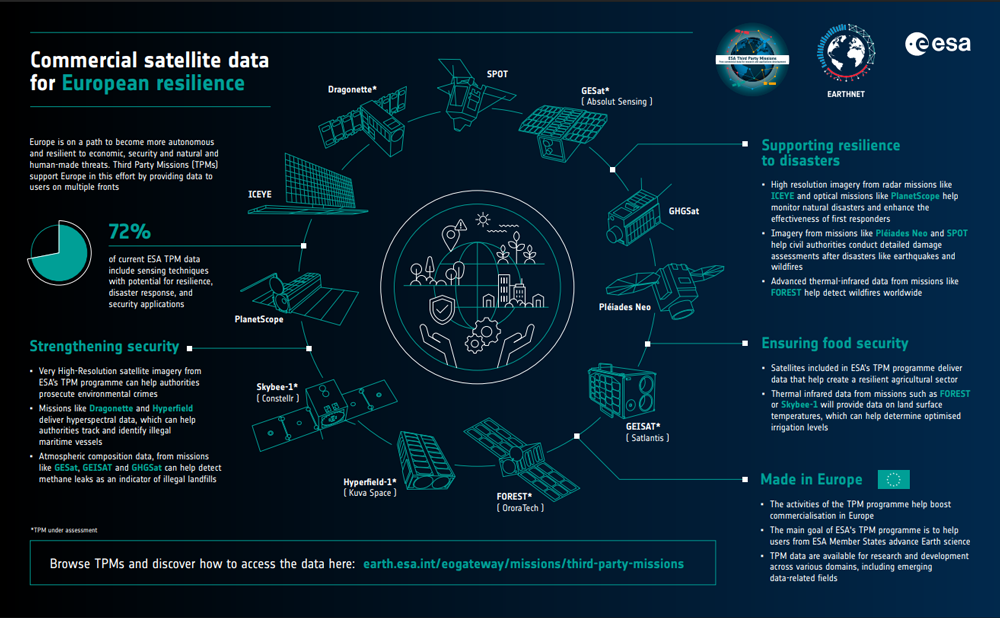
This new approach is intended to grant ESA an official mandate to work with dual-use technologies to meet defense needs. In other words, it will allow Europeans to use civilian Earth-observation programs as a foundation for a sovereign intelligence capability and for enhancing space situational awareness (SSA).
Source: esa.int
The core mandate of ERS is to ensure three critically important space capabilities: intelligence, surveillance, and reconnaissance (ISR); navigation (PNT); and secure communications. In this, Europe is not seeking primacy, with Aschbacher acknowledging that ESA will never replace national efforts or sovereign capabilities, which must remain under national control. Instead, the agency is offering states a “pooling and sharing” model, in which member countries retain full control over their own systems while gaining access to the surplus capacity of other participants, and vice versa.
ERS will not duplicate existing national ISR systems, which are quickly depleted during high-intensity crises. It will be built on existing assets, leveraging the combined capabilities of Copernicus, Galileo, IRIS², and national infrastructures, integrating remote sensing, communications, and PNT to provide the most secure, flexible, and rapid response capability in support of security and defense. Naturally, such an organizational approach requires the introduction of new technologies, including infrared sensors, artificial intelligence (AI), and other edge computing solutions.
ERS has ambitious technical objectives in each domain. In Earth observation, the primary goal is to achieve persistent, all-weather, near–real-time capability, enhanced by rapid tasking and very short revisit times (less than 30 minutes). In the PNT domain, the main objective is high-accuracy and resilient positioning that is maximally resistant to jamming, spoofing, and interference.
Source: earth.esa.int
In the area of satellite communications resilience, ERS envisions protecting global communication channels at all times and from any location. To achieve this, it proposes strengthening new quantum technologies to ensure an unprecedented level of security. A simplified, commercialization-based approach is also intended to help rapidly initiate contracts with industry. If all goes according to plan, the first ERS satellites are expected to launch as early as 2028.
The emergence of “European Resilience from Space” sends a clear signal of the political urgency Europe feels regarding its space security. EU rhetoric emphasizes growing security threats, including numerous violations of EU airspace by Russian drones and the ongoing jamming of positioning, navigation, and timing (PNT) signals.
Against the backdrop of these threats, not only space budgets but also terrestrial defense budgets across Europe are expanding. Forecasts indicate they will rise from less than 2% to over 3% of GDP over the next five years. However, despite the increase in defense spending, overall allocations for space-related security needs in Europe remain insufficient, and efforts are too fragmented to ensure true comprehensive autonomous space resilience.
Investment, innovation, and Space TechEU
One important criterion of the current three-year cycle is the significant emphasis on funding innovative research and technologies. It is estimated that about 22% of the approved budget will be allocated to these expenditures. The funds will be directed toward research on artificial intelligence–based systems, quantum technologies (particularly for space encryption and cryptography), new types of energy-efficient propulsion for rockets and satellites, as well as robotics.
These technological breakthroughs will form the foundation for flexible, resilient, and rapidly adaptable space systems, which are critical for the survival of assets in a hostile space environment. Without these core technologies, any investment in launch vehicles or satellites would represent only a short-term solution for Europe, incapable of guaranteeing long-term dominance.
In parallel, the European Investment Bank (EIB) has launched a targeted financial program called Space TechEU. It is intended to become the EIB’s first specialized mechanism for financing Europe’s space sector. The initiative is part of the bank’s broader TechEU program, aimed at general support for innovation and the development of new technologies (not limited to space applications). Total EIB funding is expected to reach €500 million, with the program projected to mobilize around €1.4 billion in new investments in cooperation with commercial banks.
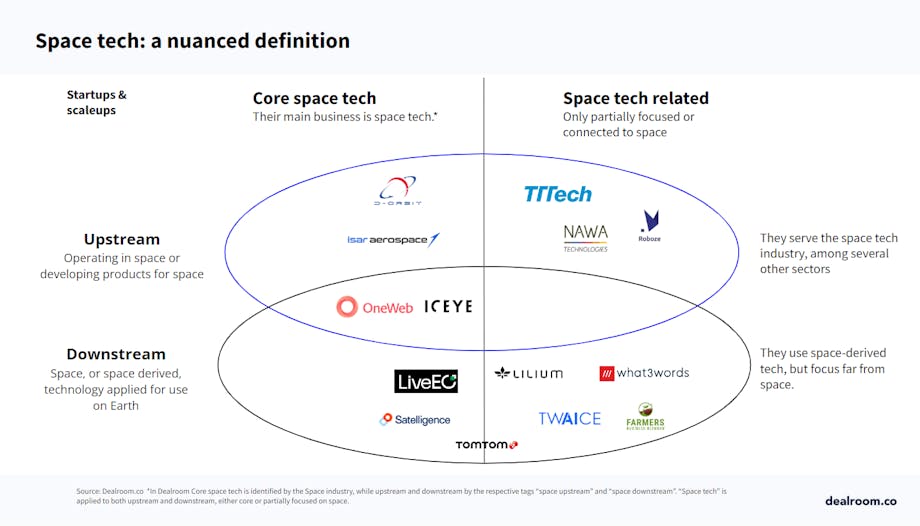
The primary goal of the program is to scale up Europe’s space sector and create a strong, globally competitive European space industry. Space TechEU, following the model of its parent initiative, is also aimed at supporting small and medium-sized enterprises (SMEs) and mid-cap companies, which often face the greatest difficulties in obtaining financing because financial institutions are insufficiently familiar with the sector’s specifics. To address this, the EIB plans to provide credit lines and guarantees to its banking partners across the EU. A key element of the initiative is a strategic partnership with ESA. The space agency will provide industry and technical guidance to commercial banks joining the program, helping to bridge knowledge gaps and increase their confidence in financing space companies.
Source: dealroom.co
Funding under Space TechEU will cover the entire value chain in the space sector, from upstream to downstream segments. In particular, funds may be directed toward the design, manufacture, and launch of satellites and rockets. Ancillary investments are also foreseen, such as ground infrastructure and applications that utilize space technologies and data, including telecommunications, maritime navigation, agriculture, climate management, and resource management.
ESA, for its part, will provide technical expertise within this partnership, accelerating the industrialization of its space sector. In addition to financial instruments, the space agency is successfully diversifying its international partnerships: at the Council of Ministers, an agreement was reached to quintuple Canada’s contribution to ESA programs, and European space cooperation was deepened with countries such as India, Japan, and South Korea.
Autonomous access to space as a strategic priority
The main driving force of the new strategy remains the EU’s primary goal: achieving full autonomy in access to space and the provision of critical space services. Against the backdrop of growing geopolitical tension and the awareness of the fragility of transatlantic ties, Europe seeks to eliminate dependence on technologies and services from third countries, particularly the United States, which previously dominated the field of space defense technologies.
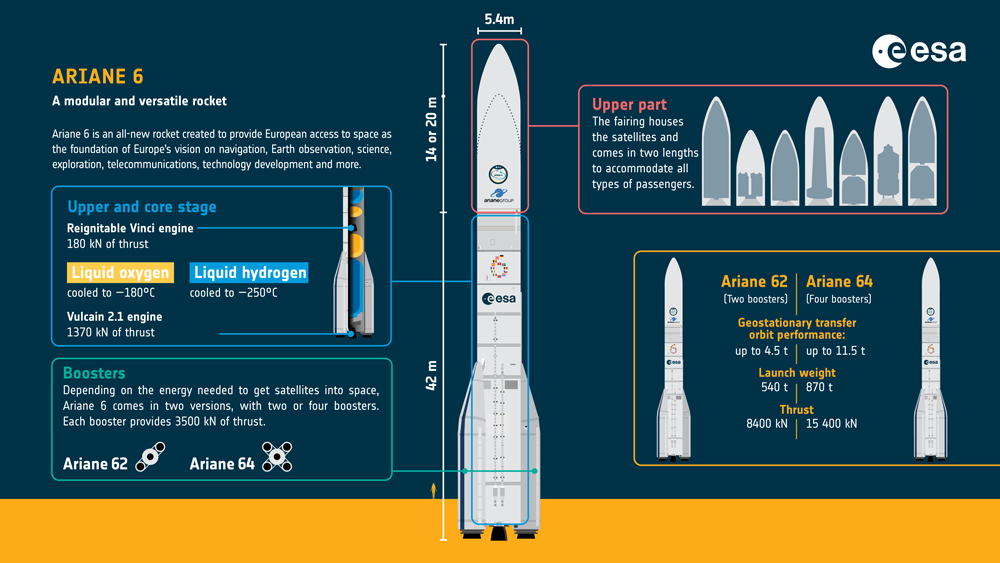
A key element that received the largest financial allocation is the space transportation sector, which has been granted around €4.4 billion. In particular, these funds will be directed toward the modernization of ESA’s two main launch vehicles: the heavy two-stage Ariane 6 and the medium four-stage Vega C. In recent years, we have already seen a series of successful Ariane 62 launches, equipped with two solid rocket boosters. At the beginning of 2026, the new, more powerful Ariane 64 modification is expected to reach orbit for the first time. The payload capacity of the new launcher will more than double: the rocket will be able to carry 21 tons to low Earth orbit (LEO) as compared to Ariane 62’s 10 tons.
Source: esa.int
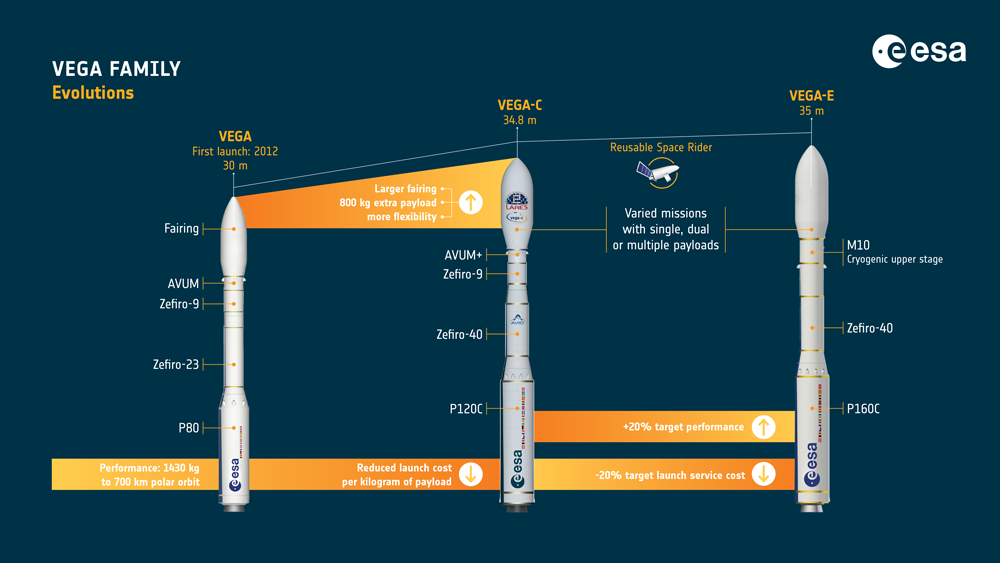
Vega C, which as of 1 December 2025 already has four successful operational launches under its belt, is also scheduled for modernization in the coming years. Its updated version, named Vega C+, will feature an upgraded first stage, the P160C, allowing the rocket to carry an additional 200 kg of payload. The debut of a new version, Vega E (Evolution), is also planned for 2027.
Europeans aim to significantly simplify the rocket’s design, with the third and fourth stages (Zefiro 9 and AVUM+) planned to be combined into a single unit. Preliminary calculations suggest this will increase the payload capacity of the new rocket modification by 25% compared to Vega C. Considering that the latest modification, Vega C+, can deliver up to 2,300 kg to a Sun-synchronous orbit, the Evolution version is expected to raise this capacity to approximately 2,850 kg to SSO.
Source: spaceproject.govexec.com
However, only a portion of the budget allocated to transport services is dedicated to stimulating the development of existing launch vehicles. For the most part, these funds are intended to serve as a basis for investments in modernizing and enhancing the competitiveness of the European launch sector amid the global NewSpace revolution, where commercial players demand greater flexibility and lower costs.
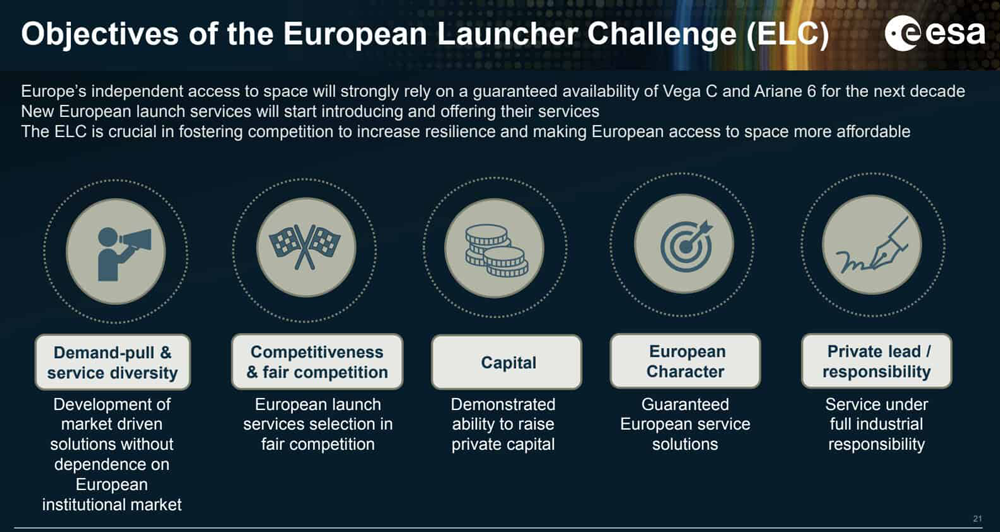
One of the key targets for funding new developments in the space transportation sector is the European Launch Initiative, which has received over €900 million from member states. This is more than twice the amount requested by the agency, reflecting the high strategic importance of this direction.
The goal of the initiative, which first took place in Seville in 2023, is to stimulate innovation and create a more competitive market for European space launch service providers. Funding is directed toward supporting the development of next-generation small and medium launch vehicles that are to be more flexible, cost-efficient, and capable of rapid response to market needs, thereby reducing the monopoly of traditional players and increasing the resilience of European space logistics.
Source: spaceintelreport.com
ESA’s budget allocations thus demonstrate a dual strategy: logistical independence through record investments in transportation, and fundamental technological leadership through stable funding for science. Investments in space transportation via the European Launcher Challenge create a competitive environment, while the protected scientific budget ensures a technological reserve and stimulates innovation. Over time, these innovations can be integrated into defense and infrastructure programs, guaranteeing the long-term resilience of the European space sector.
After some operational delays, this strategic investment is intended to provide regular and guaranteed access to all types of orbits, which is the absolute minimum for sovereign space power. Without reliable and economically competitive domestic transportation, any ambitions in defense or scientific space remain unrealized, as Europe cannot afford to rely on external operators to launch its strategic assets, including protected governmental communications and navigation, for which €2.1 billion has been allocated.
Autonomy in satellite communications and navigation sectors will also be ensured through the modernization of the Public Regulated Service (PRS) of the Galileo satellite navigation system. Currently, European military forces are increasingly interested in the system’s capabilities. In parallel, the development and deployment of the European multi-orbit secure communications constellation, Infrastructure for Resilience, Interconnection and Security by Satellite (IRIS²), continues. And this is just one of many aspects of the new approach to European unity shaped at CM25.
“Strength in Unity” as a New Development Paradigm
Summing up the key outcomes of the latest ESA CM25, it is important to note that, for the first time at the highest level, a main vector for European space in the coming years was clearly articulated: the unification of efforts in pursuit of space dominance.
Currently, the EU only accounts for 10% of global space development expenditures, almost six times less than the United States, which accounts for around 60% of global spending. Even when compared with less powerful players such as India or China, ESA is nowhere near being a leader in either the launch sector or the development of new generations of methane-fueled reusable rockets. Nevertheless, the mere recognition by Europe of its core challenges is already highly significant.
The decision to allocate nearly €22.1 billion confirmed the growing importance of the space sector and its critical role in ensuring Europe’s sovereignty. However, regardless of its historic nature, this amount is still insufficient, especially considering that it represents only about 0.03% of the combined GDP of ESA member states.
Despite the significant focus on space security, however, it is important to recognize that European spending in this area remains inadequate. In his address, Josef Aschbacher emphatically reminded Council participants that the war in Ukraine effectively began in space even before troops were deployed, noting that while 50% of global space expenditures are devoted to military capabilities, in Europe this figure is less than 15%. This context has made urgent action necessary in order to strengthen Europe’s defensive position in space, resulting in the final redistribution of budget allocations.
Source: dferdinandov.medium.com
The coordination of collective efforts is also evident in the approach to developing new types of space transportation, providing support for 27 Ariane 6 launches and 16 Vega C launches over the next four years. Here, we can see that instead of developing the next heavy launcher using state resources, ESA is increasingly relying on industry to create cost-effective launch systems, similar to the model successfully used by NASA.
Although CM25 focused extensively on security, Europeans did not neglect scientific projects. For the first time in many years, ESA’s new space budget for scientific research exceeds current inflation rates. Avoiding cuts in this area is highly significant, as many long-awaited ongoing programs are at stake, such as the LISA gravitational wave detector, the Athena X-ray telescope, and the Rosalind Franklin Mars rover. The phase of planning for the first astrobiology mission to Saturn’s icy moon Enceladus is also beginning, with a launch scheduled for the early 2040s.
The only forced and painful reduction at CM25 appears to have been in the Manned and Robotic Exploration program, which clearly received insufficient funding, to which ministers approved only 70% of its initial request.
Thus, after coordinating collective efforts and finalizing resource allocation, all that remains is to wait and observe. Within three years, we should see the first results of ESA’s new budgetary approach. It will be interesting to see what outcomes are achieved over these years, and even now, it is possible to note a fundamentally new approach in the EU’s vision for its own space sector.