

The year 2025 has come to an end, which means it’s time to take stock. For the aerospace industry as a whole, 2025 was filled with long-awaited debuts of new launch vehicles and spacecraft. From lunar landers, the beginning of the deployment of Starlink-competitive satellite megaconstellations, and the first spacecraft entirely designed by artificial intelligence: in our traditional annual roundup, we present the most memorable events in the aerospace sector in 2025.
Rocket power: showdown of heavyweights and a focus on lunar transfer
In the sphere of rocket development, 2025 saw several long-awaited launch vehicles finally enter service. For example, we saw the first flight of Blue Origin’s heavy methane-powered New Glenn rocket, a project that had been under development for nearly 14 years. Furthermore, the first commercial missions began flying with the European Ariane 6 and the American Vulcan Centaur, which made their debuts last year. The primary trend shaping the rocket sector over the past decade, an urgent drive toward full and rapid reusability of launch vehicles, continues. It is increasingly clear that only this approach can meet the market’s demand for a high launch cadence.
In 2025, SpaceX continued conducting test flights for Starship/Superheavy. Elon Musk’s company stayed true to its strategy of conducting frequent flights without prolonged preparation. As a result, Starship/Superheavy flew five times over the course of the year. However, the aggressive testing approach carried risks, and only two out of the five launches were fully successful, both of which occurred only toward the end of the year. The first three launches ended in failure, with the two later successful Starship landings finally sweetening the bitterness of unmet objectives.
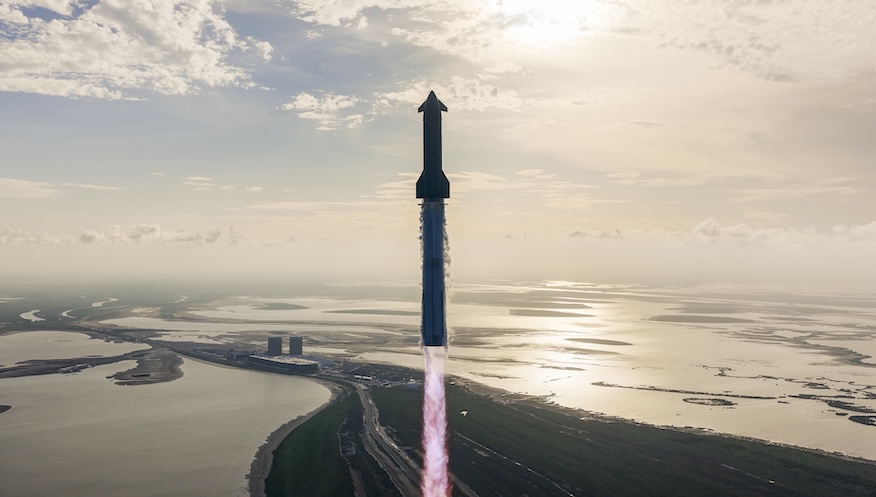
Nevertheless, SpaceX once again demonstrated its remarkable ability to learn from its mistakes. The tenth test flight overall, and the fourth since the start of 2025, was successful: after the launch on August 26, the team managed to land the Superheavy booster and subsequently touch down the Starship itself, capturing the spacecraft in the strong metal “arms” of the “Mechazilla” landing platform.
Source: spaceflightnow.com
The year’s fifth and final launch of the year also succeeded, but, unlike the previous flight, this time Starship did more than just execute an ascent and landing. During Starship Flight 11, the rocket demonstrated for the first time its ability to deploy payloads into orbit, in this case eight mock-ups of the next-generation Starlink satellites. That said, the loss of the Superheavy booster, which exploded upon crashing into the Indian Ocean, clouded an otherwise successful mission.
Moreover, on January 16, Starship’s dominance in the heavy-lift reusable rocket sector came to an end when Jeff Bezos’s Blue Origin launched its two-stage heavy rocket, New Glenn, for the first time. That debut flight, however, achieved only partial success: while the second stage successfully delivered the mission payload, a prototype spacecraft called “Blue Ring,” into orbit, an anomaly occurred during the landing attempt of the first stage, GS-1, resulting in its loss.
Blue Origin, however, redeemed this setback on November 13, 2025. During the second test flight, the first stage, eloquently named “Never Tell Me the Odds,” impressed its critics: the reusable New Glenn booster achieved its first successful landing on the Jacklyn sea-based platform. This milestone made New Glenn the second rocket booster in the world capable of both delivering a payload to orbit and returning safely to Earth. Until then, this achievement had been exclusive to SpaceX.
Source: reddit.com
Calling the current New Glenn in its basic configuration a super-heavy rocket would be inaccurate, as it can deliver about 45 tons to low Earth orbit (LEO), instead of the 50 tons required for that class. However, Blue Origin has already begun its path into the heavy-lift league, announcing on November 20 the development of a new variant called New Glenn 9×4, which will be equipped with nine BE-4 engines, enabling the rocket to carry a total of 70 tons of payload to LEO.
Although the two American rockets will clearly compete with one another, both will also be involved in missions for the U.S. Artemis lunar program. New Glenn, for example, will be used to deliver key components of the future Lunar Gateway orbital station. SpaceX’s Starship Human Landing System (HLS) variant, meanwhile, is intended to serve as the primary transport for ferrying astronauts from lunar orbit to the Moon’s surface and back.
China: playing the long game and trying to catch up with the US
China remains a key competitor to the United States in the new race to the Moon. While the Americans are betting on private rockets such as Starship and New Glenn, as well as the government’s super-heavy Space Launch System (whose first launch we hope to see in spring 2026), the Chinese are focused on perfecting their Long March rocket series, with upgraded versions meant to have capabilities comparable to those of Starship and New Glenn.
To facilitate future lunar dominance, China plans to use two launch vehicles: Long March 9, capable of delivering 150 tons to LEO and up to 54 tons to lunar orbit, and Long March 10, with a payload capacity of around 70 tons to LEO. Long March 9 is expected to handle long-term infrastructure missions, such as transporting massive modules for the planned Chinese lunar base, the International Lunar Research Station (ILRS). Long March 10, for its part, is being developed as a specialized vehicle for the crewed Chinese Lunar Exploration Program (CLEP), to facilitate sending taikonauts to the Moon’s surface by the end of the decade.
Although the first launch of the super-heavy Long March 10 is planned for 2027–2028, China actively tested the rocket throughout 2025. In mid-August, reports confirmed the completion of the first series of hot-fire tests for the new engines of the rocket’s first stage. CNSA also completed assembly and began structural testing of full-scale mock-ups of key first-stage components, including critical pressure-resistance testing of the tanks, a necessary step before producing flight-ready models. For Long March 9, which is not expected to launch before the next decade, 2025 saw approval of its new modular design, featuring a reusable first stage with methane-fueled engines for its boosters.
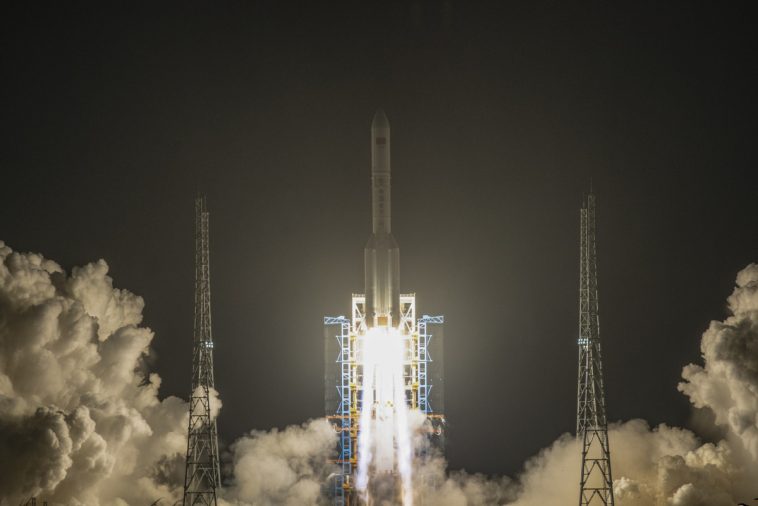
Meanwhile, as its national plan for lunar landing rockets presses forward, China has kept launching existing versions of its vehicles. In 2025, more than 60 Chinese rockets of various models reached orbit, including Long March 3B, which led the year with 13 launches. The new Long March 8A variant, which debuted with five successful launches, offers greater thrust and payload capacity compared to the standard Long March 8. In any case, the Long March series clearly remains China’s most reliable and consistent asset for space access, accounting for over two-thirds of the country’s total launches.
Source: chinadaily.com.cn
In addition to operating rockets produced by state-owned corporations, China also continues to develop its commercial launch vehicle market. However, this path has sometimes proven challenging. For example, during the first launch of the new version of the reusable methane rocket ZhuQue-3 from LandSpace on December 3, the rocket successfully delivered its payload to orbit but exploded during the attempted landing. Its predecessor, the methane-fueled ZhuQue-2, only saw two launches in 2025, with just one being successful. The private launch vehicle sector also saw activity with the B300-L (Kuaizhou 11) rocket from the new player AZSpace, which launched in mid-December 2025.
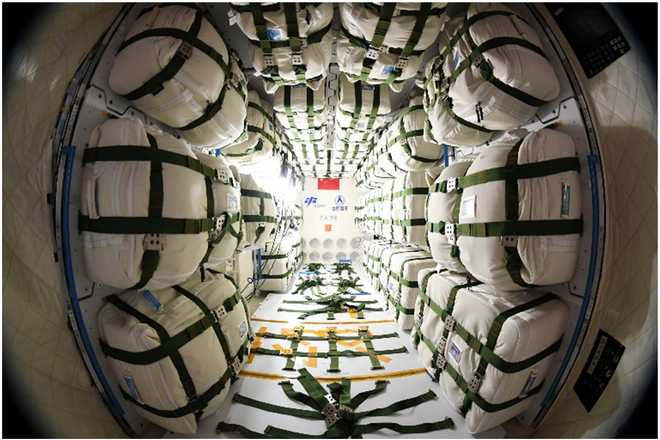
Despite challenges, then, China continues to set new national records for the number of space launches, steadily moving toward its goal. In 2025, the country had completed 92 rocket launches, with 90 successes and only two failures. Although the Chinese space program aimed to achieve 100 launches over the past year, this still represents a significant step forward compared to 68 launches in 2024. The country also focused on maintaining its Tiangong orbital station, which saw one crew rotation and several logistics missions during the year.
Source: wikipedia.org
Along with the United States, China remains at the forefront of implementing new rocket technologies, actively developing engines that run on a fuel mixture of liquid methane (CH4) and liquid oxygen (LOX). Currently, the ZhuQue 2 and ZhuQue 3 rockets operate on this fuel. The upcoming Hyperbola 3 from i-Space, which is rescheduled for launch in 2026, is also expected to use this fuel.
This fuel mixture significantly simplifies engine design, but, most importantly, it can also be synthesized on Mars or the Moon, an approach known as in-situ resource utilization (ISRU). With the development of the necessary infrastructure, methane rockets will no longer need to carry fuel from Earth for the round trip. In 2025, this milestone clearly distinguished the new generation of methane rockets from previous ones that used kerosene- or hydrogen-based fuel mixtures.
Other developments in Asia: India’s rendezvous and Japan’s HTV-X1
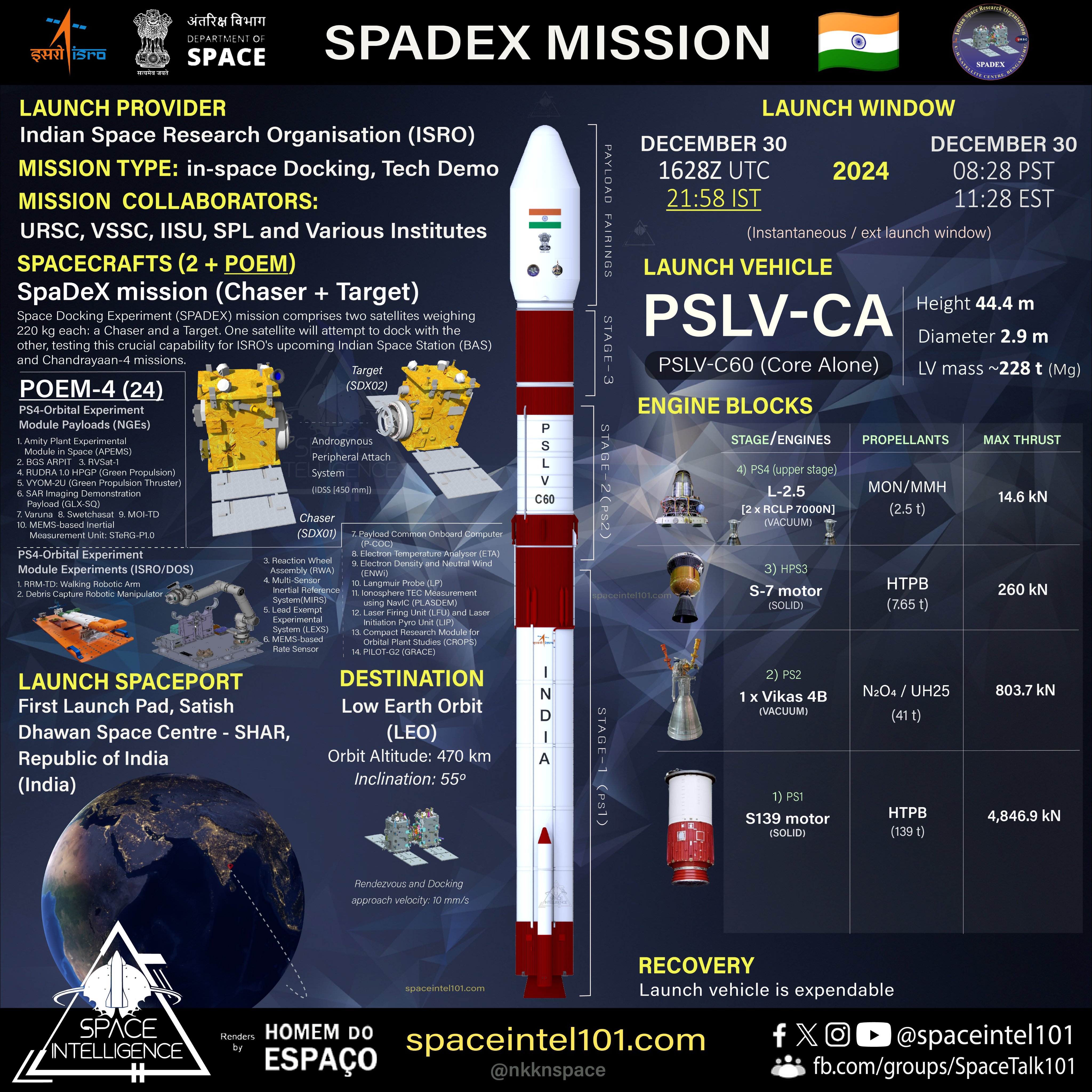
Of course, the space sector in Asia isn’t solely centered on China. Other major space powers in the region, including India and Japan, carried out a number of important demonstrations in 2025 and brought new types of space technology into operation. For the Indian Space Research Organisation (ISRO), for example, 2025 began with the presentation of its new orbital rendezvous and docking technology. On January 16, India conducted its groundbreaking Space Docking Experiment (SpaDEx) mission, which involved the docking of two satellites in orbit.
The spacecraft, weighing 220 kg each, had been launched at the end of December 2024 aboard an Indian Polar Satellite Launch Vehicle in the Core Alone (PSLV-CA) configuration. They then waited in the planned orbit for about two weeks before the active phase of orbital rendezvous began. In January, the SDX-01 Chaser satellite approached its target, SDX-02 Target. After performing several planned maneuvers, it successfully docked using a V-shaped approach. The successful completion of the SpaDEx mission marked India’s symbolic entry into the elite club of countries and space organizations capable of conducting orbital docking. Until then, such achievements had been accomplished only by the USA, China, the USSR/Russia, and the European Space Agency (ESA).
Source: x.com
Particularly significant was the fact that ISRO used rockets of its own manufacture for the SpaDEx mission, an undeniable indication of independent access to space. In recent years, the example of ESA has shown how difficult it can be to conduct space launches without a domestically produced launch vehicle (the well-known Ariane 6 delays) and relying solely on external providers.
Alongside India’s successes, Japan last year also continued to use its newest domestically produced launch vehicles, specifically its flagship H3 rocket, which had its first launch in March 2023. In 2025, a new, more powerful modification, the H3-24W, was launched, featuring a wider fuselage, two first-stage engines, and four side boosters.
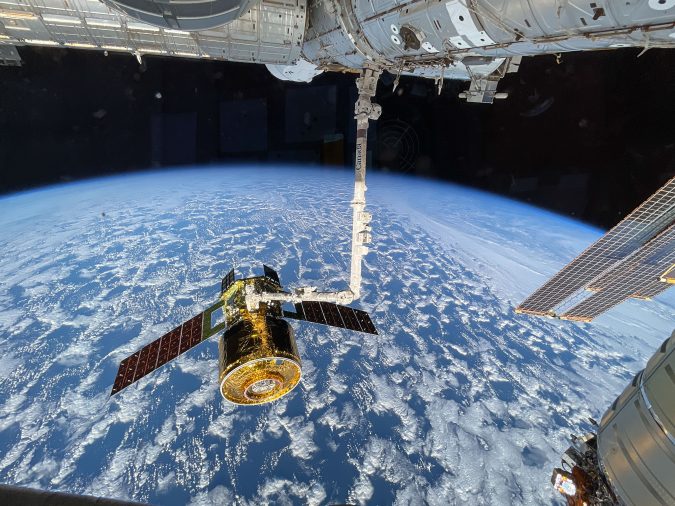
H3 flew twice in 2025: first, in February (the older H3-22S variant) and, later, in October (the new H3-24W). As part of the second launch, the rocket delivered the country’s latest spacecraft, HTV-X1, into orbit. For the Japan Aerospace Exploration Agency (JAXA), this spacecraft promises to become the main space cargo vehicle, performing uncrewed logistics missions to the ISS and to the next-generation orbital stations that will succeed it.
Source: wikipedia.org
The payload capacity of the new spacecraft is just over 4 tons, placing the capsule in second place, surpassed only by the new Cygnus XL variant from Northrop Grumman, which carried out its first logistics mission to the ISS in September 2025. The payload capacity of the American spacecraft variant is nearly 5 tons.
Reflecting on last year’s spacecraft debuts, it is worth mentioning that the ISRO has also come very close to realizing its crewed spaceflight program, Gaganyaan. For the initial launches, India plans to use its domestically produced heavy-lift rocket, LVM-3. The current flight schedule for the Gaganyaan program includes six launches, with the first three being uncrewed in 2026, followed by crewed missions in 2027.
Europe’s Space Renaissance: Ariane 6 is gaining momentum
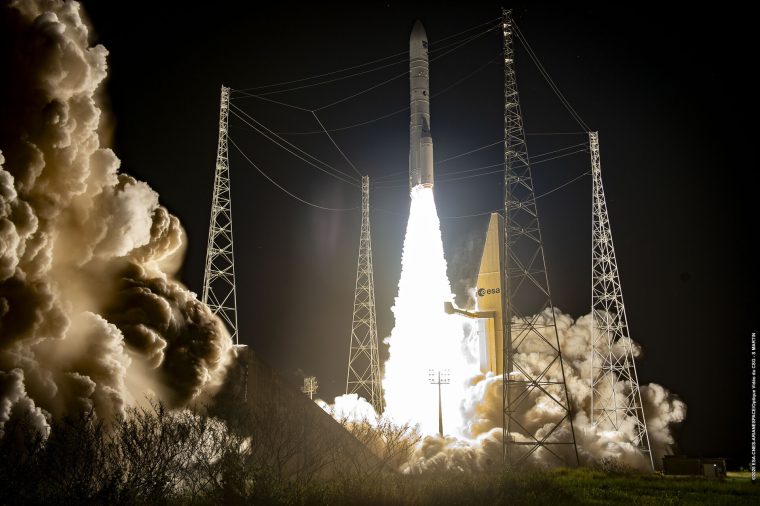
Truly colossal shifts in the aerospace sector also took place in Europe, for which 2025 became a year of relief. After a two-year delay and an increasingly urgent need for its own launch vehicles, ESA and Arianespace finally carried out three operational launches of the Ariane 6 rocket (specifically, the 62 version with two side boosters). The first Ariane 6 mission, VA263, placed the French military satellite CSO-3 into a sun-synchronous orbit on March 6. During the August launch, VA264 delivered the first next-generation meteorological satellite, MetOp-SG-A1, for the EUMETSAT system, along with the Sentinel-5A satellite. This was followed by the planned VA265 mission, which, on November 4, enhanced the Copernicus constellation with the new Sentinel-1D.
Source: esa.int
On December 17, 2025, the fourth (and final for the year) Ariane 6 launch took place, marking the 14th overall launch of Galileo FOC satellites. The coming year will see the first launches of new, more powerful Ariane 64 rockets (with four side boosters). The Ariane 6 launches, however, were more than just deliveries to orbit: they also symbolized the end of a period of crisis during which Europe was forced to rely on competitors to launch critically important satellites. Although Ariane 6 is not a reusable rocket, its modularity and lower manufacturing costs nevertheless allow it to compete in the market. However, this primarily concerns the European region, where specialized missions are being prepared for the new rocket.
In addition to the successful Ariane 6 launches, 2025 also saw two Vega C launches and the first demonstration flight of the Spectrum rocket by the German company Isar, which ended in failure: just a few seconds after liftoff, the rocket lost control, fell near the Andøya launch site, and exploded. The investigation revealed that the anomaly occurred due to a rocket vent valve unexpectedly opening, which caused the loss of control at launch.
Meanwhile, other private space companies focused on preparing for their first flights. The British rocket company Skyrora made a significant step toward realizing its ambition to become the first British commercial space operator. The company received its first UK launch license, with flights expected to begin this year. Throughout the previous year, active preparation of launch vehicles continued, culminating in the successful completion of hot-fire tests of all stages of the Skyrora XL rocket. Alongside rocket testing in the Shetland Islands, intensive upgrades to the SaxaVord spaceport were completed, where, by November 2025, the main launch pad for future Skyrora launches was prepared.
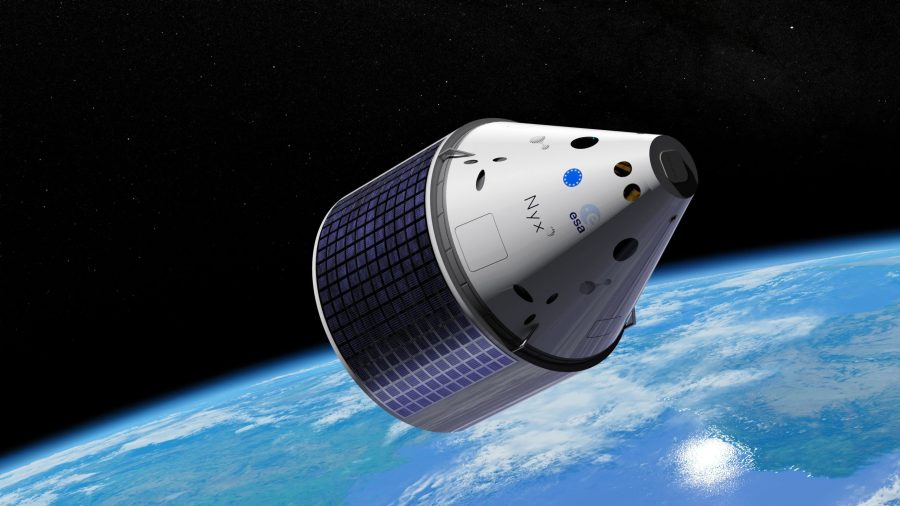
Structurally, it is becoming clear that Europe’s space sector is undergoing major changes in its effort to catch up with the U.S. in launch frequency and commercialization. One of the key institutional developments for the European space sector in 2025 was the adoption of a private partnership model resembling NASA’s Commercial Cargo program. At the end of November, this approach progressed further: at the ESA Ministerial Council in Bremen, Germany, a record €22.1 billion funding package was approved for the Commercial Services for Orbital Cargo (CSOC) programs, including the procurement of commercial cargo delivery and return services from low Earth orbit (LEO Cargo Return Service). Over the course of the year, ESA created a favorable environment for the development of reusable spacecraft, the leading example of which could become the Nyx spacecraft line from The Exploration Company.
Source: bsgn.esa.int
On June 26, 2025, the first demonstration version of Nyx was launched aboard a Falcon 9 rocket. However, it achieved only partial success: although the capsule reached orbit, contact was lost during its attempted return to Earth. Currently, three Nyx variants are planned: the low-orbit Nyx Earth for logistics missions in Earth orbit, Nyx Cislunar for missions to lunar orbit and back, and the Nyx Moon landing capsule.
Alongside Nyx, development continues on the European Space Shuttle Space Rider, which is intended to fill ESA’s gap in having a piloted spacecraft. During the year, a series of tests were conducted on the Space Rider service module, as well as parachute system tests, during which a shuttle mock-up was even dropped from a helicopter. By November, all flight hardware for Space Rider had been manufactured and was awaiting further integration.
The elusive Moon: Blue Ghost’s success amid painful failures
In 2025, efforts to reestablish a human presence on the Moon continued, albeit so far only through robotic landers. Launched in mid-January, Firefly Aerospace’s Blue Ghost lunar lander became the first landing platform of 2025 to successfully reach the Moon’s surface. The soft landing occurred on March 2 and proceeded without significant anomalies or deviations.
Firefly began preparations for building the Moon lander under the guidance of its co-founder and principal investor, Max Polyakov, when NASA selected the company in 2021 to participate in the Commercial Lunar Payload Services program. Less than four years elapsed between the contract’s approval and the actual landing of Blue Ghost on the Moon, an exceptionally rapid pace for lunar lander missions.

Source: scientificamerican.com
It should be noted that Blue Ghost was the only lunar landing that succeeded in 2025. Four days after Blue Ghost’s soft landing, Intuitive Machines’ IM-2 Athena attempted to land on the Moon for a second time. Packed with a full array of advanced electronics, sensors, and multiple experimental and commercial rovers, IM-2 reached the lunar surface much faster than Blue Ghost, just a week after launch.
Unfortunately, the chosen trajectory did not guarantee success. Although IM-2 Athena established contact with Earth after landing, it was later discovered that the spacecraft had tipped onto its side. This prevented proper battery recharging and blocked some service modules. The outcome was painful, especially considering that during its first landing attempt, IM-1 Odysseus, in February 2024, the platform suffered a similar fate, tipping over and being rendered partially unusable. 2025 was thus a second unsuccessful year for Intuitive Machines, whose lunar landings so far have literally gone “sideways.”
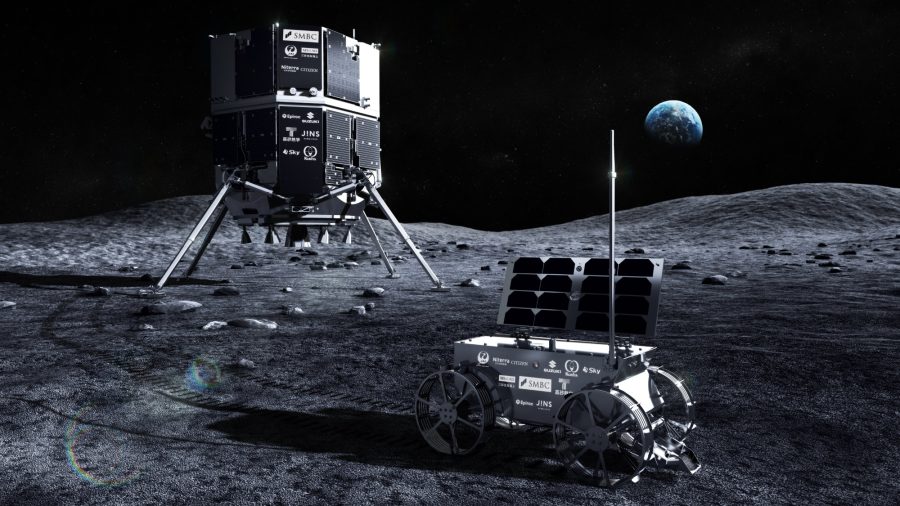
IM-2, however, was not the only lunar lander to suffer two consecutive failures. In early summer, ispace, a private Japanese space company, attempted a second landing of its Hakuto-R module, with the TENACIOUS lunar rover and the RESILIENCE lander onboard. Unfortunately, both reached the lunar surface only in pieces. Hakuto-R2 descended at the 105th second of the planned landing timeline, resulting in something more like a crash than a controlled descent. ispace later confirmed the loss of the spacecraft. In a strikingly uncanny coincidence, the first Hakuto-R lander also failed during its April 2023 landing attempt, losing communication just seconds before touchdown.
Source: nasaspaceflight.com
The last lunar module loss of the year occurred in orbit. The small orbital spacecraft Lunar Trailblazer was launched under NASA’s SIMPLEx program on the same rocket as the IM-2 mission. Its primary task was to detect and map water on the Moon’s surface. However, shortly after launch, NASA lost contact with the spacecraft, and in July 2025, the mission was officially declared a failure.
Thus, over the course of the year, we witnessed a lunar déjà vu affecting two landers, IM-2 and Hakuto-R2, whose failures mirrored the fiascos of previous years. One can only hope that both companies will draw the right lessons from the outcomes of these failed missions. Against this backdrop of setbacks, the singular success of Firefly’s Blue Ghost stands out as a truly phenomenal achievement.
Records and personalities
To conclude this overview, it is worth highlighting the new records set by the space sector in 2025, since carefully observing these achievements clearly illustrates the progress of space exploration. The first milestone was the number of orbital launches, which came very close to 300, setting a new world record compared to 2024’s 259 launches.
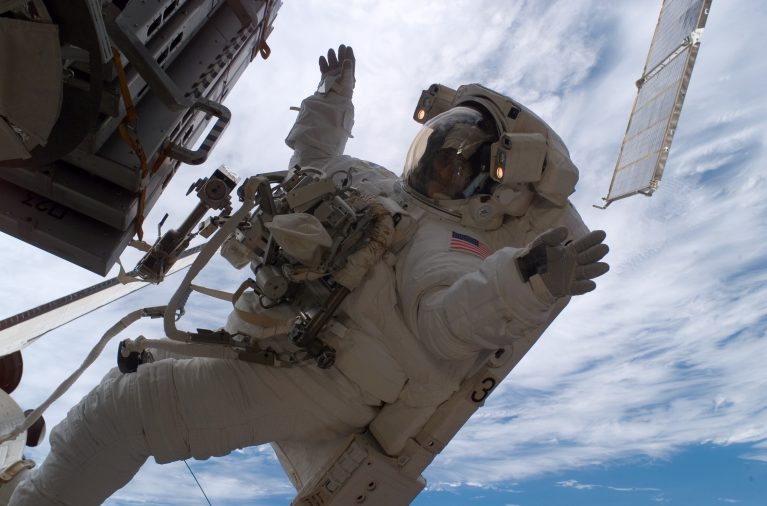
At the end of January 2025, the women’s world record for cumulative time spent on spacewalks was also broken. The new record-holder is the American astronaut, Sunita Williams, who has completed nine spacewalks totaling 62 hours and 6 minutes. In doing so, she surpassed her colleague Peggy Whitson, who spent 60 hours and 21 minutes on extravehicular activities.
Source: wikipedia.org
In the United States, a record was also set for the annual deployment of satellites by a single country. By the end of the year, this number had surpassed 3,300 satellites, with nearly 90% of them being Starlink satellites. Indeed, 2025 was a record-breaking year for SpaceX. The company conducted over 150 launches of the Falcon family, including Falcon 9 and Falcon Heavy, setting a new absolute world record for a private company. Nearly all Falcon 9 stages were reused, and the turnaround time between landing and the next launch was reduced to a historic minimum of 9 days and 3 hours. SpaceX also set a new record for reusability: one Falcon 9 booster (B1067) completed its 29th launch in July 2025. The high launch cadence achieved by SpaceX made competitors realize that the economics of reuse and shortening the “recovery-to-relaunch” cycle had evolved from a simple advantage to a necessary condition for dominating the space launch market.
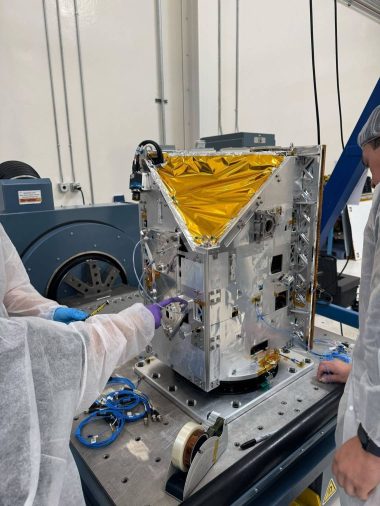
In another first, 2025 saw a satellite entirely designed by artificial intelligence reach orbit for the first time. MERCURY ONE from Proteus Space is considered the world’s first ESPA-class spacecraft fully designed with AI. Launched on November 28, 2025, from Vandenberg, MERCURY ONE set several industry records, including the fastest development cycle: the entire process, from concept to a launch-ready spacecraft, took only eight months, unprecedented for a spacecraft of this class.
Source: universemagazine.com
The satellite was created using Proteus Space’s own AI platform, which employs a parallel design methodology to automatically select components and optimize the overall design. Its successful launch on December 2 and the subsequent establishment of communication with MERCURY ONE in LEO confirmed the platform’s viability and its potential to drastically reduce the time required to deploy customized satellites into orbit.
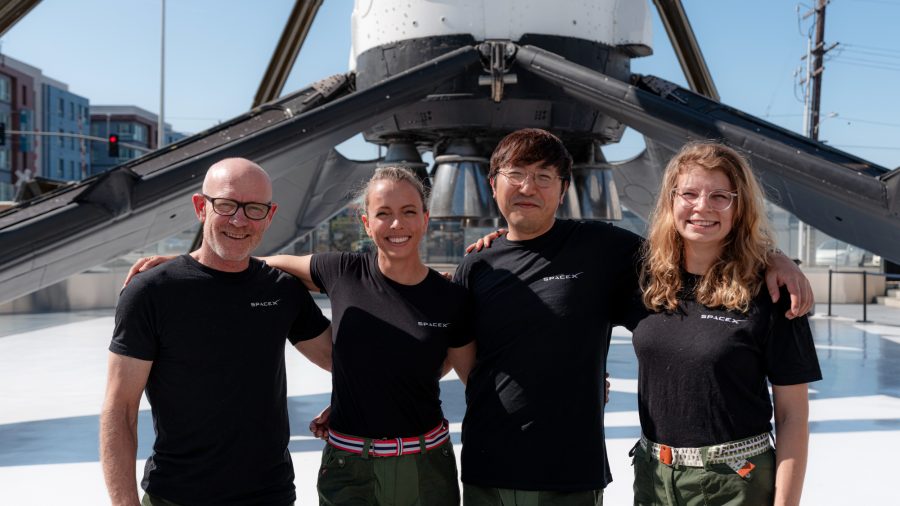
Another record was set in crewed spaceflight. On April 1, the Crew Dragon spacecraft, as part of the private Fram2 mission, reached a polar retrograde orbit for the first time, powered by a Falcon 9 launch vehicle. This marked the first time in the history of crewed spaceflight that a spacecraft maintained a stable polar orbit around both poles of Earth. The Fram2 crew also consisted entirely of private astronauts, a growing trend in modern crewed spaceflight. For each crewmember, Fram2 was the first of their career.
Source: space.com
The success of Fram2 confirmed another rule of recent years: you don’t need to be a professional astronaut to fly into space. Yannike Mikkelsen is a film director by profession, while Rabea Rogge is an electrical engineer in robotics. Eric Phillips, meanwhile, was a polar researcher and guide before starting his space career, and Chun Wang is known as a prominent crypto investor. Fram2 clearly illustrates how 2025 continued the trend of shifting from state-led space programs toward dominance by the commercial sector. The unprecedented number of launches, the use of innovative reusable technologies, and new approaches to satellite production not only set new industry records but also laid a strong foundation for humanity’s future ambitious projects in orbit and beyond. It seems that New Space has finally moved from a vision of the future to a dynamic present-day reality.


