The Convention establishing the European Space Agency (ESA) was signed on May 30, 1975, by ten founding countries. Since that time, they have been joined by 23 more member states, three associated participants, four partner states, and Canada. In 2025, ESA celebrates not only its 50th anniversary, but also half a century of developing and implementing space innovations. It is this organization that defines the current shape of Europe’s space infrastructure and economy, as well as the direction in which they will continue to evolve. Let’s take a look at the ESA’s most important achievements over its half-century of history.
Independent access to space
Most of ESA’s achievements would have been impossible without independent access to space. At the time the ESA was founded, only six countries in the world had their own launch vehicles, as well as experience placing spacecraft into orbit: the United States, the Soviet Union, France, Japan, China, and the United Kingdom. A turning point for ESA came four years after its creation. Since 1979, the agency has had its own rocket systems: on December 24 of that year, the first rocket in the Ariane family was launched into space. The most recent one at the time of this publication was Ariane 6, which lifted off on July 9, 2024. Since 2012, the Ariane family has been joined by the Vega rockets, which are used for transporting small payloads and whose debut launch took place in 2022.
Independent access to space guarantees ESA autonomy from other national space programs, and with it, Europeans can plan launches for civil and defense missions on their own and develop other scientific and commercial projects. Today, rockets regularly lift off from the Guiana Space Centre in French Guiana, underscoring with each launch that Europe is a full-fledged player in space exploration.

Source: esa.int
Constructing a European spaceport in French Guiana
Since its founding, ESA has carried out more than 300 launches, all from the Kourou spaceport, from which the Ariane 1 rocket first lifted off. The official name of the spaceport is the Guiana Space Centre. It is located in French Guiana, occupying a 60-kilometre stretch of Atlantic coastline about 20 km wide. This site was selected for a spaceport in 1961, but construction did not begin until 1965, at the initiative of the French space agency Centre national d’études spatiales, or CNES. Three years later, the spaceport was used for its intended purpose for the first time, and then, in 1975, CNES and ESA agreed to operate it jointly.
Today, ESA funds two-thirds of the fixed costs of maintaining the Kourou spaceport, oversees CNES’s compliance with the contract, and participates in strategic planning. A substantial portion of the expenses goes toward servicing the launch facilities for Ariane and Vega, covering all the necessary infrastructure for assembling launch vehicles on the ground, and sending them into orbit.

Source: esa.int
Development of satellite navigation for aviation: EGNOS
EGNOS, the European Geostationary Navigation Overlay Service, became Europe’s first satellite navigation project and the precursor to Galileo. EGNOS increases the reliability of satellite signals across Europe and several neighbouring countries, provides highly accurate synchronization with UTC, supports vertical guidance, and operates in the most challenging weather conditions. This makes it indispensable wherever flawless positioning and the integrity of transmitted data are crucial. For example, in the sphere of aviation, EGNOS improves airport safety and accessibility.
The service went live in 2009, and in the same year, ownership rights were transferred to the European Commission. The certified module for aviation and other safety-critical applications, EGNOS Safety of Life, became available two years later. Today, the navigation service’s infrastructure includes more than forty RIMS stations, several navigation ground stations, two mission control centres, a Coordination Centre, a service centre, and signal transponders on three geostationary SATCOM satellites.

Source: essp-sas.eu
The Galileo global navigation system
Galileo is Europe’s largest constellation, with 24 satellites positioned in three orbital planes at an altitude of 23,000 km. The global satellite system of the same name has been operational since December 2016, and its development and maintenance are carried out directly by ESA. Galileo is four times more accurate than GPS, offering positioning precision of just one meter, with most of its services provided free of charge worldwide. The system serves more than 4 billion devices, including phones, smartwatches, and navigators, assists in search-and-rescue operations, and is extremely useful for autonomous vehicles. Another service with secure data-transmission channels is available to the defense ministries, civil protection services, and police of authorized EU member states.

Source: gnss.asia
Artemis: the first laser communication link between orbits
On 12 July 2001, ESA launched Artemis: a European data-relay satellite equipped with a laser terminal for high-speed inter-orbital transmission. It provided the world’s first laser inter-satellite link between low Earth orbit and geostationary orbit. The successful implementation of the Artemis project demonstrated the ability of satellites and unmanned aircraft to exchange information and paved the way for subsequent European data-relay systems.
Four months later, on 30 November, the first-ever transmission of an image via a laser communication link from one satellite to another took place. The terminals on Artemis and SPOT 4 were able to exchange high-resolution images at a rate of 50 Mbit/s. For Europe, this experience confirmed the possibility of transmitting large volumes of data between orbits almost in real time and without relying on the visibility of ground stations. Later, the technologies developed for Artemis formed the basis of the European Data Relay System (EDRS), which uses laser terminals to communicate with meteorological, navigation, and Earth-observation satellites, sending data streams to Earth through geostationary relay satellites.

Source: wikipedia.org
Detailed mapping of the Sun
Together with NASA, the European Space Agency has carried out missions that made it possible to produce a complete map of the Sun, including its distant polar regions, and to track solar flares and coronal mass ejections. The first of these projects was the Ulysses mission, which was launched in 1990. During the mission, the spacecraft flew over the Sun’s poles in a polar orbit, measuring magnetic fields and the strength of the solar wind. This helped both to create the first three-dimensional models of the polar regions and to understand how the Sun affects the surrounding space.
Next came the SOHO mission (Solar and Heliospheric Observatory), launched in 1995, which expanded our knowledge by discovering more than 5,000 comets approaching the Sun. Finally, Solar Orbiter, which was launched in 2020 and entered the closest orbit to the Sun to date in order to capture high-resolution images of the polar regions.

Source: esa.int
Protecting the Earth from asteroids
In 2026, Hera, an ESA spacecraft, is expected to approach Dimorphos, the only asteroid whose orbit has been altered by humans. This occurred in September 2022, when NASA’s DART spacecraft intentionally collided with the celestial body, shortening its orbit by about 33 minutes. Hera will help scientists study the consequences of that impact in detail, including changes in the asteroid’s shape, structure, and size, in order to confirm the effectiveness of the DART method and improve future planetary-defense strategies for protecting Earth from asteroids.
At the same time, ESA, in cooperation with international partners through its Near Earth Object Coordination Centre (NEOCC), continually monitors thousands of asteroids to refine risk assessments.

Source: wikipedia.org
Participation in the Zero Debris Charter
In 2023, ESA’s Aeolus mission, which measured wind profiles in the atmosphere, ended with a controlled re-entry, even though the satellite had not originally been designed with this in mind. It was gradually lowered until it almost completely burned up in the atmosphere over uninhabited Antarctica. In doing so, the European Space Agency demonstrated its commitment to the Zero Debris Charter: an ESA initiative that calls for the complete elimination of new space debris by 2030. As of 2025, more than 180 parties from 33 countries have signed it.
To achieve zero space debris, ESA recommends more effective disposal of satellites (primarily through controlled deorbiting), reducing the time they spend in orbit, and preventing their premature fragmentation. The problem of space debris is indeed acute: we have written previously about how new technologies and startups are helping to clean up orbit, and ESA’s initiative complements these efforts and promotes their scaling across the entire sector.

Source: esa.int
First landing on a comet
In November 2014, millions of people watched live as the Philae lander descended onto the nucleus of comet 67P/Churyumov–Gerasimenko, located 510 million km from Earth. For the first time in space history, this was accomplished by a European spacecraft as part of ESA’s Rosetta mission, transmitting over 60 hours of recordings and other data from the comet’s surface. Before this, Rosetta also set another record: it became the first spacecraft to enter orbit around a comet. The next similar mission is planned for 2029: ESA has selected the interplanetary Comet Interceptor probe to be the next “comet hunter.”
You can learn more about Rosetta’s flight and historic landing from this short video:
Transforming the Shuttle into an orbital laboratory
ESA played an important role in NASA’s Space Shuttle program, which ran from 1981 until 2011. The European Spacelab module transformed the shuttle into a mini-station, enabling chemical, physical, and biological experiments in orbit long before the launch of the ISS.
Shaped as a cylinder 6.7 m long with a diameter of 4.1 m, Spacelab could carry up to three tons of payload on a single shuttle flight. Beginning in 1983, this laboratory participated in 16 missions, and in addition, its individual scientific instrument containers flew to space eight more times (the last being in 1998). For ESA, this was both a first and a highly successful experience, since some of the technologies developed were later used on the ISS, as well as in the ATV and Cygnus spacecraft.

Source: esa.int
Construction of the ISS Cupola module
Commissioned by ESA, the Italian company Alenia Spazio built the Cupola observation module for the ISS, featuring the largest windows in space. These seven transparent portholes remain essential for observing Earth and operating the Canadarm2 robotic arm. The module also includes the Nightpod camera, which helps astronauts take clearer images at night. Under a 1998 agreement, ESA assumed responsibility for the design and construction of Cupola, while NASA, in return, granted the agency the right to transport five payloads.

Source: esa.int
Mapping the Milky Way
After 13 years of development, the Gaia space telescope finally reached a halo orbit in December 2013, about 1.5 million kilometers from Earth. ESA spent several hundred million euros on its development to create the most precise three-dimensional map of our galaxy, charting the positions of over 2 billion stars in the Milky Way. All of this was achieved with a spacecraft measuring 4.6 × 2.3 m and equipped with a rotating sunshield covering 100 m². These stunning results were made possible by the largest digital sensor ever built for a space mission. Another task Gaia carried out until January 2025 was monitoring hundreds of thousands of asteroids in the Solar System.

Source: mpg.de
First 3D printing of metal parts on the ISS
In 2024, a metal part was printed in space for the first time using a 3D printer that was developed jointly by ESA and Airbus. Previously, polymer parts had been manufactured on the ISS using 3D printing, but printing with metal required much higher temperatures and strict safety measures to protect the station and crew from excessive heat. The printing process was monitored by the French space agency, CNES, from the ISS payload operations center. Meanwhile, two operators, representatives from Airbus and CNES, ensured that the process ran smoothly. Initially, a two-dimensional stainless-steel letter S was printed, followed by a 3D structure built layer by layer.
Comparing samples printed on the International Space Station with those printed on Earth will help assess the effect of microgravity on print quality. However, ESA’s successful experiment has already demonstrated that manned missions could soon become more autonomous, thanks to the ability to manufacture components directly in orbit.

Source: airbus.com
Contribution to the development of the precise time system
Space operations require extreme precision in everything, including timing. Today, ESA uses its own time standard, accurate to within a few billionths of a second. In 2012, at the initiative of ESA’s Space Research Centre (ECOS), a laboratory was launched that transmitted time measurement results to the International Bureau of Weights and Measures in Paris to determine the most accurate UTC value. Nine years later, ECOS began developing its own time scale using a pair of atomic clocks. Today, these two sets of measurements are synchronized and known as UTC (ESA).

Source: esa.int
Creating a European astronaut corps
The first European astronaut flew into space in 1983. This honor went to Ulf Merbold, who served as a payload specialist on the first Spacelab mission. Fifteen years later, the ESA member states participating in the ISS project merged their astronauts with the existing ESA core team. This led to the creation of the unified European Astronaut Corps, headquartered at the European Astronaut Centre (EAC) in Cologne, Germany. Today, the EAC trains European and international astronauts for missions, instructs them in the operation of ISS equipment, and conducts exercises at partner centers in the United States, Canada, and Japan using technologies such as virtual reality and digital twins to simulate missions.

Source: esa.int
ESERO: raising children’s awareness about space
The European Space Education Resource Office (ESERO) actively supports education from preschool to university, fostering interest in science, technology, and engineering. ESERO’s activities include numerous national and regional teacher training programs, the development of educational materials for STEM curricula, and raising awareness of career opportunities in the space sector. The organization’s offices operate in 22 ESA member states, as well as within leading universities, observatories, and research centers.

Source: ars.electronica.art
Launch of Envisat, the largest Earth observation mission
At the time of its launch in 2002, Envisat was the largest satellite ESA had ever sent into space for Earth observation. The eight-ton spacecraft, roughly the size of a bus, operated at an altitude of about 800 km until 2012, when communication with it was permanently lost. During this productive decade, however, it made significant contributions to the study of the atmosphere, oceans, and glaciers. Data collected by Envisat helped assess natural disasters and climate change. For example, in 2004, the satellite helped map the damage caused by the tsunami in Asia, and a year later, it tracked Hurricane Katrina as it approached New Orleans. Information gathered by Envisat was also used in many subsequent environmental monitoring projects and helped spur the creation of the Copernicus system. Today, Envisat data is freely available to anyone interested.

Source: esa.int
Contribution to the Hubble and James Webb telescopes
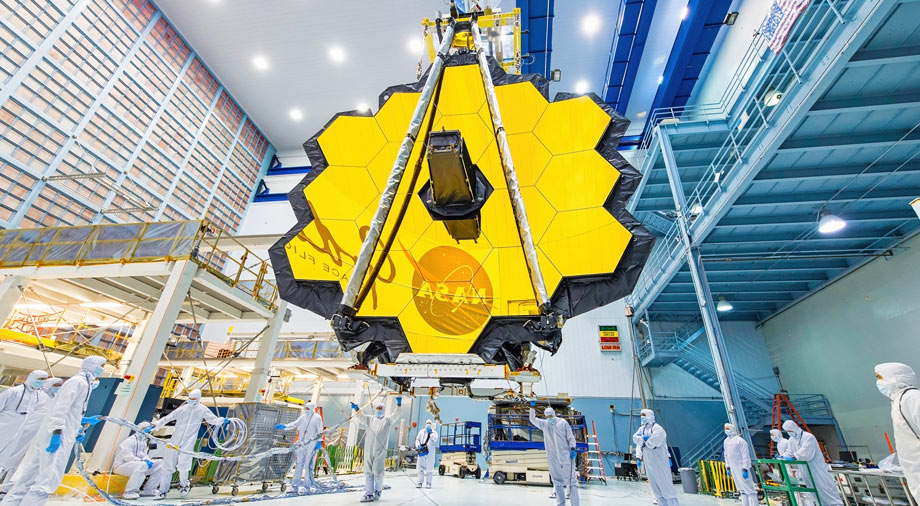
In 1990, the Hubble Telescope revolutionized astronomy with its ability to capture highly detailed images of space without distortion. To ensure guaranteed observation time with this space instrument in the future, ESA provided NASA with solar panels for the observatory and supported their subsequent engineering maintenance. Later, the James Webb Telescope joined Hubble, capturing images of galaxies from the birth of the universe 13.5 billion years ago. Once again, ESA played a key role by launching it into orbit on an Ariane 5 rocket with precision that minimized fuel loss, significantly extending the observatory’s operational lifespan.

Source: esa.int
Confirming gravitational effects predicted by Einstein’s Theory of Relativity
ESA conducted a unique study of gravitational redshift using a pair of Galileo satellites that ended up in unstable orbits due to a launch error. By leveraging the variable gravitational field and ultra-precise atomic clocks, scientists were able to measure the change in the wavelength of light under the influence of gravity with five times greater accuracy than previous experiments. This result confirmed a key predicted effect of Einstein’s General Theory of Relativity and expanded the limits of precise space-based measurements. In the future, ESA plans to extend these studies with the Atomic Clock Ensemble in Space (ACES) mission on the ISS, which will measure the flow of time in space even more precisely for further tests of fundamental physics.

Source: esa.int
Participation in the operations of the most remote research station in Antarctica
The Concordia research station is located in one of the most remote corners of Antarctica. Situated 950 km from the coastline and at an altitude of 3,233 meters above sea level (farther from humanity than astronauts on the ISS!), scientists study the ability to adapt to extreme cold, isolation, prolonged darkness, and low oxygen levels. ESA supports and regularly sends researchers to Concordia to help plan long-duration human space missions more effectively and safely.

Source: esa.int
What’s next for ESA?
Over the past five decades, ESA has grown significantly and now undertakes bolder and larger-scale projects. The number of member states is also increasing: the most recent to join at the time of publication was Slovenia, in January 2025. In the future, Ukraine could also become a member: in 2023, the Cabinet of Ministers approved an action plan for integration, which includes starting negotiations and preparing to conclude an agreement.
For both sides, this could mark the beginning of mutually beneficial cooperation: Ukraine has substantial experience in rocket design, the development and launch of Earth observation satellites (EOS SAR and EOS Data Analytics), and a cohort of qualified space engineers. The Ukrainian company SETS, which is headquartered in Dnipro, has long been developing new types of ion thrusters for spacecraft orbit correction, helping to deorbit them in line with the Zero Debris Charter concept.
Over its fifty years, ESA has gained independent access to space, established its own spaceport and satellite constellation, launched the largest Earth-observation mission, actively supported space startups, and trained European astronauts for work on the ISS. However, challenges have also accumulated, both internal and external. For example, competition with China, India, and Japan has intensified. These countries are all rapidly developing their own space programs, forcing ESA to allocate more and more funding to keep pace with competitors.
Against this backdrop, however, ESA’s plans remain highly optimistic: the agency is expanding European launch infrastructure with a new spaceport in Norway, launching the Ariane 6 rocket, developing the European Launcher Challenge program, and participating in the Artemis II mission. Measures have also been developed to reduce Europe’s dependence on the US in the military space sector, and a long-term strategy through 2040 has been approved. This strategy covers the most important areas where ESA can play a key role, including continued Earth and climate monitoring, ongoing space exploration missions, and efforts to stimulate growth and enhance Europe’s competitiveness in the commercial space sector. All of this will strengthen ESA’s position on the international stage and make it one of the key players in space exploration for decades to come.
Finally, we’d like to share this video celebrating the 50th anniversary of the European Space Agency: