The world is in the grip of “resource fever”: Ukraine and the United States have signed the “deal of the century” to develop mineral deposits; China is trying to protect itself from the illegal export of natural resources; and leading electronics manufacturers are concerned about the situation in the Democratic Republic of the Congo. That country, with its vast cobalt reserves, an essential component in the production of lithium-ion batteries, regularly experiences military conflicts.
Against this backdrop, the prospect of extracting valuable resources from space appears enticing. It is less dependent on geopolitical risks, could potentially meet humanity’s needs for centuries to come, and reduce harmful environmental impacts. NASA and the U.S. Geological Survey have repeatedly floated this idea, but practical implementation remains a distant prospect due to numerous limiting factors and questionable feasibility.
Which minerals in space are of interest?
U.S. legislation states that “one cannot own the Moon or asteroids, but one can own the materials extracted from them.” This is similar to the fact that no one can own the world’s oceans, yet ownership of fish caught from them is not disputed.
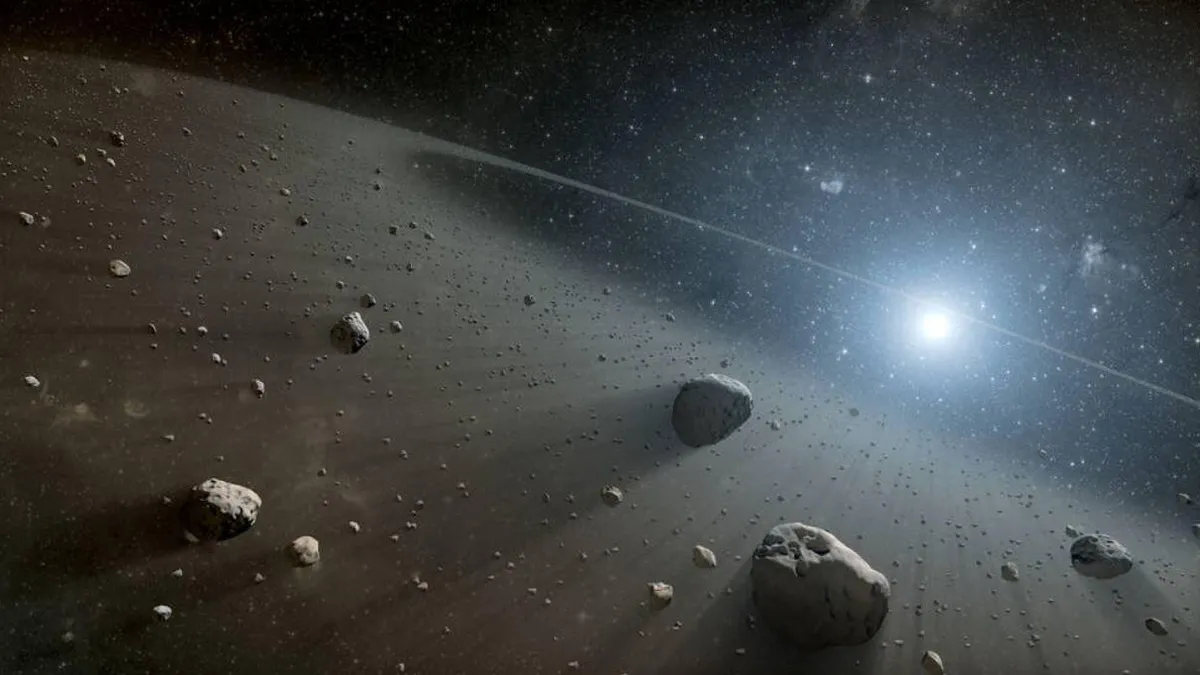
So what kind of “fish” can we find in space, and where exactly can we “catch” them? To a large extent, mining in space refers to the mining of natural resources on asteroids, other small planetary bodies, and near-Earth objects. Although asteroids and the Earth are made up of similar materials, their surface compositions differ. Asteroids themselves, moreover, are also compositionally diverse, with their makeup directly related to their distance from the Sun. Some are rich in carbon, while others contain more silicates (salts of silicic acid), which are also rock-forming minerals on Earth.
Source: cnet.com
In addition to their rocky components, asteroids contain a significant amount of metal, most commonly nickel, cobalt, gold, or platinum, and, more rarely, iridium, palladium, osmium, ruthenium, and rhodium. It was precisely because asteroids collided with Earth millions of years ago that these rare metals were left in the planet’s crust. The rest were pulled deep into the Earth toward its iron core by gravity.
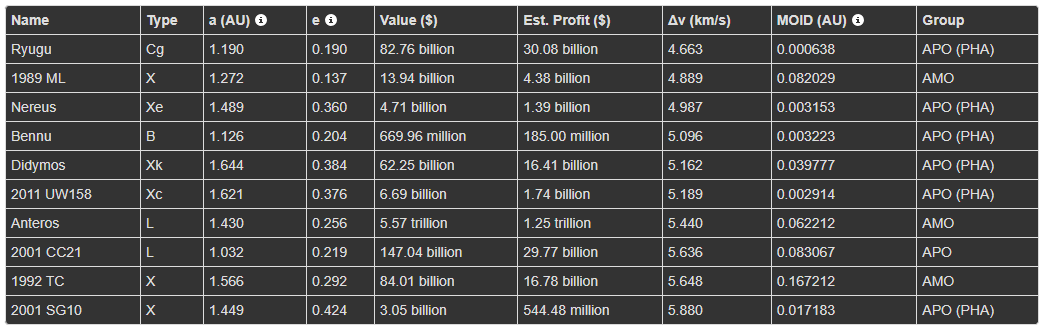
The most comprehensive data on potential “space riches” can be found in NASA’s Asterank database, which includes over 600,000 asteroids. Based on each asteroid’s mass, composition, and other known parameters, a special calculator estimates which minerals could be mined and how valuable they might be. Thanks to Asterank, it was discovered that the ten asteroids closest to Earth could, hypothetically, yield profits of around $1.5 trillion—but only after sustained mining operations begin. The concentration of some metals in asteroids is remarkable. For instance, certain celestial bodies contain up to 100 grams of platinum per ton, more than what is typically found in South American platinum mines. At the same time, the estimates provided by Asterank are quite rough and do not account for crucial factors such as the complexity and high cost of extraction or the challenges of transporting the minerals back to Earth.
Source: asterank.com
The most intriguing object is the asteroid 16 Psyche, located three times farther from the Sun than Earth, in the Main Asteroid Belt between Mars and Jupiter. It is a prominent example of an M-type asteroid: extremely dense, with massive reserves of iron and nickel that make up between 30% and 60% of its volume. Scientists determined this through radar observations and by measuring how quickly the asteroid absorbs or re-emits heat. Given its diameter of about 226 kilometers, the market value of its metals, excluding transportation to Earth, is estimated in the quintillions of dollars. Take a look at this 3D model of 16 Psyche: it might one day make every person on Earth a billionaire (though that’s far from guaranteed).
It’s not just money: why people search for minerals in space
The most valuable resources for humanity in space are precious metals, such as gold, silver, and platinum. The economic benefit of mining them on asteroids, though still hypothetical, can be justified by their potential for profitable sale on Earth. By contrast, base metals like iron, magnesium, and aluminum are of a different kind of interest: they could be used to build infrastructure directly in space, including large arrays of solar panels. In theory, this would reduce costs and help overcome the logistical challenges of transporting everything from Earth.
On Earth, traditional mining technologies are far from perfect and have a severe impact on the environment. Mining typically involves large-scale construction that often leads to deforestation and reduced biodiversity. The use of explosives and heavy machinery causes erosion and soil degradation. Coal mines pollute water and air, negatively affecting the health of people in mining regions. Moving away from traditional Earth-based extraction methods would lessen the environmental impact and help preserve natural landscapes and biodiversity for future generations.
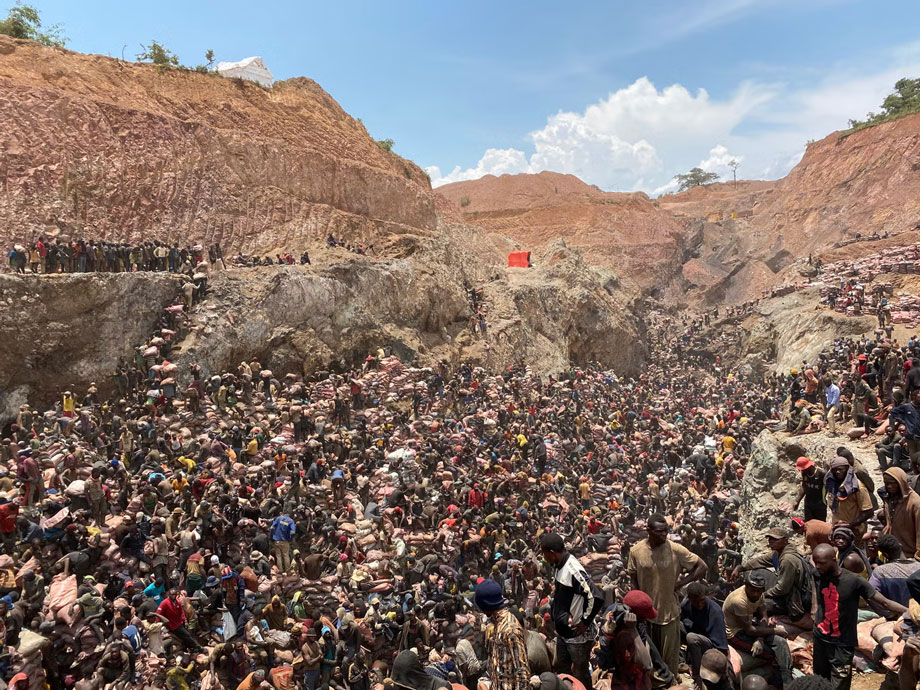
Large mineral deposits are often located in countries with low living standards, where artisanal mining, abuse of labor, and child exploitation are widespread. In this regard, asteroid mining could drive important environmental improvements and help avoid serious social problems.
Source: independent.co.uk
Who has already tried to take steps toward developing minerals in space?
The idea of mining extraterrestrial resources is not new: scientists began retrieving and studying mineral samples from space as early as the 1960s. However, real steps toward space resource exploitation were taken much later. In 2007, the Shackleton Energy Company was founded in Texas to develop technology to mine minerals on the Moon. To attract investor interest, the company launched a crowdfunding campaign. However, it raised less than 0.5% of the funds needed to finance the project. As a result, the idea of creating a network of fueling stations in space collapsed before it could even take on a clear shape.
The story of Planetary Resources, Inc., founded in 2009, was more successful. In the long term, the company aimed to develop robotic resource extraction on asteroids, but started by entering the market for low-cost space telescopes equipped with laser-optical systems, intended as the first step toward achieving its core mission. These telescopes were to be used for Earth observation, including the study of near-Earth asteroids. The company had ambitious plans to “add trillions of dollars to global GDP,” successfully completed ground tests of its Arkyd-100 telescope prototype, and even captured the interest of the American engineering giant Bechtel. Yet it all came to an end in 2018: despite having high-profile investors such as Larry Page and Eric Schmidt of Google, as well as Charles Simonyi from Microsoft.
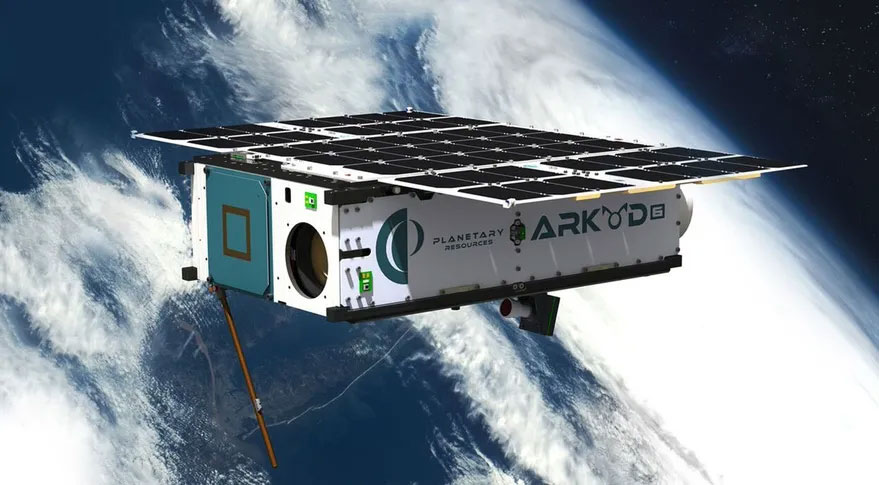
Source: spacenews.com
A similar initiative was launched by the company Deep Space Industries, considered a competitor to Planetary Resources, Inc. It planned to use a significant portion of materials mined from asteroids, mainly water, directly in space to avoid enormous fuel costs. And although both companies eventually ceased operations rather quickly, they still managed to jointly identify around 15,000 asteroids with the highest potential for mineral extraction.
Among the companies still active today is the Japanese firm iSpace. It aims to establish water and mineral resource extraction on the Moon and provide others with access to new business opportunities there. In late 2024, iSpace, in partnership with the geological exploration company Magna Petra, announced a future mission to extract commercial volumes of the helium-3 isotope from lunar regolith.
Although a large number of startups focused on space mining have failed, their ideas continue to inspire other enthusiasts. These new players, in turn, are making plans to utilize space resources yet to be mined and are developing related fields. For example, Orbit Fab, founded in 2018 and still operational, is developing in-orbit satellite refueling systems and has successfully signed contracts with the U.S. Department of Defense. In the future, its fuel may be produced directly in space. For now, the company is supplying water to the ISS and has already launched the first fuel depot in low Earth orbit.
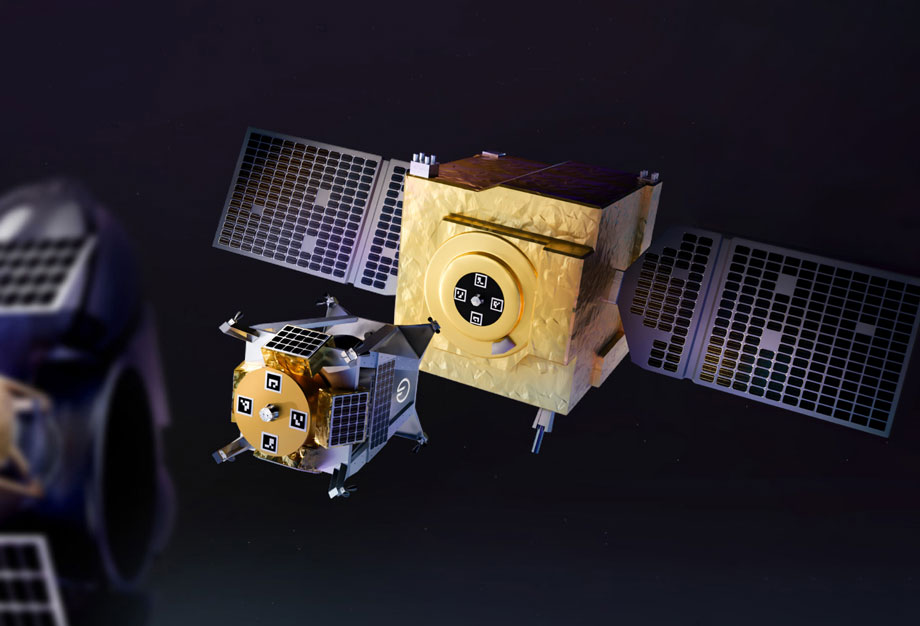
Source: orbitfab.com
And some have found an alternative niche without abandoning their original mission, choosing instead to earn revenue here and now. This is the approach taken by the California-based company Offworld, which is developing versatile industrial robots capable of performing mining operations not only on Earth but also on the Moon, Mars, and asteroids. The robots are controlled by artificial intelligence, making them fully autonomous in their decision-making.
A similar idea is being pursued by the British company Asteroid Mining Corp., which is developing specialized “SCAR-E” robots for crater exploration and resource prospecting on asteroids. For now, however, these machines are performing other tasks: for example, they are capable of thoroughly inspecting spacecraft hulls.
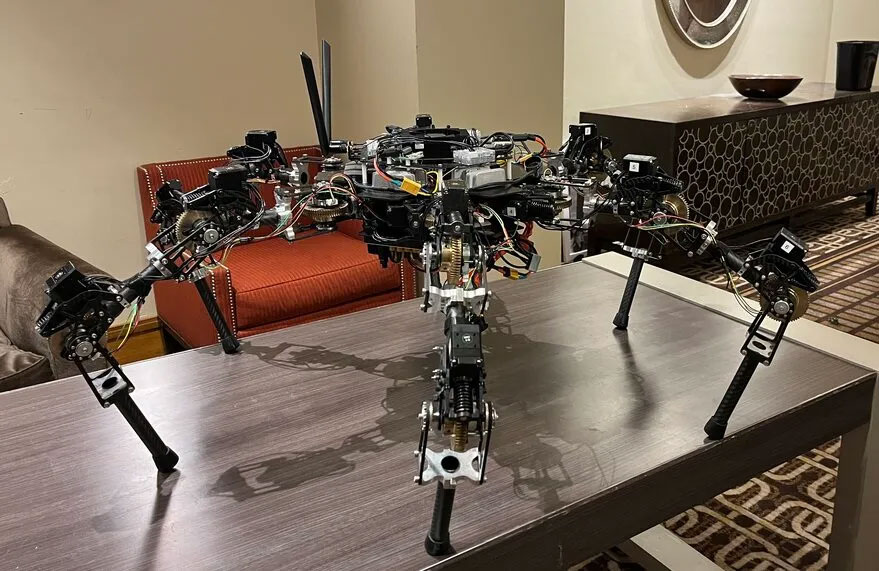
Source: spacenews.com
The Silicon Valley-based startup TransAstra is successfully addressing the “last mile” challenge in space: providing space tugs to transport satellites from their drop-off point to their final destination. To save on delivery costs, a single large launch vehicle often carries many satellites and drops them off in the same orbit. However, to perform their functions, the satellites need to be positioned in different orbits, and that’s where tugs like those developed by TransAstra come in.
Another California startup, AstroForge, founded by former NASA and SpaceX employees, sees a promising future in the use of clean energy. This, in turn, means increased demand for mineral resources, which are limited on Earth but essential for producing solar panels, wind turbines, electric vehicles, and related infrastructure. That’s why AstroForge is working on sending a tiny “refining plant” into space, capable of extracting metals from asteroids and sending them back to Earth. For this purpose, two missions, Brokkr-1 and Odin, were launched a few months apart, but both failed due to communication issues. Nevertheless, AstroForge is not giving up on the idea of mining and refining platinum-group metals, which are found in high concentrations in M-type asteroids.
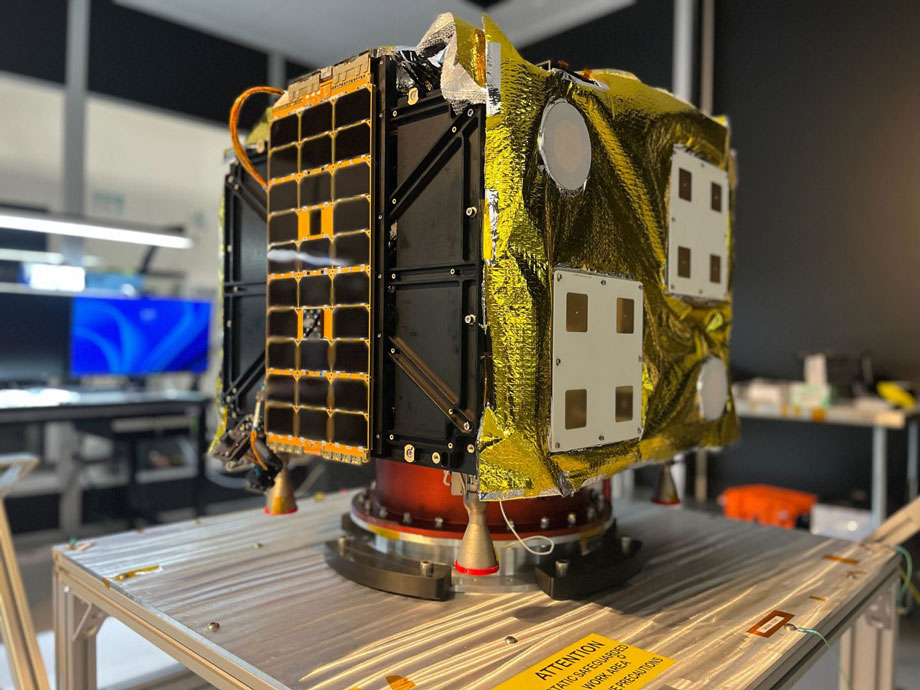
Source: arstechnica.com
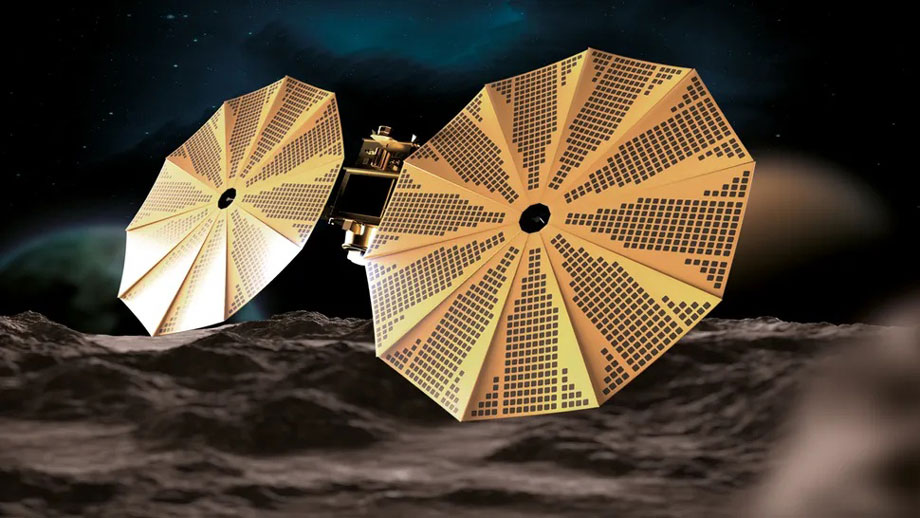
In addition to the Americans, other countries are also interested in space mining, primarily those that have passed space resource laws: Japan, the United Arab Emirates, and Luxembourg. The Japanese space agency JAXA, in collaboration with the Indian Space Research Organisation (ISRO), is planning the LUPEX mission for 2028 to study water ice on the Moon and return lunar samples to Earth. That year, the 13-year Emirates Mission (EMA) is also scheduled to launch, with a UAE spacecraft set to explore the Main Asteroid Belt. As part of this mission, the MBR Explorer spacecraft will travel 5 billion kilometers to gather information and lay the groundwork for future use of mineral resources on asteroids. Meanwhile, Luxembourg is aiming to become Europe’s hub for space resource mining. So far, this has mostly resulted in the development of a legal framework and the establishment of a partnership with the American company Deep Space Industries, which focuses on prospecting for water and minerals in space.
Source: space.com
Why We’re Still Not Mining Resources in Space
Researchers at Tel Aviv University once modeled a scenario in which humanity successfully mines minerals in space. The Israelis found that this would rapidly destabilize the global raw materials economy, leading to a devaluation of primary resources. The price of gold would crash to 50 cents, and other rare metals would face a similar fate. As a result, poor countries in developing regions would be doomed to famine because they heavily depend on exporting mineral resources.
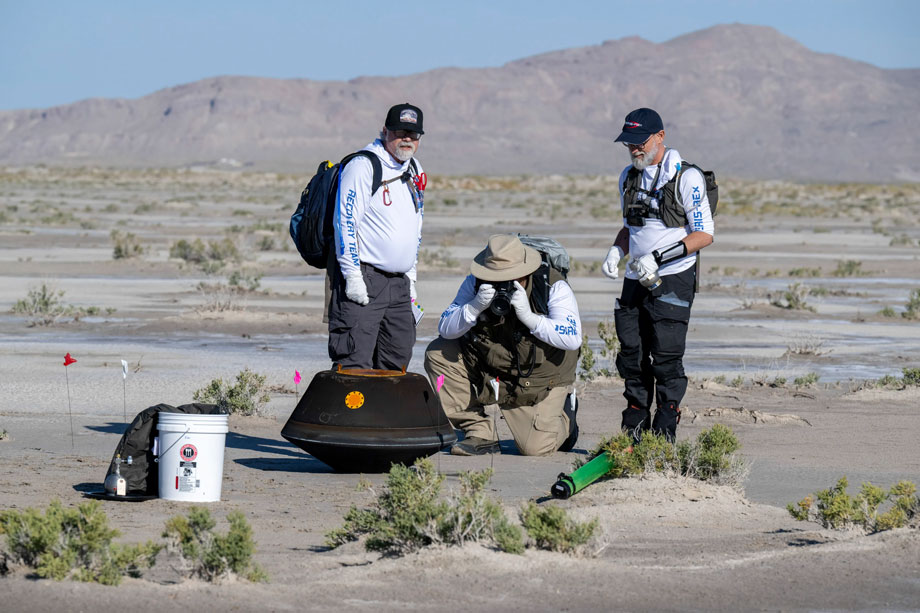
If we move away from the modeling results to the real factors limiting space mining, we find that these are much more predictable: mining in space is an extremely expensive and complex undertaking. That is why real projects remain on paper and in calculations, rather than reaching the practical implementation stage. For example, during NASA’s OSIRIS-REx mission, a 121-gram fragment of the asteroid 101955 Bennu was brought back to Earth, and the project, which took seven years to complete, cost the U.S. government $1.16 billion. That is a huge price for “mining” such a modest amount of material. However, the mission was not in vain: researchers discovered molecules essential for the origin of life.
Source: science.nasa.gov
The complexity and high cost of such missions are largely explained by the current state of technology. As Joel Sercel, founder and CEO of the California startup TransAstra, states, “several technical breakthroughs are needed to make asteroid mining possible.” Humanity requires highly precise tools that can identify asteroids and determine which among them are the most valuable, as well as provide navigation and soft landing capabilities, since these celestial bodies almost always have irregular shapes and unstable surfaces.
Resource extraction in space will only become feasible once we can design and build specialized robots capable of autonomously performing drilling, extraction, transportation, and many other processes in the harsh conditions of space. If we don’t limit ourselves to using resources on-site (ISRU), they will need to be transported back to Earth, and given the vast distances and fuel costs involved, the project might not pay off even after hundreds of years. Moreover, mining activities on asteroids could affect their trajectories and potentially generate additional space debris.
Source: rubinobservatory.org
What’s next?
Recently, humanity has managed to reduce the cost of space transportation, thanks to reusable launch vehicles. But that is only one variable in a complex system of equations. Today, the idea of mining in space has reached a level of maturity where dozens of startups either plan to do this in the future or are already creating additional value from their activities right now, like TransAstra.
The astrophysicist Neil deGrasse Tyson stated in 2015 that the first trillionaire would emerge thanks to asteroid mining. Ten years later, it has become clear that humanity has taken but one step in that direction: to make the entire journey, a huge amount of resources and new technological breakthroughs will be required. Some researchers believe that the key to effectively organizing mining operations on asteroids and other planets could be the Moon. At the very least, great hopes have been placed on studying the Moon, and the upcoming Artemis missions will help us learn more about the resources it possesses.
In the end, despite the abundance of startups, investments, enthusiasts, and even discussions at the government level, humanity has not moved much closer to space mining in the traditional sense. And even if it does, it will remain unprofitable for a long time. So, in the short- and medium-term, it is more rational to invest those same funds in other, more promising projects: for example, those related to space exploration, the search for alternative energy sources, or replacing the “irreplaceable” minerals needed in the electronics industry.