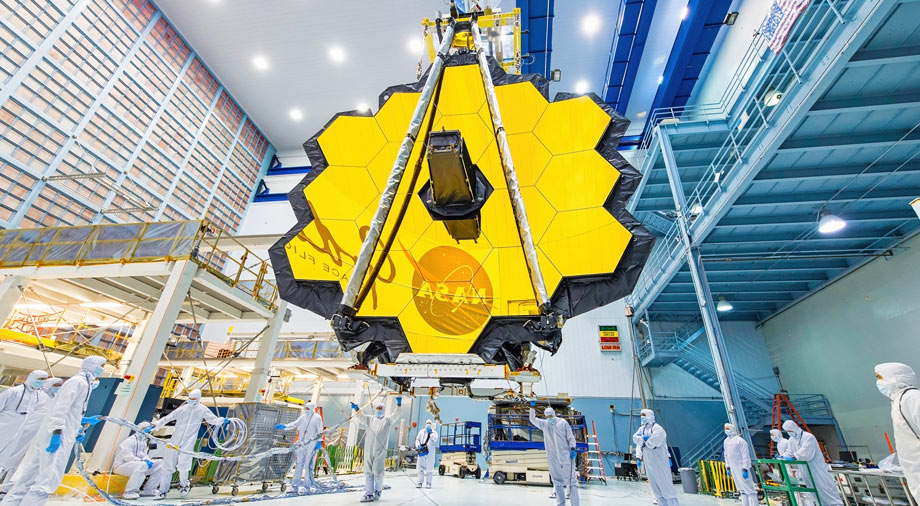
In 1977, humanity launched its most ambitious mission beyond the Solar System, sending two identical spacecraft, Voyager 1 and Voyager 2, on the longest journey in the history of space exploration. Although their original mission was to study the outer planets of the Solar System, both probes have now crossed the boundary of the heliosphere and entered interstellar space, becoming the most distant artificial spacecraft ever launched by humankind.
It may be hard to believe, but even moving at an enormous speed by our standards — nearly 61,500 km/h (Voyager 1) and 55,000 km/h (Voyager 2) — the spacecraft have covered only about 0.02% of the distance to the nearest star system, Alpha Centauri. If that was actually their final destination, it would take them more than 73,000 years to get there.
The Voyager missions may lead us to despair at the prospect of interstellar travel. However, there are certain theoretical paradoxes that, in theory, might help us traverse cosmic distances much more quickly. For today, we have prepared a complete guide to interstellar travel.
Einstein’s paradoxes: the foundations of interstellar travel
Interstellar travel, as portrayed in science fiction, requires overcoming vast distances and immense spans of time. When it comes to journeys to other stars, Newtonian physics, which for 300 years formed the basis of all mechanical calculations on Earth, no longer applies. Newtonian physics holds that the orbital paths of the planets in the Solar System should be stable, but over long periods of astronomical observation, it turned out that Mercury behaves rather strangely, shifting its orbit by 43 arcseconds every century.
At the beginning of the 20th century, the mystery of Mercury’s perihelion precession was taken up by the German physicist, Albert Einstein. His new theory of physics, first developed in 1905 as the Special Theory of Relativity and expanded in 1915 with the General Theory of Relativity, completely transformed humanity’s understanding of the nature of space and time.
Unlike Newton, who considered gravity a force acting instantaneously on distant objects, Einstein proposed that gravity is actually a curvature in the fabric of space-time, which appears to “bend” under the influence of massive objects such as planets and stars. Since Mercury was the closest planet to the Sun, Einstein realized that it was the mass of the star itself that influenced the deviation of Mercury’s orbit. In the end, he was able to calculate the precise angle of Mercury’s perihelion shift, which, to the surprise of many physicists, amounted to exactly 43 arcseconds. One of the greatest mysteries of early 20th-century astronomy was solved: planetary orbits are not stable, but are constantly influenced by the gravity of more massive objects.
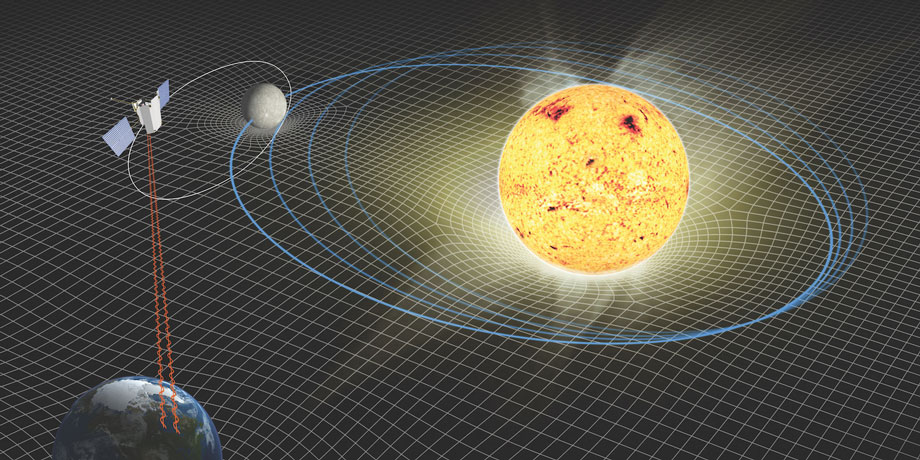
Source: pgda.gsfc.nasa.gov
Einstein demonstrated that neither time nor space is absolute, but depends on a set of factors, including the velocity of the observer measuring them. Special Relativity attempted to describe not only circular orbital trajectories but also motion in a straight line at a constant speed. Its main principles were quite simple:
- The laws of physics are the same for all observers moving uniformly relative to one another.
- The speed of light in a vacuum is the same for all observers, regardless of the motion of the light source.
These principles, however, implied consequences such as time dilation and the shortening of distances in space. Einstein realized that when an object approaches the speed of light, strange things begin to happen. For the object, time slows down relative to a stationary observer, and its length contracts in the direction of motion. These effects were not just theoretical curiosities: they are, in fact, a fundamental part of the fabric of the Universe.
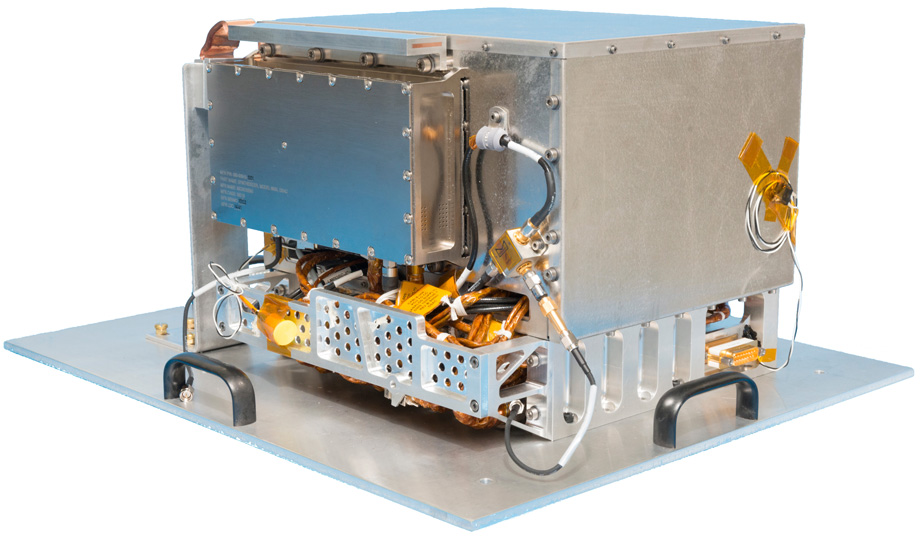
Today, the phenomena described by the Theory of Relativity have been repeatedly confirmed, from the behavior of subatomic particles in accelerators to the proper functioning of GPS satellites, whose geolocation relies on ultra-precise atomic clocks installed on them.
Source: jpl.nasa.gov
For potential space travelers, however, the implications of Einsteinian physics were a double-edged sword: on the one hand, they made it possible to traverse enormous cosmological distances within a single human lifetime, even if those distances would take thousands of years from the perspective of an observer on Earth. On the other hand, a traveler who moved long enough at a speed close to that of light would, upon returning to Earth, find themselves in the future, where everyone they once knew had long since died. This phenomenon is described by the twin paradox, which we will discuss in more detail below.
Time dilation and spatial contraction are the result of the fact that our Universe is not a three-dimensional space with “separate” time, but in fact a unified, four-dimensional continuum that should be understood as “space-time,” in which the one is inseparably linked to the other. The very nature of the Universe thus gives rise to an astonishing interconnection: the speed at which we move through space affects the speed at which we move through time. In other words, if humanity ever gains the ability to embark on interstellar travel, it must accept the fact that such a journey will not simply be a physical relocation from point A to point B, but also a leap through time.
A “rejuvenating” trip to Alpha Centauri and the twin paradox
Let us consider the example of a journey to the star system closest to our Sun, Alpha Centauri, which is located at a distance of about 4.37 light-years. A light-year is a measure not of time, but of distance. That means that to reach Proxima Centauri, light traveling through the cosmic vacuum at a constant speed of 299,792,458 m/s would need about 4.37 Earth years. That is how much time would pass for an observer of this interstellar journey who remains on Earth. However, for the spacecraft itself and its crew, everything would be different.

Source: youtube.com
The closer a spacecraft comes to the speed of light, the more space will contract in the direction of its motion, and the more strongly time will slow down. These two phenomena are known as relativistic length contraction (or Lorentz contraction) and time dilation. As a result of these forces, the crew of the spacecraft would experience the journey to the Alpha Centauri star system as lasting much less time than for people on Earth. This happens because the space between the traveler and the destination contracts and, since the speed of light is a constant, the journey would take less time.
In other words, for the interstellar traveler, the journey would feel ordinary: their clocks would tick at a steady rate, and time would pass for them as it always does. The paradox would only become apparent when they returned home to discover that, during their interstellar voyage, time on Earth did not run in step with their own.
In his 1905 paper, Einstein called this phenomenon the clock paradox. In 1911, the French physicist Paul Langevin expanded this thought experiment, using the example of twins to illustrate the effect more clearly.
Imagine that one of the twin brothers embarks on a voyage on a spacecraft traveling at nearly the speed of light, while the other remains on Earth. When the traveler returns, he will be much younger than his brother, who stayed home. The solution to the paradox lies in the fact that the traveler is not in an inertial frame of reference for the entire journey. He must accelerate at the beginning, travel for some time with this acceleration through space, and then decelerate at the end. This breaks the symmetry between the twins and causes the divergence in time. The twin on Earth remains in an inertial (relatively constant) frame of reference, while the traveling twin experiences periods of acceleration and deceleration. Under such different conditions, the very notion of simultaneity loses its meaning.
The twin paradox demonstrates the deep interconnection between space and time and clearly shows that our “earthly” perception of time is not a universal constant but is inseparably linked with the motion of our planet in space. Two events that seem simultaneous to an observer on Earth will occur at different times for the traveler. A journey across vast interstellar distances at speeds close to that of light is akin to steering the very flow of time, creating a new future distinct from the one left behind on Earth.
Experimental confirmation at CERN
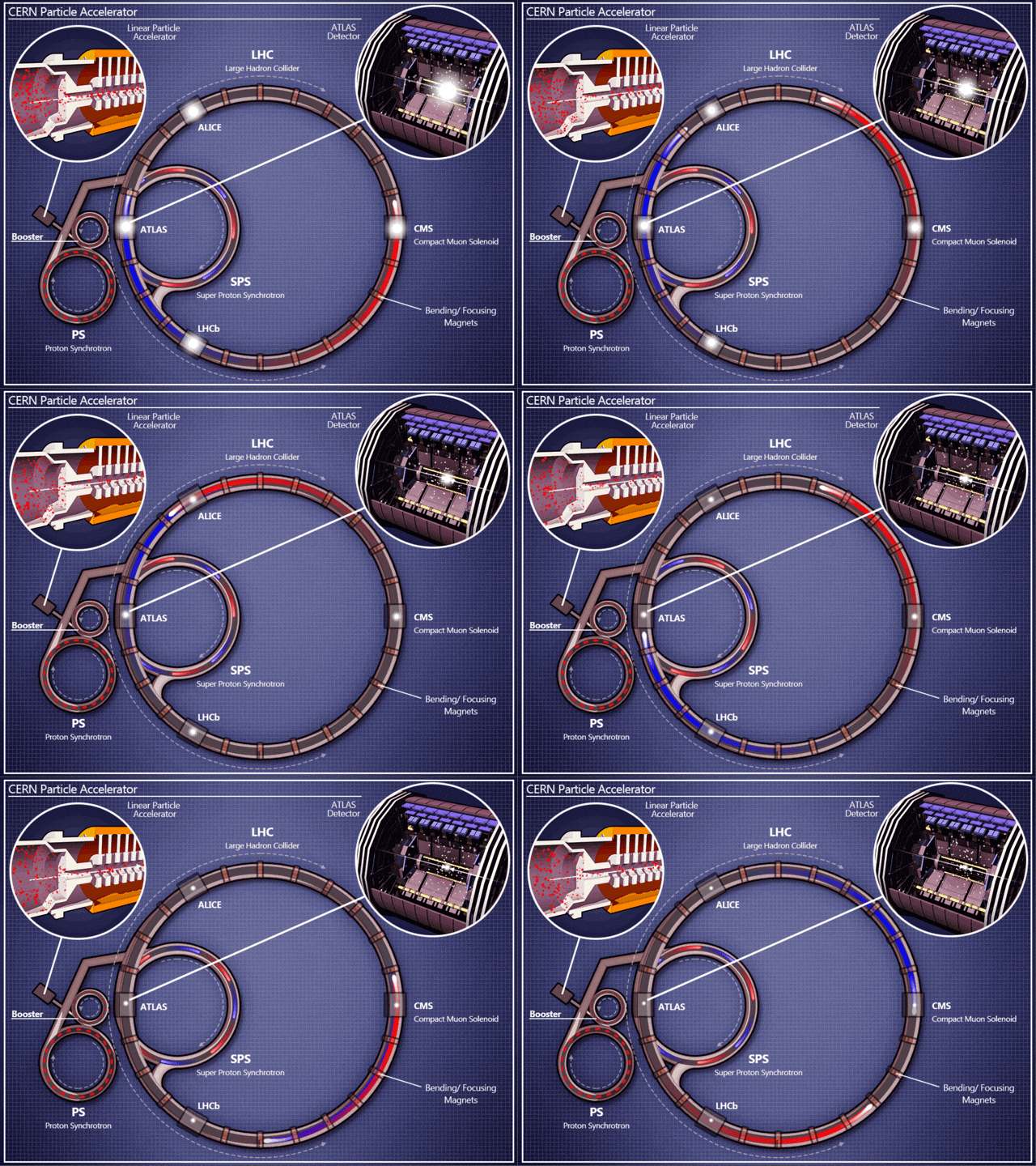
It is important to understand that the twin paradox is not just a theoretical assumption but a proven fact, experimentally verified by the European Organization for Nuclear Research (Conseil Européen pour la Recherche Nucléaire, CERN) at the Large Hadron Collider (LHC), on the border between Switzerland and France near Geneva. This colossal structure is a circular accelerator of subatomic particles, with tunnels stretching 27 km. It is there, in the underground tunnels of the LHC, that physicists can directly observe evidence that time and space are indeed not constant.
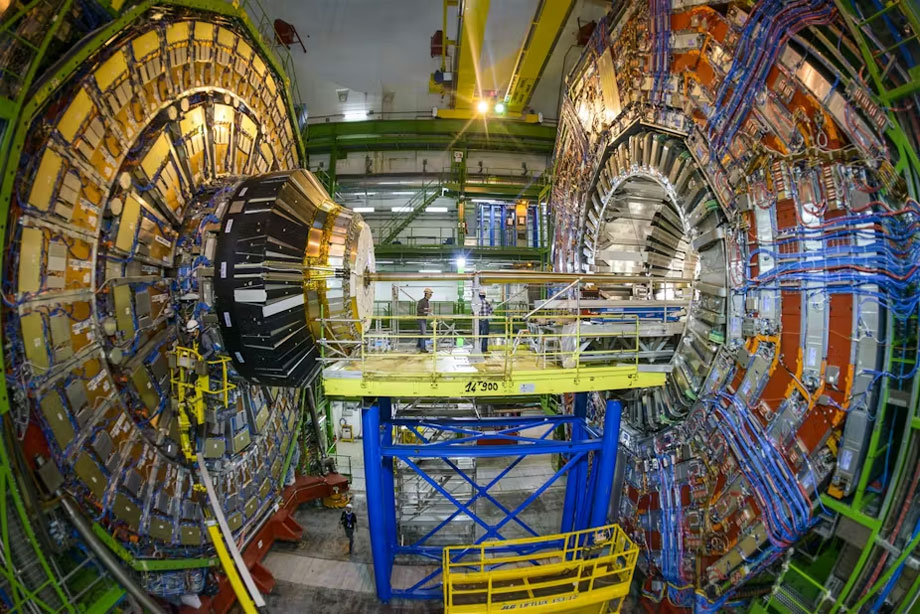
Source: ihepa.phys.ufl.edu
Protons in the LHC are accelerated to 99.9999991% of the speed of light. To stationary observers (that is, experimental physicists), it appears that the accelerated protons cover tens of kilometers in just a few seconds, but for the protons themselves, the 27-kilometer ring of the collider actually contracts to just a few meters, providing a striking example of relativistic length contraction (Lorentz contraction). But this is not the most remarkable aspect of the experiments.
In fact, the incredible speed of the accelerated protons begins to affect not only space but also time. This slowing of time experienced by the protons is so extreme that their “internal clocks” tick thousands of times more slowly. This means that if we compared two protons — one inside the LHC and one stationary — the proton in the collider would “age” much more slowly, even though for both of them the passage of time feels the same.
Another astonishing consequence of the Theory of Relativity, which we can observe thanks to CERN, is related to mass. Einstein’s most famous equation, E = mc², holds that the energy (E) of a body is equivalent to its mass (m) multiplied by the square of the speed of light (c) squared. Put simply, energy and mass are interchangeable. When scientists at the LHC expend energy to accelerate protons, that energy is transformed into the mass of the particles.
Source: rubaiathabib.me
At close to the speed of light, the relativistic mass of a proton increases by thousands of times. This makes protons increasingly hard to accelerate, proving that the absolute (100%) speed of light is in fact unattainable for any body with mass, even the tiniest elementary particles, whose mass is 1.67262192369 × 10⁻²⁷ kg. So, if it is impossible to accelerate even such light particles to the speed of light, are humanity’s hopes that interstellar travel at relativistic speeds might be possible actually realistic?
Technical implementation: a proton–proton reactor, an antimatter propulsion system, and laser sails
As noted above, the Theory of Relativity holds that no object with mass can reach the speed of light. The closer an object is to the speed of light, the more its relativistic mass increases. In practice, this requires ever greater amounts of energy for further acceleration. However, in the case of a spacecraft, it is clear that the available energy will always be subject to the limitations of its propulsion system and fuel supply. Therefore, to achieve the absolute speed of light, a spacecraft would thus require an infinite amount of energy, which is impossible with current energy technologies.
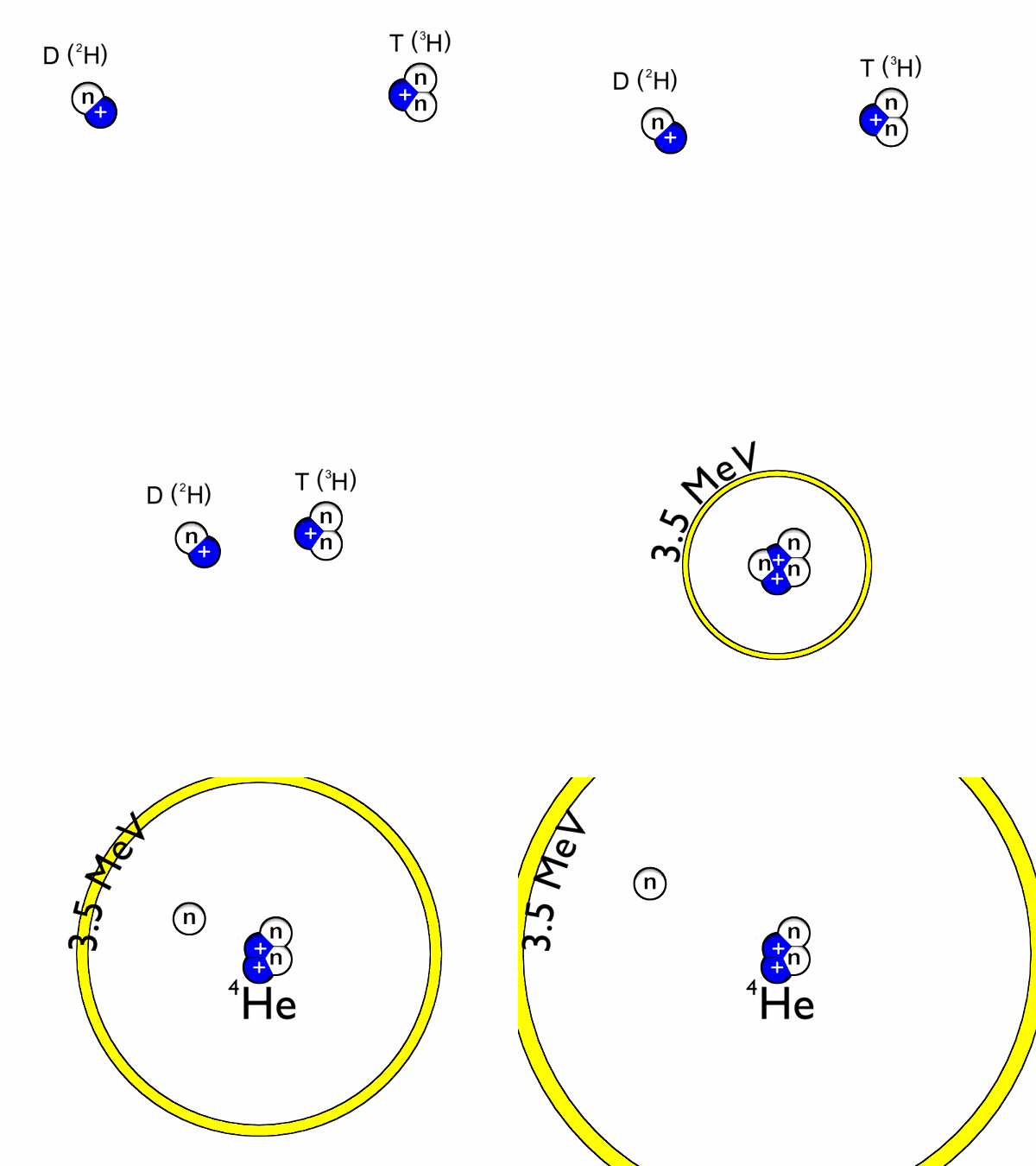
Nevertheless, in the context of interstellar travel, we can at least attempt to reach a certain percentage of the speed of light. One of the most promising methods for accelerating a spacecraft to such speeds is the use of controlled nuclear fusion. Unlike modern nuclear reactors at power plants, which generate energy through the fission of atomic nuclei, nuclear fusion produces energy by merging nuclei.
Source: commons.wikimedia.org
This is the principle upon which a proton-proton reactor for interstellar propulsion would operate. Its concept is based on the same process that powers our Sun and other stars, nuclear fusion, which can be harnessed as an energy source for spacecraft. Fusing nuclei is technologically far more complex than splitting them, because achieving a stable fusion reaction requires extremely high temperatures and pressures, since protons, having the same positive charge, strongly repel each other. Nevertheless, a proton-proton reactor would have much greater energy efficiency, making it ideal for reaching relativistic speeds.
The challenge of using a proton-proton reactor for interstellar travel lies not so much in the ability to produce enormous amounts of energy, but in organizing the process of effectively converting that energy into spacecraft thrust. Traditional rocket engines rely on expelling mass to generate thrust. At relativistic speeds, the required mass would reach astronomical proportions (no pun intended).
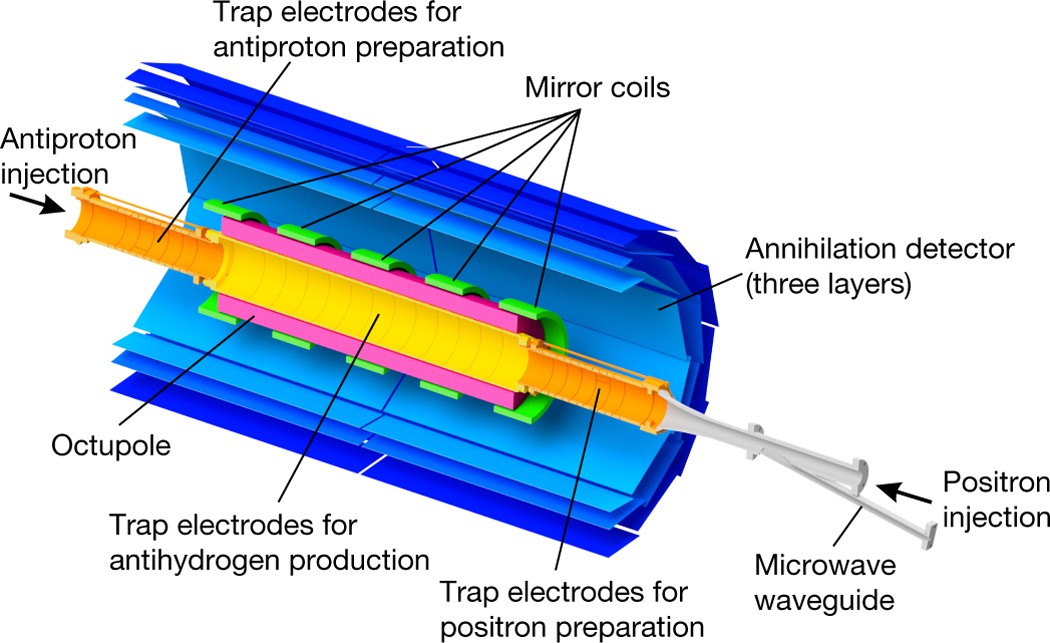
Other theoretical concepts for interstellar engines include antimatter engines and solar (or laser) sails. Antimatter-based engine concepts propose generating thrust through the annihilation of matter with antimatter. During this “encounter,” both types of substance annihilate, releasing a tremendous amount of energy. Antimatter engine concepts typically suggest using a hydrogen/antihydrogen pair, since hydrogen is the simplest and most abundant element in the Universe.
At present, the process of matter-antimatter annihilation is one of the most efficient known energy sources, as 100% of the mass of the hydrogen/antihydrogen pair is converted into energy. It is important to emphasize that this does not mean the efficiency (η) of such an antimatter engine would necessarily be 100%, but simply that all of the mass of the substance is transformed into energy, something that does not occur in chemical fuel combustion or in nuclear fusion.
Source: nature.com
Even a small amount of antimatter would thus be sufficient to accelerate a spacecraft to speeds approaching that of light. At the same time, antimatter engines remain the most fantastical concept for interstellar propulsion, as the main challenge lies in producing and storing such large quantities of antihydrogen. Current experimental facilities at CERN allow for the production and storage of only minute amounts of this antimatter, which is extremely volatile and dangerous.
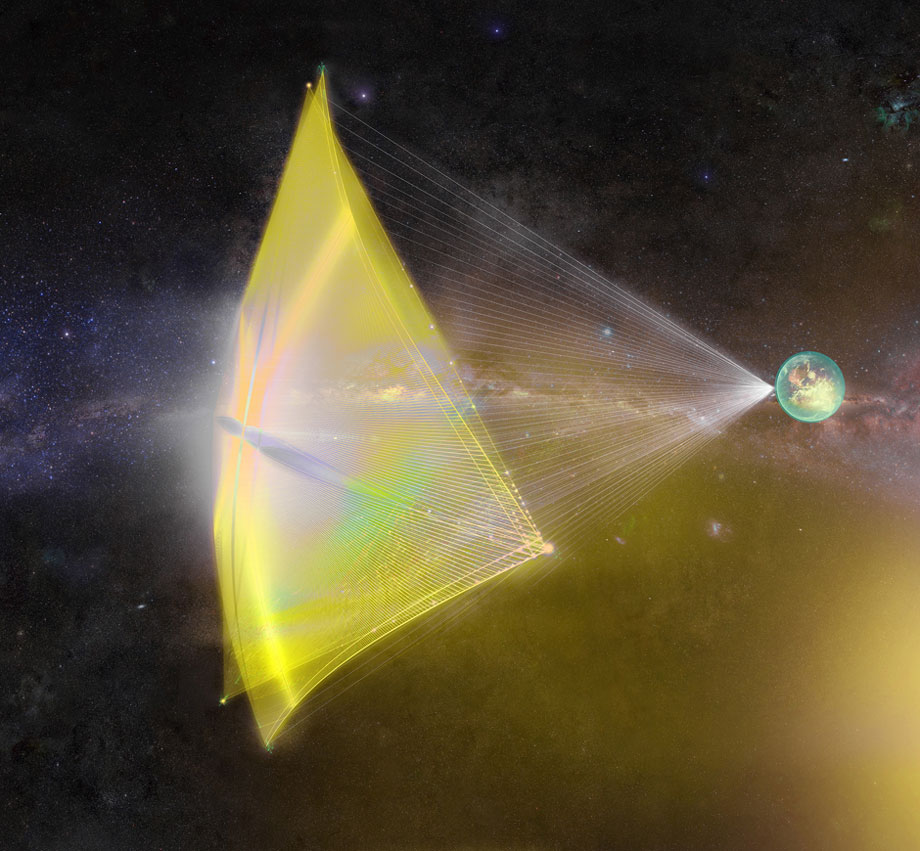
The final interstellar propulsion concept we will discuss today involves the development of laser sails. These extremely large, lightweight sails (which can be made from metamaterials or graphene) gain acceleration by capturing photons delivered to the sails by extremely powerful lasers located on Earth. Although the pressure of these photons is minuscule, it produces a continuous thrust that allows the spacecraft to accelerate steadily in the vacuum of space, free from resistance by any external medium.
Modern projects, such as Breakthrough Starshot, propose using powerful Earth-based lasers to “push” the sails, helping accelerate them to 20% of the speed of light. This could enable a journey to Proxima Centauri in just 20 years, compared to the 73,000 years it would take the Voyagers.
Source: breakthroughinitiatives.org
The mass of a spacecraft plays a decisive role in the concept of interstellar travel using solar sails. Instead of sending large spacecraft or probes to other star systems, Breakthrough Starshot proposes launching tiny, high-tech cubesats weighing just a few grams, about the size of a postage stamp. The extremely low mass of such a reconnaissance probe would facilitate acceleration and would also be a far cheaper solution than building large spacecraft.
However advanced future interstellar propulsion systems may become, the main challenge of such journeys will remain the gradual increase in a spacecraft’s effective mass during acceleration, which strongly affects its inertia and makes changing direction or speed difficult. Additionally, any encounter with interstellar gas or dust at relativistic speeds would be catastrophic for the spacecraft. Even tiny particles of matter acquire enormous kinetic energy due to relativistic mass. The prospect of an unavoidable collision represents the greatest danger when planning any interstellar journey at relativistic velocities.
But if traveling at speeds close to that of light is so difficult, are there other ways to ever reach other stars? As it turns out, modern astrophysics does not rule out the possibility that the Universe may contain objects capable of instantaneously transporting matter through space-time.
Wormholes: bypassing space-time
Among the most fascinating hypothetical phenomena that could also make interstellar travel significantly easier are “Einstein-Rosen bridges,” more commonly referred to as “wormholes.” In physical terms, these objects are a kind of “tunnel” through space-time, providing instantaneous travel between two distant points in the cosmos, such as star systems, galaxies… or even other “versions” of the Universe. Although the physical properties of a wormhole, which are capable of tearing the very fabric of space-time, border on science fiction, wormholes are, in fact, viable solutions to Einstein’s equations of General Relativity and, from a mathematical standpoint, could exist in our Universe.

Source: pressreader.com
For a wormhole to be stable and suitable for interstellar travel, however, it must be filled with exotic matter with negative energy density. This type of matter would generate repulsive gravity, preventing the wormhole from collapsing under its own weight, as would happen with ordinary matter. Beyond the (not insignificant) requirement for as-yet-undiscovered exotic matter, a spacecraft would need extremely powerful energy sources and technologies to manipulate space-time to safely pass through a wormhole. One idea is to use antimatter, since its annihilation with matter releases the greatest amount of energy. This energy could help maintain the stability of the wormhole if a spacecraft were to enter it.
As with traveling through space at speeds close to the speed of light, passage through a wormhole could give rise to temporal paradoxes. If a wormhole connects not only different locations but also different times, it could lead to the so-called grandfather paradox: a traveler who goes through the wormhole into the past could potentially prevent their own existence by killing their grandfather, hypothetically making their own existence impossible.
Other causality-violating scenarios include sending messages to one’s past self that could alter the future. The existence of such paradoxes has led some prominent physicists to reject the possibility of wormholes that allow travel to the past. Notably, Stephen Hawking proposed his “chronology protection conjecture,” which asserts that the laws of physics prevent the formation of wormholes that would permit travel into the past.
Wormholes thus remain a highly intriguing but, ultimately, theoretical concept. While they would seem to offer an ideal solution for interstellar travel, their realization would require exotic matter and technologies far beyond our current capabilities. Furthermore, the actual existence of wormholes has never been confirmed by either astronomical observations or laboratory experiments.
Finally, it is clear that, whatever the ultimate method of interstellar travel humanity develops in the future (and there is little reason to doubt that we will), it will face serious ethical challenges. A manned mission to another star would inevitably leave all Earth-bound humans behind. They would experience rapid aging relative to the travelers, while the travelers would age much more slowly in comparison. Some speculative scenarios even describe situations in which travelers return to an advanced or, conversely, severely degraded human society, feeling like strangers in their own world.