Activity in space requires large amounts of energy. But we’re not just talking about the tons of fuel burned during a rocket’s launch into space: electricity is also necessary to power various spacecraft systems throughout their entire missions. From communications and navigation to experimental scientific equipment, backup systems, and crew life support, the long-term operation of spacecraft is ensured by power systems that are resistant to failure in the harsh conditions of outer space.
Today, we’ll explore how electricity generation and power supply work in space, since these systems have undergone significant evolution over the past 70 years.
Chemical batteries and fuel generators: an ideal solution for short distances
Among the first sources of electrical power for spacecraft were chemical batteries. At the dawn of the space age, they were the only available and relatively simple technological method for providing reliable power. Chemical batteries didn’t require the implementation of complex deployment mechanisms (which would later be used in satellite solar panels), and they were also significantly safer than proposed nuclear-powered systems or radioisotope thermoelectric generators (RTGs). Furthermore, the short duration of early space missions — miniature satellites rarely stayed in orbit longer than a few weeks – meant that the energy capacity of chemical batteries was more than sufficient.
The first artificial satellite, the Soviet Sputnik-1, was launched in 1957. It was equipped with silver-zinc (Ag-Zn) chemical batteries, which had the optimal energy-to-weight ratio among all options then available to Soviet engineers. It provided a relatively high specific current, which powered the radio transmitters, relays, and the spacecraft’s ventilation system, which was implemented as a small fan that dissipated heat. Nevertheless, despite their excellent power-to-mass ratio, at approximately 50 kg, the silver-zinc batteries accounted for almost 60% of the satellite’s total mass.

Source: mediasat.info
Sputnik-1’s silver-zinc battery provided enough power for 22 days of telemetry transmission to Earth, after which the alkaline battery was completely depleted. After this initial successful experience of powering spacecraft with chemical batteries, it was clear that there was utility in further developing this technology. Engineers then began focusing on rechargeable secondary cells.
These new types of secondary chemical batteries, including nickel-cadmium (NiCd), nickel-hydrogen (NiH₂), and, later, lithium-ion (Li-ion) cells, gave spacecraft designers much greater flexibility when planning long-term missions. Rechargeable batteries also proved useful for storing energy generated from other sources, mainly solar panels, which in turn drove the development of hybrid power systems. Such systems combined solar generation with backup energy sources like chemical batteries or RTGs. These hybrid systems were especially valuable when sunlight was unavailable or during periods of peak energy demand on board spacecraft.
Nickel-cadmium batteries were widely used between the 1950s and 1990s. Their debut came with the launch of the American Vanguard 1 satellite in 1958. Despite the satellite’s very low mass of only 1.5 kg, it nevertheless carried six NiCd batteries to store energy generated by miniature solar panels mounted on its exterior. NiCd batteries proved to be reliable and capable of numerous charge/discharge cycles, making them an ideal choice for long-term missions. However, they had one notable drawback: the “memory effect,” where incomplete discharges gradually reduced the battery’s capacity. Compared to some primary chemical batteries, NiCd cells also had a relatively low energy density.
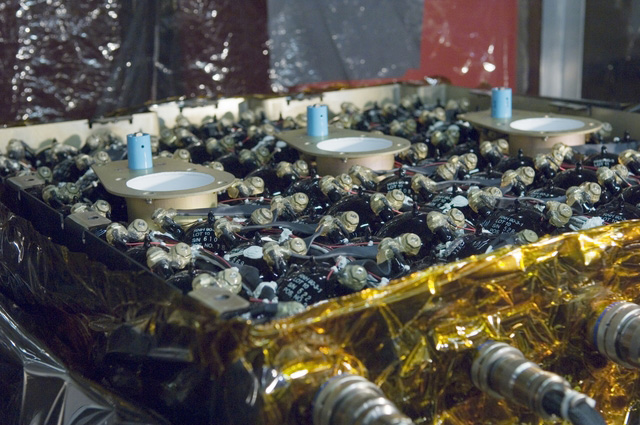
Nickel-hydrogen (NiH₂) batteries offered a much more promising solution and began seeing use in the late 1970s. In 1977, they were first installed on the U.S. Navigation Technology Satellite-2 (NTS-2), developed by the Naval Research Laboratory. With their high energy capacity and the ability to complete tens of thousands of charge/discharge cycles, NiH₂ batteries quickly became a standard for long-duration missions. Some even functioned in space for up to 20 years, a record among chemical batteries. They also did not suffer from the “memory effect” that plagued early nickel-cadmium cells.
However, NiH₂ batteries had their own drawbacks, chief among which was their weight. For this reason, they were mostly installed on large geostationary satellites, like the Hubble Space Telescope before upgrades, large spacecraft, and, from the 2000s onward, on the International Space Station (ISS). Another technical limitation was that hydrogen had to be kept under constant pressure to ensure stable battery performance.
Source: itoldya420.getarchive.net
Since the 2000s, lithium-ion (Li-ion) batteries have become increasingly common. Their operating principle is based on the movement of lithium ions between positive and negative electrodes through an organic electrolyte. The key advantage of these batteries is their significantly lighter weight, while still boasting energy capacity levels close to those of NiH₂ batteries. This is precisely why they have gradually replaced nickel-hydrogen batteries in space technology (they were eventually used to fully replace NiH₂ batteries on the ISS). Due to their compact size, lithium-ion batteries are also useful for small satellites. However, their main drawback is their sensitivity to overheating and over-discharging, which necessitated the introduction of complex battery management systems, such as the Battery Management System (BMS).
It is also worth mentioning fuel cells, which convert the chemical energy of rocket fuel (most often hydrogen–oxygen mixtures) into electricity through electrochemical reactions. These reactions produce water, which, when properly purified, can be consumed by crews as drinking water. This benefit meant that fuel cell-based power generation was used in early crewed space missions like Gemini and Apollo, as well as on the Space Shuttle. The electricity generated in this way primarily powered life-support systems and onboard equipment. However, fuel cells also entail substantial fuel consumption, which is something spacecraft engineers always seek to minimize. This is why this technology tended only to be used on relatively large spacecraft and missions of limited duration.

Source: airandspace.si.edu
Despite the evolution of chemical power sources and their relative affordability and ease of use, some types of long-duration space missions simply had no room for them. This was the case with Voyager 1 and Voyager 2, as well as a number of other spacecraft sent to the distant reaches of the Solar System. The specific profile of these missions forced their developers to seek longer-lasting and more powerful energy sources. As it turned out, the only systems capable of providing the necessary power were nuclear energy and radioisotope thermoelectric generators (RTGs).
With the power of the Sun: nuclear reactors in orbit
In the early 1960s, nuclear power was viewed as an essential component for realizing long-distance space missions, since even a relatively small reactor could provide a spacecraft with power for decades. Bold theorists in the 1950s and 60s even dreamed up unrealistic plans to build nuclear-powered giants: spacecraft propelled by impulse drives that would run on energy from a series of nuclear explosions. However, these turned out to be merely ambitious theories. More practical concepts proposed equipping spacecraft and satellites with small nuclear reactors that would sustain a chain nuclear reaction and generate heat that would then be converted into electricity by turbine systems or thermoelectric converters.
The first to demonstrate the use of a nuclear reactor in space was the Soviet Romashka spacecraft, which was developed and launched in 1964. In essence, Romashka wasn’t even a satellite in the traditional sense: rather, it was just a nuclear reactor housed in a protective shell and fired into orbit. Romashka was designed to prove the viability of using nuclear power by maintaining a controlled chain reaction in space. The reactor operated on fast neutrons and used thermoelectric elements to directly convert heat into electricity. Its power source consisted of 49 kg of uranium dicarbide, which provided an output of 0.8 kW, which was sufficient to power a medium-sized satellite.
A year after Romashka, the United States sent its own nuclear reactor into space: SNAP-10A (Systems for Nuclear Auxiliary Power). Its power output and efficiency were somewhat lower than the Soviet counterpart, and, at its peak, SNAP-10A produced only 0.5 kW. The system used thermoelectric converters to turn heat from the nuclear reaction into electricity. The SNAP-10A mission might have been considered entirely successful if not for a voltage regulator anomaly that occurred on the 43rd day of operation, prematurely ending the mission.

Source: ans.org
Despite SNAP-10A’s partial success, the United States never attempted to launch nuclear reactors into orbit again, primarily due to the inherent risks associated with such missions. The last efforts in this area were carried out under the aegis of the Nuclear Engine for Rocket Vehicle Application (NERVA) program, which ran from 1961 to 1973. The goal of the program was to develop nuclear reactors to power electric rocket engines and large reactors to supply energy to manned space bases. In the end, however, NERVA yielded no tangible results: all developments remained on paper and never reached the stage of space testing.
The Soviet Union, on the other hand, began actively implementing nuclear reactors in certain of its spacecraft and satellites. This led to the creation of the Upravlyaemy Sputnik-A (US-A, or “Controlled Satellite-A”) series, the first of which was Kosmos-367, launched in 1970 and developed for military surveillance of maritime routes.
At the core of the US-A satellites was the BES-5 Buk (short for Bystro Energetichesky Sputnik, or “Fast Power Satellite”), a space-based nuclear power unit that, like the earlier Romashka reactor tested six years prior, operated using fast neutrons. After years of development, the reactor’s power output was significantly increased: it could now generate between 3 and 5 kW. This improvement was largely due to the use of a new type of nuclear fuel: uranium-235. Heat from the reactor core was transferred by a sodium-potassium alloy coolant, which was then directed to thermoelectric generators based on semiconductors, converting the thermal energy into electricity. Excess heat was radiated directly into space through a large radiator mounted on the satellite.
Soviet engineers also took care (or so it seemed at the time) to address the safety aspect of operating a nuclear power unit in space: upon reaching the end of its service life, the US-A’s nuclear reactor was detached and boosted into a so-called “disposal orbit” (900–1000 km altitude), where it would no longer pose a direct threat to many types of spacecraft of the era and would not risk re-entering Earth’s atmosphere, which could have caused nuclear fallout upon atmospheric burn-up.
However, safety regulations could not fully prevent emergency situations or anomalies. The most well-known accident involving a US-A satellite occurred in 1978. The Soviet mission control center unexpectedly lost control of Kosmos-954 in late October 1977, about a year after launch. The failure most likely stemmed from a malfunction in the engine responsible for orbital adjustments. Although ground control maintained contact with the satellite, the malfunctioning engine prevented it from being moved to its designated disposal orbit, so the satellite continued in a decaying orbit, gradually descending toward inevitable reentry.
The critical moment came on January 24, 1978, when Kosmos-954 entered the denser layers of Earth’s atmosphere over northern Canada. Shortly afterward, emergency services began receiving calls from citizens who had witnessed a fiery ball falling from the sky. In response, the American and Canadian governments launched a joint operation called “Morning Light” to search for radioactive debris from the Soviet satellite. The operation recovered about 100 fragments with a combined weight of 65 kg, showing varying levels of radioactivity, from a few milliroentgens per hour to as much as 200 roentgens per hour. The area contaminated by radioactive fragments from Kosmos-954 ultimately covered about 124,000 km².

A diplomatic scandal erupted. Canada won a legal claim against the USSR, which was forced to pay 3 million Canadian dollars in compensation. For nearly three years afterward, Moscow suspended all US-A satellite launches until its radiation safety systems were modernized. From that point on, in any emergency situation, satellites of this series would automatically eject all fuel elements (TVELs) from the reactor core into space using a special automated gas ejection mechanism.
Of course, the threat of creating a “Chernobyl” over foreign territory did not deter the USSR from continuing to develop new types of space-based nuclear reactors. The successor to the BES-5 was the TEU-5 Topol (also known as Topaz-1), a nuclear power unit first launched into orbit in October 1987 aboard the Kosmos-1 satellite. This was followed by further modifications of satellites equipped with an upgraded reactor design known as Yenisey (Project Topaz-2), whose first launch occurred after the dissolution of the USSR.
However, by 1996, under international pressure, safety concerns, and the increasing financial impracticality of such reactors, Russia officially shut down all remaining developments in this field.
The radioisotope heart of the Voyagers
The United States ceased all experiments with launching nuclear reactors into orbit by the mid-1960s, but engineers were in no rush to abandon the potential offered by radioactive elements, especially plutonium-238. Such power systems were called radioisotope thermoelectric generators (RTGs), which could indeed provide power for space missions lasting decades.
The main difference between RTGs and nuclear reactors is that the generation of thermal energy in RTGs occurs through the natural decay of radioactive isotopes, rather than through an artificially induced chain reaction of nuclear fission, as in a reactor. The subsequent conversion of thermal energy operates on a principle similar to that of a nuclear reactor: heat generated is converted into electricity by thermoelectric converters (this is the so-called Seebeck effect).
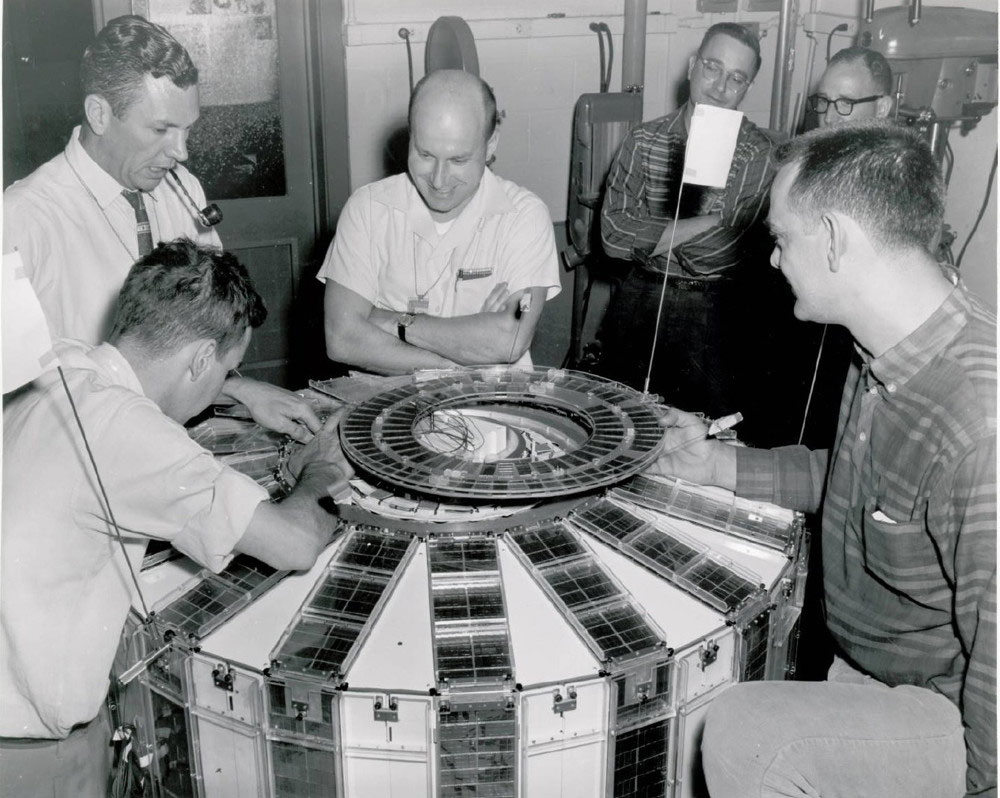
The Americans first launched a satellite equipped with an RTG in 1961, when they sent Transit 4A into orbit. Although its primary mission was purely military (it tested a satellite navigation system for U.S. Navy submarines), the spacecraft was also the first successful demonstration of the potential for using radioisotopes for power generation in space. The satellite used an experimental RTG, SNAP-3A, which was like a super-powerful nuclear battery capable of operating for decades without requiring alternative power sources such as solar panels.
RTGs ultimately enabled sending space missions to the most distant corners of the Solar System, as well as employing landing craft that could operate for years inside caves or deep canyons on planets and moons.
Source: John Hopkins Applied Physics Laboratory
The first use of RTGs in extraterrestrial missions was during the Apollo lunar program. The SNAP-27 RTG powered the scientific equipment used in the Apollo Lunar Surface Experiments Package (ALSEP) in five consecutive missions (Apollo 12, 14, 15, 16, 17), which astronauts installed on the Moon. After their departure, it continued to conduct a series of scientific studies and was able to transmit the results back to Earth.
In the early 1970s, American RTG generators passed through the Main Asteroid Belt between Mars and Jupiter for the first time. At that time, NASA managed to launch two spacecraft: Pioneer 10, which studied Jupiter, and Pioneer 11, which explored Jupiter and Saturn. Each was equipped with four RTGs. In 1976, the Viking 1 and Viking 2 landers reached the surface of Mars. Each had two RTGs to power their systems and keep their equipment warm during cold Martian nights.
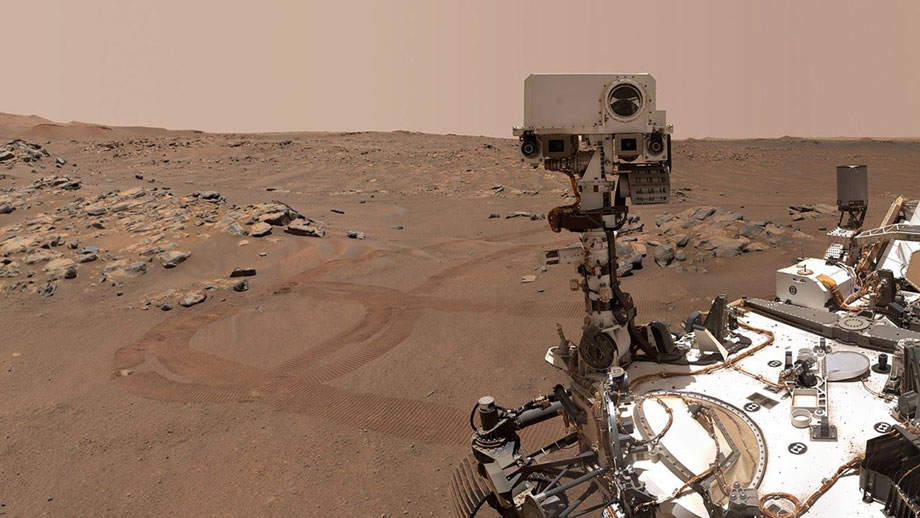
In the 21st century, radioisotope thermoelectric generators returned to Mars, providing power to the Curiosity and Perseverance rovers, which were launched in 2011 and 2020, respectively. The rovers are equipped with more powerful electric generators called Multi-Mission Radioisotope Thermoelectric Generators (MMRTG), which work equally well in the vacuum of space and during the rover’s planetary activities. One such generator can produce 110 watts of power and has a planned service life of 14 years. However, over time, the nominal power of the MMRTG decreases due to the gradual decay of plutonium and degradation of its thermocouples. Both Mars rovers are also equipped with a hybrid power system, so part of their energy during daytime operation is generated by solar panels.
Source: science.nasa.gov
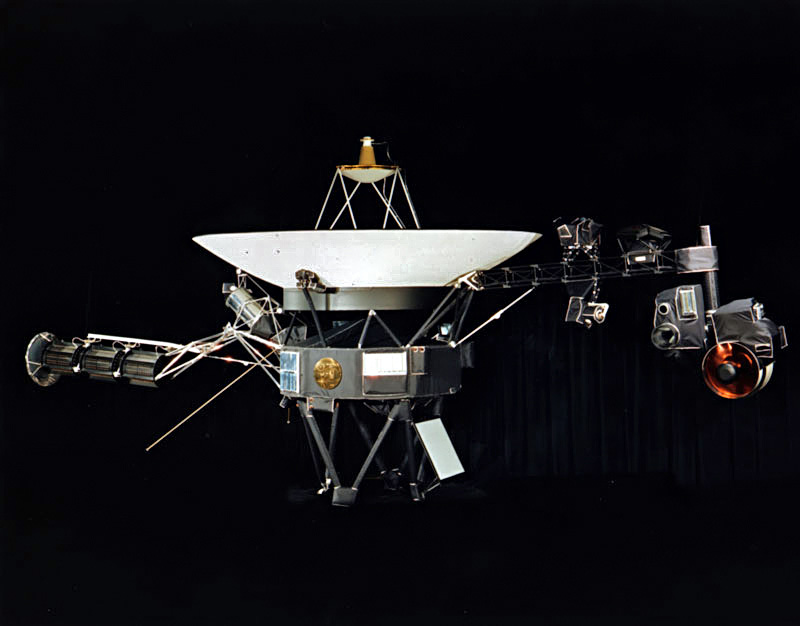
The most distant journey by an RTG-powered spacecraft has even gone beyond the Solar System. In 1977, NASA launched Voyager 1 and Voyager 2 just weeks apart. Each was powered by three Multi-Hundred Watt (MHW) RTGs. The design of this particular generator later led to the evolution of the technology and the creation of the aforementioned MMRTG.
At the time of launch, each radioisotope thermoelectric generator could produce up to 158 watts of electrical power (together, the three RTGs generated up to 470 watts). Over time, the depletion of plutonium fuel resulted in power reductions, with the spacecraft losing approximately 4–4.3 watts of power per year on average. When NASA checked on the spacecraft in 2022, it found that the power output from the three RTGs had halved, producing only 230–249 watts. Due to the continual decline in power generation, the agency had to develop a special energy-saving strategy, which involved gradually shutting down some secondary systems of the spacecraft, the least critical scientific instruments, and heaters.
Source: Wikipedia
Over the 70 years since the introduction of RTGs, they have become indispensable for distant space missions. Indeed, spacecraft powered in this way have visited nearly every planet in the Solar System. In 2015, New Horizons, powered by an MMRTG, flew past Pluto, and, four years later, on January 1, 2019, reached the Kuiper Belt object Arrokoth (2014 MU69, also known as Ultima Thule). Thus, despite its venerable age, NASA is in no hurry to retire the MMRTG. The Dragonfly mission, which aims to deliver a flying spacecraft to Saturn’s moon Titan, will also be equipped with an MMRTG. The generator will allow Dragonfly to operate in the low temperatures and absence of sunlight on Titan’s surface.
Stay tuned for our next article in this series, wherein we will discuss the most common method of electricity generation for satellites in Earth orbit, deployable solar panels, and explore the future of energy production in space.