
The interaction between the European Space Agency (ESA) and the European Parliament is a key factor in shaping a unified European space policy. Although ESA is an independent international organization, it must nevertheless cooperate closely with European lawmakers, since all of its member states are members of the EU. Moreover, a significant share of ESA’s space program funding comes directly from the EU budget, making this cooperation doubly important.
Another reason for strengthening this cooperation is dictated by current circumstances: as the American space sector gradually distances itself from Europe, there is a growing belief that the ESA and the European Parliament need to forge closer ties, with the Parliament now playing an active role in drafting new space legislation and contributing to the development of innovative space technologies.
Let us take a closer look at the main reasons for this closer relationship and the benefits it brings.
One law for strengthening the space sector
The high degree of fragmentation in laws regulating space activities has long hindered the development of Europe’s space sector. Currently, the 13 ESA member states most actively engaged in space operations all have different legislative and regulatory frameworks. As a result, final costs for both manufacturing enterprises and private aerospace companies involved in European space initiatives tend to be quite high.
An attempt to rethink the existing rules took place on June 25, 2025, when the European Commission proposed ambitious new measures to make Europe’s space sector safer, more competitive, environmentally sustainable, and, most importantly, unified. This resulted in the introduction of the draft EU Space Act, which is aimed at establishing a single market for space services, which should greatly improve the business climate within the EU, particularly for space startups and small to medium-sized enterprises.
The new Space Act will be built on three key pillars:
- Security: New safety standards are intended to ensure Europe’s access to space by introducing stricter control over hydrocarbon emissions, the creation of space debris, and the removal of existing debris in Earth’s orbit. This could mean new rules for future spacecraft, requiring them to incorporate additional technological solutions for safe end-of-life disposal, such as electric propulsion systems for deorbiting. These new norms may also give a boost to space startups focused on automated debris removal and companies specializing in tracking orbital objects, both active and defunct.
- Resilience: New unified cybersecurity standards aim to protect European satellites from hacking and malicious cyberattacks designed to destabilize the space sector. Such attacks cause an estimated €1 billion in damage annually. Lawmakers hope that enhanced cybersecurity regulations will strengthen Europe’s telecommunications giants, enabling them to deploy new satellite megaconstellations without fear of losing them to cyber threats.
- Development: Perhaps the most crucial aspect of the new legislation focuses on creating a unified economic space within the EU. However, this will not mean unrestricted freedom for industry players. In the EU, sustainable development has always gone hand-in-hand with responsibility, and this principle will likely apply to the space sector as well. Companies will need to learn how to profit from activities such as orbital debris removal, on-orbit servicing, and emerging robotic technologies. Recent trends suggest this is an achievable goal, one that could foster a highly competitive market within Europe.

Source: @defis_eu on X
It is worth noting that these new rules are intended to apply not only to European domestic operators but also to foreign companies providing services within the EU. European lawmakers are already showing a certain level of optimism, emphasizing that the new regulatory framework will not only impose a set of requirements on participants but will also support them, including financial assistance with some production and research costs.
The proposed Space Act thus reflects the shared goals of ESA and European legislators to strengthen Europe’s autonomy, resilience, and competitiveness in the space sector.
A new vision for the space economy
In addition to the proposed Space Act, the European Commission also unveiled a new Vision for the European Space Economy. This initiative outlines a strategy aimed at making the EU a global space leader by 2050. Soon, we will witness the first steps of this new approach in the strategic planning of European space operations and the launch of new infrastructure projects. Most likely, this unification of European efforts will focus on addressing the key challenges currently facing global space activities.
These new challenges, however, actually serve to bring nations together, and include the safety of space operations, space traffic management, resilience to cyber threats in space, reduction of space debris, and lowering CO2 emissions. To tackle these issues, ESA and other European space agencies are already deploying their monitoring and communication satellite resources:
- Connected and Automated Mobility. New technological solutions aim to improve the accuracy of the Galileo satellite constellation for geospatial positioning. This new approach will be especially useful for managing autonomous vehicle traffic and developing intelligent transport systems.
- EU Maritime Security Strategy. Supported by the new IRIS2 satellite constellation, which ensures reliable, uninterrupted communications for European shipping worldwide.
- Common Fisheries Policy. Monitoring of shadow fleets and illegal fishing with the help of the Copernicus Sentinel-1 satellite.
- EU Arctic Policy. Focused on creating a free navigation zone and uninterrupted satellite communication using Galileo and IRIS2 satellites.
- Permanent Structured Cooperation / Common Security and Defence Policy (PESCO/CSDP). A mechanism enabling EU member states wishing to deepen defense cooperation to do so on a permanent basis. It actively uses Galileo satellites for continuous navigation and IRIS2 for resilient communications under challenging conditions.
- Renewable Energy Directive. Copernicus monitoring satellites are used to select optimal sites for wind turbines and solar panels.
- Single European Sky. By 2030, EGNOS is expected to help reduce CO2 emissions by up to 45,000 tonnes per year by enabling more fuel-efficient and quieter routes for civil aviation.
Europe’s vision for the space economy extends far beyond Earth. In its effort to create a unified space ecosystem, the EU is considering not only the modernization of its industrial and technological base on Earth but, for the first time, is also adding on-orbit servicing and beyond-orbit operations into this framework. This includes concepts like in-situ resource utilization (ISRU) and resource extraction from other moons and planets. From now on, European lawmakers can begin working toward consolidating these areas into a unified regulatory framework.
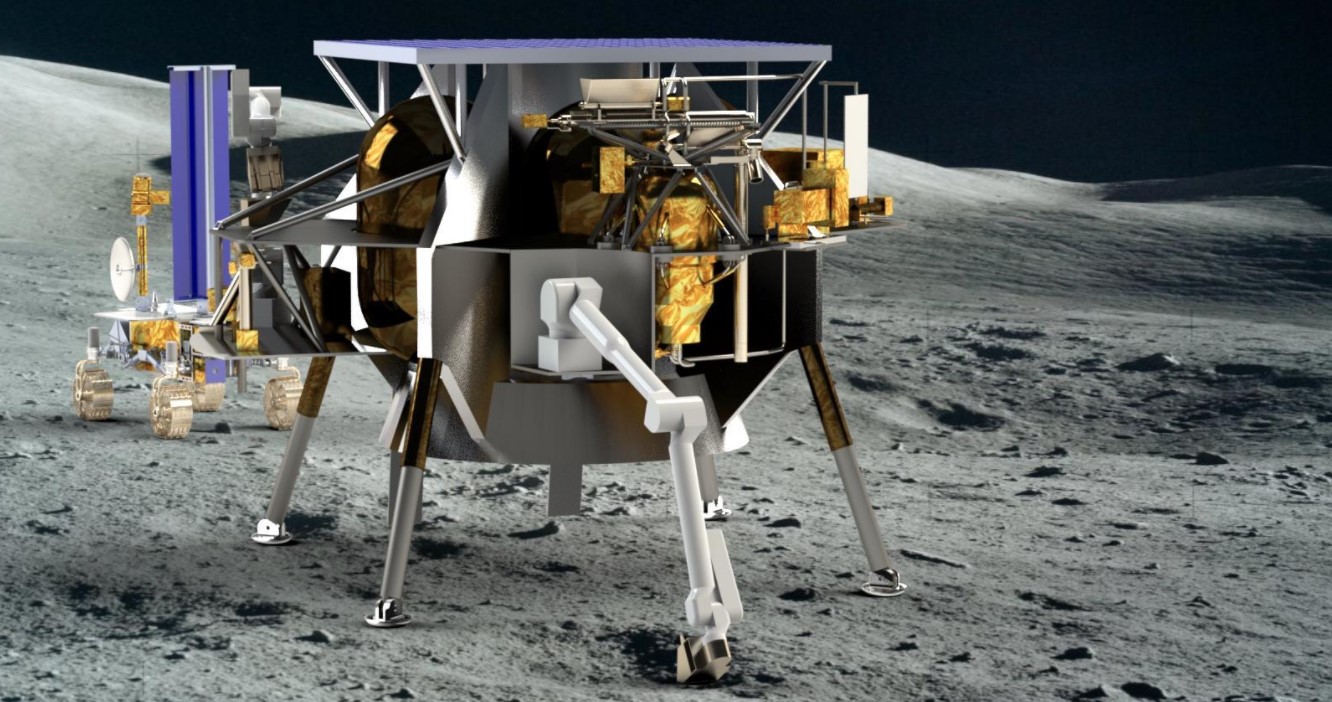
Source: spaceapplications.com
Even today, ESA is encouraging private aerospace entrepreneurs to participate in a number of organized studies aimed at demonstrating and advancing ISRU, in-orbit servicing operations (ISOS), and other initiatives, because the path to real-world implementation of new technologies begins with testing. Such preparatory activities will also help create new business models that could later become the foundation of a unified European space business ecosystem.
The space vision roadmap, published on June 25, outlines a list of 40 actions intended to strengthen the EU’s leadership in the space sector. Here are a few key points:
- Creation of the European Space Group: A unified strategic planning forum that will include Europe’s main space agencies and organizations, such as ESA, EUSPA (the EU Agency for the Space Programme), and several major private sector players. The group’s primary goal will be to identify potentially attractive areas for space sector development. The proposed forum will also push European bureaucracies to adopt legislation that accelerates progress rather than hinders it.
- Investment support: Several parallel programs have been proposed to encourage the activities of new space startups and fund emerging technological solutions. These include debt financing programs, seed investment initiatives, and a procurement platform for non-EU countries.
- Monitoring initiatives: To create a reliable and favorable investment climate, a series of competitiveness studies for new European projects has been proposed. Monitoring groups will work within the framework of the Competitiveness Compass, published in January 2025. The Competitiveness Compass is an action plan aimed at making the European economy competitive with other global economic powers. The new monitoring methodology will first assess the EU’s market share in the global space sector, which is projected to reach €1.6 trillion by 2035. After completing competitiveness studies, the monitoring groups will propose measures to strengthen Europe’s position within other European institutions.
Europe’s new vision for space development almost entirely rejects the old paradigm of supporting large, state-run space programs requiring multibillion-euro budgets. Returning to the Moon no longer means launching entirely new national space programs: it is enough to stimulate and support private players. Many of them already have technological solutions but lack the necessary investment and legislative backing. By actively involving the private sector in space activities, the EU will be able to reduce its financial burden. In recent years of political turbulence and uncertainty, this approach is particularly relevant, as the EU must carefully manage its internal resources.
Playing as a single team
Another interesting proposal discussed in connection with the presentation of the new Space Act is the idea of creating a so-called “Space Team Europe”: a mechanism for dialogue and coordination among European countries on the development of the EU space sector. Most likely, Space Team Europe will be organized as an inclusive forum. Since all 27 EU member states are currently involved to some extent in developing their own space projects, the creation of such a platform makes sense. It could foster a certain level of effort consolidation while reducing disagreements on key issues among participants.
The European Commission has been the main initiator of the Space Team Europe project. However, it’s important to understand that the mechanism has not yet been launched. Its core functions are still being developed, but it’s already clear that they will focus on transparent information sharing among all EU countries, coordinated approaches to achieving strategic space sector goals, and discussions on defining key priorities and development directions for the space industry.
Other functions of Space Team Europe may include coordinating investment distribution at national and institutional levels, developing unified technological standards and regulations, consolidating the introduction of new practices and approaches, and working jointly on new infrastructure projects, space missions, and programs.
The main players in Space Team Europe are expected to include leading EU research institutes, ESA’s startup incubators, prominent European space organizations, and the private sector. To ensure meaningful feedback, newly created focus groups of end-users of space data and services might also be invited to join the forum: after all, customers sometimes have the clearest understanding of the functionality they expect from the innovations being developed.
Unity begins with a common cause
In the context of building a unified European space ecosystem, “unity” takes on new meaning. Several pan-European space projects in the past have significantly strengthened horizontal ties among EU countries. In 2011, the first operational pair of satellites from the Galileo European geospatial navigation constellation, an analogue to the American GPS, reached orbit. By 2016, the number of Galileo satellites in orbit was sufficient to begin providing services to users. Today, all 27 EU member states have access to this satellite-based geospatial awareness service.
Galileo is a good example of how responsibilities can be shared among European countries. The constellation’s two satellite control centers are located in Italy and Germany, while several French, German, and Belgian contractors have also been involved, through industrial contracts, in developing the system’s technological components and ground infrastructure. The main European Global Navigation Satellite System (GNSS) Service Center (GSC) is located in Torrejón de Ardoz, Spain.
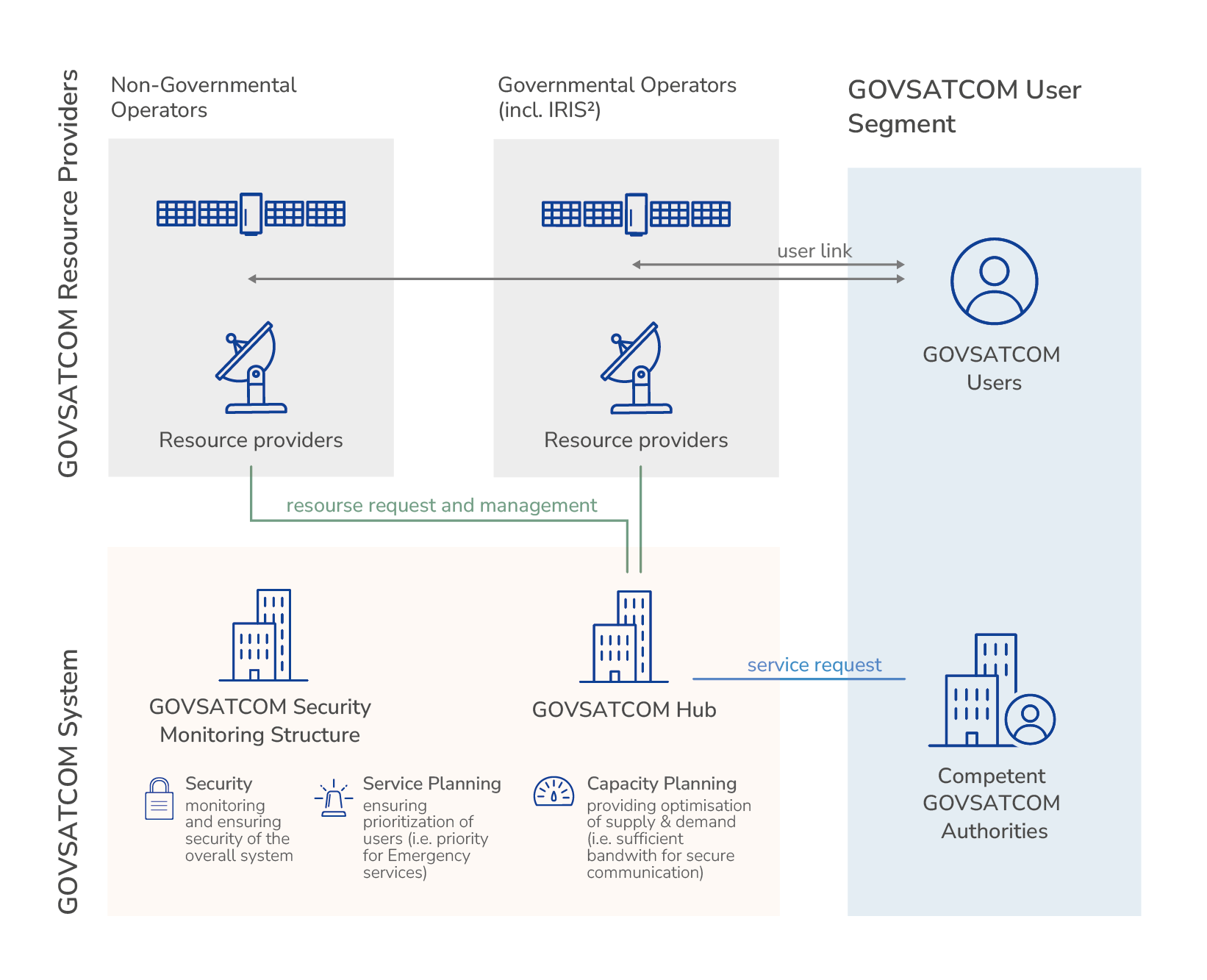
Galileo isn’t the only example. Projects like the Earth observation program Copernicus also stand out as key collaborations between the European Commission, ESA member states, EUSPA, the European Organisation for the Exploitation of Meteorological Satellites (EUMETSAT), and several other stakeholders. Between 2023 and 2024, the European governmental satellite communications program, GOVSATCOM, saw active development. It is now part of the ambitious 2021–2027 European initiative aimed at integrating public and private satellite fleets to establish a secure and reliable governmental communications channel across all EU countries. GOVSATCOM is expected to reach full operational capability within the next few years.
Source: euspa.europa.eu
Years of dedicated cooperation on space projects are now being complemented by ambitious plans for the future, and Europe remains determined to develop its own space launch capabilities. Although delayed, the Ariane 6 rocket has finally entered service. And while this new launch vehicle is only starting to gain momentum, work on its successor is already underway. This effort is part of the ESA’s Future Launchers Preparatory Programme (FLPP) as well as the Horizon Europe research initiative.
The focus will likely be on achieving reusability, developing new types of propulsion systems, and creating more cost-effective rocket fuels, including those that could potentially be produced beyond Earth as part of the ISRU concept discussed earlier. ESA and its member states are also exploring 3D printing technology in space, digital transformation, and the active use of space data to support key sectors of the European economy, from energy and finance to agriculture and transportation.
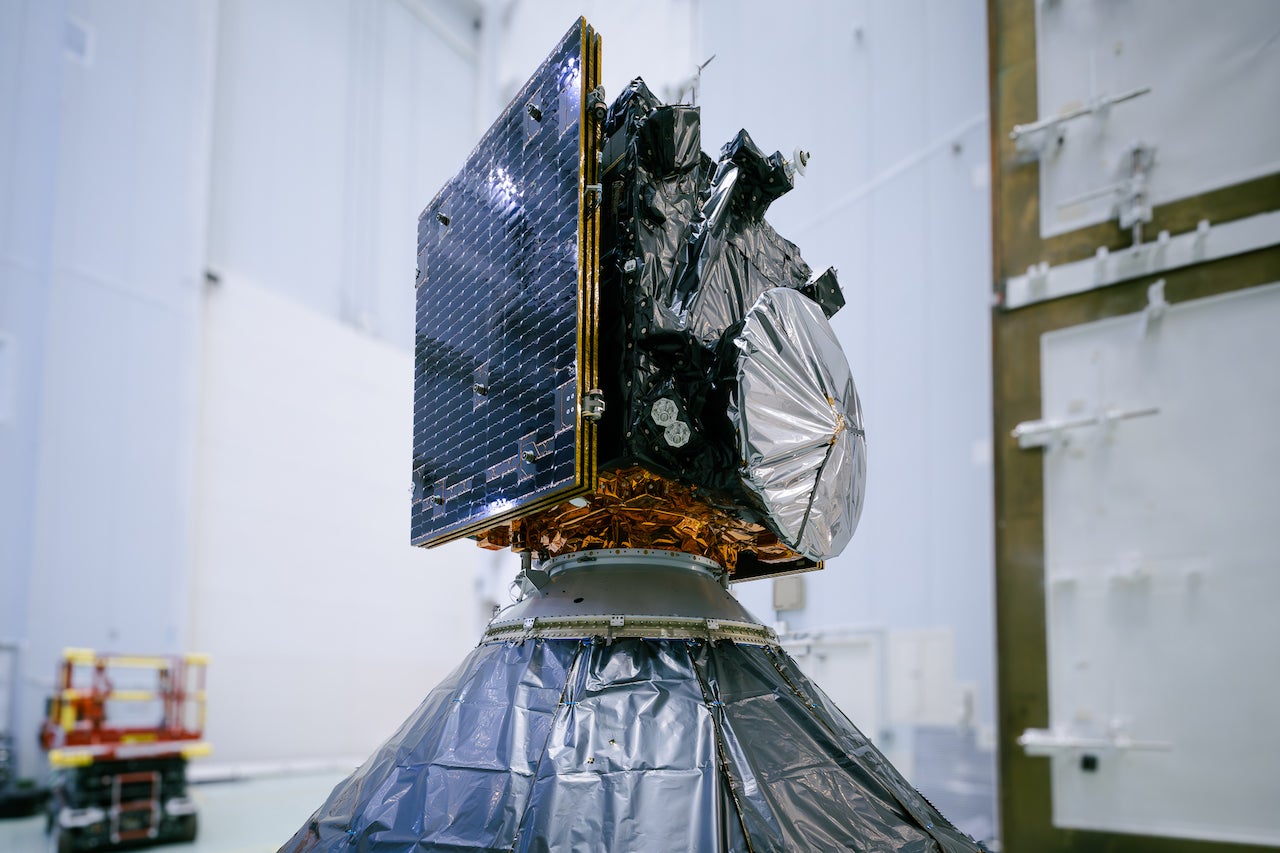
Cooperation in the space sector also extends to European security and includes missions aimed at enhancing planetary defense. In October 2024, ESA launched its Hera mission to the binary asteroid system Didymos/Dimorphos. As a follow-up to NASA’s DART mission, the Hera spacecraft will closely study the aftermath of DART’s impact with Dimorphos, which occurred on September 27, 2022.
Source: ESA
Other security initiatives include work on the Zero Debris Technologies program, which focuses on developing new technologies for tracking, proactively reducing, and automatically removing space debris from orbit. Among other projects in development are programs for monitoring space weather and solar activity, such as the ESA Vigil mission, planned for launch in 2031.
Particular attention is being given to the work within the European Student Assembly, which will be important for future projects and legislative initiatives. Although it is not directly an ESA space program, some of its participants are actively involved in developing the space sector, and this involvement goes beyond just technological personnel. Since the European Student Assembly invites students from across the EU to its forums and consultations, together they engage in discussing critical issues for the European Union and develop policy recommendations that have a chance to be formally presented directly to the European Parliament. This system allows future generations to influence European policy, including in the field of space.
As we can see, the European Parliament is well aware of the potential in strengthened cooperation between ESA and other EU space organizations. This awareness is finally getting noticed at the legislative level, as demonstrated in the new bills and development strategies proposed by the European Commission. Ultimately, the main strategic goal of this work, ensuring full autonomy and future dominance in the space sector, no longer seems so unattainable.