
For most of the 20th century, space was the prerogative of superpowers, which constantly modernized and raced to launch giant, bus-sized satellites into orbit. These bulky spacecraft, which represented the most advanced technology of their era, cost hundreds of millions of dollars and took decades to develop. These satellites were predominantly placed into high Earth orbits (GEO) at 35,000+ km, which made servicing operations and life-extension missions essentially impossible. Such assets were extremely expensive, and their loss threatened to nullify years of work.
The rules of the game, however, began to change in the 21st century. Today, we increasingly see constellations of small, or even micro, satellites in low Earth orbit (LEO) replacing costly giants. These spacecraft conduct remote Earth monitoring, provide navigation services, or function as relays for encrypted government communications. For certain types of tasks, even satellites the size of a passenger car may now be too large.
In this article, we will discuss the topic of CubeSats: standardized nanosatellites packed with highly sensitive electronics, smaller than a shoebox, which have created an entirely new segment of the NewSpace market.
Architects of a new age: the emergence of the CubeSat concept
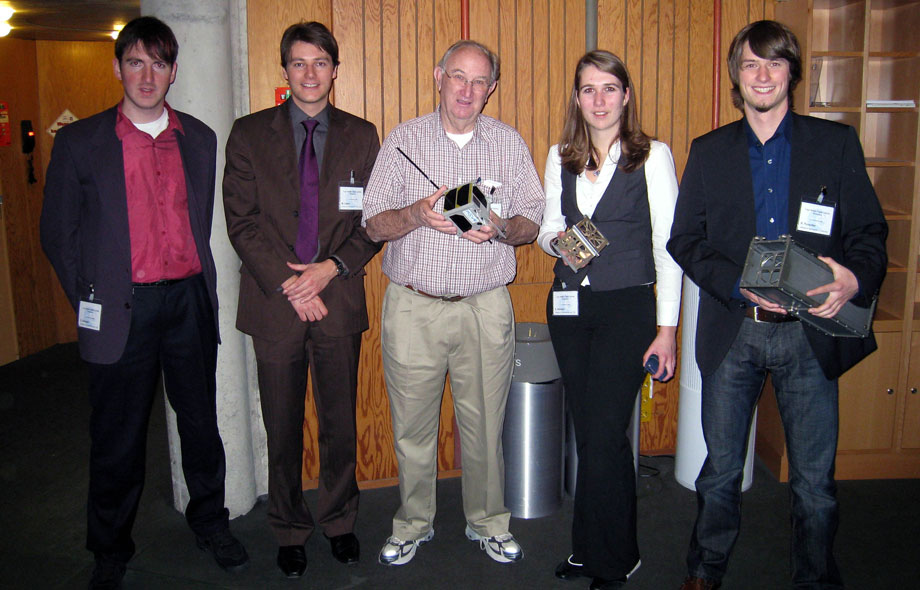
The history of CubeSats began at the turn of the millennium. The first satellite built to the CubeSat standard (with characteristic dimensions of 10×10×10 cm) was developed in 1999 by Stanford University professor Bob Twiggs and his colleague Jordi Puig-Suari of the California Polytechnic State University. It is important to understand that these scholars built the first CubeSat not to start their own business or conduct scientific experiments in orbit. On the contrary, the reason for the miniature satellite’s development stemmed from the professors’ frustration: during the course of study, students did not have enough time to finish building even a small satellite. So Twiggs and his colleague decided to act proactively, focusing on developing a spacecraft that could be assembled in a matter of months.
In fact, the only function of the first generation of CubeSats was signal transmission. In later educational spacecraft, which began to be developed in 2003, CubeSat capabilities were expanded to include photography by equipping them with tiny CMOS cameras.
Source: amsat-uk.org
Despite the first test nanosatellite’s appearance at the end of the 20th century, no similar CubeSat standard emerged on the commercial market over the following 10 years. For many years, CubeSats remained the domain of engineering universities and were used mainly for hands-on training of future aerospace engineers. The only exceptions were a few companies that recognized the potential in the nanosatellite niche.
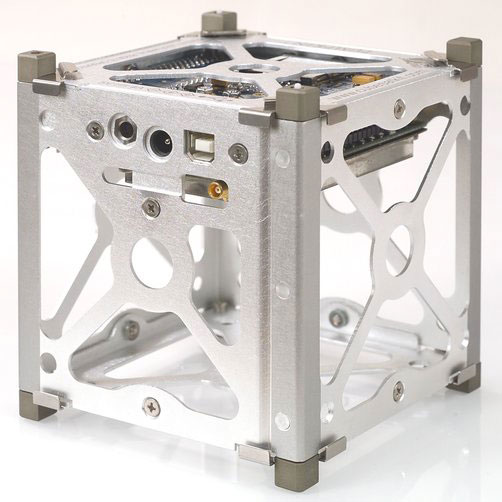
The first private company to work on the new satellite form factor was Pumpkin Inc., which focused on developing and selling ready-made CubeSat platforms. Its first CubeSat, the CubeSat Kit, was introduced in 2000, just a year after the standard appeared. Mass production, however, only began later. Pumpkin was a pioneer in modular CubeSat assembly and was also the first to offer customers a ready-made satellite chassis, a kind of CubeSat “skeleton” onto which the onboard computer, sensors, and other sensitive electronics could be mounted.
Source: pumpkinspace.com
Pumpkin did not endow its CubeSats with any specific functions. Rather, they served as “mother” spacecraft that the customer (initially universities, and later military laboratories) could equip with their own set of experimental sensors, after which the CubeSat would be launched into orbit. Since Pumpkin was only the developer, in order to send a finished satellite into space, customers still needed to turn to third-party providers to carry CubeSats as a payload on a launch vehicle inside a special P-POD deployer container.
The first non-commercial Pumpkin CubeSat to reach orbit was QuakeSat, a joint project of QuakeFinder and Stanford University, which was launched on June 30, 2003, aboard the Russian “Rokot” rocket. Although QuakeSat was not an off-the-shelf sale in the strict sense, Pumpkin later created a full commercial kit based directly on the QuakeSat architecture. Just four years after the first successful launch, in April 2007, the first commercial CubeSat Kit from Pumpkin, Columbia’s Libertad-1 CubeSat, reached orbit aboard the Ukrainian-Russian “Dnipro” rocket.
This launch clearly demonstrated that, increasingly, it would be possible to order parts from an online store, assemble them, and contact an orbital launch service provider to send the satellite into orbit. Of course, this was still a technologically complex task, but it was nothing compared to the effort required to launch a satellite in the past. With this in mind, the first CubeSat operators emerged, building another profitable sector of the new space economy around small nanosatellites.
The first operators and constellations: Planet Labs’s Pigeon Flock
The CubeSat market experienced explosive growth in the early 2010s. The main driver of this growth was a significant leap in the quality of low-cost electronics. An ordinary, inexpensive circuit board found in every smartphone reached a sufficient level of power and reliability to be integrated into space hardware, enabling it to perform real technical tasks and support the development of full-fledged commercial services.
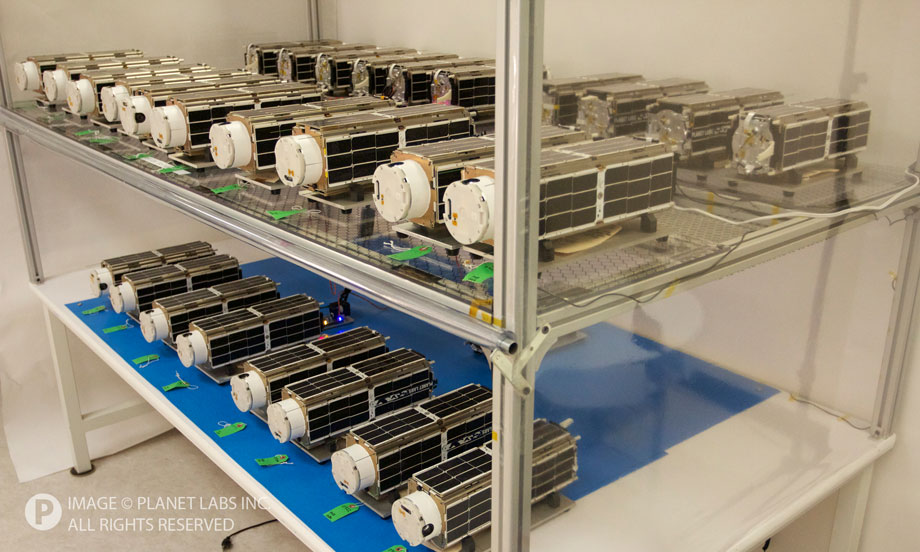
The first private company to use CubeSats as the foundation of its business was Planet Labs, founded in 2010 as Cosmogia. The company planned to focus on optical Earth observation, deliberately betting on large constellations of relatively inexpensive CubeSats. Its first test satellite, Dove-1, was launched in 2013, after which work continued on deploying a fully functional constellation that was expected to include more than 200 Dove CubeSats.
Source: nanosats.eu
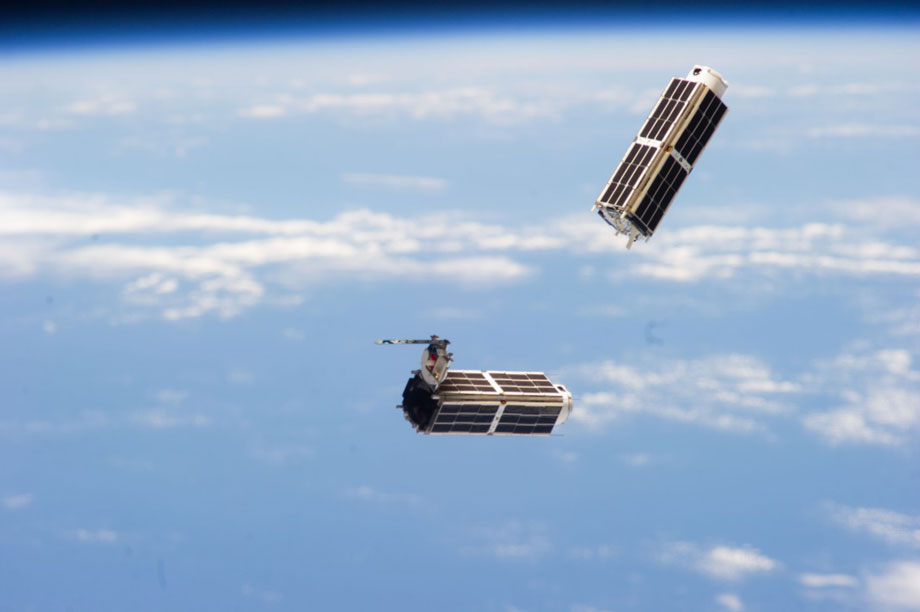
The actual deployment of the commercial Dove constellation began in January 2014, with the Flock-1 mission. The procedure for placing CubeSats into orbit differed significantly from the standard deployment of a satellite from a launch vehicle. First, a batch of small 3U CubeSats (10×10×30 cm) was delivered to the International Space Station as part of logistics resupply missions. After the ISS crew received the shipment, the CubeSats were released from the station in large numbers using a special deployment mechanism called the JEM Small Satellite Orbital Deployer (J-SSOD).
This approach allowed Planet to scale its network quickly. The constellation, known as “Flock,” grew rapidly to include 150–180 simultaneously operating spacecraft, making it the world’s largest CubeSat Earth observation constellation. Flock was capable of photographing the entire land surface daily, a key indicator of its uniqueness and commercial value.
The CubeSats also used a somewhat different approach to imaging the Earth’s surface. Large optical satellites often work like professional photographers, aiming their cameras at a specific point on Earth as directed by an operator and taking a picture. Planet’s CubeSats operated differently, functioning more like a scanner: they flew over their area of interest and continuously photographed everything passing beneath them. This approach, characteristic of radar imaging with synthetic aperture radar (SAR) satellites, also found application in optical satellite imagery. The core function of the Dove CubeSats was high-frequency monitoring of wide areas: they offered not just photos, but imagery showing changes over time.
Source: space.com
Quite soon, the company’s key clients came to include agricultural giants, which needed analysis of crop health to practice precision farming, as well as environmental organizations tracking illegal logging. Other clients included governments and defense agencies seeking daily updates to monitor strategic facilities. A significant share of Planet’s clients today comes from the financial sector, where satellite data supports economic intelligence: for example, forecasting companies’ quarterly reports by counting cars in their parking lots.
The estimated service life of Dove satellites was two to three years. However, toward the end of their operational lifetime, Planet decided not to replace the entire active Dove fleet at once, instead opting for gradual replacement. At the end of 2017, the first intermediate-generation CubeSats, Dove-R, began to appear. These were an iterative upgrade of the original Doves, and focused on improving reliability and using components more resistant to space radiation. Like the original Dove CubeSats, they still imaged in only four spectral bands and at the same resolution: three meters per pixel.

Source: planet.com
The SuperDove series represented a wholly new generation of Dove CubeSats, which, while retaining the compact 3U form factor, underwent a major technological upgrade, including improved optics and an expanded spectral range (now up to eight spectral bands) for deeper analysis of Earth’s surface. SuperDove also carried custom, application-specific integrated circuits (ASICs) to process data directly onboard the CubeSat. While it was replacing its nanosatellite constellation, Planet also acquired SkySat minisatellites. They were larger than standard CubeSats, but this allowed Planet to install more advanced optical sensors, enabling higher-detail imagery (less than one meter per pixel).
Today, Planet Labs uses this integrated network as a multi-tier observation system. SuperDoves serve as the first tier, scanning wide areas and detecting anomalies, while SkySats serve as the second tier, providing detail and verification of “hot spots” that clients want to focus on. This allows the company to shift its emphasis from selling raw imagery to selling analytical solutions, in which artificial intelligence automatically identifies objects, counts them, and delivers ready-made reports to the client on changes and trends.
Planet’s future business strategy will likely continue along this path, engaging in iterative modernization and launching the new “Pelican” platform, which is being developed to replace the current group of SkySat minisatellites. These new satellites are expected to increase image resolution and revisit frequency, while still preserving the philosophy of small size and rapid data refresh. A strategically important step for Planet Labs also remains maintaining a “living” constellation format that is continuously renewed through the introduction of new technologies.
This methodology provides a fundamental advantage over traditional manufacturing approaches, in which developing a single satellite could take years, and its technologies would become obsolete even before it began generating commercial value. Planet’s business model, by contrast, assumes a certain level of resilience, achieved precisely through betting on CubeSats, whose entire space fleet can be refreshed within just a few years.
Swarm tactics: how to create a virtual satellite?
The main business advantage of CubeSats, however, is not necessarily their size, simplicity, or lower production cost, but their ability to operate in groups. Distinct from traditional satellite constellations, CubeSats are characterized by a “swarm” flight tactic, in which the spacecraft move together in a single cluster at roughly equal distances from one another, significantly expanding their functional capabilities.
Unlike constellations, in which satellites may be spaced far apart (or even occupy different orbits) while performing a common mission, a swarm formation enhances the satellites’ functionality through the combined capabilities of each unit. This tactic allows for a distribution of tasks among dozens, or even hundreds, of CubeSats. For example, a single CubeSat passing over Kyiv in low Earth orbit (LEO) sees the city below for only a few minutes and, given its small size and limited onboard sensors, can focus only on a narrowly defined task. But as part of a swarm, such CubeSats can combine into a virtual super-satellite with enhanced capabilities.
Through real-time data exchange, known as Inter-Satellite Link, members of a swarm operate synchronously: while the first satellite captures an optical image, the second simultaneously conducts radar scanning through clouds, and the third may focus on analyzing radio signals. This synergy effectively “stretches” the sensors across space, creating an analog of a synthetic aperture (a huge virtual antenna or lens). In turn, this allows the acquisition of data of a quality and complexity that even a single, very large and technologically advanced satellite could not physically achieve (for example, instantaneous 3D terrain models).
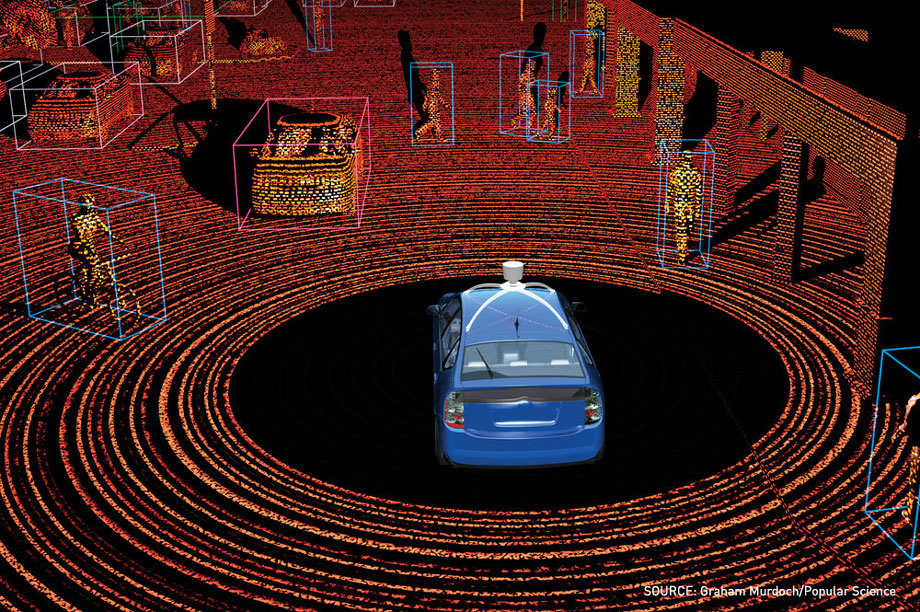
Source: clearpathrobotics.com
The advantages of this approach became apparent quickly. In early 2023, the European Space Agency (ESA) held an open competition for the best ideas on how to use CubeSat swarms, resulting in the selection of several interesting initiatives. Among them were proposals to use swarms to provide internet or even solar energy: the 16U4SBSP concept envisioned launching a swarm of large 16U CubeSats that would function as a distributed space-based solar power station. The spacecraft would collect solar energy, available around the clock without interference from the atmosphere or night, and transmit it concentrically to ground receiving stations. The swarm architecture in this case would allow for commercially significant power output in the kilowatt range, which would be impossible with a single small satellite.
Other proposals focused on acquiring new, more comprehensive geospatial datasets. For example, the Dutch initiative AltiCube+ proposed using a tightly grouped CubeSat swarm to perform high-precision radar altimetry (height measurement). The satellites are maintained at precisely determined, yet significant distances from each other, allowing them to employ interferometric data collection techniques. This long, fixed baseline enables measurements of topography and fluid levels — particularly ocean surfaces — with unprecedented accuracy. The data collected is critical for climatology and monitoring global ocean dynamics.
Another UK-based concept, called PULSARS, proposed creating a CubeSat swarm that collectively forms a virtual synthetic-aperture radar (SAR), in which each satellite acts as part of a large virtual antenna. This would enable the acquisition of highly detailed radar images, cloud penetration, and nighttime operation, providing continuous monitoring of regions regardless of weather conditions. PULSARS’s swarm-based approach would achieve the resolutions that would normally require large and expensive radar satellites, but at a significantly lower cost.
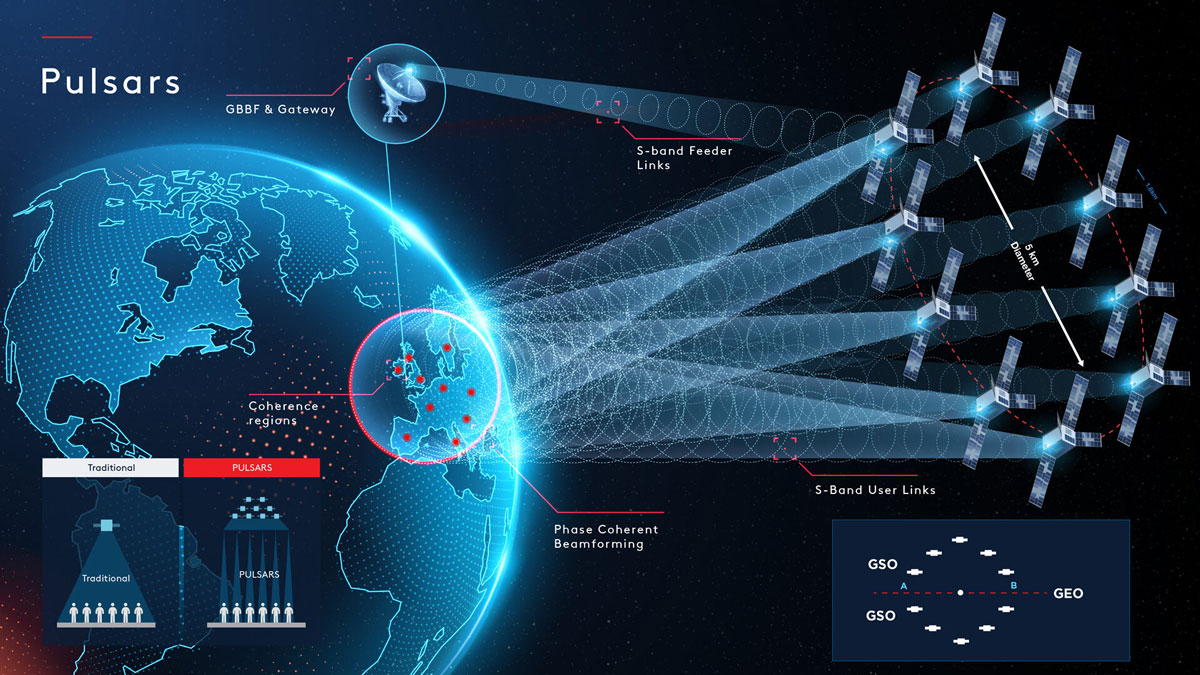
Source: esa.int
Another British mission, ROARS, proposed deploying a swarm of CubeSats at different, but closely spaced, altitudes in the upper atmosphere (thermosphere) to study its response to geomagnetic storms and solar activity. By simultaneously measuring atmospheric density, composition, and temperature at various levels, the swarm creates a three-dimensional picture of the effects of space weather. Such data is critically important not only for understanding the atmosphere but also for practical forecasting of aerodynamic drag on satellites and ensuring safety in low Earth orbits.
Across the ocean, NASA is also actively exploring the potential of CubeSats operating as a coordinated swarm. On March 4, 2024, a demonstration mission called PY4 was launched aboard a Falcon 9 as part of the Transporter 10 mission. PY4 consisted of four CubeSats developed in collaboration with Carnegie Mellon University. Its primary goal was to test cost-effective swarm capabilities: demonstrating measurement of relative distances between satellites, autonomous navigation in orbit, and coordinated simultaneous radiation measurements at multiple points. This mission is part of NASA’s broader program for testing small spacecraft technologies and distributed space systems, called Small Spacecraft & Distributed Systems, or SSDS.
In May of 2024, the program celebrated the success of the Starling mission, one of NASA’s most significant technological demonstrations in the small spacecraft sector. Launched in July 2023, the mission consisted of four 6U CubeSats, whose main objective was to prove the swarm’s ability to operate fully autonomously without constant intervention from ground control. The satellites successfully tested four key technologies: an adaptive communication network (MANET) for inter-satellite data exchange; autonomous maneuver planning and execution (ROMEO) for maintaining formation; optical sensors (StarFOX) for determining relative positions; and distributed autonomy (DSA) for collaborative scientific decision-making.
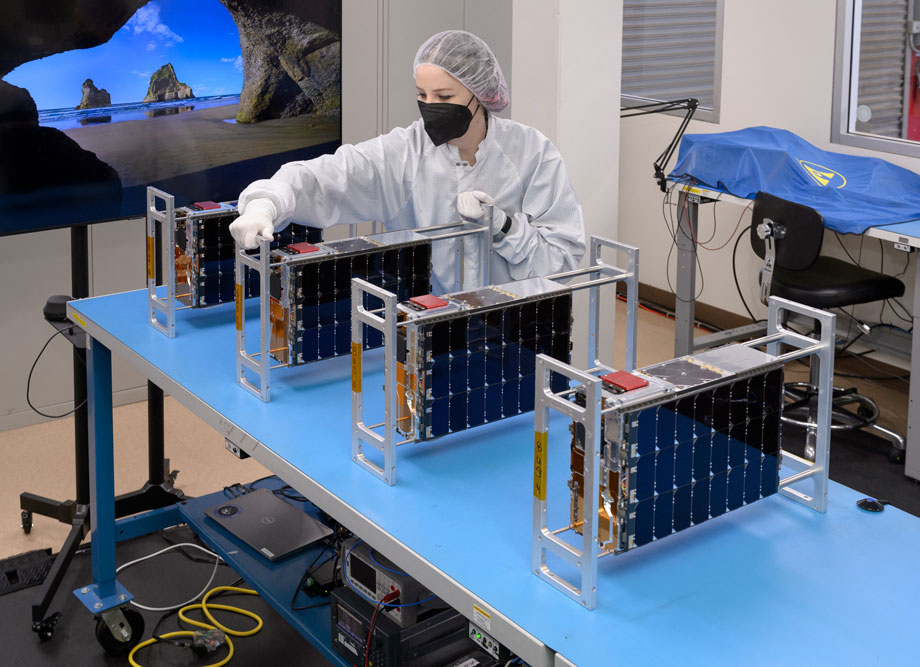
Source: nanosats.eu
Although the use of CubeSat swarms is currently of great interest to the world’s leading space agencies, it is still at the stage of technological demonstrations and has not yet found direct commercial application. The relative novelty of the swarm approach, combined with a noticeable lack of experience and technologies for precise space positioning, which is critical for maintaining a stable formation, means that even successful market players still rely on satellites operating within constellations.
However, the very distinction between swarms and constellations will define the future trajectory of the commercial CubeSat sector. While constellations effectively saturate the market with inexpensive and frequent survey imagery, the shift toward swarm technology promises to commercialize an entirely new niche: high-margin analytical data that, until now, could only be provided by large and costly traditional satellites. Swarms will enable inexpensive CubeSats to become powerful scientific and intelligence-gathering tools, such as for high-precision 3D monitoring or detailed radar imaging, thereby opening the next chapter in the small spacecraft business sector.
CubeSat as a service: space laboratories, navigation tracking, and repair assistants
Although satellite monitoring is currently the most profitable sector for CubeSats, their range of applications is much broader. Another major segment is the so-called “Internet of Things.” As of 2025, there were still many vast “blind” areas on Earth without mobile coverage, such as oceans, deserts, and mountain ranges. It is precisely in these regions that CubeSats can be of benefit–for example, collecting short messages from ground-based sensors. Companies like Astrocast or Swarm (which has been acquired by SpaceX) deploy constellations to track shipping containers, monitor pipeline conditions, and oversee mining equipment. This is a “business-to-business” market where connection stability is more important than speed, and small nanosatellites have gained an advantage here due to their low cost and ease of deployment.
The scientific potential of CubeSats is also being commercialized. Pharmaceutical companies use automated CubeSat mini-laboratories to conduct protein crystallization experiments in microgravity. This is cheaper than sending experiments to the ISS while also allowing for greater control. Such satellites can even be equipped with capsules to return samples to Earth. For example, the Israeli-Swiss company SpacePharma develops and launches its own CubeSat-based platforms, essentially functioning as remotely operated micro-laboratories (in 3U and 6U form factors).
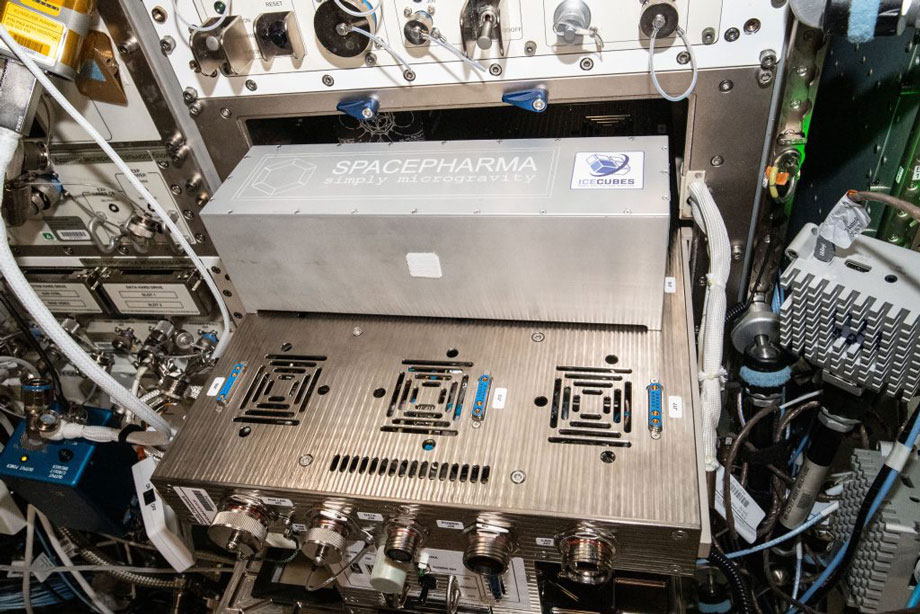
Source: bsgn.esa.int
SpacePharma’s clients, which include pharmaceutical and biotech companies, can upload their experimental protocols, and the micro-laboratory onboard the CubeSat autonomously carries out processes such as mixing, incubation, and protein crystallization in microgravity. This enables the production of high-quality crystals for developing new drugs. The novelty lies in the fact that the entire process is fully automated, with data transmitted back to Earth in near real-time.
The undisputed leaders in Earth observation are Planet Labs and Spire Global. While the former focuses exclusively on optical monitoring, Spire Global dominates another niche: satellite-based navigation tracking. Their Lemur-series CubeSats listen to radio signals passing through the atmosphere, enabling the tracking of ships (AIS) and aircraft (ADS-B). CubeSats allow logistics companies to see their vessels across the Pacific Ocean in real-time, which is critical for optimizing routes and fuel usage. Over the years, Spire has demonstrated that CubeSats can produce valuable analytical data without the need for expensive optical cameras.

Source: rivieramm.com
It was recently reported that Spire Global has joined forces with Finnish satellite company ICEYE to track “shadow fleet” vessels, which have been used to evade sanctions, engage in illegal fishing, or smuggle prohibited goods. While ICEYE provides access to its constellation of reconnaissance SAR satellites, Spire Global will complement this data with its own AIS data collection network, which monitors legally operating ships and provides information on weather and sea conditions. If ICEYE detects an unidentified vessel with its SAR satellites, Spire will use its advanced AIS and geospatial analytics to determine whether the ship is legitimate but temporarily out of contact, or truly part of the shadow fleet.
One commercial example of reconnaissance CubeSats (or, more accurately, microsatellites) is BlackSky, which provides services to military and intelligence agencies. It operates a constellation of microsatellites that have one critical function: ultra-low latency. The BlackSky system can receive a request from a user on Earth, quickly assign the task to the nearest satellite, capture an image, and deliver it back to the user in under 90 minutes. This speed is crucial for tactical intelligence.
Increasingly, CubeSats are also being considered as inspectors for future on-orbit servicing operations. Maneuverable nanosatellites could approach other space objects for visual inspection of damage or, eventually, for maintenance and repair. While this market segment is still in its infancy, the next decade will likely see the first signs of its true potential.
Another notable trend in the CubeSat market is vertical integration. Whereas companies previously assembled satellites from components sourced from multiple suppliers (solar panels from one, batteries from another, and so on), market leaders are now attempting to manufacture all critical components in-house, providing them with full control over supply chains and reducing costs. This enables giants like Planet to release new satellite versions every 3–4 months, creating a cycle that resembles software updates more than hardware production.
Trends and prospects
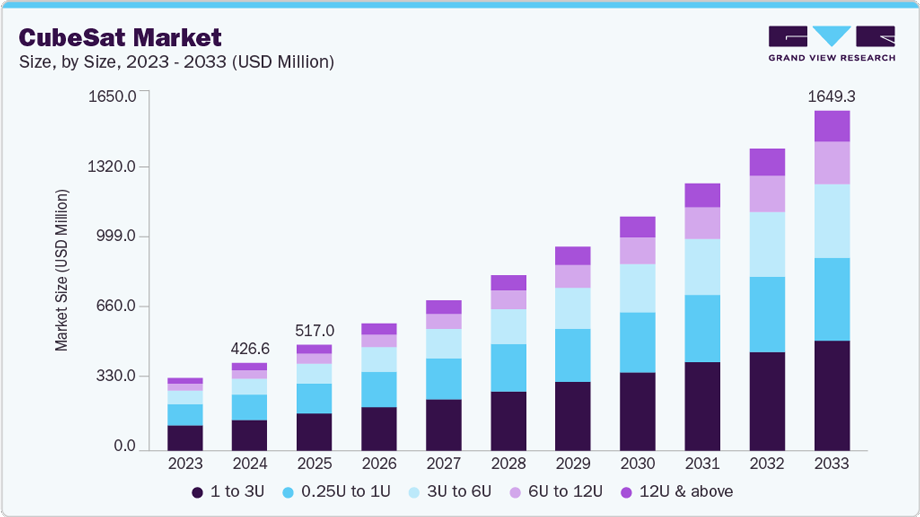
Analysts predict that the global nanosatellite market will reach $1.5 billion by 2033. While these figures are modest compared to the multi-billion dollar contracts for large traditional satellites, they don’t fully capture the impact CubeSats are having on the space economy. The projected market size represents only a fraction of the overall economic value, as the true financial value lies in the final data and services these devices can provide to users. This is why they are acting as a catalyst for a much larger market, including Earth Observation as a Service, IoT, and In-Orbit Servicing, which by the end of the decade will be valued in the tens of billions of dollars.
The main driver, as in NewSpace in general, is commercialization: while CubeSats were previously launched primarily by universities for student education, today, more than 70% of launches are funded by private companies or military agencies, which value the speed of deployment provided by such systems and the simplicity of their design.
Source: grandviewresearch.com
Geographically, the market is still largely U.S.-centric, but Europe is catching up, thanks to interest and support from ESA. China is also a strong player, though its market is largely closed and serves internal state interests. India, meanwhile, traditionally positions itself as a hub for low-cost manufacturing and launches, which, in the case of CubeSats, can reduce production costs to record lows for the aerospace industry.
Mergers and acquisitions, meanwhile, are becoming the norm. Large aerospace corporations such as Lockheed Martin, Airbus, and Raytheon are acquiring or investing in successful CubeSat startups, recognizing that the future of certain orbital service sectors lies in small form factors. This creates a healthy ecosystem cycle: startups have an exit goal, and investors see a real opportunity for return on investment.
To sum up the business landscape of the CubeSat market segment: there is a noticeable shift from the romanticism of the early years to a solid pragmatism. Investors are no longer willing to pay just for a good idea; they require a clear business plan in which the CubeSat is a tool for generating data that someone is willing to buy. Successful companies today are essentially data companies with their own assets in orbit, as demonstrated by the success of firms like Planet and Spire Global.