The U.S. stock market is holding its breath in anticipation of a truly astronomical trading event: the global leader of the aerospace industry, Elon Musk’s SpaceX, is preparing to list on the Nasdaq under the ticker symbol SPCX on June 12. A fixed offering price of $135 per share will allow the aerospace giant to raise approximately $75 billion in capital (with a total of 555.6 million shares to be issued), already making it the largest IPO in history.
An initial public offering (IPO) serves as a strategic bridge that transforms a privately held company into a publicly traded corporation, opening its capital to the global investment community. In the past, going public helped secure the long-term dominance of financial market giants such as Apple, Google, and Amazon. Now it is SpaceX’s turn. Its long-serving CEO, Elon Musk, spent years keeping the company private, but the resources available through private venture capital have ultimately proven insufficient to support his ambitious interplanetary vision.
25 Years of Success
SpaceX’s journey began more than two decades ago with an idea that most experts at the time considered doomed to fail. In the early 2000s, the young entrepreneur Elon Musk, having earned his first substantial fortune from the sale of the PayPal payment system, became deeply interested in space exploration and the colonization of Mars.
Musk’s initial concept, known as “Mars Oasis,” involved sending a small experimental greenhouse to the Red Planet to grow plants and rekindle public interest in interplanetary travel. However, while attempting to purchase decommissioned Soviet ballistic missiles in Eastern Europe to carry out the project, Musk came to recognize what he believed was the central problem of the space industry: spaceflight was extraordinarily expensive due to the high costs of rocket manufacturing and launches, limited competition in the space-services market, and, most importantly, the reliance on expendable launch vehicles.
In 2002, Musk decided to establish his own company, Space Exploration Technologies Corp. (SpaceX), with a clear and uncompromising objective: to dramatically reduce the cost of delivering payloads to orbit and ultimately make humanity a multiplanetary species.
The startup’s early years were a genuine struggle for survival. A team of young engineers developed their first light-lift rocket, Falcon 1, virtually from scratch, working under extreme conditions on the remote Kwajalein Atoll in the Pacific Ocean.
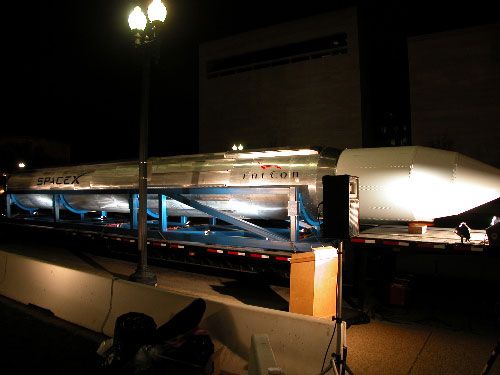
Source: collectspace.com
Three consecutive launches, in 2006, 2007, and 2008, ended in catastrophic rocket failures. The company found itself on the brink of bankruptcy, while Musk’s personal financial resources were rapidly running out. Wall Street skeptics were already preparing obituaries for the ambitious venture, but everything changed with the fourth Falcon 1 launch in September 2008.
The rocket successfully reached Earth orbit, proving that a private company with a limited budget could build a functioning orbital launch vehicle. Falcon 1’s historic success enabled SpaceX to secure a $1.6 billion Commercial Resupply Services (CRS) contract with NASA to deliver cargo to the International Space Station (ISS). Armed with substantial government funding and newfound credibility, the company was able to move forward with the development of a far more powerful rocket, the Falcon 9, as well as the Dragon spacecraft.
Falcon 9 would ultimately revolutionize the global space industry by introducing the concept of reusable first-stage boosters. For many years, the idea of vertically landing and reusing a rocket booster was regarded by established aerospace players as economically absurd. Critics argued that the fuel required to return the stage would dramatically reduce payload capacity, while the costs of refurbishing a booster after an orbital mission would eliminate any potential savings. SpaceX, however, systematically ignored these objections, methodically refining controlled descent technologies for land-based landing pads and autonomous drone ships at sea.
In December 2015, the world witnessed the first successful vertical landing of a Falcon 9 first stage after delivering satellites to orbit. The achievement permanently changed the rules of the launch industry.
Source: www.youtube.com, SpaceX
Having achieved a high level of reliability and launch cadence, SpaceX now dominates the global commercial launch market. The reuse of first-stage boosters, some of which have already flown successfully more than 15–20 times, has enabled the company to reduce launch costs to levels that no other corporation or even nation can currently match. Falcon 9 has become the industry’s workhorse for launching commercial satellites, scientific missions, and heavy U.S. defense payloads. Later, with the successful debut of Crew Dragon, it also became a safe means of transporting astronauts to the International Space Station, restoring America’s capability for crewed spaceflight and reinforcing its leadership in human space missions.
However, Musk always understood that the global market for commercial and government launches has a well-defined economic ceiling. It is worth only a few billion dollars per year, far too little to finance a long-term Mars program and the development of the next-generation super-heavy launch system designed to make that vision possible: the Starship/Super Heavy stack.
The company desperately needed an entirely new, scalable, and highly profitable business line capable of generating a steady cash flow from millions of end users around the world. This led to the creation of Starlink, a global low-Earth-orbit satellite network designed to provide high-speed broadband internet access, even in the most remote regions of the planet.
Starlink: a major asset
The deployment of the Starlink megaconstellation, which began in 2019, became another formidable challenge. Rather than relying on a small number of large and expensive satellites in geostationary orbit, SpaceX opted for the mass production of thousands of small satellites and their deployment into low Earth orbit at altitudes of roughly 300–600 kilometers. On average, a single Falcon 9 mission carried up to 60 first-generation Starlink satellites, making it possible to deploy thousands of spacecraft within just a few years.
The choice of low Earth orbit was driven by the goal of minimizing signal latency while maximizing network capacity. However, this approach required the creation of a highly sophisticated ground infrastructure for satellite manufacturing and operations, as well as overcoming significant regulatory resistance in many countries, particularly in the United States.
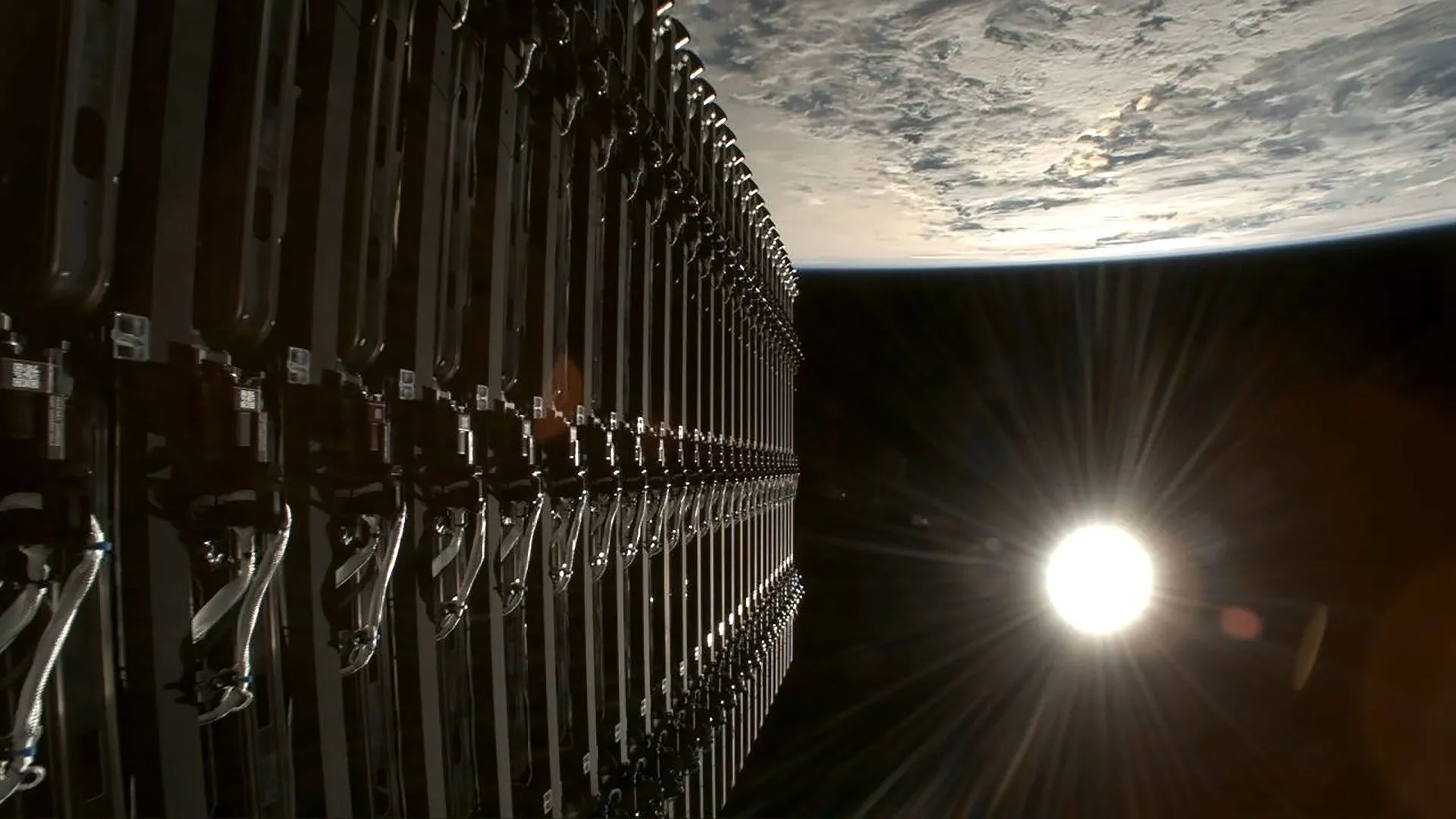
Source: techno-science.net
Today, Starlink is the world’s first successfully scalable commercial satellite constellation, comprising more than 10,000 operational satellites across multiple generations. The system has demonstrated its critical effectiveness and resilience under the most demanding conditions — from providing internet access to rural households to supporting large-scale logistics operations and through its specialized defense-oriented subsidiary, Starshield.
Starlink’s customer base has grown explosively, transforming the project from a capital-intensive venture startup into the primary financial engine of the entire SpaceX empire. A look at the company’s operational performance makes the scale of this transformation even more apparent.
In 2025, the division reportedly achieved revenue growth of 83% compared with the previous year, generating approximately $4.4 billion in operating profit. Starlink’s subscriber base also expanded significantly, rising from 9 million to 10.3 million active users during 2025. According to some projections, that figure could surpass 16.8 million subscribers by the end of 2026.
This rapid scaling provides the company with a stable and predictable stream of cash flow, an essential advantage in an industry that demands enormous capital investment.
What condition is SpaceX in as it approaches its IPO?
The data disclosed in SpaceX’s Form S-1 registration statement, filed on May 20, 2026, highlighted the company’s unique financial architecture, where enormous revenues coexist with equally massive capital expenditures and investments in future projects.
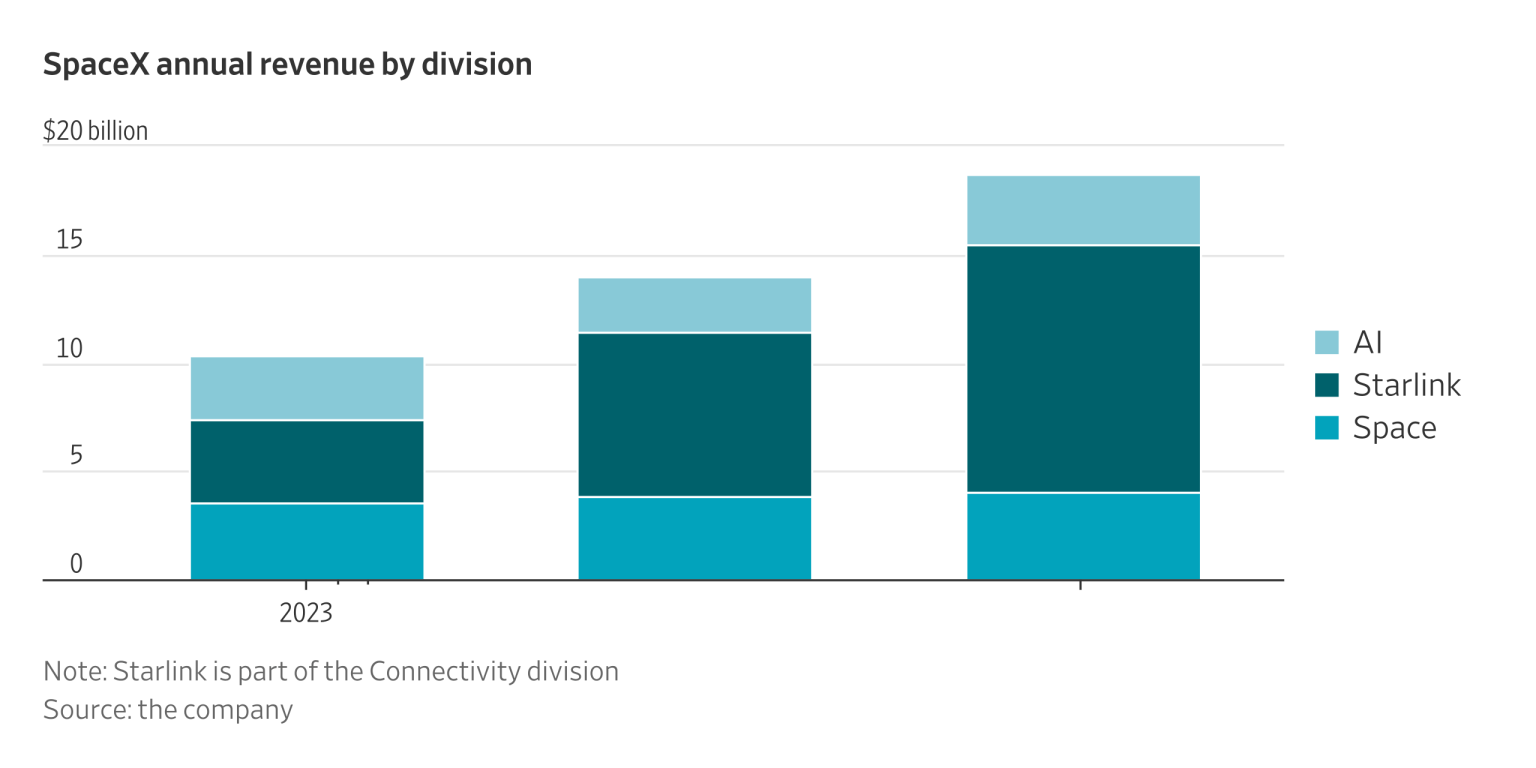
For fiscal year 2025, SpaceX reported total revenue of approximately $18.7 billion. The company’s largest commercial asset was Starlink, which accounted for nearly 61% of total revenue, or roughly $11.4 billion. In other words, satellite internet services are already generating more income for SpaceX than its historically core business — space launches.
The launch segment, including Falcon 9 and Falcon Heavy missions as well as government contracts, contributed approximately one-quarter of the company’s total revenue, generating several billion dollars thanks to a record flight cadence. The remaining revenue came from emerging technology initiatives related to computing infrastructure and artificial intelligence integration, which is gradually becoming another strategic pillar of Musk’s broader ecosystem.
However, SpaceX’s financial model differs fundamentally from that of traditional public corporations. The company deliberately sacrifices short-term profitability in favor of rapidly creating and expanding new markets. In 2025, total capital expenditures exceeded $20 billion, making it one of the largest investment programs among private technology companies worldwide. A substantial portion of these funds has been directed toward the construction of Starship manufacturing infrastructure, the expansion of Starlink satellite production facilities, and the development of next-generation computing data centers.
This investment-heavy strategy resulted in a net loss estimated at approximately $4.9 billion for 2025. The high pace of spending continued into the first quarter of 2026, as the company maintained aggressive investments in manufacturing capacity and AI-related projects. The artificial intelligence and supercomputing segment alone requires significant resources, but management views it as a market with a potential long-term value measured in tens of trillions of dollars.
Source: wsj.com
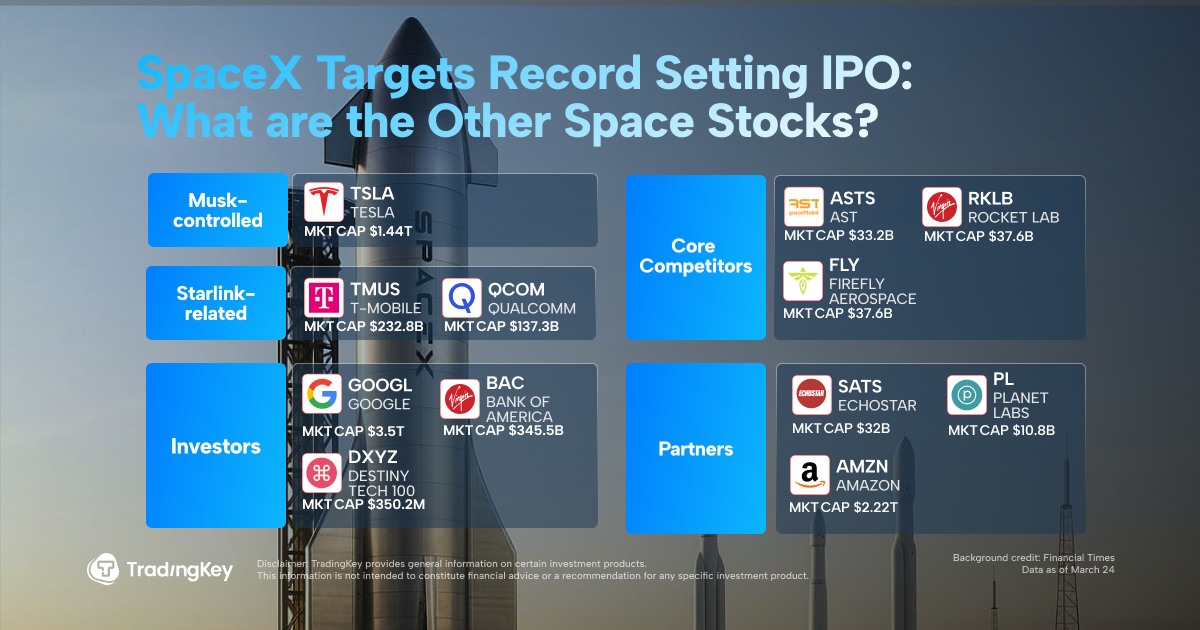
It is important to understand that the upcoming IPO is intended not only as a means of raising new capital but also as a mechanism for financing the company’s next phase of growth. SpaceX is expected to raise approximately $75 billion, while its projected market valuation is estimated to fall between $1.75 trillion and $2 trillion. The offering is being organized by a major consortium of international investment banks, and a significant portion of the shares available for public trading may be accessible to retail investors, potentially making the listing one of the largest in stock market history.
One of the defining features of SpaceX’s corporate structure has always been its founder-control model. The company employs a dual-class share system, under which different classes of stock carry different voting rights. As a result, economic ownership and actual control over corporate decision-making differ substantially.
Consequently, although Elon Musk owns less than half of the company’s economic interest, the structure of the share capital allows him to retain more than 80% of the voting power. This ensures that he remains firmly in control of key decisions.
For future public investors, this means that the company’s strategic direction will effectively remain under the founder’s control regardless of stock market sentiment or the positions taken by large institutional investors. Decisions concerning capital allocation, major investments, or the launch of new long-term initiatives can therefore be made with minimal external influence.
Source: tradingkey.com
If SpaceX achieves its target valuation of approximately $2 trillion, it will immediately become one of the most valuable corporations in the United States and the world. Yet its true uniqueness lies not merely in the scale of its market capitalization but in the very structure of its business. The company combines leadership in the launch-services market, the world’s largest satellite internet network, extensive defense contracts, and, more recently, promising artificial intelligence ventures.
Despite the substantial losses recorded last year, SpaceX’s financial logic remains remarkably consistent: the company is seeking to convert its technological leadership into a long-term infrastructure advantage as quickly as possible.
Orbital supercomputers and the xAI ecosystem
The $75 billion that SpaceX is expected to raise through its historic Nasdaq IPO is intended to fuel the continued expansion of Elon Musk’s business empire. If the company’s first two decades were dedicated to mastering orbital logistics and deploying a global communications network, the next decade is expected to be defined by the convergence of space technology and advanced artificial intelligence. This vision is centered on deeper integration with the AI systems being developed by xAI, Musk’s flagship artificial intelligence venture.
Modern AI models require enormous computational resources and uninterrupted data exchange. Musk’s plans reportedly include integrating xAI’s neural-network technologies directly into the Starlink satellite network and the Starshield defense platform. Such integration would make it possible to process gigabytes of satellite imagery, radar data, and telemetry in orbit using AI algorithms, significantly reducing response times for end users on Earth.
One of the most futuristic yet, according to Musk, economically viable projects that could be financed with IPO proceeds is the deployment of fully operational data centers in Earth orbit. Traditional terrestrial data centers face two major challenges: massive electricity consumption and the need for extensive cooling infrastructure. Space-based data centers built on large SpaceX orbital platforms are envisioned as a solution to both problems. On the one hand, such facilities would have continuous access to solar energy beyond Earth’s atmosphere. On the other hand, they could dissipate heat directly into the vacuum of space, potentially reducing cooling constraints.
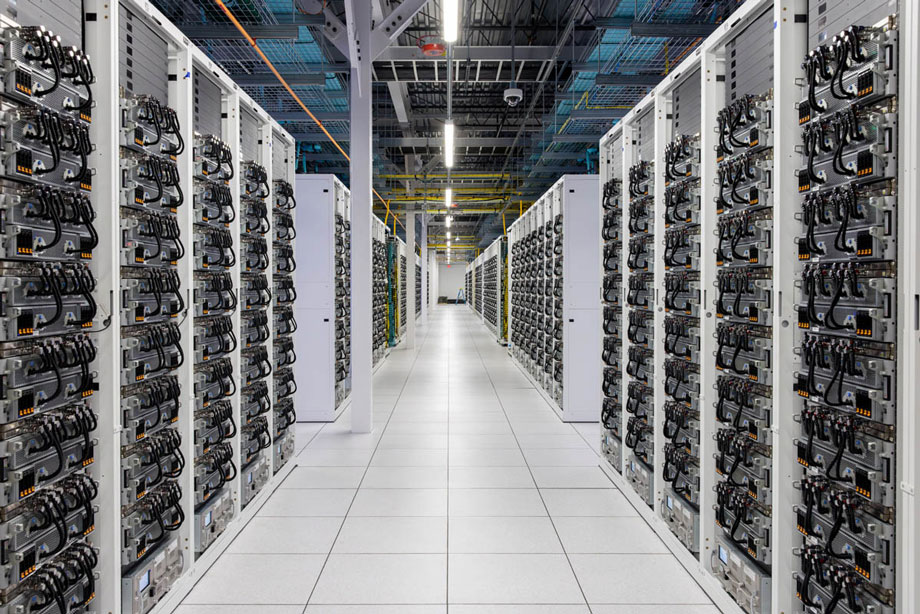
The realization of this concept depends on a powerful terrestrial foundation that is already being developed in Tennessee. At the center of these efforts is xAI’s Colossus supercomputer in Memphis. This enormous computing cluster, powered by more than 100,000 liquid-cooled NVIDIA H100 and H200 accelerators, is currently regarded as one of the most powerful AI computing systems in the world. Funds raised through the IPO could allow SpaceX to purchase or secure long-term access to a substantial portion of Colossus’s computing capacity, which could then be used to train autonomous navigation systems for Starship or coordinate vast fleets of thousands of satellites.
Source: servethehome.com
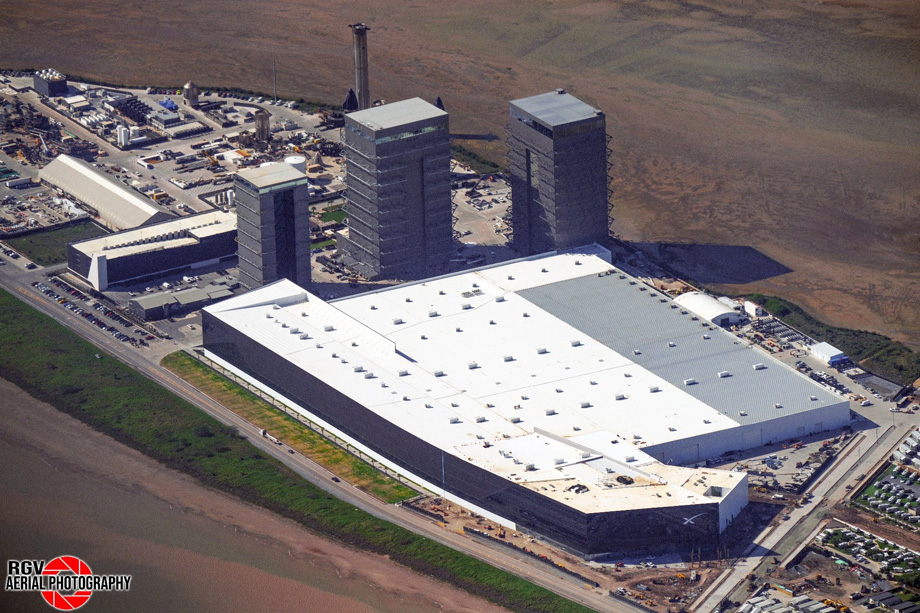
In addition to digital and computing infrastructure, a significant portion of the billions raised will be directed toward the manufacturing and engineering expansion of Starbase in Texas and the Kennedy Space Center in Florida. To send crewed spacecraft to the Moon and Mars and to place multi-ton orbital data centers into space, SpaceX requires true mass production of its Starship super-heavy launch system.
Capital raised through the public listing is expected to accelerate the deployment of large-scale Starfactory assembly lines, enabling the company to manufacture a new Starship vehicle and Super Heavy booster every few days.
Source: starship-spacex.fandom.com
Another important area of investment will likely be the infrastructure required for future interplanetary propellant depots. To send Starship missions to the Moon under NASA’s Artemis program, or eventually to Mars, SpaceX must master the ability to refuel spacecraft directly in low Earth orbit. Developing and testing orbital tanker vehicles and cryogenic storage systems for liquid oxygen and methane will require billions of dollars in investment and dozens of experimental launches.
A difficult path
Over the course of its 24-year existence, SpaceX has undergone a remarkable transformation, from an obscure private startup with only a few dozen employees into a vertically integrated aerospace conglomerate that effectively dominates both the launch market and the global space communications sector. It is this unique technological foundation that has brought the company to the doorstep of Wall Street as a financial titan.
Throughout this journey, Musk consistently maintained that SpaceX should remain private for as long as possible. His central argument was that the short-term expectations of Wall Street were fundamentally incompatible with the long-term, capital-intensive goal of colonizing Mars, the very objective for which SpaceX was originally conceived.
On numerous occasions, Musk stated that an IPO would occur only when a transportation system to the Red Planet was operating reliably and the financial risks to outside investors had been reduced to a minimum. However, reality and the rapid expansion of the technological empire built by one of the most successful entrepreneurs of the modern era have altered those plans.
The scale achieved by Musk’s interconnected businesses, from Starlink’s global internet network to ambitions of placing data centers in orbit, has long outgrown the capabilities of private venture capital. Even the world’s wealthiest individual can no longer single-handedly finance tens of billions of dollars in annual capital expenditures. Moreover, SpaceX is now pursuing dominance on two fronts simultaneously, adding the race for leadership in artificial intelligence to its quest for supremacy in space.
As SpaceX prepares for its IPO, investors around the world may soon have a unique opportunity to become direct shareholders in — and participants in the future of — what many regard as the most successful aerospace corporation in human history.