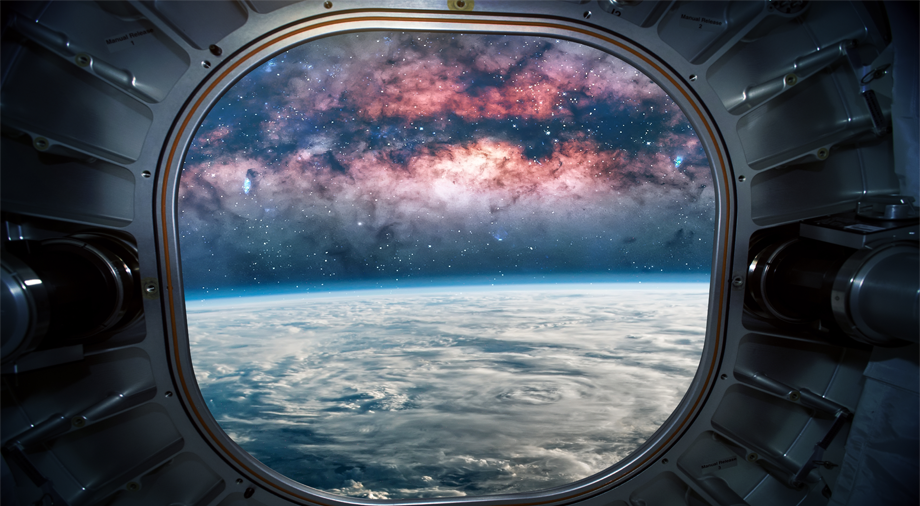
Humans perceive the world through their five senses, one of which is the sense of smell. But what about space? We can observe it from thousands of angles, but can we smell it? After all, stepping out into open space and simply breathing in isn’t possible. First off, it’s a vacuum, though not an absolute one, as is sometimes thought: there are still some particles in the vast expanse, but they are distributed very differently than in Earth’s atmosphere. Secondly, space is inhospitable to living creatures. Yet we nevertheless have many accounts from astronauts themselves, describing their journeys and mentioning the strange smells that accompanied them in space. How could this even be possible?
How do we learn about smells in space?
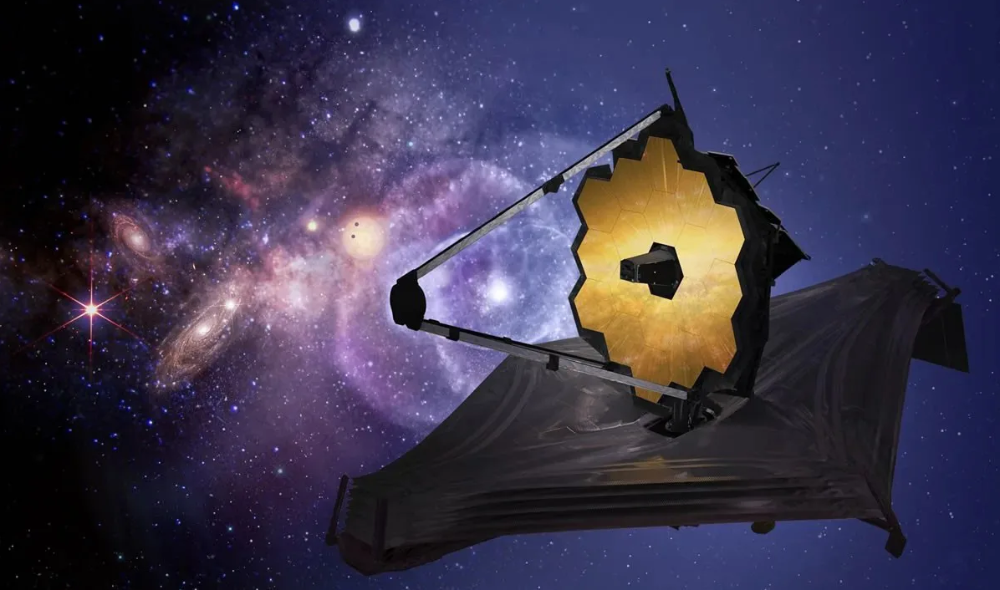
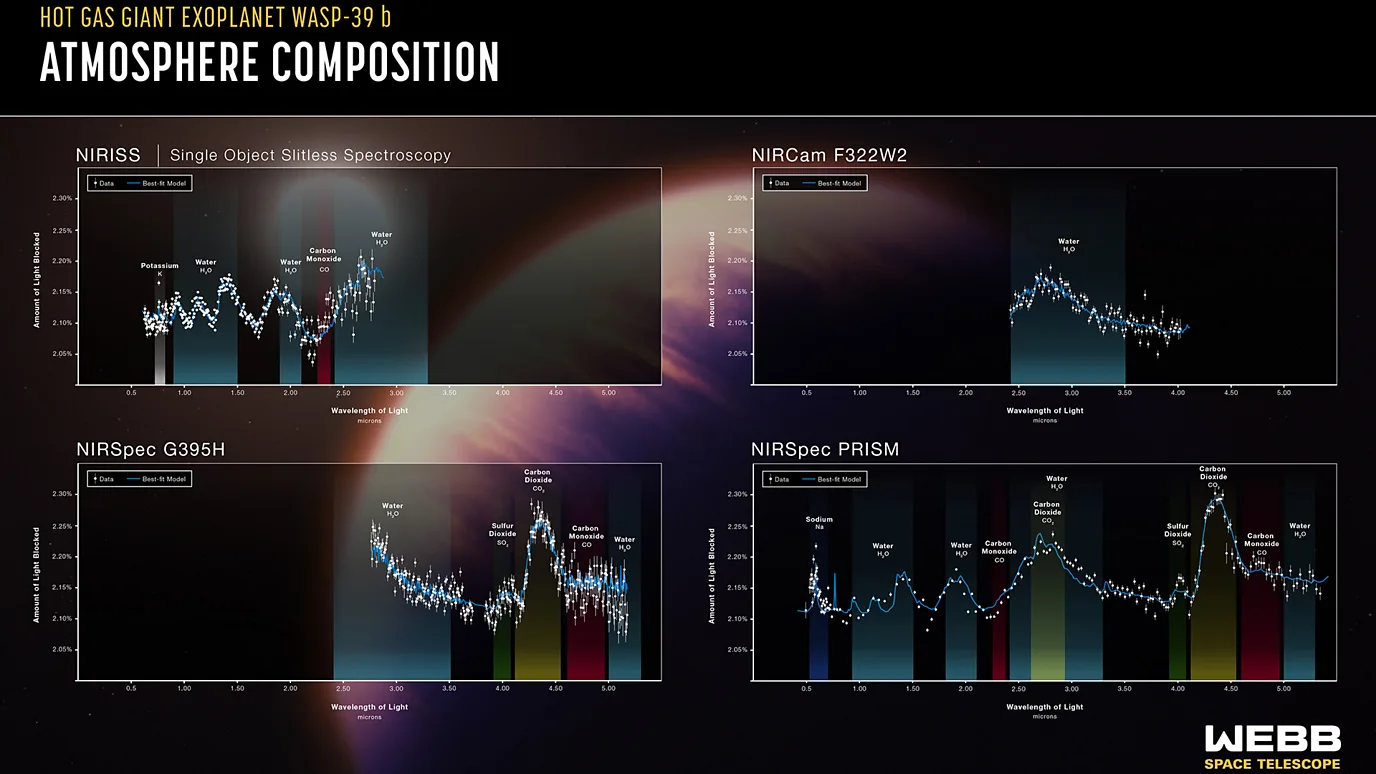
Astronauts’ senses work in space just as they do on Earth, although they can only use them when suited up or while aboard the International Space Station. But there are other ways to “smell space.” For example, in 2022, the James Webb Space Telescope (JWST) detected carbon dioxide in the atmosphere of the exoplanet WASP-39b, a gas giant located outside the Solar System. The space telescope identified the presence of CO₂ by measuring the change in a star’s brightness as the exoplanet passed in front of it. This method also makes it possible to identify other chemical compounds present in the atmospheres of different planets, helping us understand what kinds of smells might prevail there. CO₂ itself doesn’t have a particularly strong odor, though in high concentrations it has a slightly sour note, reminiscent of carbonated water.
Source: www.eoportal.org
Chemical analysis has also shown that Titan’s atmosphere contains molecules with scents that might resemble sweet almonds, gasoline, and hydrogen sulfide (the latter being the stench of rotting fish). The scorching gas giant known as HD 189733 b, located 64 light-years from Earth, probably stinks like rotten eggs. The clouds threading through the spiral arms of the Milky Way, meanwhile, contain ammonia, which has its own distinct odor: sharp and irritating, reminiscent of smelling salts. And the Sagittarius B2 gas-and-dust cloud harbors an entire cocktail of strong-smelling substances: methanol, acetone, hydrogen sulfide, and ethylene glycol. How refreshing!
As strange as it may seem, however, the study of “cosmic smells” actually brings us closer to understanding the structure and history of the Universe, while also allowing us to speculate about where signs of extraterrestrial life might be found. In 2023, astrophysicist Subhajit Sarkar of Cardiff University, together with his colleagues, used the James Webb Space Telescope to study the planet K2-18b. The scientists succeeded in detecting dimethyl sulfide there, which has a characteristic “marine” aroma and may be one of the indirect indicators of life. K2-18 itself is particularly interesting as it is a sub-Neptune planet: the most common, yet still poorly studied, type of planet in the galaxy, smaller than Neptune but larger than Earth.
In 2025, Sarkar and his colleagues reanalyzed K2-18b’s atmosphere and, according to preliminary findings, identified chemical compounds with distinctive odors that could potentially be produced by living organisms, such as phytoplankton or other primitive marine life. While the scientists have not yet determined what sort of non-biological processes could have generated these chemical compounds on this planet, they did establish that their concentrations are extremely high: 10,000 times greater than those of similar substances in Earth’s atmosphere.
Source: www.bbc.com
Using another instrument, the 30-meter IRAM radio telescope, scientists at the Max Planck Institute were able to determine a probable scent in another part of the Universe. They were searching the Milky Way for evidence of protein molecules and accidentally discovered that the galaxy itself may well contain ethyl formate molecules, which carry the aroma of rum and raspberries.
Metal, Rust, and Steak: What Smells Astronauts Smelled in Space
Oddly, most astronauts, when describing their impressions of how space smells, noticed a ferrous smell in airlock chambers after returning to the ISS and taking off their spacesuits. Their suits actually retained particles of substances from outer space, which could give off odors, and, according to astronauts, they could smell a wide variety of odors, including grilled steak, hot metal, rust, and welding.
NASA astronaut Don Pettit, after a mission to the ISS in 2003, wrote: “It’s hard to describe this smell… The best description I can come up with is metallic, rather pleasant, sweetly metallic in sensation. It reminded me of my college summer breaks, when I spent long hours bent over arc welding… This is the smell of space.” According to Pettit, inside the ISS, there is no unusual smell, but rather one “like a workshop, an engine room, or a laboratory.” Another NASA astronaut, Kevin Ford, upon returning from orbit in 2009, described space odors as unfamiliar to humans on Earth: “It’s like something I’ve never smelled before, but I’ll never forget it.”
Inside the ISS compartments, however, the smells can be quite ordinary and predictable. European Space Agency (ESA) astronaut Scott Kelly noted the smell of unwashed bodies, antiseptics, and garbage. Sweat odors appear during exercise, when astronauts work out to prevent muscle dystrophy and loss of muscle mass. Antiseptics help protect the crew from bacteria that might accidentally be brought onboard with equipment or the astronauts themselves. The lack of water also plays a role, making it impossible to frequently shower or wash clothes. Garments are worn until they become unusable, and then stored in cargo modules.
How Scientists Explain the Smells of Space
It’s not always easy to explain the presence of a particular smell. Often, this requires complex research or simulations of the conditions in which those odors originate. NASA hires specialists for such tasks, and one of them is chemist Steven Pearce. He explains the presence of the frequently reported “metallic” smell as being caused by high-energy ion vibrations. Another NASA chemist, Dr. Louis Allamandola, believes that different parts of the Universe smell differently, but, due to the lack of oxygen and high concentrations of carbon, most places would actually smell rather unpleasant, with a faint hint of hydrogen sulfide. The Moon is one of the exceptions on this list: lunar dust brought aboard by the Apollo 17 mission had the smell of burnt gunpowder, caused by the reaction of hydrogen and helium ions with silicon dioxide.
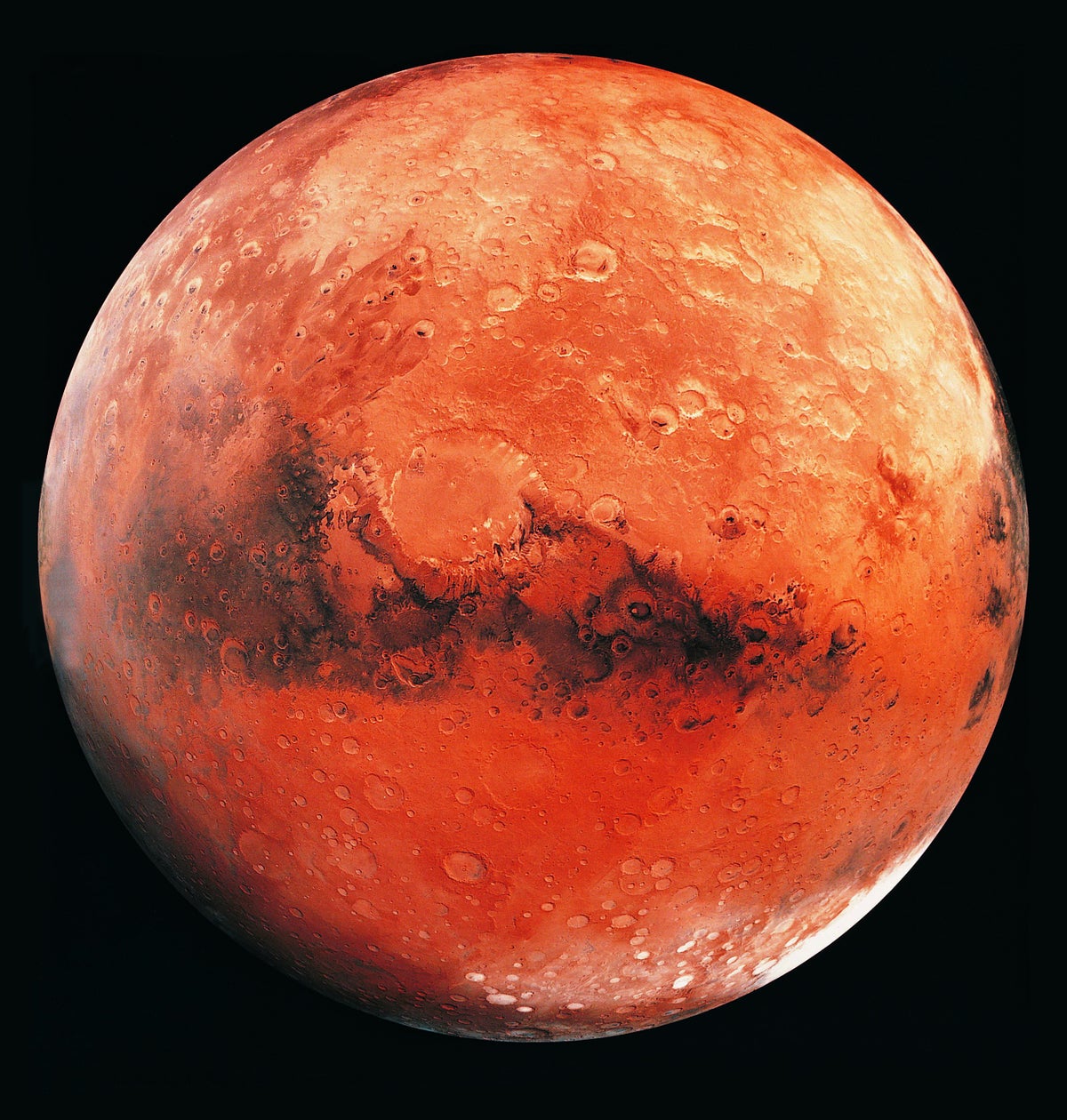
If we compile the results of studies on other planets and different parts of the Universe, we can actually create a fairly detailed map of smells. On Mars, where there is almost no atmosphere in the usual sense, one could theoretically detect a distinct odor of hydrogen sulfide mixed with rust, due to iron oxide, which gives the Red Planet its unique reddish-orange color. Venus, in addition to hydrogen sulfide, has a sourish smell. And on Saturn, the dominant scent is ammonia, familiar to anyone who has ever dyed their hair.
Source: www.scientificamerican.com
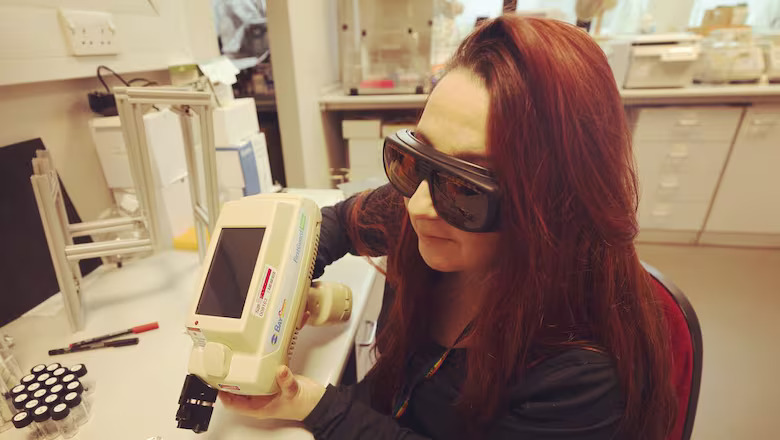
Thanks to scientist-enthusiasts, the scents of space can be experienced on Earth. For example, Marina Barsenilla, after working on designer perfumes, decided to study planetology and eventually combined her two passions. She managed to recreate nearly three dozen “cosmic” aromas, from those that supposedly drift in Jupiter’s deep clouds to the distinctive scents of the central part of the Milky Way. Later, as a scientist, she also suggested that, in its early periods, Earth also smelled different: of moisture and freshness.
You can experience the space scents recreated by Barsenilla in her laboratory at the Natural History Museum in London, where aromatic capsules of several planets are on display. Or you can simply buy fragrances like “Smell of the Moon” or “Eau de Space,” which were developed by Steve Pearce in collaboration with NASA. Alas, these perfumes are no longer produced, but you can still find them on eBay.
Source: www.cbc.ca
Who and why protects astronauts from space smells
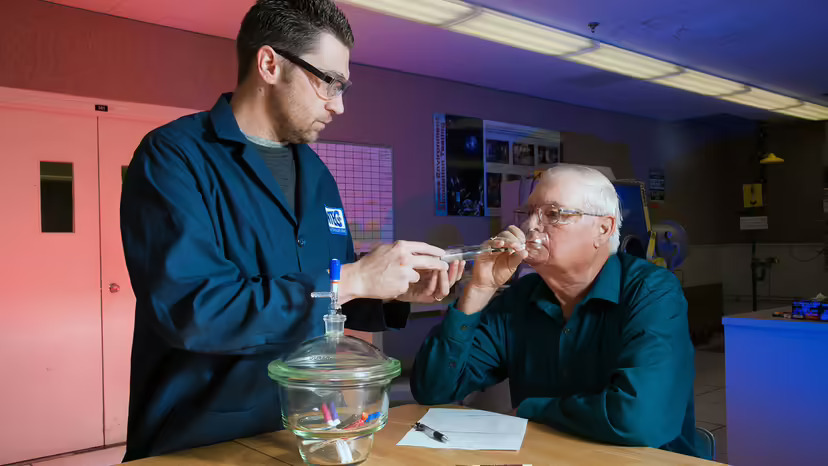
In outer space, astronauts cannot smell themselves. But the situation is entirely different aboard spacecraft, where odors can affect the crew’s health and performance. This is due to the confined space, which cannot be ventilated in the usual way or masked by replacing an unpleasant stench with another, more pleasant smell. To ensure that odors do not become an irritating factor during long missions, NASA deliberately tries to protect astronauts from unwanted scents. This is handled by a special “odor team” working at the White Sands Test Facility in New Mexico.
Here, every component is tested, down to the tiniest details that make up a spacecraft or capsule, as well as those that will surround astronauts during their journeys into orbit. Materials are also subjected to various trials to see how they behave under extreme conditions—one of the possible reactions being the release of sharp odors that could harm the crew. There is also an “odor panel” that helps determine how sensitive astronauts are to different smells. After all, if here on Earth they are extremely intolerant to the stench of hydrogen sulfide, it is unlikely they will be able to stay fully focused on the mission’s objectives while in space.
Source: science.howstuffworks.com
To understand what odors astronauts will smell during their journey, a group of volunteers carefully sniffs everything that they will encounter in flight and ranks the odors by the strength of their impact. After that, scientists try to eliminate unpleasant foreign smells or at least reduce their intensity. To this end, one NASA employee, George Aldrich, has spent more than forty years doing a very unusual job: smelling everything the crew will come into contact with. Among the tasks of this “nasal navigator,” as he is sometimes called, is the complete elimination of odors that could cause nausea, which would endanger both the astronaut’s health and the mission itself. In one interview, Aldrich shared that Sally Kristen Ride, the first American woman to travel to space, was unable to bring her favorite mascara aboard because it failed NASA’s strict smell test.
It is impossible to “smell space” directly, but it does have a scent, complex, sharp, and unexpected as it may be. Astronauts detect it, telescopes record it, scientists recreate it, and some even transform it into perfumes. The aromas of the Universe are not just a curiosity, but another path to understanding it.