
The shift of the space sector toward a militarized paradigm is perhaps the most significant development of the past decade. After the end of the Cold War, the world was inspired by the idea of peaceful space exploration. However, recent geopolitical tensions have marked the rapid return of space as a critical domain for national security and military competition.
This shift has been driven by two key factors: the NewSpace commercial revolution and the deterioration of relations among major powers, including the United States, China, Russia, and the European Union. Private companies, initially focused on commercial launches, communications, and Earth observation, have, under these new circumstances, quickly turned their attention to securing defense contracts. Governments, for their part, have recognized that the speed of innovation and cost reductions offered by the private sector are vital for modernizing their military-space capabilities. Unexpectedly, the resulting synergy between private capital and state defense needs has created a new military-industrial complex, in which the boundaries between civilian and military space technologies have virtually disappeared.
From forest surveillance to military intelligence: reorienting SAR and optical satellites
The first and perhaps most significant transformation occurred in the Earth observation satellite sector, both optical and radar-based (using synthetic aperture radar, or SAR). Since the late 2010s, technologies that were previously used primarily for civilian and scientific purposes, such as environmental monitoring, detailed mapping, illegal logging control, and crop yield assessment, have become indispensable sources of real-time military intelligence for governments around the world.
Two crucial catalysts for this shift were miniaturization and significant reductions in costs for satellites, which allowed companies to form large satellite constellations and deploy them mostly in low Earth orbit (LEO). This approach enabled an unprecedented frequency of monitoring, which was not possible with traditional state spy satellites, which had operated in high orbits since the Cold War. The ability to observe any point on the planet several times a day, rather than once every few days, became the gold standard for military planning and tracking rapidly evolving conflicts. The need for technological dominance in “temporal resolution” transformed commercial data from a supplementary tool into a primary asset for situational awareness and intelligence.
The American company formerly known as Maxar Technologies, a traditional OldSpace giant and heir to powerful brands like DigitalGlobe, significantly strengthened its position as a leading provider of high-precision optical imagery to the U.S. National Reconnaissance Office (NRO) and the Pentagon. Its submeter-resolution images from WorldView satellites set a new benchmark for strategic intelligence and target verification.
Since the start of Russia’s full-scale invasion of Ukraine in February 2022, Maxar has deepened its integration with the U.S. government. This resulted in multi-billion-dollar contracts with the NRO under the Electro-Optical Commercial Layer (EOCL) program, demonstrating the military’s trust in its platform as a reliable and resilient source of intelligence. In the fall of 2025, after being acquired by the private investment firm Advent International, Maxar Technologies was split and rebranded: the Earth observation and intelligence division became Vantor (inheriting the WorldView constellation), while the satellite systems division became Lanteris Space Systems.

Source: news.satnews.com
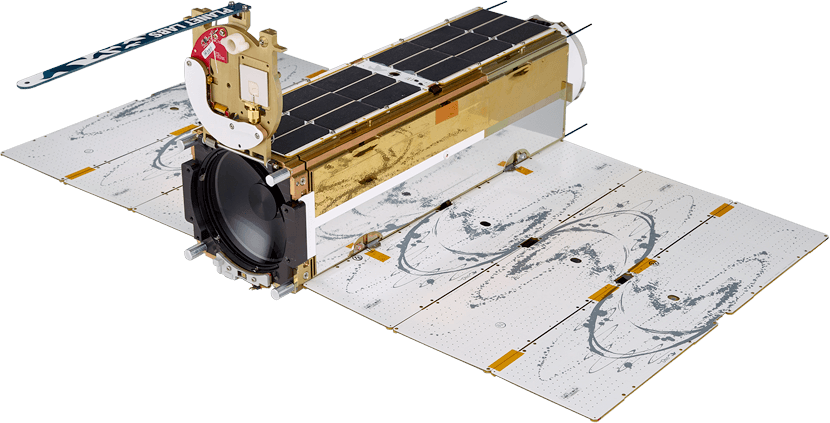
Another American satellite company, Planet Labs, which launched hundreds of small Dove CubeSats into orbit between 2014 and 2017, initially focused exclusively on the civilian commercial market. However, by 2018, it had reached full operational maturity, and its ability to image the entire Earth’s landmass daily (daily imaging) made it critically important for military monitoring, especially of large areas. The following year, the company received its first contracts for market research to explore commercial opportunities for meeting government satellite imagery needs. In this way, Planet began close collaboration with the NRO, providing its daily data to track the movement of large military formations, monitor key infrastructure, and assess damage in conflict zones, all of which are critical for evaluating the outcomes of strikes.
In May 2022, Planet Labs’s cooperation program with the NRO expanded significantly, resulting in a five-year contract (with the possibility of extension until 2032) for the provision of satellite observation data for intelligence purposes. These agreements were part of the same EOCL program under which Maxar and BlackSky provided services to the military. Thus, former purely civilian satellite companies became a kind of intelligence triumvirate, which in recent years has become the Pentagon’s main intelligence resource in armed conflicts worldwide.
Later, in June 2025, Planet signed a contract with NATO to provide daily monitoring, along with enhanced indications and warnings using AI analytics. Another agreement was subsequently reached with the German government, valued at €240 million. A significant portion of this contract covers the multi-year continuation of PlanetScope data provision, worth tens of millions of dollars.
Source: community.planet.com
However, military intelligence has benefited the most from SAR satellite remote sensing. Radar observation, enabled by a unique technology that can generate images through clouds, fog, and darkness regardless of weather or time of day, has in recent years also become valuable for militarized applications. The Finnish company ICEYE, backed by European and American funding, has become a leading supplier of SAR data to multiple defense agencies, including Ukraine’s Ministry of Defense.
As of today, ICEYE has significantly expanded its constellation and secured major defense contracts. Its small satellites focus on producing high-resolution radar images (up to 25 cm resolution) and rapid data processing. These observations have played a significant role in military monitoring of the Black Sea and assisted in planning Ukrainian military operations that effectively hindered the Russian Black Sea Fleet’s activity in the region. ICEYE’s terrestrial monitoring primarily focuses on detecting hidden ground targets, such as logistics hubs, command centers, fortifications, or military airfields.
Interest in these new satellite intelligence capabilities has also begun to appear in the Global South. However, Chinese companies, particularly Chang Guang Satellite Technology (CGSTL), which operates the Jilin constellation, were from the outset created and actively developed in line with the state’s Military-Civil Fusion (MCF) strategy. This represents a key difference in China’s approach: in Western countries, civilian companies usually approach the military offering their services, whereas in China, they have always been part of the defense ecosystem, rapidly supplying high-resolution imagery to the People’s Liberation Army.
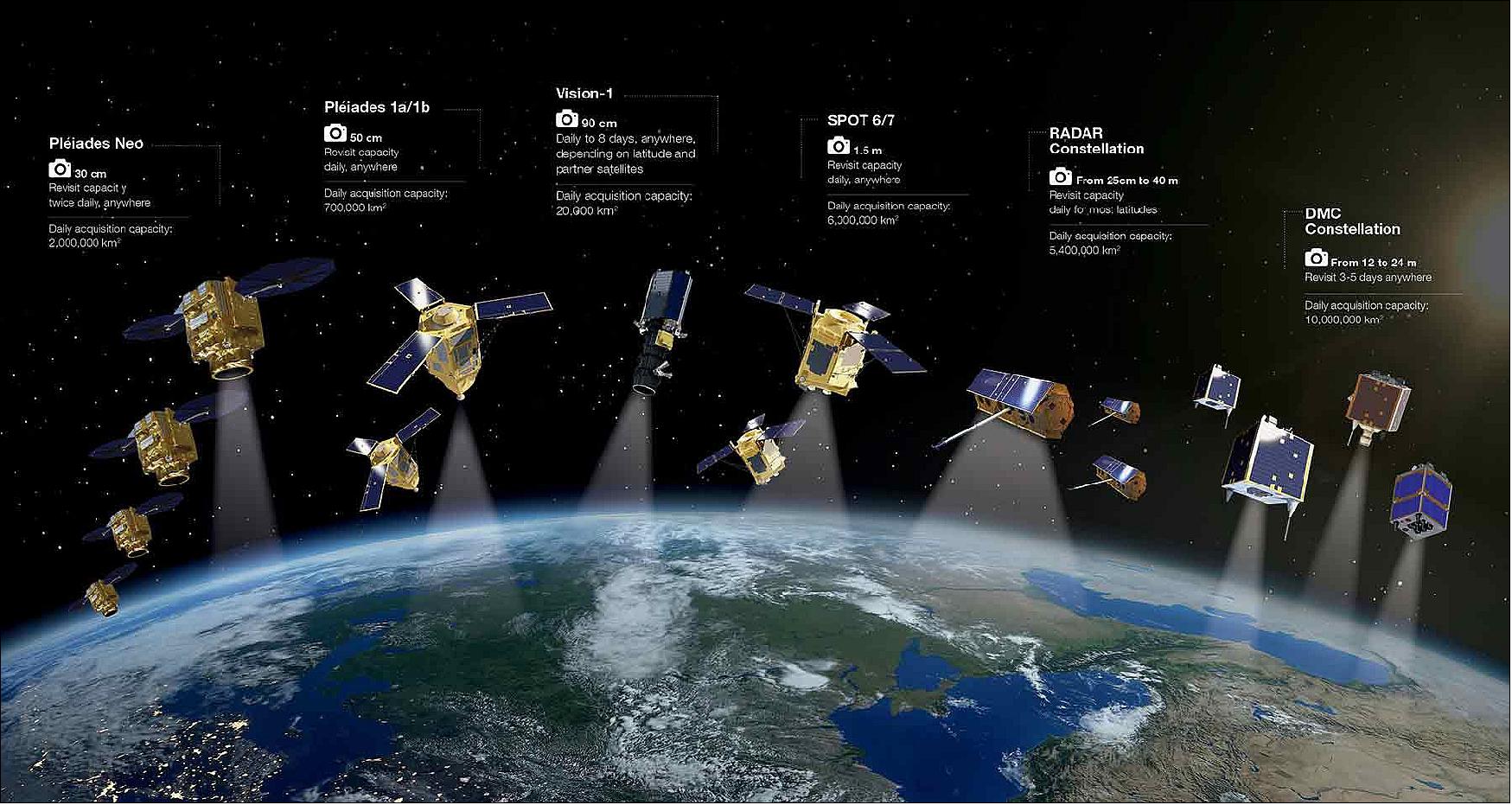
European players, such as Airbus Defence and Space, have also significantly expanded their defense portfolios, collecting intelligence from the Pleiades Neo satellites and others as part of programs for the European Union and NATO. These systems are mostly used for monitoring external borders, supporting peacekeeping missions, and, most importantly, given the current geopolitical climate, achieving strategic autonomy in intelligence gathering, reducing Europe’s dependence on the United States.
Source: eoportal.org
Beyond simply selling satellite imagery, most of the companies mentioned above also focus on providing advanced geospatial intelligence (GEOINT) services. In particular, this involves the development and implementation of machine learning and artificial intelligence algorithms for the automatic detection, classification, and tracking of military equipment within the massive streams of other satellite data. This technology has significantly accelerated the military decision-making cycle, a key component of modern network-centric warfare.
Overall, in 2025, military demand for high-frequency satellite monitoring data from the commercial sector has become a main driver of innovation and a leading source of revenue in this sector, effectively pushing traditional civilian demand into the background. This has cemented the substantial militarization of commercial Earth observation capabilities.
Absorb and strengthen: new approaches to R&D
In the context of the integration of the commercial and military sectors, special attention should be given to the intensification of research and development (R&D) activities. Space companies direct these efforts both toward the iterative improvement of existing technologies and the development of new ones. When actively engaged in the military sector, such developments can hasten the emergence of entirely new types of operational communications, intelligence capabilities, electronic warfare tools, and even space-based weaponry.
But let’s go step by step.
High-intensity R&D integration in the commercial sector primarily occurs along two parallel paths: internal strategic reorientation and aggressive acquisition of smaller, yet technologically more advanced, startups. Commercial companies realized long ago that simply selling imagery was not enough, because to maintain a competitive edge, militaries require analytical solutions and continuous automation of intelligence.
One of the most significant trends has been the acquisition of startups with well-developed data processing algorithms. For example, the aforementioned Planet Labs, in order to strengthen its capabilities in geospatial analytics and platforms, acquired the Slovenian firm Sinergise in August 2023. The acquisition of this otherwise obscure company not only expanded Planet’s market presence in Europe but also allowed the integration of the innovative Sentinel Hub technology into its software for rapid data access and processing, something critically important for government users.

Source: sentinel-hub.com
Airbus Defence and Space has also strengthened its internal R&D, particularly in the field of laser communications. We have already covered their reconnaissance fleet of monitoring satellites, but Airbus is also able to transmit observation data in near-real time. At the core of this process is the “Space Data Highway” (EDRS) technology, which operates via laser channels through geostationary relay satellites. This approach could potentially reduce the time from imaging to delivery of data to a military command from hours to mere minutes, or even seconds.
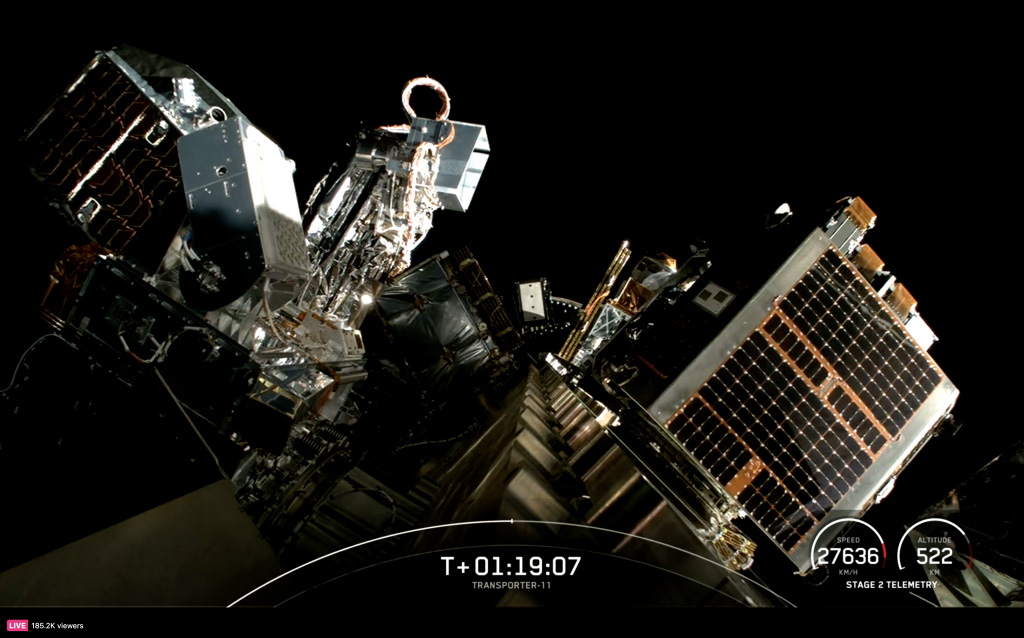
It is worth noting that today, governments are actively engaged with the commercial R&D segment. For example, the U.S. NRO Strategic Commercial Enhancements (SCE) program, launched after 2022, is specifically designed to invest in promising commercial technologies such as hyperspectral imaging and radio-frequency intelligence. This allows companies like Planet Labs, which operates the hyperspectral satellite Tanager 1, to invent fundamentally new capabilities for spectral monitoring while avoiding significant risks, as the U.S. government guarantees both active demand and the purchase of satellite data.
Source: planet.com
Another example of R&D investment is BlackSky, which focuses on real-time analytics and event monitoring. Its technological advantage lies in the ability to multisource, or rapidly integrate data from multiple satellites, and report events within 90 minutes of their occurrence. It is easy to see that this approach has high military potential, as it enhances the capabilities of tactical intelligence and rapid response on a dynamic battlefield.
Currently, commercial R&D is also focused on improving the resilience of satellite constellations. The Dove cubesats discussed earlier have a relatively short lifespan of about a year, and Planet Labs is constantly finding ways to improve new generations of its satellites. For instance, the new generation of SuperDove monitoring cubesats and Pelican satellites not only feature higher image resolution but also a tripled operational lifespan (up to 3–5 years, depending on the model).
The period from 2022-2025 has thus witnessed the trend of gradual convergence between civilian and military space technologies, wherein commercial R&D, through a strategy of acquiring and developing innovations, is directly aimed at meeting critical defense needs, from high-frequency SAR data and AI analytics to advanced laser communication and satellite communication systems.
Telecommunications constellations and battlefield communications
Another decisive shift toward military customers has occurred in the field of satellite communications, where numerous commercial satellite networks, initially created to provide global internet access for civilian users, have become the backbone of resilient military communications.
To a large extent, this shift was driven by the same factors mentioned earlier in the context of monitoring satellites: traditional military communication systems in geostationary orbit (GEO) have proven inefficient in modern conditions because of their design and placement. Above all, an orbit of more than 36,000 km resulted in high signal latency and required large, easily identifiable terminals. New commercial satellite networks in low Earth orbit (around 600 km) have eliminated these drawbacks and offer truly global, flexible, and attack‑resistant communication, an extremely appealing bonus for militaries.
The key player here was SpaceX, with its Starlink satellite network. Although the project was conceived as a commercial internet provider, its architecture of thousands of satellites in LEO turned out to be ideal for military needs. First, it provided low signal latency (around 20–50 ms), which is extremely important for real-time battlefield command coordination. Second, the extensive network of thousands of satellites ensured high resistance to jamming, thanks to rapid switching between satellites and load distribution. A third factor favoring the use of Starlink in armed conflicts was the relatively high level of cyber protection and signal encryption, which SpaceX has continuously improved. Finally, the enormous number of satellites in orbit (now more than 8,600 active constellation units) makes Starlink almost impossible to disable completely.

Source: bbc.com
Since 2022, the deployment of Starlink in military conflicts, particularly in Ukraine, has vividly demonstrated its critical importance for command, control, and tactical-level intelligence. Starlink terminals provided “last-mile connectivity” for frontline units, artillery teams, and unmanned systems, transforming the battlefield into a truly network-centric zone, akin to the honeycomb structure of a beehive. The success of the first months of use and the growing operational necessity led to the mass signing of defense contracts, including with the Pentagon. This gave rise to the , which is creating a separate, more secure, priority version of the Starlink service, adapted to military encryption and security standards.
Elon Musk’s success, of course, encouraged other market players to redirect their commercial projects toward military applications. Today, the American company Amazon, with its Project Kuiper satellite network, is also actively cooperating with defense structures, embedding military-oriented capabilities into its architecture from the very start of satellite production. This includes, in particular, the use of inter-satellite laser links for rapid global data transfer without the need for intermediate ground stations — a key advantage for government and intelligence missions requiring worldwide coverage.

Source: shephardmedia.com
Until recently, Britain’s OneWeb, which in 2023 completed its merger with the French government-linked Eutelsat Group, has also been building its own LEO constellation. While the project was previously focused on corporate connectivity, it is now positioned as a strategic asset for the governments of the United Kingdom and France. Following restructuring and financial injections from European partners, OneWeb has concentrated on providing secure government services, using its high polar orbit to ensure coverage of critically important Arctic regions, directly relevant to NATO’s defense and security interests.
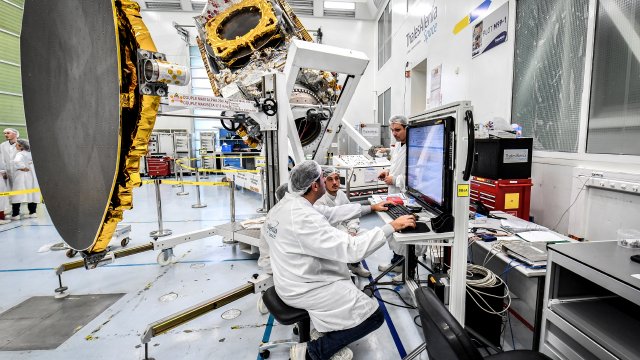
Speaking of European capabilities, one should also mention the Infrastructure for Resilience, Interconnectivity and Security by Satellite, or IRIS², project, which responds to the growing need for military-civilian satellite networks. With EU funding of €6 billion (the total project cost, including private investments, amounts to €10.6 billion), IRIS² will be aimed at establishing a secure communication network for EU governmental and military needs.
Source: lecho.be
Of course, the reorientation of such companies towards military applications involves not only selling terminals, but also developing secure communication protocols. These approaches include technologies that make communications resistant to cyberattacks, as well as anti‑jamming systems and low‑probability‑of‑intercept/low‑probability‑of‑detection (LPI/LPD) methods, which make it more difficult for the enemy to identify and suppress the signal. Such applications effectively turn civilian engineers into developers of military communications systems.
Beginning in the 2020s, military structures have increasingly used commercial satellite constellations as the foundation for distributed sensor networks, integrating them with drones, fighter aircraft, robotic ground systems, and other combat platforms. This kind of hybrid architecture makes it possible to instantly connect sensors (for example, a drone‑mounted radar) with strike systems (such as an artillery crew) through a commercial satellite channel, significantly shortening the sensor‑to‑shooter cycle and ultimately providing a decisive tactical advantage on the battlefield.
Orbital delivery technologies and space dominance
Breakthrough involvement in the military sector has also extended to launch vehicle manufacturers, whose civilian developments have begun to serve military purposes, both directly and indirectly. In this context, the American company Firefly Aerospace is a particularly illustrative example of this strategic transformation. Although its light launcher Alpha and future medium-class launch vehicles are commercial developments, their flexibility, reliability, and relatively low cost have made them indispensable to the Pentagon. Firefly is actively engaged in programs such as the National Security Space Launch (NSSL) and other Department of Defense initiatives, providing the United States with independent access to space for deploying critically important military satellites.

Source: fireflyspace.com
Firefly Aerospace is also rapidly developing its Rapid Launch and Responsive Space concepts, which involve the ability to place a military satellite into orbit within just hours or days after receiving an order, instead of the months or even years required by traditional launch‑planning approaches. This scenario allows armed forces to quickly replace a lost or damaged asset or to rapidly deploy an urgent intelligence resource directly over a conflict zone, ensuring the critical resilience of the military constellation. Today, on‑demand rapid deployment is perhaps the most sought-after orbital launch service among defense agencies worldwide, though far from the only one.
Another significant shift is connected to Hypersonic Glide Vehicle (HGV) technology and the Global Strike concept. American companies developing heavy launch vehicles (such as SpaceX with its heavyweight Starship) are already being considered by the Department of Defense as potential platforms for the fast transport of military cargo or for delivering hypersonic strikes anywhere in the world. The approach, known as Point‑to‑Point, requires a space rocket to deliver a payload or warhead across intercontinental distances in under an hour, using the same technology employed to place satellites into orbit.
In China, private launch manufacturers such as iSpace and LandSpace, supported by the country’s MCF policy, are focusing on the development of powerful methane‑fueled engines. Although these companies plan to use them to deliver payloads into orbit, similar technologies can be adapted for military ballistic missiles. In some cases, even the funding structures of such startups serve dual purposes, masking military programs beneath a civilian space brand, a practice not unique to China.
Moreover, although companies producing commercial rockets supposedly do not manufacture ballistic missiles, due to international restrictions such as the Missile Technology Control Regime (MTCR), their technological advances in the areas of solid-fuel boosters, high‑precision guidance systems, and versatile liquid engines significantly simplify states’ development of their own ballistic and hypersonic systems. This shortens the military R&D cycle because private capital finances the most expensive and riskiest stages of development–that is, the stages that too often strain military budgets.
Awareness in space and dual-purpose satellites
In parallel with the development of new approaches to rapid orbital launch and point‑to‑point logistics missions, another significant shift is taking place toward the militarization of what was previously an exclusively civilian sector of orbital services. Changes are now visible in the area of active control over outer space itself, where commercial companies are creating new tools either to protect access to space or hinder competitors’ access.
Space Domain Awareness (SDA) is the first step toward such dominance. Over the past decade, companies like the US‑based LeoLabs have built global radar networks for tracking space debris and active satellites. But this information is also vital for the military, since it provides SDA with the ability to detect and predict the maneuvers of hostile reconnaissance satellites that may pose a potential threat to already deployed space assets or those of allied countries.

Source: leolabs.space
A critical area here is the development of dual-use satellite systems, such as inspector satellites or space tugs. The development of spacecraft like Northrop Grumman’s Mission Extension Vehicle (MEV), although presented as a commercial service, can potentially have military applications as well. The ability of such vehicles to maneuver near other satellites could, in an aggressive scenario, be used for a kinetic attack or the capture of an enemy spacecraft, with the possibility of subsequently deorbiting it. Both the United States and Russia and China have their own developments in this domain.
The market for electronic warfare and defense systems is also becoming actively commercialized. Moreover, this is where the most aggressive integration of commercial R&D into the military sector can be seen. Many fast-growing private startups are funded by military programs and incubators, including the Defense Innovation Unit in the United States, to develop compact, flexible cyber- and radio-electronic warfare technologies placed directly in low Earth orbit. These systems are designed not only to jam or intercept enemy satellite communications and navigation, such as GPS, Galileo, or GLONASS, but also to conduct more complex operations like spoofing (intentional signal distortion), forcing enemy systems to misidentify their location.
One concrete example of developments in this area is companies focused on radio-frequency intelligence (RF geolocation). Startups like the US-based HawkEye 360 and Kleos Space, headquartered in Luxembourg, are creating constellations of small satellites capable of precisely triangulating the source of unauthorized or potentially threatening radio-frequency emissions on Earth. As with the previous examples, this technology has commercial uses, but it is most fully realized in a military context, enabling the detection and localization of enemy radar stations, air-defense systems, or communications hubs.
In recent years, the profile of space companies worldwide has changed fundamentally. From early commercial ambitions, they have evolved into key providers of services and technologies for the military sector. The shift from civilian to military customers is not merely a business decision but an outgrowth of global geopolitical tensions that have become a hallmark of the 2020s. Today, the militarization of the private space sector is almost irreversible, creating new challenges for international security and turning space into a fully fledged and highly risky arena for future military conflicts.