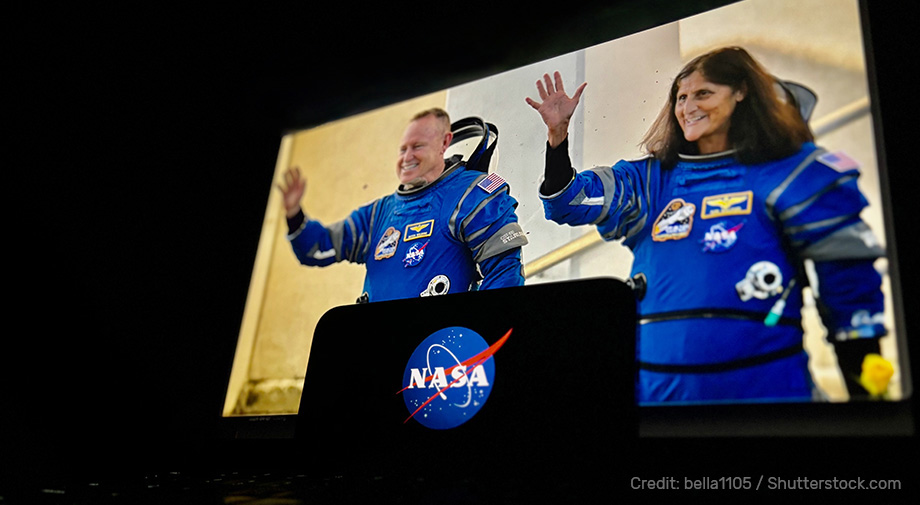
On April 10, 2026, the Orion capsule entered Earth’s atmosphere above the Pacific Ocean. Four NASA astronauts had just returned from a historic mission during which they traveled 252,756 miles from Earth, farther than anyone in history had ever gone. The record set by the crew of Apollo 13 back in 1970 had finally been broken after 56 years.
Behind these numbers lie not only remarkable technological achievements but also extraordinary individuals who chose a demanding, dangerous, and profoundly important profession. What was the journey like for a person who ventured into space? What challenges did they face while preparing for the mission and while traveling hundreds of thousands of miles away from Earth?
Source: nasa.gov
NASA’s first astronauts
A year after the launch of the Soviet Sputnik 1 in the autumn of 1957, the United States responded by establishing NASA. Then, in April 1959, the American space agency officially announced the creation of its first astronaut corps. President Dwight Eisenhower proposed military test pilots for the role, believing that no one else would be better suited to remain calm inside a machine capable of killing its occupant in a fraction of a second.
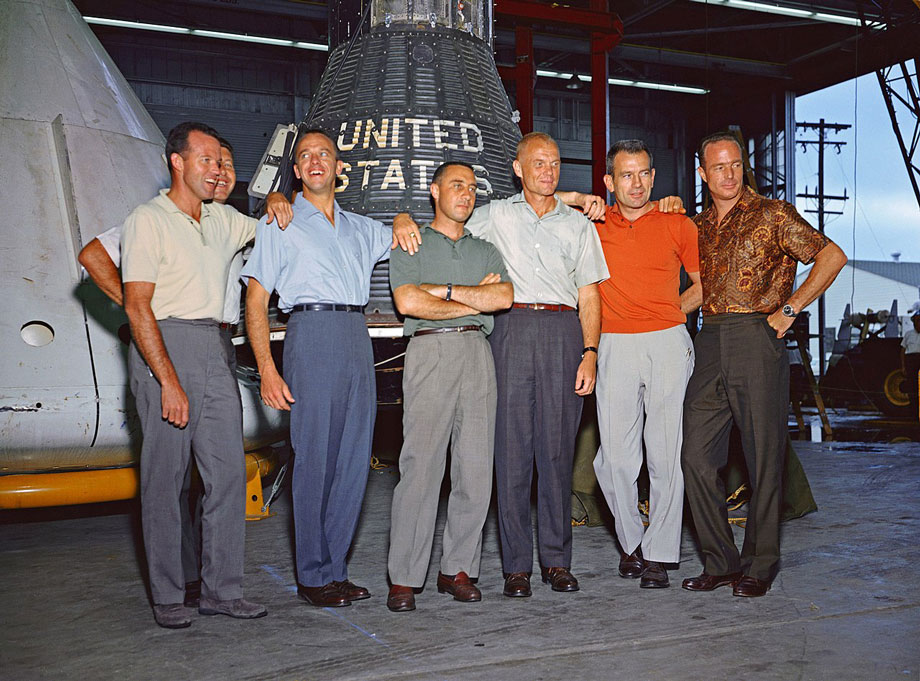
Personnel records of military flight school graduates were soon pulled from the archives: 508 names in total. The number of candidates was first reduced to 110, then to 32 finalists, and finally to the “Original Seven.” This collective nickname was given to the team because its members were destined to fly America’s first crewed space mission aboard a spacecraft that, at the time, did not even exist: the Mercury spacecraft. They would later become known as the Mercury Seven.
The initial requirements for candidates were straightforward: under 40 years of age, no taller than 180 cm (a limitation imposed by the physical dimensions of the capsule), at least 1,500 flight hours, an engineering degree, and qualification as a jet aircraft pilot. The most demanding tests awaited the applicants in the final selection stage. They underwent exhaustive medical and psychological examinations, pressure-chamber testing, numerous stress-resilience assessments, and interviews specifically designed to unsettle them.
Candidates were asked questions that had no correct answers, deliberately placed in situations that created a sense of threat, and closely observed to see how they reacted. Ultimately, these evaluations produced the first seven astronauts: Alan Shepard, John Glenn, Gus Grissom, Scott Carpenter, Wally Schirra, Deke Slayton, and Gordon Cooper.
These seven men instantly became national heroes, even before any of them had actually traveled into space.
Source: wikipedia.org
How astronaut selection has changed in 60 years
Since 1959, NASA has conducted 24 astronaut selection campaigns, and each one differed from the last. The criteria were shaped not only by advances in technology and science but also by politics and the specific goals the agency was pursuing at the time.
In the early 1960s, only male military pilots could apply to become NASA astronauts, in keeping with Eisenhower’s original vision. However, in 1965, the agency selected its first group of scientist-astronauts who had no flight-test background, opening the door to scientific research in orbit that could benefit humanity.
Two of these scientists left NASA without ever traveling to space, but four eventually reached orbit. Owen Garriott and Edward Gibson served aboard America’s first space station, Skylab, in 1973–1974, while Joseph Kerwin was a member of Skylab’s first successful crew.
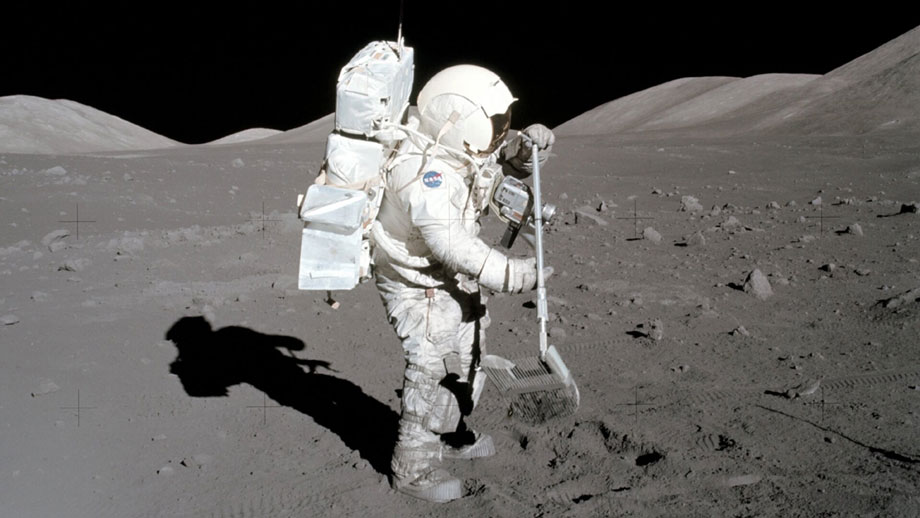
The most famous of the group, however, was geologist Harrison Schmitt. In December 1972, he became the only professional scientist ever to walk on the Moon, as a member of the Apollo 17 crew. It was Schmitt who discovered the orange glass beads scattered across the lunar surface: evidence of ancient volcanic activity that previous lunar missions had been searching for.
Source: esa.int
In 1978, NASA announced the first astronaut selection that was open to women and members of minority groups. Among those selected was Sally Ride, who in 1983 became the first American woman in space. Also chosen was Guion Bluford, the first African American to travel into orbit. The same astronaut class included Ronald McNair, a physicist and black belt in karate, who later tragically lost his life in the Space Shuttle Challenger disaster in 1986.
By the 1990s, NASA’s astronaut corps had expanded beyond military test pilots to include civilian scientists and engineers. At that point, space stations required personnel with a wide range of expertise, from medicine to materials science. For example, during the STS-40 mission in 1991, part of the crew consisted of physicians and biologists who conducted a series of experiments on human physiology in microgravity. It was during this era that NASA introduced mission specialists: astronauts without pilot qualifications who focused exclusively on scientific research and the operation of onboard equipment.
Today, the requirements are different from those of half a century ago, but NASA still seeks individuals with outstanding professional qualifications and strong psychological resilience. U.S. citizenship is mandatory, and applicants must hold either a master’s degree in a STEM field, a medical degree, or a professional flight qualification. Candidates are also expected to have at least two years of relevant work experience, while pilots must have accumulated a minimum of 1,000 hours of flight time as pilot-in-command of a jet aircraft. There are no age restrictions, but applicants must meet NASA’s medical standards at the time of application.
Although NASA sets exceptionally high standards for prospective astronauts, interest in the program remains enormous. For example, during the agency’s 24th astronaut selection cycle in 2025, NASA received more than 8,000 applications and selected only 10 candidates, less than one percent of the total.
The selection process resembles a multi-stage funnel. First, an evaluation board composed of active astronauts and NASA managers reviews applications and narrows the field to several hundred candidates. This is followed by more than 2,000 individual verification checks, during which NASA specialists scrutinize every achievement listed on a résumé and every detail of a candidate’s background. Roughly 120 finalists are then invited to the Johnson Space Center in Houston, where they undergo dozens of interviews and medical examinations. Only after this process are the successful applicants granted “ASCAN” status: Astronaut Candidate. Even then, however, there is no guarantee that they will ever fly into space.
Source: businessinsider.com
From ASCAN to astronaut: two years of preparation
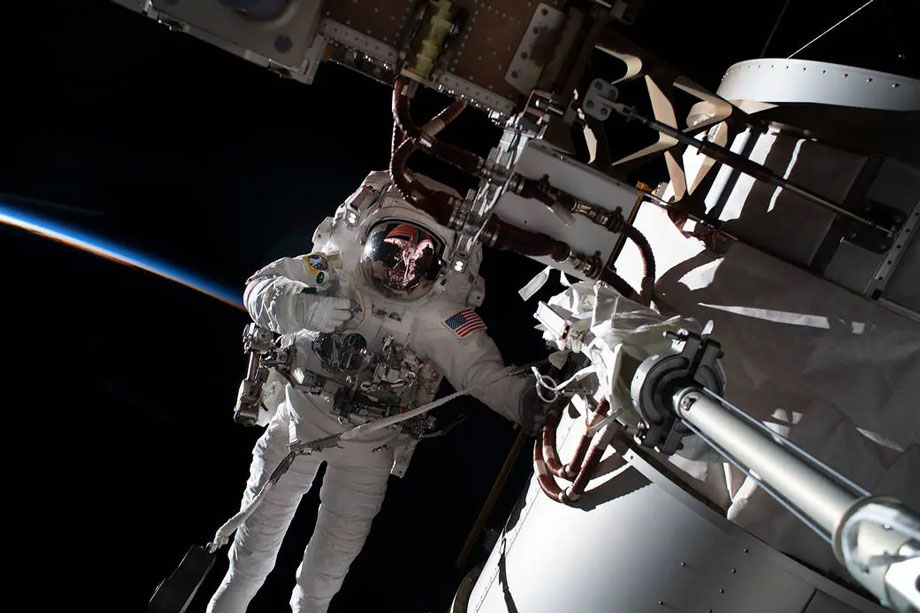
Every astronaut candidate undergoes a two-year basic training program, after which they officially become NASA astronauts and become eligible for assignment to a flight crew. The program combines military, scientific, and engineering training across 16 disciplines, including life-support systems, navigation, robotics, the management of onboard scientific experiments, and extravehicular activity (spacewalk) operations. All candidates, even scientists, must complete flight training in the T-38 Talon jet trainer.
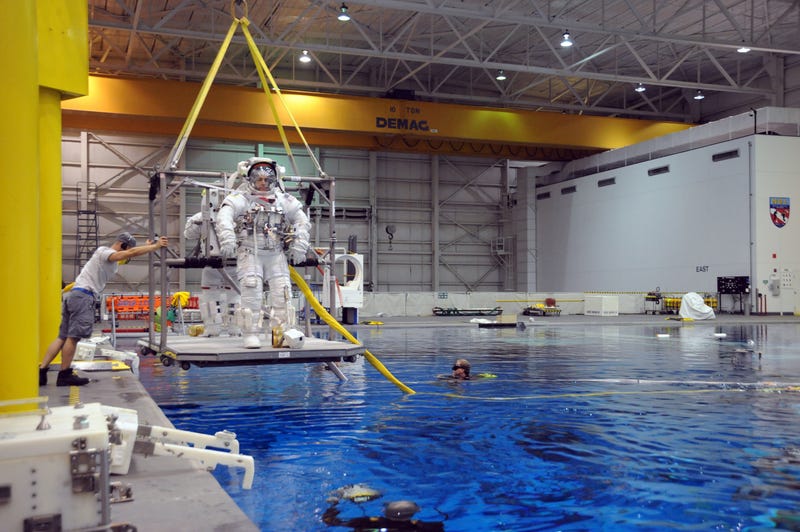
A central component of the training is underwater practice. The Neutral Buoyancy Laboratory in Houston is one of the largest pools in the world and contains full-scale mock-ups of space station modules. Working underwater in a spacesuit simulates weightlessness better than any other ground-based method. In these conditions, astronauts learn to service equipment, perform repairs while wearing a spacesuit, and respond to emergencies. If something goes wrong in space, immediate action is essential.
Astronauts also receive survival training for extreme environments, preparing them for emergency landings in forests, mountains, deserts, or at sea. If a spacecraft comes down far from its planned landing site, the crew must be able to survive until rescue teams arrive. This is not merely a formality: there have been real cases in which crews landed far from their intended destination. For example, in 2018, an emergency escape system activated two minutes after launch, and a spacecraft carrying two astronauts landed about 200 miles from the launch site. Both crew members survived.
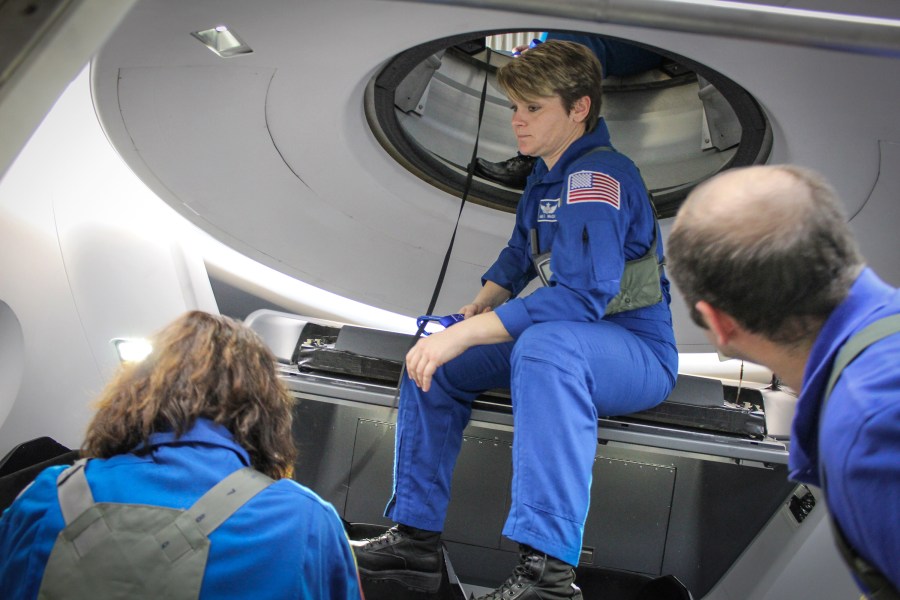
At the same time, astronauts spend extensive hours training on simulators. Full-scale mock-ups of spacecraft and station modules recreate every phase of a mission, from launch to docking. Here, crews learn to operate under both normal and emergency conditions, repeatedly practicing contingency procedures until their responses become second nature.
Source: nasa.gov
Psychological resilience is as important as professional skills.
Physical fitness can be measured and observed directly; psychological fitness is harder to gauge. Nevertheless, it may be the decisive factor when selecting astronauts for a future NASA mission.
Psychological screening begins before the first formal interview and continues throughout an astronaut’s career. Candidates are evaluated on several key traits: stress tolerance, the ability to work effectively in a team during prolonged isolation, emotional intelligence, and the capacity to make decisions quickly under pressure. During stress interviews, psychologists ask provocative questions, deliberately interrupt candidates, criticize their responses, and impose strict time limits. To observe how a person reacts, a candidate may even be told that they solved a problem incorrectly when, in fact, the solution was correct.
This process is designed to identify individuals who can continue functioning effectively even when they are exhausted, isolated from society, in pain, or deprived of sleep. Researchers at the University of Nebraska–Lincoln, who studied psychological resilience, concluded that NASA considers this quality to be just as important as professional competence when evaluating astronaut candidates.
Another critical issue is conflict management. Conflicts among crew members typically arise not out of personal incompatibility but due to accumulated fatigue and a lack of control over circumstances. Constant noise can further aggravate these stresses. On the International Space Station, for example, noise levels can reach 72 decibels, roughly comparable to a typical open-plan office. At the same time, the sense of isolation from Earth remains, regardless of how much noise surrounds the crew.
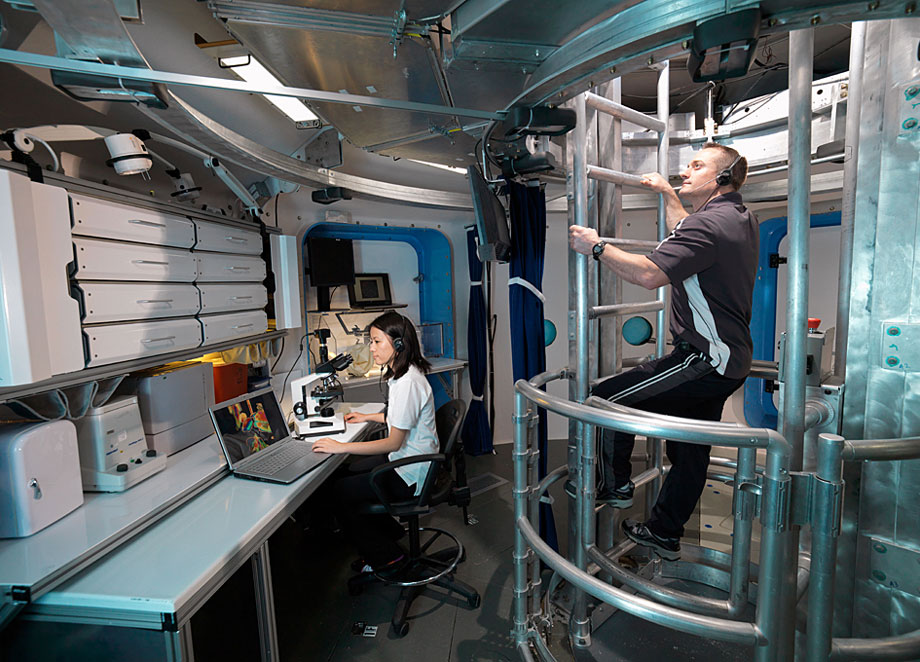
Whereas Soviet training methods relied heavily on sensory-deprivation chambers, NASA conducts extended mission simulations in confined environments. One such program, known as Human Exploration Research Analog (HERA), places crews inside a sealed habitat with no access to the outside world for periods ranging from 45 to 60 days, during which they live and work as though they were on an actual space mission.
Source: spaceref.com
The farther a crew travels from Earth, the more difficult it becomes to cope with isolation. For future missions to Mars, astronauts will face communication delays ranging from 3 to 22 minutes each way, meaning they will be unable to receive immediate guidance from mission control on Earth.
To minimize the risks associated with such conditions, NASA is already developing automated psychological self-support tools, such as assistance systems capable of operating 24 hours a day without direct involvement from a mental-health specialist. These systems are specifically designed for the challenges of prolonged isolation in confined environments. In essence, they provide a form of psychological therapy integrated directly into the spacecraft’s onboard software, making support continuously available whenever it is needed.
What’s next?
Artemis II served as a full-scale rehearsal for the next mission, which is expected to return astronauts to the surface of the Moon. After that will come preparations for operating aboard the permanent Gateway station in lunar orbit and, ultimately, for a mission to Mars. The journey there is expected to take approximately nine months each way, meaning that a crew could spend around three years in isolation in total, long enough to test even the most psychologically resilient individuals. As a result, astronaut training will have to evolve once again. Today’s astronaut candidates are only about 25 years old, and they still do not know exactly what challenges await them in the future.
Since 1959, 370 people have successfully passed NASA’s astronaut selection process. Among them were 212 military personnel and 138 civilian specialists, 191 pilots, and 159 individuals who entered astronautics from scientific and engineering backgrounds without flight qualifications. Until 1977, only men could become NASA astronauts. However, in January 1978, the agency announced a new selection class that included six women. Although the first American woman would not fly into space for another five years, the proportion of women has continued to grow with each subsequent astronaut class.
Over six decades, much has changed in the profession of a NASA astronaut, but its core purpose has remained the same. The word “astronaut” comes from the Greek words ἄστρον (astron, meaning “star”) and ναύτης (nautes, meaning “sailor”), and can be translated literally as “star sailor.” The term was first used in 1880 by the English writer Percy Greg in his novel Across the Zodiac, where it referred to a spacecraft. Since humanity first ventured into space, spacecraft, spacesuits, and mission objectives have all changed. Yet everyone aboard, whether pilot, scientist, or engineer, continues to fulfill the mission embedded in the very name of the profession.